
Best Reolink RV Security Cameras That Stops Theft
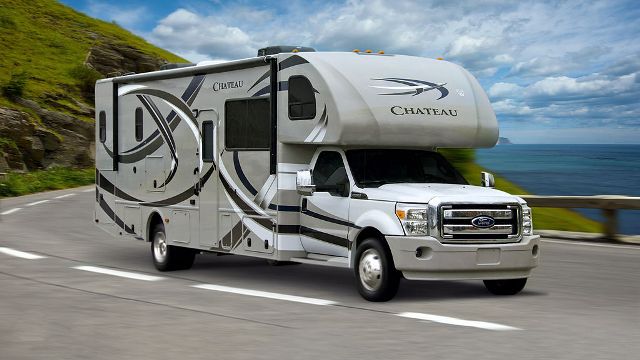
A security camera is one of the simplest ways to prevent break-ins or the entire vehicle from being stolen. The right security camera for an RV has to be able to pick up motion from anyone approaching, send an alert straight to your phone, and keep recording without needing you to be anywhere nearby. That being said, there are still different types of security cameras to consider and what makes one "right" for your setup comes down to a handful of attributes worth understanding before you buy.
RVs, motorhomes, and trailers are expensive by itself. Combine them with your valuables in it, the risk of having them getting stolen can cost you a bomb. This is exactly why these vehicles are worth protecting with a security camera.
There are also many types of security cameras out there, and picking the right one for your setup comes down to a handful of attributes worth understanding before you buy. Here's what those are.
Potential Security Risks for RVs, Motorhomes & Travel Trailers
There are several different kinds of RVs on the market, motorhomes (Class A, B, B+, or C), caravans, travel trailers, fifth wheel trailers, toy haulers, pop-up trailers, and slide-in campers. Since you're likely carrying personal valuables inside any of these, the main security threats worth planning for are:
- Theft
- Break-ins
- Vandalism
There are also several security measures worth considering alongside a camera:
- Change or reinforce your RV's locks
- Install RV security cameras or a full camera system
- Install door and window sensors
- Carry adequate theft insurance for your RV's contents
How Common is RV Theft, Really?
RV theft is often more organized than owners realize. In 2023, the Florida Highway Patrol and Charlotte County Sheriff's Office dismantled a theft ring responsible for stealing 19 RVs and campers worth more than $1 million, and only nine were recovered. In a separate case, a Florida theft ring convicted in 2025 was linked to at least 10 stolen RVs, trailers, and boats worth over $550,000. Both groups primarily targeted vehicles left unattended in storage.
State data suggests the problem extends well beyond a handful of high-profile cases. According to the California Highway Patrol's 2024 Vehicle Theft Facts report, 2,348 RVs and 8,751 trailers were stolen in California alone, with fewer than half of RVs recovered. While there is no comprehensive federal database tracking RV theft, as RV Travel notes, the available evidence points to the same conclusion: once an RV is stolen, recovery is far from guaranteed, making prevention and deterrence critical.
What Features to Consider for RVs, Motorhomes & Travel Trailer Cameras
Security cameras and alarm systems are effective and affordable, but it's worth understanding a few things before you buy a security camera for an RV specifically.
-
Easy to install: A simple setup saves a lot of hassle. For most RV owners, that means plugging a camera into an outlet and connecting it to a network with no drilling or wiring runs. A battery-powered or solar-powered camera is the best type of security camera that skips the outlet requirement entirely and is usually the better fit for an RV.
-
Remote monitoring via phone: Checking on your RV while you're away from it means you'll need either a WiFi signal or a cellular connection reaching the camera. Campgrounds, rest stops, and places like Starbucks or McDonald's often have WiFi you can use. But, a cellular camera on a current 4G or 5G network skips the hunt for WiFi entirely, letting you check in from anywhere there's cell coverage.
Note: If you're planning to boondock somewhere remote, it's worth reading our guide on how cameras keep recording without internet before you rely on cellular alone.
-
Motion detection & alerts: A push notification or email the moment something moves near your RV is the core feature that makes remote monitoring actually useful, rather than something you only check on manually.
-
Night vision: Infrared night vision matters for RVs parked in poorly-lit campgrounds or rest stops. A true IR-cut filter keeps daytime colors accurate while still giving clear night footage.
-
Alarm or siren, nice to have: A loud chime or siren, whether built into the camera or a separate unit, can scare off someone approaching your parked RV before they get close.
-
Footage storage: Continuous recording means you can pull up footage from days or weeks ago, which doubles as a handy record of the trip itself. Cloud storage works well while you have a network connection, and an SD card keeps recording motion and backing up footage even without WiFi or cellular.
-
Power supply: Pay attention to what your RV can actually power. Many security cameras take a 12V DC input, which happens to match the voltage of a typical RV house battery. That's a convenient overlap, not a dedicated RV wiring feature. So, there's no cigarette-lighter plug or reverse-polarity protection built in. If your power is limited, a solar-powered camera or a battery-powered camera sidesteps the wiring question entirely.
Best Reolink Security Cameras for RVs, Motorhomes & Travel Trailers
Picking the right camera depends mostly on one thing: how your RV is set up for power and connectivity. Here's a closer look at five solid options, with a side-by-side comparison once you've seen how each one actually works.
Best Cellular Security Camera for RV — Go PT Ultra
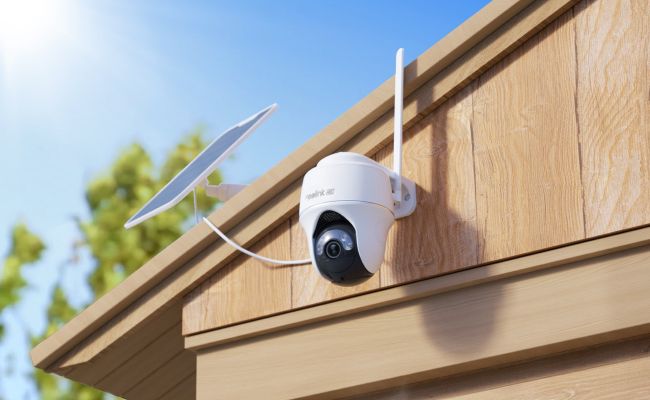
The Go PT Ultra is a camera that does not require your RV's WiFi or the campground's, which matters most at RV parks, rest stops, and boondocking spots where internet is either absent or too weak to trust for alerts.
But, the real highlight is its pan-tilt motor and auto-tracking. Instead of a fixed frame, it follows a person or vehicle as they move through the scene.
It comes bundled with Reolink's Solar Panel 2 rather than selling that separately, so unlike a battery-only camera, it's built to run indefinitely at a sunny campsite rather than needing a recharge every few weeks. The PIR-plus-AI detection tells people, vehicles, and animals apart to cut down on false alerts from wind or wildlife, and the built-in siren adds an active deterrent the plain cellular pick this replaces didn't have.
For this camera, Reolink doesn't offer an official no-drill wall bracket for it. But, the installation guide includes a no-drill strap-around option for a pole, ladder rung, or similar fixture, so it doesn't have to go straight into the RV's siding.
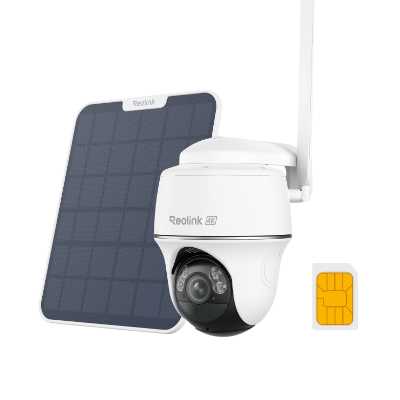
4K 8MP Wire-Free 4G LTE PT Battery Camera
4K 8MP; Smart Detection; 355° Pan & 140° Tilt; Battery/Solar Powered; Color Night Vision; Smart Real-Time Alert.
Best Battery & Solar-Powered Security Camera for RV — Argus Eco Ultra
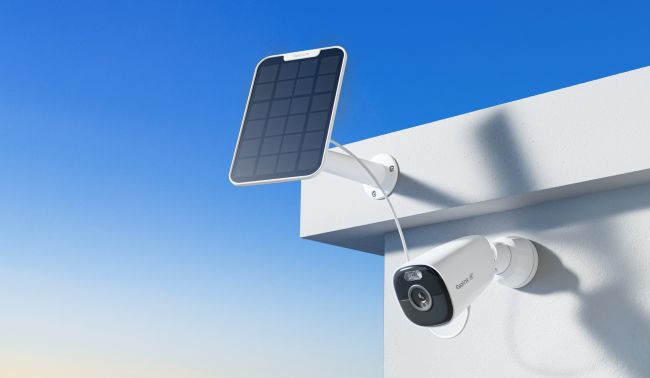
The Argus Eco Ultra connects directly to WiFi or a phone hotspot on its own, so it works wherever you're parked without needing a router or outlet nearby. It runs entirely on battery, and pairing it with Reolink's solar panel (sold separately) keeps it topped up indefinitely at a sunny campsite.
Because each unit is fully standalone, covering the front, side, and rear just means buying a second or third camera, each one still working entirely on its own, viewable together in the same app. The built-in siren and spotlight alarm adds an active deterrent on top of the recording, and it detects motion and saves to its own SD card even without a WiFi connection. The WiFi only matters for checking in remotely or getting an alert.
On mounting, it uses the same bracket as the rest of the Argus Eco line, supporting either a screw-in install or a no-drill strap around a tree, post, or similar fixture, and Reolink's official RLA-BKW5 wall bracket offers both of those same options too, just confirm whatever you're strapping it to can support the camera's weight.
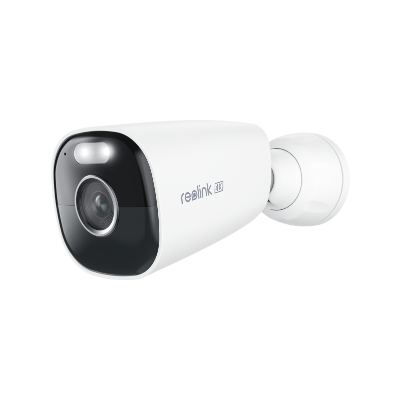
4K Standalone Battery/Solar-Powered Camera
4K 8MP; Smart Detection; 5/2.4GHz Dual-Band WiFi; Battery/Solar Powered; Color Night Vision; Easy & Flexible Installation.
Best Wireless Indoor Security Camera for RV - E1 Pro
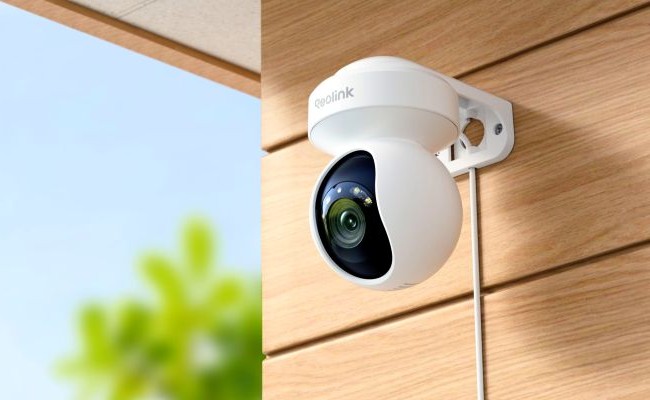
In the case of RVs, the E1 Pro's 355° pan and 50° tilt matters here because this camera can cover a whole room or campsite view through a window just by panning to follow motion, rather than needing several fixed cameras to do the same job. Since it plugs into a standard outlet, it's best suited to whenever the RV has shore power or a generator running, not a boondocking pick.
This is a light camera with no weighted base or non-slip feet, so setting it loose on a shelf isn't a great idea once the RV is moving, it'll slide with the first turn or stop. Reolink's own wall or ceiling mount is the better way to go for RV use, since it stays put through driving and everyday bumps. If you'd rather skip the mount, only set it unmounted on a flat surface while the RV is parked and level, not while you're on the road.
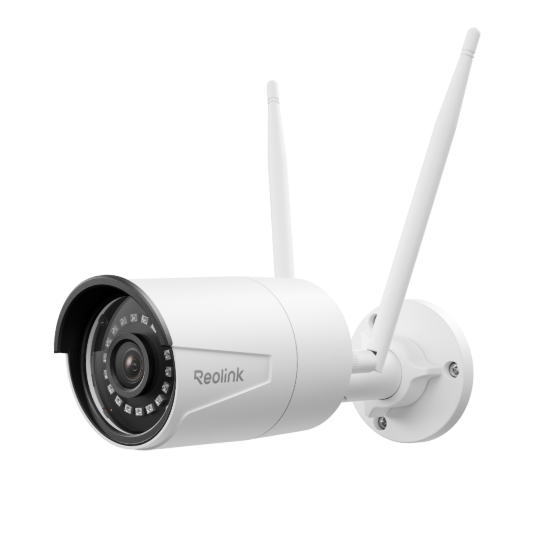
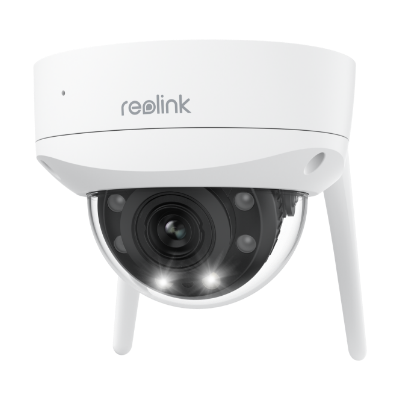
Best 12V RV Security Cameras — RLC-520A, RLC-510WA, and RLC-843WA
| Spec | RLC-520A | RLC-510WA | RLC-843WA |
|---|---|---|---|
| Image | 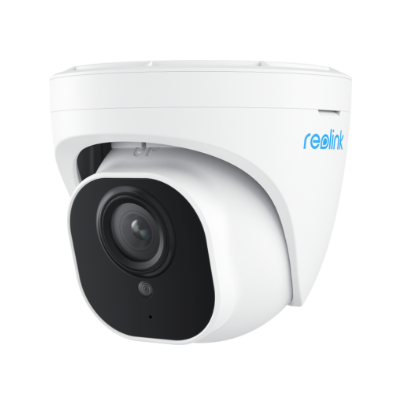 |
 |
 |
| Network connection | Wired Ethernet only, no WiFi | WiFi, dual-band 2.4/5GHz | WiFi (802.11ac) |
| Resolution | 5MP | 5MP | 8MP (4K) |
| Field of view | 80° horizontal, fixed | 80° horizontal, 42° vertical, fixed | 100°–31° horizontal with 5x optical zoom |
| Night vision | Infrared, up to 100ft (30m) | Infrared, up to 100ft (30m) | Infrared up to 100ft (30m), plus a separate color night vision spotlight mode |
A 12V electrical system is the most common electrical system in RVs, and all three of these cameras take that voltage directly, so there's no separate power brick or converter to fit into a tight RV utility bay.
The RLC-520A stands out for flexibility, it's the only one of the three that also accepts a standard PoE cable, useful if you'd rather run power and data over one line whenever you're near a PoE-capable router. Its 80° field of view is fixed rather than motorized, so the mounting spot you choose is the angle you're stuck with, plan for that before installing it.
The RLC-510WA and RLC-843WA skip the PoE cable option entirely and connect over WiFi instead, which makes them easier to mount on the roof, back, or front of the RV without running any data cable at all, and the 843WA's 5x zoom is worth the price jump if you need to make out detail at a distance, like a license plate at the edge of a campsite, rather than just a general view.
All three cameras can be attached with screws and drywall-style anchors, and Reolink doesn't offer an official no-drill accessory for any of them. That makes this pick the most sensible when you're comfortable putting a small hole in the mounting spot, replacing an existing factory backup camera, or attaching to a spot that isn't the RV's own siding, a hitch, ladder, or roof rack rail, rather than as a true no-drill option.
Below is footage from a Reolink camera mounted on an RV, shared by Jake and Danielle, real RVers documenting their van life on the road.
Best 12V RV Security Camera System for RV & Fifth Wheel — RLK8-800PT4
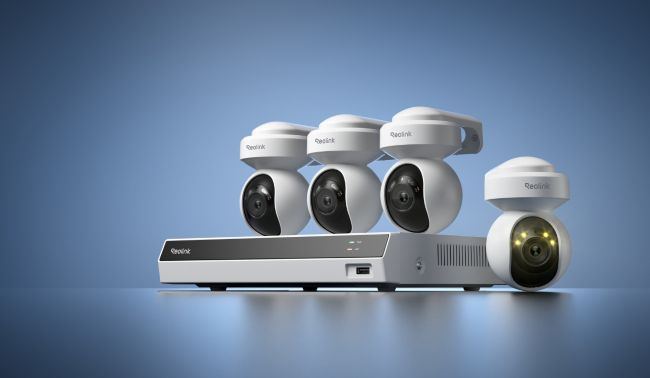
The tradeoffs of auto-tracking pan-tilt cameras are the reason to pick the RLK8-800PT4 NVR bundle over a set of fixed cameras operating on a standalone basis. Instead of missing someone who walks past the edge of a fixed camera's frame, each camera follows the motion and keeps them in view.
The 8-channel NVR with 2TB pre-installed means you can add a fourth camera angle later without buying a new NVR, and 2TB holds weeks of continuous footage before anything gets overwritten. Each camera receives both power and data through PoE from the NVR, while the NVR itself requires continuous mains power. As a result, this setup is best suited for an RV that is parked and connected to shore power, such as at a campsite with hookups, rather than for use while driving or boondocking without an external power source. For on-site monitoring, connect the NVR to a TV or monitor via HDMI. Remote viewing is also available through the app once the NVR is connected to the internet.
The included cameras use screws and anchors as well, no no-drill accessory offered, and Reolink's install guide specifies they need to go in upside down for outdoor use, that's what makes the waterproofing work correctly, worth knowing before you start drilling.
Buyer Comparison Table
Now that you've seen how each one actually works, here's how all five options stack up side by side:
Beyond Cameras: RV Insurers’ Top Tips for Protecting Your Motorhome
A camera is the most direct way to see what happened around your RV, but it's not the only layer worth having. Progressive's own guidance for RV owners and RV Life's theft-prevention guide both point to the same small set of add-ons rather than any single silver bullet.
The device both sources call out specifically for motorhomes is a steering wheel lock, the same Club-style or Disklok devices used on cars. That's because a motorhome, unlike a towed trailer, can simply be driven off if nothing stops the wheel from turning, RV rental company Cruise America recommends the same device for exactly that reason. It physically blocks the wheel from turning, and it works whether the RV is parked at home, a campsite, or a rest stop.
A GPS tracker is the next layer. It won't stop a theft, but it gives you and law enforcement a real shot at locating the RV afterward. Door and window alarms, motion-triggered lighting, and a camera with a built-in siren or spotlight add active deterrence on top of that, someone testing the door gets a warning, not a quiet, uninterrupted attempt. Parking somewhere visible and well-lit instead of tucked out of sight helps too, opportunistic theft tends to lean on privacy.
None of these sources puts a hard number on how much any single device cuts theft risk. What they agree on instead is that layering matters more than any one fix, a lock, a tracker, a camera, and a well-lit parking spot, rather than leaning on any single device alone.
FAQs
What are the most effective security devices for motorhomes?
A security camera, a steering wheel lock, and a GPS tracker, used together rather than relied on individually. See the section above for what each one actually does and why RV insurers and rental companies recommend layering them.
How to stop a motorhome from being stolen?
Make it hard to drive away and easy to notice: a steering wheel lock to block the wheel, a camera with a siren to deter anyone approaching, and a well-lit parking spot instead of somewhere tucked away. The section above walks through why each one matters and what RV insurers and rental companies actually recommend.
Conclusion
A security camera won't stop someone from trying to break into your RV. But its presence alone can deter them, and if a theft still happens, it gives you evidence of what happened while you were away at the campground store or asleep in the back. Whichever one fits how you actually travel, the right pick comes down to matching the camera to your setup rather than chasing the highest spec on the page.
A camera is also just one piece of the picture. Pair it with a steering wheel lock if you're driving a motorhome, a tracker for peace of mind if the worst happens, and the small habits that matter more than any gadget, locking up, parking somewhere visible, and not leaving valuables sitting in view through a window. None of it makes an RV theft-proof. Together, though, it's enough to make yours a much less appealing target than the rig parked next to it.
Search
Subscribe for the Latest Updates
Security insights & offers right into your inbox