
Motion Sensor Security Cameras: PIR vs AI Detection
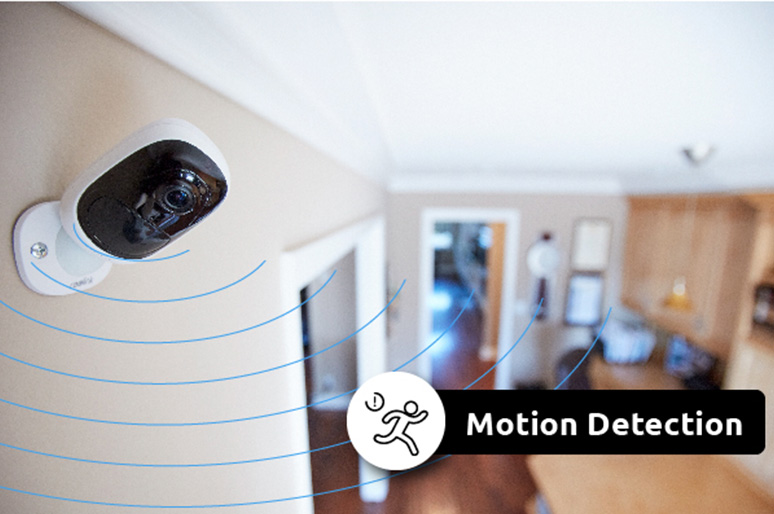
A motion alert is only useful if it flags something that actually demands your attention. If your security camera treats a swaying tree branch the same as a visitor at your front door, you’ll eventually start tuning out the notifications altogether.
Cutting through that noise requires pairing the right detection technology with smart placement. Below is a look at how PIR and AI motion sensors perform in the real world, top indoor and outdoor camera picks, and practical strategies to eliminate false alerts for good.
Types of Motion Security Cameras and How They Work?
There are 2 main types of motion security security cameras: PIR and AI-Based. You’ll get deep insights of the 2 motion detector security cameras types below.
1. PIR Motion Sensor Cameras
Nowadays, the majority of motion detection cameras use PIR technology to detect motion events. PIR is the acronym of passive infrared. It’s a kind of highly effective, cost-saving technology to detect motion events by monitoring the changes of heat in the monitored areas.
Unlike those traditional motion detector security cameras relying on algorithm to calculate the video frame change, PIR motion sensors detect the changing of temperature in the detecting areas when intruders break in.
When an intruder enters the detecting area of your motion sensor security camera recorder, the intruder can give off infrared energy (heat) which cannot be seen via human eyes, but can be picked up and sensed by the PIR motion sensor.
The PIR sensor can compare the previous temperature with the new state (when the intruder enters the detecting area), calculate the changes and trigger the alerts. Most battery powered security cameras with motion sensors use PIR technology, since PIRs are power-saving, which can free you from frequent battery replacement.
2. AI-Based Motion Detection Cameras
While AI detection works differently from PIR technology, it serves the same practical purpose of helping the camera decide when an event is worth recording or notifying you about. Instead of relying on a dedicated motion-sensing component, the camera analyzes the video it captures and can distinguish people, vehicles, and animals from irrelevant movement such as swaying trees or changing light conditions.
There's also a more basic version of software detection on older or budget cameras. It flags any pixel change from one frame to the next instead of recognizing what caused it. That makes it the version most likely to send a false alert for a shifting shadow or a moving branch.
Why Choose a Motion Camera? Comparison of Pros and Cons
You can take a look at the below chart to get the main pros and cons of the 4 types of detectors used in motion sensor CCTV security cameras.
There's no single winner here. PIR is the cheapest and most battery-friendly option, which is why most wire-free cameras use it. AI-based detection costs more processing power, but it tells you what actually triggered the alert. This is why it's become standard on Reolink's wired and higher-end cameras. Microwave and ultrasonic sensors are less common in consumer security cameras today. They're pricier, and more prone to false alarms through walls or from interference.
Key Features of Outdoor Motion Sensor Security Camera & System
Before purchasing home security cameras with motion sensor, take the below important features into consideration.
1. Weatherproofing (If You're Placing It Outdoors)
An outdoor motion camera needs a weatherproof rating. An indoor one doesn't.
For outdoor placement, IP65 is a good baseline. The solid housing protects the camera from dust and water jets.
2. Motion Sensor Camera with Night Vision
Night vision matters indoors and outdoors alike. Any camera watching a dark room, hallway, or yard at night needs it. There are 3 main types of night vision security cameras.
- Traditional night vision security cameras: Outdoor & indoor motion detection cameras with traditional night vision can only see in low-light condition.
- Infrared night vision cameras: Infrared cameras can see in low-light conditions or even totally darkness, with the built-in IR LEDs around the camera lens.
- Starlight security cameras: Starlight security cameras can make the most use of the natural light to produce extremely clear night vision images and videos with the specialized sensors.
A motion sensor light with camera can also offer you night vision images. The floodlight will illuminate the scenes and then the camera can see the area that’s lit up. However, the resolution of such devices is still limited at night. You cannot count on them to identify license plate numbers.
Currently, IR night vision is the most popular among security cameras with its cost-saving and efficiency, while starlight security cameras will become a new trend with its outstanding night vision quality.
3. Local Storage
Cameras with SD card can help you get local storage even without Internet. You don’t need to rely on NVR, DVR or your computer to store the data.
Battery-powered models can offer you video surveillance for your property without power and Internet access. You still get important video tapes when you monitor your remote property, such as your rural home, barn, farm, etc.
4. Use-Friendly App
When you need to get a camera for remote access, pick one that comes with a compact app.
Take Reolink App as an example. You can enable or disable the motion sensor simply by a tab on your iPhone or Android mobile phones. You can also remotely watch and manage up to 16-channel live streaming of your security cameras.
The interface is extremely simple and intuitive, even your grandma can use it without any problems.
Best Motion Sensor Cameras
The motion sensor security camera best picks below are some of our most popular models with motion sensors.
Reolink Argus 4 Pro — Best Outdoor Motion Sensor Wire-Free Security Camera
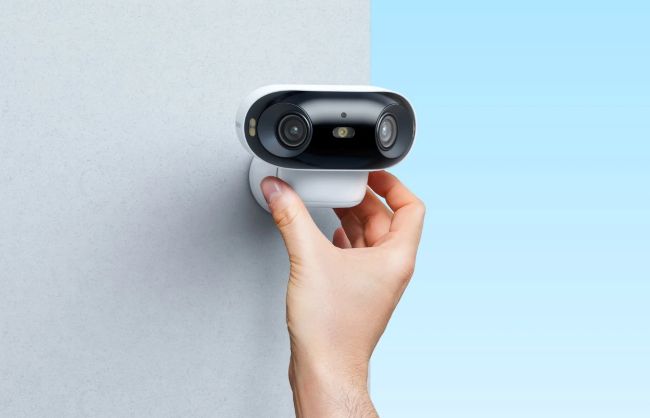
The Argus 4 Pro is a flagship camera with a wide 180-degree field of view. Two lenses combine into one image, creating a wider motion detection range than a single-lens camera covers. It also features Reolink's ColorX technology, so users get true full-color footage at night without needing visible floodlights.
Did You Know?: PCWorld reviewed the Argus 4 Pro and called its image quality "impressive even on the lowest resolution." Read the full review.
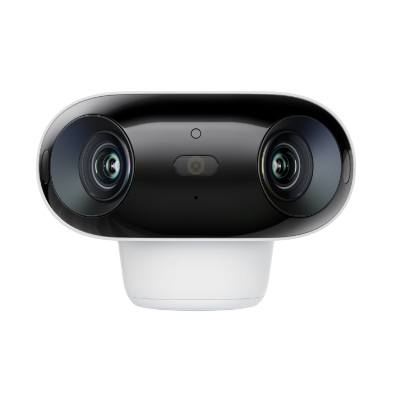
4k 180° Wire-free Color Night Vision Camera
4K UHD 180° Blindspot-free View; Color Vision Day and Night; 30% More Battery Life; Dual-band Wi-Fi 6; Smart detection.
Reolink Go Plus — Best 4G Outdoor Motion Sensor Camera with Rechargeable Battery
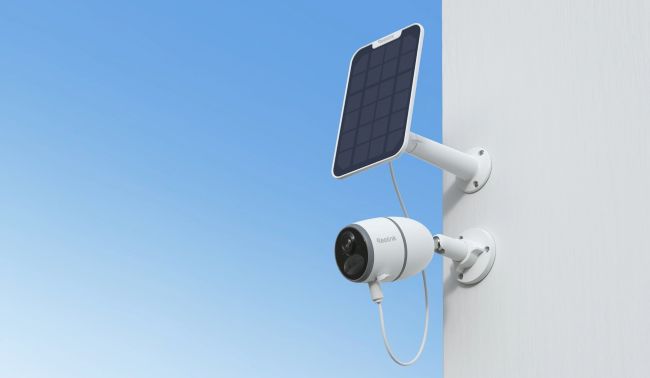
The Go Plus is a 4G LTE, battery-powered camera. It needs no WiFi and no power outlet, just a cellular signal and its rechargeable or solar-charged battery. It uses both PIR and AI detection, so it recognizes a person, vehicle or animal instead of just reacting to any movement. Night vision reaches 10m (33ft), and it's rated IP65 for outdoor use.
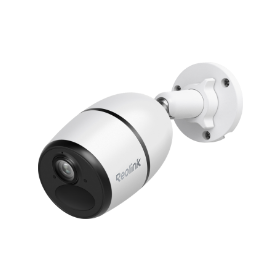
Smart Wireless 4G Battery Camera
Rechargeable Battery/Solar Powered, Person/Vehicle Detection, 2K 4MP Super HD, Two-Way Audio, High-Quality Night Vision, Live View Anytime.
Reolink E1 Pro — Best Indoor Motion Sensor Camera
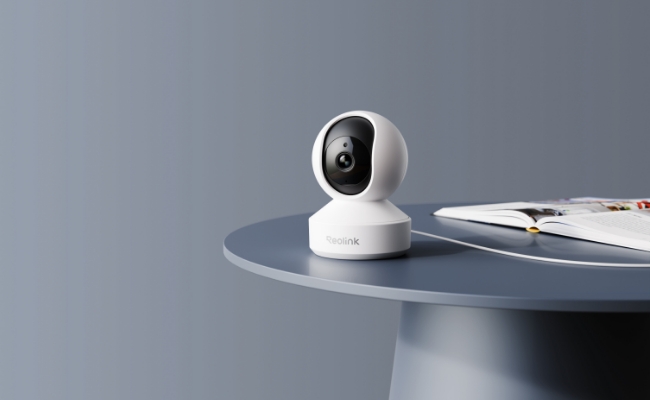
The two picks above are both built for outdoor use. Reolink E1 Pro covers the indoor side of this comparison. It's a plug-in, pan-and-tilt camera built specifically for indoor rooms, not weatherproofed and not meant to go outside. It uses AI detection to recognize a person or pet, not a dedicated PIR sensor. Pan and tilt cover 355 degrees horizontally and 50 degrees vertically, so one camera can watch most of a room from a single spot.
Note: Avoid using motion sensor fake security cameras. They won’t save your budget in a long run. If there is a break-in, the dummy fake security camera cannot record any evidences for the later investigation.
Installation Tips
The placement of your motion cameras and systems can make a difference on effective motion detection alerts. The tips below apply whether your camera is mounted on a porch or sitting on a shelf indoors, unless a step says otherwise. Here are some helpful suggestions on your camera's placement and installation..
How to Install Security Cameras with a Built-In Motion Sensor?
A built-in motion sensor means there's nothing separate to mount. The camera does the sensing itself. Argus 4 Pro, Go Plus, and E1 Pro all work this way. They're simple to power on, but where you point them decides how well they actually catch motion. A few principles apply no matter which camera or scenario you're working with.
- Angle it to catch side-to-side movement. Reolink's own installation guidance says its PIR sensors pick up side-to-side movement more easily than someone walking straight toward the camera. Point it so a person crosses the frame, along a walkway or across a yard, instead of facing straight down a path toward the lens.
- Mount outdoor, battery-powered cameras 2 to 3 meters (6.5 to 10ft) high. That's Reolink's own guidance for cameras like Argus 4 Pro and Go Plus. Not too far from what you're covering, and not too high above it. The ideal range for recognizing a person is 2 to 10 meters (7 to 33ft) from the camera.
- Give indoor cameras more room to work with. A camera like E1 Pro has no weather constraints, so a corner near the ceiling usually covers more of a room than a wall-height mount.
- Use detection zones instead of moving the camera. Most current Reolink cameras let you draw a custom zone to exclude from the app. A busy sidewalk, a neighbor's window, or a spot where tree branches keep triggering alerts can be left out without repositioning anything. A few older models only let you turn zone exclusion on or off instead of drawing a custom shape.
- Don't max out the sensitivity setting. Too high a setting picks up rain, snow, and simple light changes as motion instead of a real event worth an alert. Keep the camera at least 1 meter (3ft) from your WiFi router too. Wireless interference can trigger false alerts on its own.
- Keep a battery camera charged and within its temperature range. A charge below 10% increases false alerts. So does operating outside 0°C to 45°C (32°F to 113°F), according to Reolink's own guidance.
Powering it is the easy part. PoE models run on a single Cat5e/6 cable. WiFi and battery models plug into standard power or charge separately. None of Reolink's cameras need anything more complex than that to get online.
How to Place Security Cameras & Systems with External PIR Motion Sensor?
Some smart home security systems pair a camera with a separate PIR motion sensor placed somewhere else. The sensor isn't built into the camera itself.
Note: Reolink's current cameras and NVRs don't support pairing with a separate motion sensor. If you're setting up a new Reolink camera, the built-in-sensor cameras above are the way to go.
If you do have a camera or system with an external sensor, make sure it and the camera cover the same monitored area.
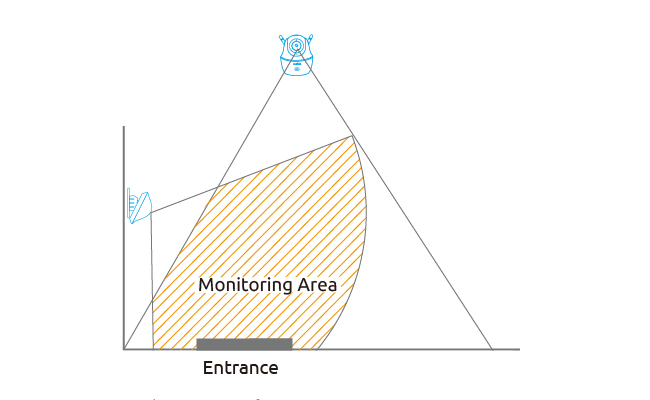
Here are some useful suggestions on PIR motion sensor installation:
- It’s better to install your PIR motion sensor to stay away from wireless interference, or it may impact the WiFi signal between your PIR sensor and your camera, NVR or DVR.
- Make your PIR sensor stay away from the outlets, such as the air conditioner vents, humidifier outlets, etc., or it might lead to false alarms.
- It’s not suggested to install the PIR motion sensor facing the mirror. The mirror might enable your PIR motion to work ineffectively.
- It’s not advised to install your PIR sensor facing the sunshine or bright light, since it might trigger false alarms.
What to Do If Motion Detector Cameras Aren't Sensing Motion?
Below are some effective solutions to some common issues you may have for your motion sensor security cameras.
1. Motion Detection Is Not Working?
Solution 1: Check whether you’ve activated your PIR sensor on your app. Sometimes you may just forget to enable the PIR sensor.
Solution 2: Change the placement. Avoid placing them behind the glass window.
Pro Tip: For more in-depth information, check out our guide on effective solutions to fix motion detection not working.
2. How to Reduce False Alarms?
Solution 1: Check the placement. Some everyday items in your yard or front door may give off motions and trigger alerts, such as windmills, naughty cats, dogs, etc.
Solution 2: Lower the sensitivity. Highly sensitive sometimes may pick up some unnecessary motion events, such as changing lights of the sun.
3. WiFi Is Not Working
Solution 1: Check the WiFi range between your router and your cameras. If there are any obstacles, such as walls, they will affect the WiFi transmission.
Solution 2: Change to another WiFi signal channel. In some cases, a WiFi channel would be too crowded, you can adjust to another signal channel to get much more stable WiFi signal.
FAQs
What is the best motion sensor camera?
The best motion sensor camera largely depends on your specific needs, such as where you plan to use it (indoor or outdoor), whether you prefer wired or wireless setup, and how much you're willing to spend. Here, we recommend the Reolink Argus 3 Pro and Argus 4 Pro as best outdoor motion sensor security cameras.
Do motion sensor cameras record all the time?
No, most motion sensor cameras do not record all the time—they typically start recording only when motion is detected. When the camera’s motion sensor is triggered—by movement from a person, vehicle, or animal—it begins recording a short clip, often ranging from a few seconds to a few minutes.
Do motion cameras work without WiFi?
Yes, some motion cameras can work without WiFi, but it depends on the type of camera and its features. For example, 4G battery-powered cameras can work without WiFi and most of them use motion sensors for smart detection.
PIR or AI detection, which one do I need?
Neither one is strictly better. They solve the same problem in different ways. PIR is simpler and uses less power, which is why battery cameras like Reolink Go Plus lean on it. AI detection needs more processing power. But it can tell you what actually triggered the alert instead of just that something moved. It could be a person, a vehicle, or an animal. If your camera has both, like Argus 4 Pro or Go Plus, you get the best of each.
Conclusion
PIR keeps things simple and cheap, which is why most battery cameras use it. AI detection costs more processing power, but it tells you exactly what triggered the alert instead of just that something moved. Pick the one based on what actually bothers you, false alarms from bugs and wind, or not knowing whether it was a person or a passing car. Match your pick to where the camera goes, indoors or outdoors, and the alerts you get will actually be worth checking. If you have any questions on motion sensor security cameras, feel free to leave them in the comments section below!
Search
Subscribe for the Latest Updates
Security insights & offers right into your inbox