
How Do Doorbell Cameras Work? Types, Recording & Setup 2026
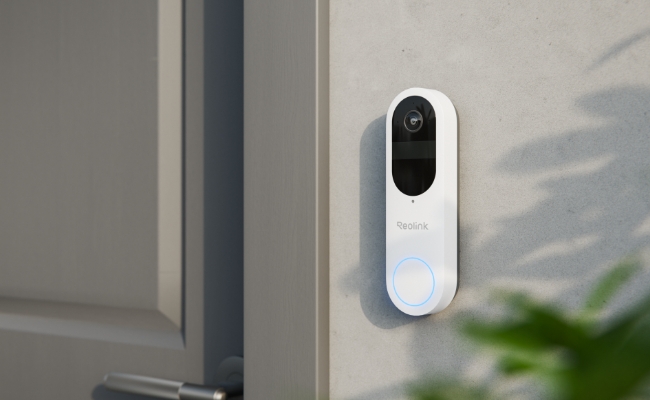
A doorbell camera combines a doorbell with video, motion detection, and two-way communication so you can see, hear, and speak with visitors at your front door. Depending on the model, it may connect through WiFi or PoE, record motion events, send real-time alerts, and store footage locally or in the cloud.
In this guide, we explain how doorbell cameras work, how different power and connection types affect performance, and which features matter most. We’ll also compare common doorbell camera setups and recommend Reolink models for different home security needs.
What Is a Doorbell Camera?
A doorbell camera (also known as a video doorbell) is a smart security device that replaces or pairs with a traditional front door chime. It integrates a built-in camera lens, microphone, speaker, and motion sensors directly into the doorbell unit.
How Do Doorbell Cameras Work?
A doorbell camera works by combining internet connectivity, motion detection sensors, and two-way audio to stream live video to your smartphone whenever activity is detected or the chime button is pressed. It serves as a digital gatekeeper, allowing you to monitor your entrance, speak to visitors remotely, and record doorstep activity in real time.
1. Power and Network Connection
-
Power Supply: Wired models draw continuous power from existing doorbell transformers (typically 16V–24V AC), while battery-powered models run on rechargeable lithium-ion batteries. High-end setups use Power over Ethernet (PoE) to supply both power and internet through a single Ethernet cable.
-
Network Link: Connects to your home network via Wi-Fi (2.4 GHz or 5 GHz) or Ethernet to transfer data to your mobile devices and smart displays.
2. Motion or Button Trigger
-
Motion Sensors & AI: The device scans your doorstep using Passive Infrared (PIR) heat sensors or AI vision algorithms to distinguish humans, vehicles, or packages from background movement like wind and leaves.
-
Manual Button Press: Pressing the physical button completes a circuit that immediately activates the camera and indoor chime systems.
3. Alerts and Chime
-
Indoor Ringing: Triggers your home’s existing mechanical wall chime, a digital chime box, or a plug-in wireless unit.
-
Mobile Push Notifications: Instantly sends alert notifications to paired smartphones, tablets, or smart home hubs so you know someone is at the door.
4. Live View and Two-Way Audio
-
Real-Time Video Stream: Opening the push notification launches a wide-angle HD or 2K video feed of your entryway.
-
Two-Way Communication: Built-in noise-canceling microphones and speakers allow you to talk directly with delivery drivers or guests without opening the door.
5. Recording and Storage
-
Event-Based & 24/7 Recording: The camera automatically captures video clips during motion events or button presses. Continuous 24/7 recording is available on supported wired and PoE models.
-
Storage Options: Footage is saved locally to a microSD card, Network Video Recorder (NVR), or NAS drive with no monthly fees, or uploaded automatically to encrypted cloud storage.
6. Playback and Review
- App Video History: Users can open their camera application at any time to search through organized event timelines, play back saved video clips, or download security footage directly to their phone.
What Are Common Types of Doorbell Cameras and How They Work?
Doorbell cameras fall into three primary categories based on how they receive power and transmit data: Wired Wi-Fi, Power over Ethernet (PoE), and Battery-Powered. Choosing the right type depends on your home's existing wiring, Wi-Fi coverage, and whether you prefer continuous 24/7 recording or motion-triggered clips.
1. Wired Wi-Fi Doorbell Cameras
- How They Work: Connect to existing low-voltage doorbell wiring (typically 16V–24V AC) for continuous power while transmitting video feeds and alert data wirelessly over 2.4 GHz or 5 GHz Wi-Fi bands.
Best Used For: Homeowners with existing doorbell wiring and strong Wi-Fi signals at the front door who want reliable performance without managing battery recharges.
2. PoE (Power over Ethernet) Doorbell Cameras
- How They Work: Use a single Cat5e or Cat6 Ethernet cable connected to a PoE switch or Network Video Recorder (NVR) to deliver both high-speed network data and direct electrical power.
Best Used For: New home builds, major renovations, or privacy-focused users building a dedicated local security system with an NVR.
3. Battery-Powered Doorbell Cameras
- How They Work: Run on built-in rechargeable lithium-ion batteries that typically last 3 to 6 months per charge, connecting to your home network exclusively via Wi-Fi.
Best Used For: Renters, apartments, or homes without pre-existing doorbell wires where drilling or running new cables isn't an option.
Doorbell Camera vs. Regular Doorbell
Why Use a Video Doorbell Camera?
A video doorbell camera acts as your front door's digital gatekeeper, combining home security with everyday convenience by letting you monitor, record, and speak with anyone at your entrance in real time.
-
Real-Time Motion & Visitor Alerts: Get instant push notifications on your phone the moment someone steps onto your porch or presses the chime, ensuring you never miss a package or guest.
-
Continuous & Event Video Recording: Automatically captures video clips of motion events or records continuous footage to local storage (like a microSD card or NVR) or the cloud, giving you verifiable proof of deliveries or security incidents.
-
Two-Way Audio Communication: Built-in microphones and speakers allow you to speak directly with delivery drivers, instruct contractors, or greet visitors without ever opening your front door.
-
Remote Home Access Anywhere: Stream live wide-angle video feeds and answer your door from anywhere in the world using your smartphone, keeping your home connected whether you are at work or on vacation.
-
Visual Crime & Package Theft Deterrence: A visible camera unit actively deters porch pirates, trespassers, and opportunistic intruders before they attempt a break-in or steal a delivery.
How Long Do Doorbell Cameras Record?
Most doorbell cameras record event-based video clips ranging from 15 seconds to 2 minutes per motion trigger, automatically extending as long as movement is detected. Mains-powered models (wired and PoE) offer continuous 24/7 recording, whereas battery-powered models rely on motion triggers to preserve battery life.
Event-Based Recording (Battery & Wired)
-
Motion-Triggered Clips: When PIR heat sensors or AI algorithms detect activity, the camera captures clips customized between 15 and 120 seconds.
-
Dynamic Extension: Many models continue recording until the detected person, vehicle, or package leaves the camera's field of view.
Continuous 24/7 Recording (Wired & PoE)
- Uninterrupted Coverage: Powered via low-voltage doorbell transformers or Power over Ethernet (PoE), wired models record continuously to local storage (microSD card or NVR) regardless of motion events.
Best Reolink Video Doorbells for Different Setups
For Easy WiFi Setup — Reolink Video Doorbell WiFi
The Reolink Video Doorbell Wi-Fi is a compact smart doorbell that receives continuous power via an existing transformer or power adapter. Operating on 2.4 GHz and 5 GHz dual-band Wi-Fi, it delivers fast streaming speeds and reduced network interference. It records in 2K+ (5MP) Super HD resolution with infrared night vision for crisp image detail at any hour.
-
Smart AI Detection: Accurately distinguishes between people, vehicles, and parcels to reduce false alarms.
-
Weatherproof Design: Built with an IP65-rated housing to withstand rain, heat, and cold.
-
Included Chime: Comes bundled with an indoor chime unit for instant audio alerts inside your home.
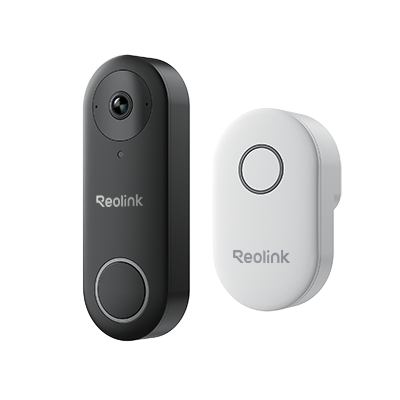
Smart 5MP Video Doorbell with Chime
5MP Super HD Day & Night, Person Detection, 2.4/5 GHz Dual-Band WiFi, 180° Diagonal Viewing Angle, Two-Way Audio, Rich Notification.
For Stable Wired Connection — Reolink Video Doorbell PoE
The Reolink Video Doorbell PoE is a high-reliability security solution that connects to a router or PoE switch via a single Ethernet cable for both power and data transmission. It supports continuous 24/7 local recording to an NVR or microSD card without requiring subscription fees.
-
Clear 2K+ Imaging: Captures high-resolution 5MP video and uses clear infrared night vision for round-the-clock entrance monitoring.
-
Interactive Features: Offers real-time push alerts, two-way audio, and customizable quick-reply voice messages for fast responses.
Smart 5MP Video Doorbell with Chime
5MP Super HD, Person Detection, Power over Ethernet, 180° Diagonal Viewing Angle, Two-Way Audio, High-Quality Night Vision.
For Flexible Wire-Free Installation — Reolink Battery Video Doorbell (2nd Gen)
The Reolink Battery Video Doorbell (2nd Gen) is a wire-free security solution powered by rechargeable battery that lasts up to 300 days of battery life. It features a 2K (4MP) head-to-toe 1:1 aspect ratio, giving you a full top-to-bottom view of visitors and doorstep packages.
-
HDR & Smart AI: High Dynamic Range (HDR) technology balances bright daylight and shadows, while AI detection tracks people, vehicles, and packages.
-
Smart Ecosystem Integration: Fully compatible with the Reolink Home Hub and smart home systems like Google Assistant and Amazon Alexa for hands-free control.
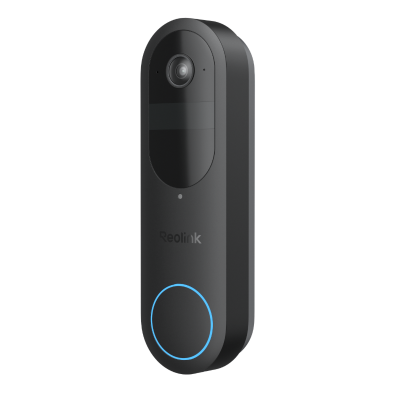
2K Battery Wi-Fi Video Doorbell with Smart Detection
- 2K 4MP Head-to-Toe View
- Person/Vehicle/Animal/Package Detection
- 300-Day Lasting Battery Life
- No Monthly Fees for Local Storage
FAQs
Do doorbell cameras have a monthly fee?
It depends on the doorbell camera you are using. Some require a monthly subscription, while others do not charge any fee. The Reolink doorbell cameras we have shared do not have any monthly fees or subscriptions.
What are the disadvantages of doorbell cameras?
Doorbell cameras require an internet connection to offer remote live feed and access. If there is an issue with the internet, they won’t work properly. Secondly, people have privacy concerns about the stored recordings and recording public/neighbor’s properties.
What activates a doorbell camera?
Doorbell cameras have a PIR sensor that detects the motion of objects. When motion is detected, the camera activates and begins recording.
Does a doorbell camera record all the time?
Doorbell cameras offer various recording modes to suit different needs. Continuous recording captures footage 24/7, allowing you to monitor all activity at any time. Motion-triggered recording activates only when movement is detected near the doorbell, helping conserve storage by focusing on key events. Scheduled recording lets you set specific times for the camera to operate. However, not all models support every mode.
Conclusion
Doorbell cameras are a kind of smart doorbell. They not only ring the chime but also record the video of the person and facilitate two-way communication. They have a built-in camera, microphone, and speaker. They also have storage to store videos. Users can view the live feed of their front door from anywhere and communicate with the person at the door through the app.
Search
Subscribe for the Latest Updates
Security insights & offers right into your inbox