






















































































































































Safest Cities in Montana: Ranked for 2026
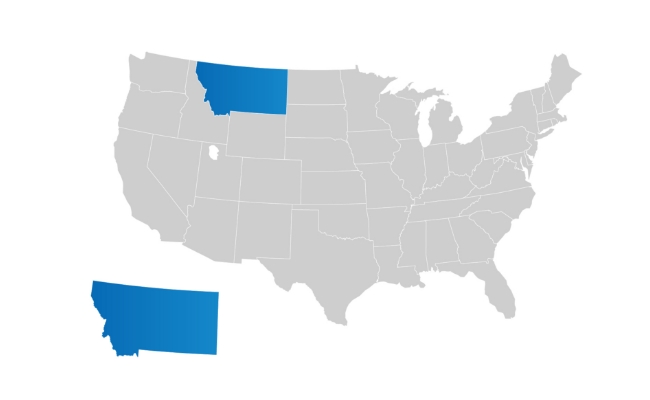
Montana has wide open spaces, rugged natural beauty, and small-town charm. Is the Treasure State safe for people seeking to settle down? In this article, we will look at the top safest cities in Montana, as they are based on recent crime data. Then, we will see which places have the lowest violent and property crime rates so you can pick from the safest cities to live in Montana.

🎉 Exclusive Limited-Time Security Deals
- Save Up to 50% on Bundles & Multi-Packs
- Official Anniversary Sale is live—shop now and save more!
Is Montana Safe?
Yes, Montana is overall a safe place to live, but it requires a bit of nuance.
It is safe from random crime: You are highly unlikely to be pickpocketed or caught in a random street mugging here. Property crime tracks well below national baselines.
The statistics are skewed by specific cities: If you look strictly at statewide math, Montana ranks in the bottom half of U.S. states for safety. This is driven almost entirely by localized issues with aggravated assault (often related to domestic disputes or bar fights) concentrated heavily in larger hubs like Billings or Great Falls.
Top 10 Safest Cities in Montana
The data for these updated rankings is pulled from localized municipal police logs, statewide reporting mandates, and professional safety analytics groups tracking crime metrics.
1. Colstrip
-
Violent Crime Rate: 0.0 per 1,000 residents
-
Property Crime Rate: 0.9 per 1,000 residents
Colstrip holds the absolute top spot as the safest town in Montana. With a population of just over 2,000 people, it routinely records zero violent crimes and only a handful of minor property offenses annually.
2. Baker
-
Violent Crime Rate: 2.2 per 1,000 residents
-
Property Crime Rate: 1.6 per 1,000 residents
Located on the eastern plains, Baker boasts incredibly low property crime that sits roughly 80% below national baselines. A highly engaged local police force and tight-knit neighborhood networks keep crime opportunities minimal.
3. Eureka
-
Violent Crime Rate: 1.8 per 1,000 residents
-
Property Crime Rate: 3.7 per 1,000 residents
Tucked away near the Canadian border, Eureka benefits from a steady, visible law enforcement presence. Severe crimes like burglaries or aggravated assaults are virtually nonexistent here.
4. Dillon
-
Violent Crime Rate: 4.2 per 1,000 residents
-
Property Crime Rate: 3.5 per 1,000 residents
Dillon features a highly unique safety profile: unlike most cities where property crime vastly outnumbers violent crime, Dillon sees them almost equal, though both track far below the Montana state average.
5. Conrad
-
Violent Crime Rate: 2.2 per 1,000 residents
-
Property Crime Rate: 6.8 per 1,000 residents
Conrad maintains high community visibility. The vast majority of its recorded offenses are low-level property infractions (like minor thefts), with violent incidents being extremely rare.
6. Stevensville
-
Violent Crime Rate: 2.3 per 1,000 residents
-
Property Crime Rate: 11.4 per 1,000 residents
As Montana’s oldest recognized settlement, this town south of Missoula keeps violent crime rates incredibly low thanks to strong school-and-community partnerships and a proactive local police presence.
7. Libby
-
Violent Crime Rate: 1.5 per 1,000 residents
-
Property Crime Rate: 7.6 per 1,000 residents
A massive success story in recent safety audits, Libby jumped significantly in the safety rankings after seeing year-over-year drops in both property and violent crime rates.
8. Glendive
-
Violent Crime Rate: 6.7 per 1,000 residents
-
Property Crime Rate: 9.2 per 1,000 residents
With a slightly larger population of nearly 5,000 residents, Glendive acts as an eastern commerce hub. Active police outreach programs keep serious criminal activity at bay, leaving the town safely under the state average.
9. Whitefish
-
Violent Crime Rate: 1.7 per 1,000 residents
-
Property Crime Rate: 11.1 per 1,000 residents
Despite experiencing a massive boom in tourism and seasonal population growth as a premier resort town, Whitefish has managed to keep violent crime suppressed to exceptionally low levels.
10. Columbia Falls
-
Violent Crime Rate: 2.7 per 1,000 residents
-
Property Crime Rate: 14.2 per 1,000 residents
Serving as a major gateway to Glacier National Park, Columbia Falls rounds out the top ten. It successfully manages high seasonal tourist traffic while maintaining safe, quiet residential neighborhoods
Quick List of Safest Cities in Montana
Key Takeaways:
- Colstrip stands out as Montana's safest community, recording no violent crime and less than one property crime per 1,000 residents.
- Baker and Eureka also report exceptionally low overall crime rates.
- Whitefish demonstrates that even high-tourism destinations can maintain very low violent crime.
- Columbia Falls and Stevensville remain among Montana's safest places despite higher property crime levels driven partly by tourism and population activity.
- Across all ten cities, violent crime rates remain well below national averages, making them attractive options for safety-conscious residents.
Crime Rate & Trends in Montana
When evaluating if Montana is a safe place to live, it is important to separate its peaceful reputation from actual crime data. Statistically, Montana presents a unique paradox: residents report feeling significantly safer than the average American, yet official data shows a complex picture regarding crime rates.
Real Crime Numbers vs. The National Average
Recent FBI uniform crime reporting data reveals that Montana does not follow standard national baselines:
-
Violent Crime: Contrary to popular belief, Montana's violent crime rate sits roughly 18% higher than the national average, with about 424 reported incidents per 100,000 residents. Crucially, 81% of these violent crimes are classified as aggravated assaults, frequently arising from domestic or interpersonal disputes rather than random violence against strangers.
-
Property Crime: Montana performs better in this category, tracking roughly 8% lower than the national average at 1,617 incidents per 100,000 residents. The vast majority of these offenses (nearly 80%) are non-violent larceny-thefts, such as shoplifting or unforced property theft.
Urban vs. Rural Divide
Safety in Montana is highly dependent on exactly where you live. Crime is not evenly distributed across the state:
-
Micro-Urban Clusters: The state’s higher crime averages are driven almost entirely by its largest commerce and metro hubs. Cities like Billings, Great Falls, and Helena experience higher rates of property crime and aggravated assault due to higher population densities and localized economic strains.
-
Rural Safety: In sharp contrast, Montana’s small towns and rural counties boast some of the lowest crime metrics in the country. Small, community-oriented municipalities like Libby, Colstrip, and Baker consistently report near-zero violent crime rates, offering exceptionally secure environments for families.
Most Dangerous Areas to Avoid in Montana
1. Wolf Point
Wolf Point consistently records the highest violent crime rate per capita in Montana, tracking at over 1,300 incidents per 100,000 residents.
Located on the Fort Peck Indian Reservation in northeastern Montana, this small town struggles heavily with localized aggravated assault. The crime here is rarely random; it is deeply tied to long-standing socioeconomic challenges, generational poverty, and substance abuse issues within the community.
2. Billings (Downtown & South Side)
As Montana's largest city and major commerce hub, Billings records the state’s highest total volume of crime, featuring a violent crime rate of roughly 888–929 incidents per 100,000 residents and property crime clearing 4,000 per 100,000.
Because Billings sits at the crossroads of several major interstate highways, it acts as a transit corridor, which correlates with elevated rates of property theft, vehicle break-ins, and drug trafficking. The South Side and specific pockets of the immediate downtown area at night see the highest concentration of these offenses.
3. Polson
Despite its idyllic location on the southern shore of Flathead Lake, Polson ranks third statewide in both violent crime (~868 per 100,000) and property crime (~3,882–4,531 per 100,000).
Polson experiences a severe version of "hot-spot tourism." During peak summer months, a massive influx of seasonal visitors stretches local law enforcement thin, creating opportunities for opportunistic larceny, shoplifting, and alcohol-fueled physical altercations.
4. Havre
Located along Montana’s northern "Hi-Line" near the Canadian border, Havre reports the highest property crime rate in the entire state, peaking near 4,959 incidents per 100,000 residents.
Stagnant local economic conditions and its role as a regional trading post drive a disproportionately high rate of non-violent property offenses, including burglary, commercial vandalism, and petty theft.
5. Great Falls
Great Falls routinely tracks as a statistical hot spot, averaging a high property crime rate (~4,675 per 100,000) and elevated aggravated assault rates.
Like Billings, its layout features sprawling retail and busy commercial hubs that naturally attract retail theft and vehicle break-ins. Local authorities note that violent crimes here are heavily dominated by domestic and interpersonal disputes rather than random street crime.
6. Helena (Downtown Central)
The state capital features a crime rate of roughly 3,090 per 100,000 residents, driven by roughly 755 violent crimes and 3,210 property crimes per capita.
For a town of roughly 33,000 people, Helena struggles with property crime and vehicle thefts that cluster around its central urban core, government complexes, and immediate surrounding neighborhoods.
Safety and Security Tips for Living and Visiting Montana
Montana is generally a very peaceful state, but its sprawling geography and rural landscapes introduce unique security challenges. Because homes are often far apart and emergency response times in rural counties can be longer than in urban areas, a proactive approach to property security is essential.
1. Secure Outbuildings and Ranches
Many Montana properties feature detached structures like equipment sheds, barns, or workshops that house expensive machinery, tools, and off-road vehicles. These are often out of direct sight of the main house.
Upgrade all outbuilding entryways with high-grade, weather-resistant deadbolts and heavy-duty padlocks. Ensure that detached garages and perimeter gates are consistently locked, even when you are on the property.
2. Safeguard Seasonal and Vacant Properties
Cabins and vacation homes across resort areas like Whitefish or Flathead Lake often sit vacant for months at a time during the off-season, making them soft targets for opportunistic property crime.
Do not leave valuables visible through ground-floor windows. Install interior timer lights to simulate occupancy, and rely on motion-activated outdoor lighting to eliminate dark blind spots around the perimeter.
3. Implement Self-Reliant Smart Surveillance
Because local sheriff departments handle massive territorial jurisdictions, relying entirely on a third-party alarm company to dispatch help may not prevent a crime in progress. A system that allows you to see exactly what is happening in real-time gives you the power to handle the situation immediately.
Invest in high-definition outdoor security cameras that offer smart human and vehicle filtering to eliminate annoying false alerts caused by wandering local wildlife (like deer or bears).
High-Value Security Recommendation
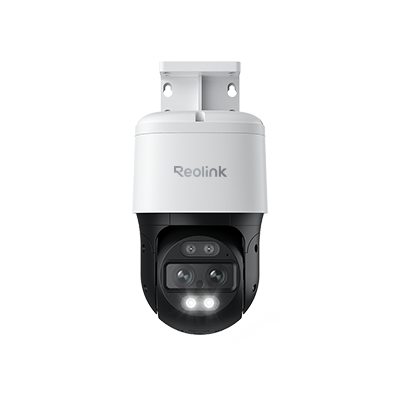
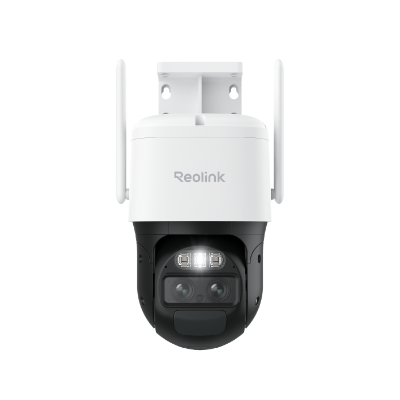
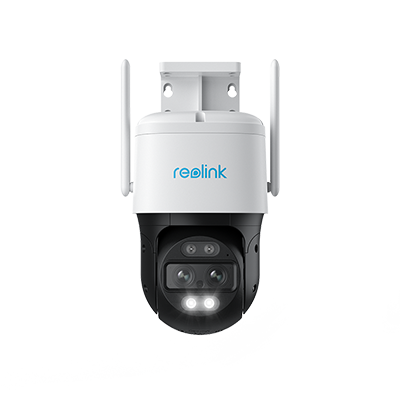
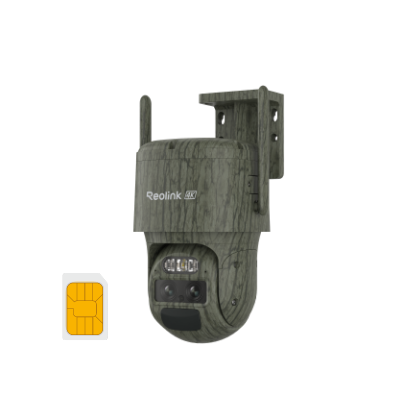
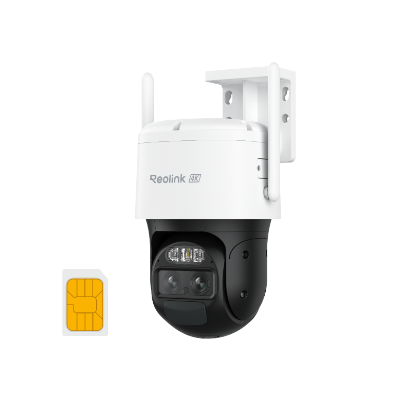
If you need to monitor remote areas of your property—such as a long driveway, a detached barn, or a cabin without an accessible outdoor power outlet—traditional battery cameras fall short because they only record after detecting motion, often missing the start of an event.The Reolink Altas PT Ultra completely redefines wire-free security. Powered by a massive 20,000 mAh battery, it is the industry’s first battery-powered camera capable of utilizing a 10-second pre-recording buffer so you never miss a critical moment. Combined with ColorX technology, it delivers bright, full-color nighttime video without needing a visible spotlight that would give away its location, keeping your property secure subscription-free.

Industry-leading 4K Continuous Recording Battery Camera
4K UHD Continuous Recording; ColorX Night Vision; Pan & Tilt; Automatic Tracking; All Recordings Stored Locally.
4. Practice Vehicle Smart Awareness
Whether you are parking at a remote hiking trailhead near Glacier National Park or in a downtown lot in Billings, vehicle break-ins are predominantly crimes of opportunity.
Never leave firearms, electronics, or expensive outdoor gear exposed in your vehicle. Lock your doors, roll up windows completely, and consider recording the serial numbers of valuable gear in case of theft.
5. Build Local Community Networks
In big sky country, your closest neighbor might be half a mile down the road, making them your most valuable security asset.
Establish a casual communication network or neighborhood watch group with nearby residents. Knowing who belongs on the local backroads—and who doesn't—makes it incredibly easy for communities to look out for one another's properties.
FAQs
Which city in Montana has the lowest crime rate?
Whitefish has the lowest rates of both violent crime (79 per 100,000 people) and property crime (1,518 per 100,000) in Montana. Its remote location deters criminal activity.
What is the most crime-ridden city in Montana?
Billings has the highest rates of violent crime (580 per 100,000) and property crime (4,052 per 100,000) among Montana cities. However, its crime rates are still well below national averages.
What are the disadvantages of living in Montana?
Potential downsides of living in Montana include long winters, lack of public transportation in rural areas, and limited job opportunities depending on location and industry. The state also has a limited number of large cities for those who prefer urban living.
Conclusion
Montana is one of the safest places to live in the United States with its wide open wilderness, low population density, and community-oriented culture. Big Sky Country has both violent and property crime rates, which are well below national averages. In most other parts of the country, small cities are safer than urban areas, and small rural farming and ranching towns scattered across the state have extremely low crime rates. Montana residents can live in an environment with little crime when they take basic security precautions.
Search
Subscribe for the Latest Updates
Security insights & offers right into your inbox