
Lumens vs. Watts: Which Matters More for LED Lighting?
To choose light bulbs, LED technology has transformed the way things are done. For years, we have been told by watts the brightness of the bulb. Watts indicate the amount of energy that a bulb consumes, and lumens indicate the amount of light that the bulb gives out. This change can come as a sticking point when buying lights.
The understanding of lumens vs watts can assist you in getting the right bulb for your home. This article describes their functions, the differences between them, and how to convert lumens to watts.
Lumens vs. Watts: Understanding the Basics
Watts and lumens play different roles in lighting. Let’s start with the basics.
What are lumens?
Brightness is defined in lumens (lm). The presence of a larger number of lumens implies a brighter bulb. To get bright light, search for higher lumens. To take an example, an ordinary LED bulb that substitutes a 60W incandescent might have an output of 800 lumens. Nowadays, the idea of a lumen revolves around the effects that the light will have on your area. They do not give you the price of running the bulb.
What are watts?
Watts (W) are units of measure of energy. They demonstrate the amount of strength that a bulb consumes. Old incandescent lights required higher watts to be brighter. The same quantity of electric power resulted in more light produced by a 100W incandescent bulb than the 40W bulb due to that connection. LEDs break this law. One of the LED bulbs has a capacity to produce 1600 lumens with only 15-20 watts (as compared to 100W with an incandescent bulb). Watts have gone the way of cost and heat, not brightness.
Watts vs. Lumens: What’s the Difference?
A watt is an expression of the amount of power that a bulb draws. A lumen gives an indication of how much light is provided by the lumen. This is the basic watts vs lumens LED difference.
An example of a 60W incandescent: 60 watts supplies 800 lumens. With eight to 12 watts, an LED bulb with 800 lumens could be used. LED bulbs having the same watts (e.g., two 10W bulbs) may have different lumens (e.g., one at 800, and one at 1100). This reveals that watts are not as such equal to brightness; Lumens do.
Outdated bulbs linked up the light and power. LEDs disconnected that connection. They produce the same or greater light with lower energy. This reduces the usefulness of watts to estimate the brightness. Lumens are the most important measurement today.
Lumens vs. Kelvin vs. Watts: Comparison Chart
Bulbs list three terms: lumens (brightness), Kelvin (color tone), and watts (power use). Here’s a simple comparison table:
Lumens vs. Watts LED: Which Is More Important?
In the case of LEDs, the center of attention is lumens. Why? Watts no longer tell you the brightness. Two LED bulbs of 10W can be different in lumens (800 vs 1200). Assess your requirement of lumens and then pick it. The Watts only influence the amount of money that you pay to use energy.
Comparing old bulbs, a 15W fluorescent produces around 900 lumens. An LED 15W lamp may output 1200 lumens. Both of them use the same power, but the LED light is brighter. This gap has improved in technology. LEDs use less power to make more light.
This can also be seen in even dimmable LEDs. When dimmed, 1600 may get dropped to 800 lumens. Its wattage will read lower as well, but the brightness alteration is what you feel. These 50W halogen and 15W LED bulbs can be exactly identical when mounted in a socket. The LED beats it after you have switched it on.
Lumens to Watts Conversion Guide
LED efficiency lets you trade watts for lumens. Here’s how to match replacements:
- 450 lumens ≈ 40-watt incandescent: To mimic a 40W incandescent’s 450 lumens, LED bulbs use 5–7 watts.
- 800 lumens ≈ 60-watt incandescent: A 60W incandescent gives 800 lumens. LEDs match this with 8–12 watts.
- 1100 lumens ≈ 75-watt incandescent: Old 75W bulbs gave 1100 lumens. LEDs hit that level with 10–15 watts.
- 1600 lumens ≈ 100-watt incandescent: A 100W bulb yields 1600 lumens. LEDs use 15–20 watts to reach that brightness.
- 2600 lumens ≈ 150 watt incandescent: 150W filaments hit 2600 lumens. LEDs match this with 18–25 watts.
Watts vs. Lumens: How to Choose the Right Light Bulb
The selection of a proper light bulb means matching the watts and lumens to the type of room and the devices in the room. Start by evaluating the purpose and size of the space.
- In bedrooms, use 800 to 1100 lumens per bulb to produce a relaxing environment. Use low-watt LEDs, 10 to 15 watts, to keep power consumption low. Dimmers provide control of bedtime reading.
- In kitchens, consider 1600 lumens or greater in the counters. This will make cooking safe. Install 15 to 20-watt LEDs to complete tasks that do not result in high bills. This level is beneficial for overhead fixtures.
- Living rooms require flexible lighting. Use 800-lumen bulbs in general areas and brighter ones where reading is involved. Stay at 10-watt LED lights, and look at smart lights that turn on and off automatically.
- Bathrooms must have a lot of light. Use 1100 to 1600 lumens in the area around mirrors to prevent shadows. 12 to 18 watts of LEDs are effective, particularly in wet areas where they are moisture-proof.
- In offices or studies, use 1600 lumens to ease eye strain. Long hours are supported by low-watt LEDs, 15 to 20 watts. This is augmented by task lamps with narrow beams.
- For outdoor surveillance, 2,500–4,000+ lumens ensures wide, bright coverage. If you use security cameras with built-in lights, 700–2,000 lumens is typically sufficient.
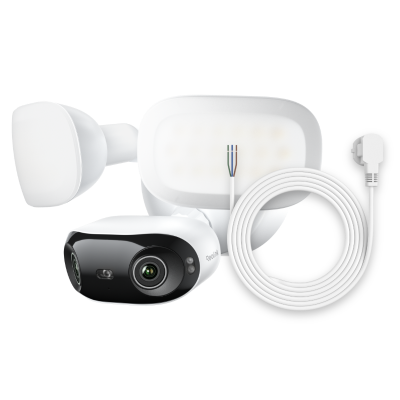
4K 180° Ultra-Wide Wired Floodlight Security Camera
3000-Lumen Dimmable Lighting, Adjustable Color Temperature, Local AI Video Search, Local Storage, Dual-Band Wi-Fi 6.
FAQs
How much is 1000 lumens in watts?
A 1000-lumen LED has a power of 8.15 watts. This depends exactly on the efficiency of the bulb. There are LEDs that have 1000 lumens of light at 10 watts and others 14 watts. Note that manufacturers or claims are higher efficiencies (less than 100W of incandescents are more than 100W to reach 1000 lumens). In task lighting, such as a desk lamp, this range of watts is adequate without the expense of blisteringly high costs to light up.
How many lumens is a 60 watt light bulb?
The typical 60W incandescent bulbs produce 800 lumens. With less power (812W), LEDs can produce the same light intensity as, or greater than, the fluorescent bulbs. The conversion to LEDs translates to low energy costs. A 60W incandescent bulb can only last 1000 hours, whereas an 800-lumen LED could last 25000 hours. Watt markings on old bulbs are replaced with lumen markings.
How many lumens is a 100 watt bulb?
There are 1600 lumens behind 100 of the power rating. This intensity is bright when placed in big rooms or workstations. The LEDs can serve 1600 lumens and remain below 20 watts. In the longer term (e.g., 5 years), select the LED and save almost $100 in energy costs. Where you want to use fixed fixtures such as downlights in the living room, change to 15-20W LEDs instead of 100W incandescents. They illuminate without the use of fire using electricity.
Is 800 lumens the same as 60 watts?
800 lumens would be equivalent to a 60W incandescent lamp. However, LEDs reaching 800 lumens consume 8 to 12 watts. Watts once foretold brightness. They now only counter energy consumption. Simply, the same watts do not mean the same brightness. One 10W LED bulb can be located next to another. One would provide 800 lumens, and the other 1200. Do the lumens and then the wattage.
Conclusion
Lumens determine brightness, whereas watts determine the use of energy. LEDs have quenched the ancient relationship between watts and light energy. A bulb is not rated by watts in most instances, but by how much power it draws to make you feel as though it is bright enough. Moving to using lumens will guarantee that you receive the acuity required.
Do tell us what you think. What was the benefit, or detriment, of switching to lumen-based bulbs to your choice of lighting or energy costs? Share your experience below.
Search
Subscribe for the Latest Updates
Security insights & offers right into your inbox