
Best Home Security Systems for Military Families 2026: Renter & PCS Guide
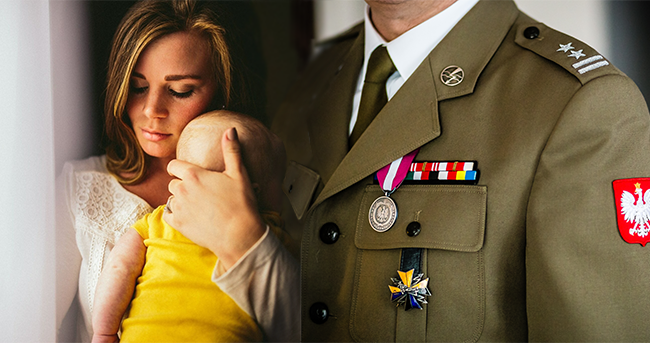
The best home security camera system for military families depends on your current housing setup, how frequently you relocate, and what level of remote access you need during deployments. Because military life introduces unique variables like base housing restrictions, frequent PCS moves, and long-distance check-ins, there is no single "best" camera that fits every family.
Finding the right setup means matching your specific deployment scenario to features like easy portability (no-drill mounts), flexible power sources, and reliable storage options that won't lock you into unexpected monthly contracts.
- Why Military Families Need a Reliable Home Security System?
- What Are Common Types of Home Security Cameras and Systems for Military Families?
- 5 Key Features to Look for in the Best Security Camera for Military Family
- 3 Best Security Cameras and Systems for Military Families
- Buyer's Decision Table for Military Families
- 5 Useful Security Tips for Military Families at Home
- FAQs
- Conclusion
Why Military Families Need a Reliable Home Security System?
Stay Connected During Deployments
For military families, a home security system is not just about recording footage. It gives deployed service members and their families a way to check on the home, receive alerts, and stay informed from anywhere.
The biggest need is reliable remote visibility. Whether a spouse is home alone, the family is away from base housing, or the service member is overseas, real-time app access makes it easier to see what is happening at the front door, driveway, backyard, or entry points.
Easy to Move During PCS Relocations
Military families often move every few years, so a fixed, hardwired security system may not be the best fit. In base housing, rentals, or temporary homes, drilling holes, running cables, or signing long installation contracts can create extra problems when it is time to relocate.
That is why portability matters. Battery-powered, wire-free, or easy-to-install security cameras are often more practical for PCS life. They can be set up quickly, moved from one home to another, and removed without leaving damage behind.
For many military households, the ideal system is one that works like the family does: flexible, portable, and ready for the next move.
Avoid Monthly Fees and Surprise Costs
Military families often need predictable expenses, especially during deployments, relocations, or transitions between duty stations. A security system with hidden subscription fees can become frustrating if basic features like video playback, cloud storage, or recorded footage require an extra monthly payment.
A local storage system helps avoid this issue. Cameras that save footage to a microSD card, NVR, or local storage hub allow families to keep recordings without relying on paid cloud plans. This can be especially useful for families who want long-term monitoring, better privacy, and fewer recurring costs.
For military families, a reliable home security system should protect the home without adding another unpredictable bill.
What Are Common Types of Home Security Cameras and Systems for Military Families?
Choosing the right security setup depends on how your family manages relocation and housing modifications. Security systems are best categorized by their power source and connectivity, as these factors determine how easy the system is to install, move, and maintain.
1. Battery-Powered & Wire-Free Cameras
Battery-powered security cameras run entirely on rechargeable batteries, requiring no wires, no drilling, and a 20-minute setup. They are the ideal choice for military families living in base housing or renting off-base.
Because they require zero structural setup to a property, wire-free cameras can be mounted using temporary adhesive or magnetic brackets. This makes them highly portable for frequent PCS moves—you can simply take them down, pack them in a box, and deploy them at your next station in minutes. Some models can also be paired with a small solar panel for self-sustaining power, reducing maintenance while you are deployed.
2. Plug-In Wi-Fi Cameras (Indoor)
Indoor plug-in cameras connect to a standard wall outlet for continuous power and use your home Wi-Fi network to stream footage. They are best used for monitoring main living areas, nurseries, or entry points from the inside.
These desktop or wall-mount cameras provide a reliable way for deployed service members to check in on their family or pets via two-way audio. Since they don't rely on batteries, they offer consistent monitoring without any upkeep, making them a low-maintenance, highly portable indoor security option.
3. PoE (Power over Ethernet) Wired Systems
Power over Ethernet (PoE) systems use a single network cable to provide both power and internet connection to each camera, running directly back to a central Network Video Recorder (NVR). This setup is best for military families who own their permanent home and require 24/7 continuous recording.
While PoE systems require running cables, they provide a reliable network connection that cannot be dropped or jammed like Wi-Fi signals. The cameras feed directly into a local NVR system, giving you complete privacy and massive local storage capacity without tying up your home's internet bandwidth during long-distance remote streaming.
5 Key Features to Look for in the Best Security Camera for Military Family
The best security camera for a military family should be easy to move, simple to manage remotely, and reliable enough to protect the home during deployments or PCS transitions.
When comparing options, focus less on flashy features and more on what actually helps in military life: remote access, flexible installation, smart alerts, local storage, and dependable recording.
1. AI-Powered Smart Detection
Basic motion detection triggers false alerts from shifting shadows or pets. For a deployed service member, AI-powered detection ensures you are only notified of real events like an approaching person, vehicle, or package.
Basic cameras use simple PIR sensors, which frequently send dozens of false alarms a day due to trees blowing in the wind. This can cause unnecessary stress during long-distance deployments.
Look for cameras featuring on-board AI algorithms that accurately distinguish human forms, vehicles, and delivery packages. This keeps alerts actionable and keeps your mind at ease.
2. High-Capacity Local Storage (No Monthly Fees)
Cloud storage locks your footage behind recurring monthly fees. Local storage via a microSD card or an NVR saves your footage on-site securely with full privacy and zero subscriptions.
Frequent relocations mean your household budget needs to stay predictable. Opting for a system built around local storage allows you to own your data outright. Systems designed around an NVR (Network Video Recorder) allow for continuous 24/7 recording from multiple cameras without eating up your home's internet bandwidth.
Note: Certain local recording setups, such as those from Reolink, are built specifically to offer long-term local storage with full features and absolutely no mandatory monthly subscription fees.
3. Clear Night Vision (Infrared and Color)
Intrusion risks increase after dark, making night vision quality essential. A reliable system must offer a mix of discreet infrared and high-visibility spotlight options.
To maintain true situational awareness across different time zones, look closely at the camera's low-light specifications:
-
Infrared (IR) Night Vision: Works in complete darkness, producing crisp black-and-white footage without drawing attention to the camera itself.
-
Full-Color Night Vision: Uses low-light ambient sensors to keep footage in full color even in poorly lit environments.
-
Spotlight Night Vision: Activates a bright built-in LED light when motion is detected, acting as an active visual deterrent while illuminating the area.
4. Direct Two-Way Audio
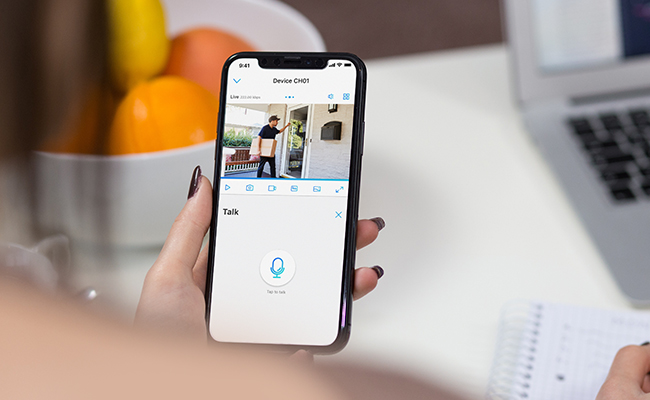
Two-way audio allows a family member to speak directly through the camera to visitors, delivery drivers, or loved ones at home.
A built-in microphone and speaker transform a camera from a passive recording device into an active communication tool. Whether it's telling a delivery driver where to leave a package at the front door, or checking in on main living spaces from a base overseas, two-way audio helps bridge the physical gap of deployment.
5. Multi-User Access and Remote Sharing
A military security system must allow multiple users to log into the same camera network simultaneously across different global locations.
The system's mobile app should support smooth multi-user permission sharing. This allows the spouse handling the home front to receive instant push alerts locally, while the deployed service member can seamlessly log in from a smartphone or tablet thousands of miles away to review historical footage or view live streams without disrupting the system's home-base performance.
3 Best Security Cameras and Systems for Military Families
1. Best for Frequent PCS Moves: Wire-Free Battery Ecosystem
Frequent Permanent Change of Station (PCS) moves demand highly portable, zero-drill hardware. A completely wire-free, battery-powered camera model allows you to pack up your entire security setup and redeploy it at your next base housing assignment in minutes.
Military families living in base housing or off-base rentals are restricted from drilling holes, running complex wiring, or leaving permanent property modifications.
Wire-free models mount using heavy-duty temporary adhesives or magnetic brackets. They operate on independent rechargeable batteries and can be enhanced with compact solar panels for self-sustaining power, ensuring your perimeter stays monitored with zero physical footprint or landlord pushback.
Highly adaptable, wire-free configurations featuring long-lasting battery runtimes and full smart detection features are available within the Reolink Argus Series.
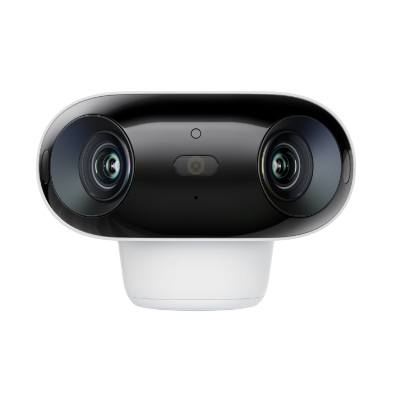
4k 180° Wire-free Color Night Vision Camera
4K UHD 180° Blindspot-free View; Color Vision Day and Night; 30% More Battery Life; Dual-band Wi-Fi 6; Smart detection.
2. Best for Routine & Neighborhood Watch: Video Doorbell System
Monitoring daily property arrivals and checking on the front door from across the globe is essential during deployments. A dedicated video doorbell bridges the distance, offering wide-angle views and targeted visitor tracking.
A deployed service member needs a reliable window into daily life at home—such as checking package deliveries, screening unexpected visitors, or tracking local neighborhood activity—without being overwhelmed by false alerts from passing vehicles.
Doorbell cameras specialize in front-porch situational awareness, providing an ultra-wide field of view and integrated two-way audio that lets you speak to visitors from any time zone. By pairing the hardware with onboarding AI algorithms, the camera filters out environmental noise and only triggers alerts for actual human visitors or package arrivals.
Front-door security setups designed around widefields of view, high resolution, and active two-way audio are standard features in Reolink Video Doorbells.
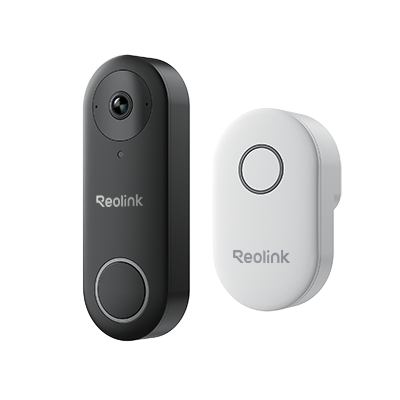
Smart 5MP Video Doorbell with Chime
5MP Super HD Day & Night, Person Detection, 2.4/5 GHz Dual-Band WiFi, 180° Diagonal Viewing Angle, Two-Way Audio, Rich Notification.
3. Best for Continuous Recording: PoE Wired NVR System
Permanent homes require robust, uninterrupted surveillance that doesn't bottleneck your home internet. A Power over Ethernet (PoE) system running to a dedicated Network Video Recorder (NVR) delivers secure, 24/7 recording with maximum local storage capacity.
Standalone Wi-Fi cameras rely entirely on local network stability and only record short, motion-triggered clips. For complete peace of mind over a large permanent property, military families need a hardwired solution that captures every single second of footage continuously.
PoE model drives power and high-speed data through a single network cable plugged directly into a centralized hardware recorder. This creates a closed, highly secure local environment that saves weeks of 4K UHD footage locally onto a hard drive, bypassing data-privacy concerns and freeing up home internet bandwidth for family video calls during deployment.
Professional-grade hardware kits built for continuous local tracking and expandable channel storage are fully realized in specialized Reolink PoE NVR Systems.
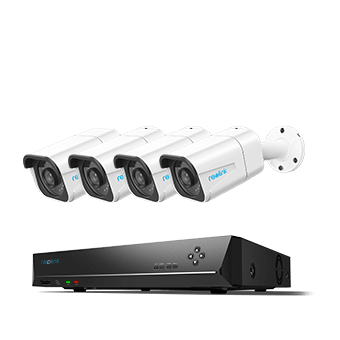
4K 8-Channel PoE Security System
4 pcs 4K Ultra HD Security Cameras; 2TB HDD 8-Channel NVR for 24/7 Recording; Person/Vehicle Detection; Plug & Play; 2 Network Solutions.
Buyer's Decision Table for Military Families
5 Useful Security Tips for Military Families at Home
Deployments and frequent relocations introduce unique vulnerabilities to a household. Beyond deploying a reliable camera network, establishing these five low-maintenance security habits ensures your property remains a hard target while your family is separated.
1. Harden All Physical Entry Points
Over a quarter of home break-ins occur through unsecured doors or windows. Securing primary access points with physical reinforcement is your first line of defense before any camera system triggers an alert.
Ensure all exterior doors use a high-quality deadbolt with a minimum one-inch throw. For frequent movers renting off-base or living in temporary housing, you can easily install heavy-duty, 3-inch screws into the existing strike plates of your doors to prevent kick-ins without violating property modification rules.
2. Maintain Clear Lines of Sight (Landscape Management)
Overgrown trees and bushes create natural blind spots that shield intruders from view. Keeping foliage trimmed removes hiding spots and maximizes your security cameras' effective viewing angles.
Walk your property line to look for vulnerable spots. Ensure bushes near windows are trimmed down to a maximum height of three feet, and tree branches are pruned up to at least seven feet from the ground. This "three-seven" rule ensures that neighbors, passing patrols, and your outdoor security cameras have an unobstructed view of your yard.
3. Establish a Trusted Local Support Network
A neighborhood support network bridges the gap when a service member is overseas. Securing your home means knowing who to contact locally in an immediate emergency.
Before a deployment begins, identify a trusted neighbor or a local military spouse who can keep an eye on your property. Share your emergency contact info and deployment timeline with them, but keep the details private from general acquaintances. Additionally, locate your closest first responders and map out the quickest routes to the nearest base security office or local police station.
4. Implement a Strict Social Media Blackout
Publicly sharing deployment timelines or posting about being home alone invites targeted risk. Restricting what you share online is critical to keeping your household safe.
Never post countdown clocks, specific deployment dates, or location check-ins on platforms like Facebook, Instagram, or community forums. Even localized family support groups can occasionally be viewed by outsiders. Wait until your service member has safely returned home before uploading photos or sharing stories about their time away.
5. Check Real-Time Community Insights
Real-world feedback about military housing forums reveals that local crime patterns change rapidly. Monitoring neighborhood platforms keeps you ahead of localized risks.
Based on community feedback from military housing forums on Reddit, families frequently note a rise in targeted vehicle break-ins right around major unit deployment dates.
Use localized neighborhood apps or base community pages to track recent local activity patterns.
If your security system flags an unfamiliar person or unexpected delivery vehicle lingering near your property, you can instantly check your live feed or look through historical recordings to verify their intent.
FAQs
What is the best security camera system for military families?
The best security camera system for military families is one that is easy to install, supports remote viewing, and can move with the family during PCS relocations. For most military households, a DIY system with smart alerts, local storage, and no required monthly fee is more practical than a permanent hardwired setup.
Do military families need a DIY home security system?
Yes, a DIY home security system is often a good choice for military families because it is easier to install, remove, and reuse after a move. This is especially helpful for families living in base housing, rentals, or temporary homes where drilling or permanent wiring may not be allowed.
What security camera features matter most during deployment?
Remote access, real-time alerts, AI detection, and reliable recording matter most during deployment. These features allow deployed service members and family members at home to check live footage, receive important alerts, and review events from anywhere.
Are wireless security cameras good for military housing?
Wireless security cameras can be a good fit for military housing because they are flexible and usually easier to install without major modifications. Battery-powered or wire-free models are especially useful when drilling holes or running cables is not allowed.
Conclusion
Securing your home during deployments and frequent relocations does not require complex contracts or permanent property damage. By matching your military family's specific housing setup to the right hardware framework—whether that means a zero-drill battery camera for base housing, a smart doorbell for porch monitoring, or a hardwired PoE system for permanent local storage—you can maintain complete visibility over your property from any station worldwide.
Focus on finding the right balance of portability, smart AI alerts, and subscription-free storage to keep your household secure without unexpected expenses.
If you have navigated a PCS move or deployment using these setups, let us know which features made the biggest difference for your family in the comments below!
Search
Subscribe for the Latest Updates
Security insights & offers right into your inbox