
Garage Door Security Guide 2026: 10 Tips for a Safer Garage
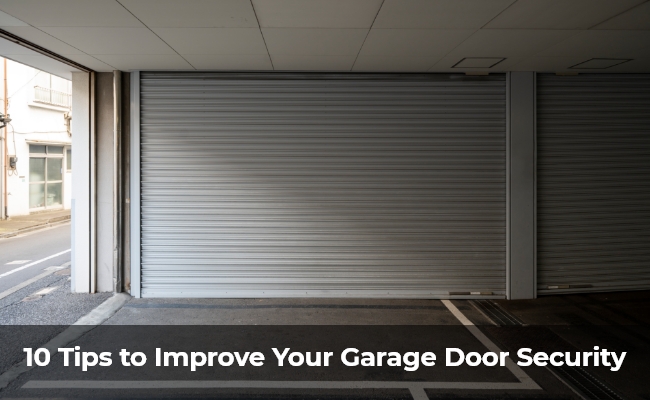
Learning how to secure garage door entry points is critical to overall home security, as garages often store high-value vehicles and equipment while serving as a primary target for break-ins.
Unlocked tracks, outdated remote openers, unshielded emergency release cords, and weak interior access doors frequently make garages the most vulnerable entry point into a home.
Securing a garage effectively requires a layered strategy that combines physical hardware reinforcement—such as track locks and emergency release shields—with controlled digital access, motion-activated floodlights, and smart surveillance monitoring. This guide breaks down 10 practical methods to eliminate vulnerabilities, upgrade your access points, and build a reliable defense system for your garage.
Key Takeaways:
-
The best way to secure a garage door is to use layered protection, combining physical reinforcement, controlled access, lighting, and active monitoring.
-
Keep the garage door fully closed and locked, and use smart alerts or auto-close settings to reduce the risk of accidentally leaving it open.
-
Reinforce weak entry points with stronger locks, secure tracks, upgraded door hardware, and a properly secured interior door between the garage and home.
-
Improve visibility and deterrence with frosted windows, motion-activated floodlights, and security cameras covering driveways and access points.
-
Match your security setup to your garage type: attached garages need strong interior-door protection, while detached or unwired garages may benefit more from wireless or cellular monitoring.
-
Regularly inspect your garage from an intruder’s perspective to identify blind spots, weak hardware, exposed valuables, or gaps in lighting and camera coverage.
- What Are the Most Common Garage Security Risks?
- What Makes a Garage Door Secure?
- How to Secure Garage Door: 10 Effective Ways
- How to Secure Your Garage Door From the Inside?
- How to Secure Your Garage Door From the Outside?
- Best Garage Security Setup for Different Situations
- Best Reolink Cameras for Garage Security
- FAQs
- Conclusion
What Are the Most Common Garage Security Risks?
Garages are frequently targeted by intruders because they house valuable property and often serve as an unmonitored entry point into the main home. Most vulnerabilities stem from physical design flaws and daily operational oversights rather than complex break-in techniques.
Below are the six most critical security risks associated with residential garage doors:
1. Left-Open or Partially Ajar Doors
Leaving a garage door open—even for short periods—exposes high-value tools, vehicles, and home access points to passing view.
Homeowners frequently forget to close the garage door after running errands or performing yard work. An open door provides total visibility into stored belongings and gives intruders direct, unhindered access to interior entry doors.
2. Emergency Release Cord Compromise
The manual emergency release cord on automatic garage door openers can be bypassed from the outside using a simple coat hanger.
By slipping a stiff wire through the top weather seal of a garage door, an intruder can hook and pull the emergency release lever. This disengages the motorized trolley from the drive track, allowing the door to be manually lifted open silently in seconds.
3. Outdated Openers and Fixed Remote Frequencies
Older garage door openers manufactured before the late 1990s use fixed code frequencies that are easily intercepted or duplicated.
Legacy systems use static dip-switch configurations that transmit the exact same radio signal every time you press the remote. Intruders using basic code-grabbing devices can record this frequency from the street and replay it to open your garage door.
4. Poor Perimeter Lighting Around Entrances
Dimly lit garage driveways and side alleys provide physical cover for intruders attempting to force open doors or windows.
Dark perimeters allow unauthorized individuals to inspect garage handles, test side-door locks, or tamper with tracks without being noticed by neighbors or street traffic.
5. Vulnerable Side Pedestrian Doors
Secondary side or rear garage doors are often constructed with flimsy hollow-core panels and low-grade deadbolts.
Because side doors are usually hidden behind fences or foliage, intruders target them to avoid visual detection from the street. Weak wooden frames and basic latch locks can be easily kicked in or levered open with a crowbar.
6. Lack of Active Visual Monitoring
Operating a garage without security cameras or door sensors leaves property owners unaware of unauthorized entry attempts.
Without active surveillance, suspicious activities—such as individuals checking garage handles or tampering with lock mechanisms overnight—occur without generating visual evidence or real-time alerts.
What Makes a Garage Door Secure?
A secure garage door should protect against more than forced entry. The strongest setup combines four layers of protection: physical strength, controlled access, visibility, and monitoring.
-
Physical security: Strong locks, reinforced hardware, secure tracks, and a solid door make it harder to force the garage open.
-
Access security: Modern garage door openers, updated locks, and secure entry controls help prevent unauthorized access and reduce the risk of someone opening the door without permission.
-
Visibility and deterrence: Covered windows and motion-activated lighting make it harder for intruders to see valuables or approach the garage unnoticed.
-
Detection and monitoring: Security cameras, motion alerts, and smart notifications help you spot suspicious activity early and provide recorded evidence if an incident occurs.
The most effective garage security combines all four layers rather than relying on a single lock, opener, or camera.
How to Secure Garage Door: 10 Effective Ways
1. Keep Your Garage Door Closed and Locked at All Times
Always lock your garage door immediately after entering or exiting, even when working nearby in the yard or living in a low-crime neighborhood.
Leaving a garage door open for even a few minutes exposes stored vehicles, high-value tools, and interior entry doors to passersby on the street. Intruders often take advantage of momentary distractions—such as stepping into the backyard to water the lawn or taking a quick phone call—to quickly grab exposed equipment or assess the home's entry points.
Get into the routine of checking that the garage door is completely closed before stepping away from the driveway, or install a smart door sensor configured to notify your phone if the door remains open past a set time limit.
2. Upgrade to a Smart Garage Door Opener
Installing a smart garage door opener allows you to monitor, open, and close your garage door remotely from anywhere using a smartphone app.
Smart controllers replace traditional fixed-frequency remotes with encrypted digital access, providing real-time visibility into your garage's security status. If a door is forced open or left open past a specified time limit, the system sends an instant push notification directly to your phone.
-
Remote Operational Control: If you leave for work and realize you forgot to shut the garage door, you can verify its status and close it in seconds from your phone without driving back home.
-
Automated Scheduling: Set custom auto-close rules (e.g., automatically closing and locking down the opener system every night at 10 PM) to ensure your garage is never accidentally left open overnight.
-
In-Garage Delivery Integration: Many smart openers integrate with secure delivery services, allowing couriers to drop packages inside your garage safely rather than leaving them exposed on your front porch.
3. Cover or Frost Garage Windows to Block Interior Visibility
Covering or frosting garage windows prevents potential intruders from scoping out high-value equipment, assessing stored vehicles, or seeing whether anyone is home.
Exposed windows allow individuals on the street to catalog stored bicycles, power tools, and lawn equipment. Additionally, visible empty parking bays signal to burglars that the home is currently unoccupied.
-
Frosted Window Films: Applying translucent or frosted window film allows natural sunlight to filter into the garage while obscuring the interior view from the outside.
-
Opaque Shades and Blinds: Installing heavy-duty window blinds or privacy shades provides full visual concealment, particularly for ground-level windows.
-
Window Security Bars: For lower-level side windows, installing interior steel security bars prevents forced entry even if the glass is broken.
4. Upgrade to a Solid-Core Garage Door and Reinforce Hardware
Upgrading to a solid, insulated steel or solid-wood garage door—and reinforcing its surrounding latch hardware—significantly increases resistance against forced physical entry.
Older hollow aluminum or thin wood doors are structural weak points that can be dented, levered, or forced open with basic hand tools. While replacing an entire garage door system typically costs between $700 and $2,000 (or up to $4,000 for high-end motorized setups), target hardware upgrades offer high security at a fraction of the price:
-
Reinforced Steel Strike Plates: The primary mechanical weak point on pedestrian or side garage doors is standard strike plates. Replacing soft factory plates with heavy-duty steel strike plates secured by 3-inch screws prevents door frame split failures.
-
Multi-Layered Steel Doors: If replacing the garage door entirely, select a double- or triple-layer steel door with rigid polyurethane insulation to maximize impact resistance and structural strength.

5. Secure the Interior Connecting Door to Your Home
Always keep the interior door that connects your attached garage to your living space closed and locked with a heavy-duty deadbolt.
An attached garage provides convenient sheltered access during bad weather, but an unlocked or flimsy interior door allows an intruder who breaches the garage immediate access to your home. Treating this interior door with the same level of security as your front entrance creates a critical secondary barrier.
-
Solid-Core Construction: Replace hollow-core interior doors with a solid wood or fire-rated metal door that resists kick-ins and mechanical force.
-
Grade 1 Deadbolts: Install an ANSI Grade 1 single-cylinder deadbolt featuring a 1-inch throw bolt to secure the door firmly into the wall studding.
6. Install Motion-Detection Security Cameras
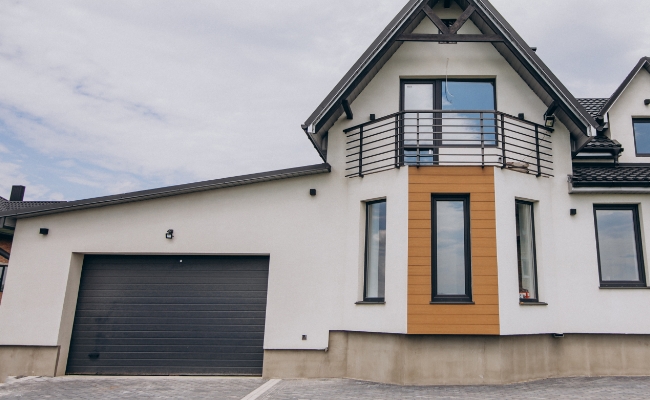
Installing dedicated outdoor and indoor security cameras provides active monitoring, real-time alerts, and crucial video evidence for garage protection.
A garage houses high-value assets—such as vehicles, power tools, and sports equipment—while serving as a direct path into the home. Positioning security cameras to cover driveways and interior access doors creates a visual crime deterrent and notifies you instantly when movement is detected.
-
AI Motion Filtering: Choose cameras with smart person and vehicle detection to avoid constant false alerts from passing street traffic or small animals.
-
Night Vision Capabilities: Ensure driveway-facing cameras feature infrared (IR) or spotlight-assisted color night vision to capture clear facial features and license plate details after dark.
-
Local Storage Flexibility: Utilizing cameras with onboard microSD card storage or an NVR recorder allows continuous local video saving without mandatory monthly cloud subscriptions.
Security camera systems engineered specifically for garage and driveway monitoring—such as Reolink’s spotlight Wi-Fi cameras or PoE NVR setups—deliver subscription-free 2K/4K recording directly to onboard local storage.
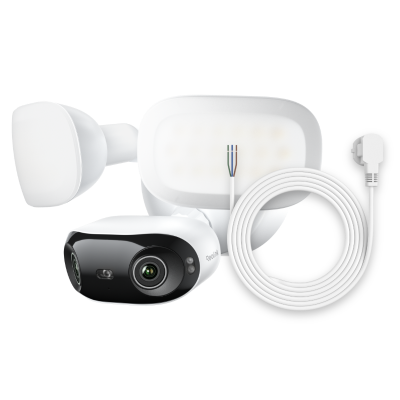
4K 180° Ultra-Wide Wired Floodlight Security Camera
3000-Lumen Dimmable Lighting, Adjustable Color Temperature, Local AI Video Search, Local Storage, Dual-Band Wi-Fi 6.
7. Keep High-Value Items Out of Plain Sight
Organizing your garage to keep high-value property hidden prevents casual onlookers from earmarking your home for a target break-in.
Leaving power tools, expensive bicycles, or unboxed electronics near an open door gives passersby a clear view of your belongings. Discretion is one of the simplest ways to reduce your risk.
-
Opaque Storage Cabinets: Store expensive hand and power tools inside locked, opaque steel tool cabinets rather than on open wall pegs.
-
Strategic Layout: Position bicycles, lawncare machinery, and high-value safes along side walls away from the direct line of sight of an open main garage door.
-
Overhead Storage Racks: Utilize ceiling-mounted garage storage racks to keep items off the ground and hidden behind the open garage door panel.
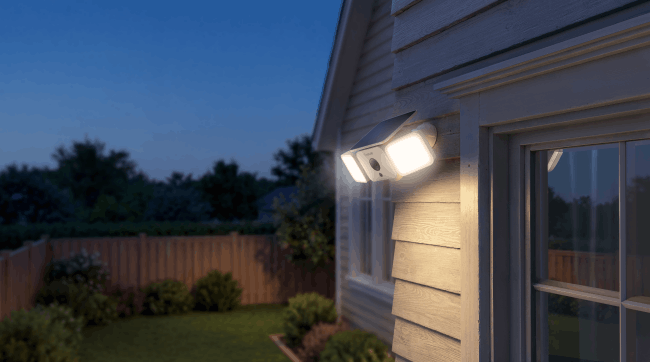
8. Install Motion-Activated Outdoor Floodlights
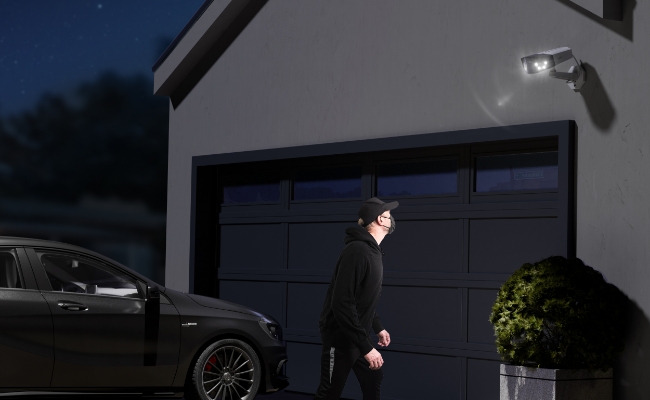
Mounting motion-activated LED floodlights along your garage driveway and side entrances eliminates dark shadows where intruders can hide or tamper with locks.
Bright perimeter lighting acts as an immediate psychological deterrent. When an individual approaches your garage at night, sudden illumination exposes their activity to neighbors and street traffic while improving security camera video clarity.
-
Dual-Head LED Fixtures: Install adjustable motion-activated floodlights directly above the main garage door and over secondary side pedestrian doors.
-
Integrated Camera-Floodlight Units: Combining bright motion spotlights with an integrated security camera provides automated lighting and high-definition video recording in a single installation.
9. Lock the Garage Door Tracks Manually
Manually locking the garage door tracks from the inside physically prevents the door panel rollers from sliding upward, blocking forced entry even if the motorized opener is compromised.
All sectional garage doors operate on vertical and horizontal steel tracks. Installing a physical barrier directly into the track rail prevents the door from being levered open with crowbars or lifted after an emergency release cord is pulled.
-
Track Deadbolts and Slide Latches: Engage the manual slide latch on the inside of the door panel so the steel bolt extends directly through the vertical track slot.
-
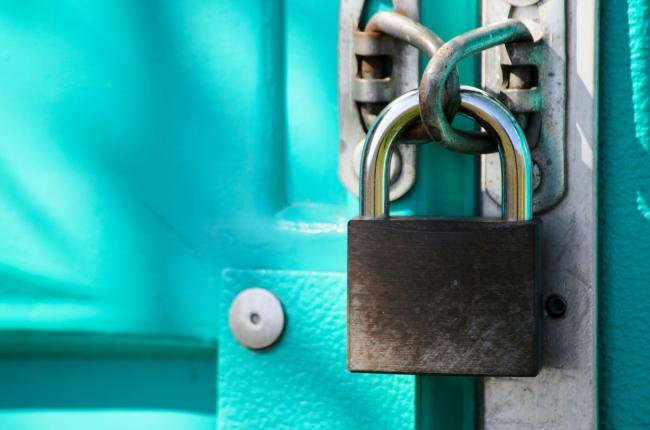
Padlock or C-Clamp Barrier: If your track lacks a built-in latch, slide a standard heavy-duty padlock or tighten a small C-clamp into the track hole immediately above one of the rollers. This physically blocks the roller from moving upward.
-
Vacation Lock Usage: Use manual track locking whenever you travel or leave for extended periods. (Note: Remember to disengage manual track locks before operating an automatic opener to prevent motor or track damage.)
10. Perform a Security Assessment from an Intruder's Perspective
Conducting a routine perimeter walk-through—evaluating your garage as if you were looking for an entry point—helps identify hidden vulnerabilities before they can be exploited.
Crime statistics indicate that approximately 9% of residential break-ins occur through garage or basement entry points, making regular security audits essential. Inspecting your property during both daytime and nighttime hours exposes blind spots, hardware weaknesses, and lighting gaps.
-
Daytime Inspection: Walk around the garage perimeter to check for visible high-value equipment through un-frosted windows, loose track weather stripping, or weak side-door strike plates.
-
Nighttime Audit: Evaluate your exterior lighting after dark. Identify dark shadow zones along side alleys or driveway corners where motion-activated floodlights or security cameras need repositioning.
-
Testing Emergency Releases: Check if your opener's emergency release cord can be seen or reached from the outside through the top door seal, and install an emergency shield if a gap exists.
How to Secure Your Garage Door From the Inside?
Using a cable tie is the cheapest and quickest way to secure the door security from the inside. Binding a cable tie to the emergency release lever would be best. Only two things are necessary for this process: cable tie and scissors. Here are some steps to follow.
- Unplug your garage opener.
- Find the emergency release lever.
- Insert the cable tie through the hole where the release rope is coiled.
- Loop the cable tie again on the hole at the bottom of the trolley carriage.
- Lock the cable tie
How to Secure Your Garage Door From the Outside?
Adding equipment is the most effective way to secure your garage door from outside. For example, the following ones:
- Install the outside keyed handle and inside release handle on the garage door.
- Place the spring latches to the ends of the lock section and connect them to the release handle.
- Install the garage door lock strikers & apply lubrication.
Best Garage Security Setup for Different Situations
Best Reolink Cameras for Garage Security
Selecting the ideal garage camera depends on whether you are monitoring an interior attached garage, a dark exterior driveway, or a detached garage with no existing power wiring. Below are scenario-driven recommendations tailored for specific garage setups.
Best for 24/7 Attached Garage Monitoring — Reolink RLC-843A
Ideal for attached garages where an interior camera needs to run 24/7 continuous local recording, withstand physical impacts from sports gear or parking accidents, and monitor high-value tools and house access doors.
-
Key Strengths: Features an IK10 vandal-proof heavy-duty dome housing designed to absorb heavy impacts without damaging the camera lens.
-
Performance: Delivers sharp 4K (8MP) Ultra HD video quality with 5x optical zoom, letting you inspect fine details across large multi-car garage interiors without pixelation.
-
Features: Powered by a single Power over Ethernet (PoE) cable for uninterrupted 24/7 local recording to an NVR or microSD card, equipped with smart person/vehicle/pet AI detection, and rated IP67 weatherproof.
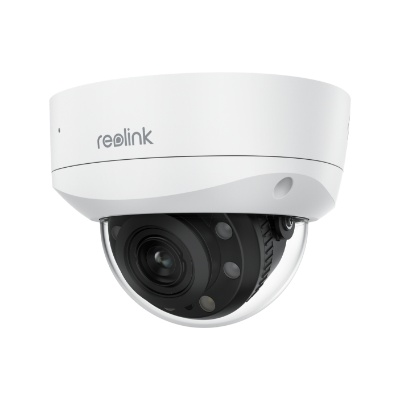
Smart 4K PoE IK10 Camera with 5X Optical Zoom
IK10 Vandal-Proof, 4K 8MP Ultra HD, 5X Optical Zoom, Color Night Vision
Best for Driveways and Dark Garage Entrances — Reolink TrackMix PoE
Ideal for monitoring exterior garage doors and wide driveways after dark, where you need to track moving vehicles or visitors coming up the driveway without losing broad context of the entrance.
-
Key Strengths: Incorporates a dual-lens design that provides a wide-angle overview alongside an automatically zoomed, motion-tracked view of subjects in the same screen layout.
-
Performance: Features 4K Ultra HD resolution with motorized 355° pan and 90° tilt coverage, ensuring zero blind spots along garage perimeters and side alleys.
-
Features: Equipped with motion-activated spotlights for color night vision, two-way audio to speak with visitors near the garage door, and intelligent AI alerts that distinguish people, vehicles, and pets.
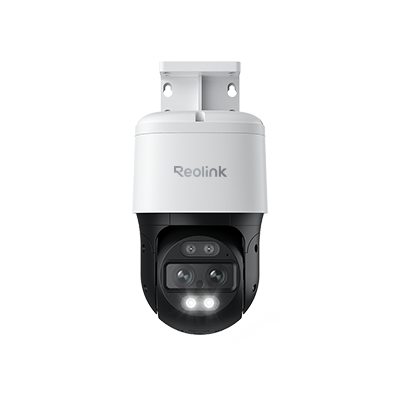
4K Dual-Lens PTZ Camera with Dual Tracking
4K 8MP Ultra HD, Wide & Telephoto Lenses, Pan & Tilt, Auto-Tracking, Person/Vehicle Detection, Power over Ethernet, Two-Way Audio.
Best for Detached Garages Without Wiring — Reolink Argus 4 Pro
Ideal for detached garages, garden sheds, or outbuildings situated far from home AC outlets where running Ethernet or power cables is difficult or prohibited.
-
Key Strengths: Operates 100% wire-free on a long-lasting rechargeable battery paired with continuous solar panel charging, eliminating manual battery swap trips.
-
Performance: Combines dual lenses to deliver a seamless 180° panoramic 4K view across the entire detached garage facade without fisheye edge distortion.
-
Features: Built with ColorX night vision technology to record full-color footage in dark alleys without relying on visible spotlights, dual-band Wi-Fi 6 connectivity, and local microSD card storage.
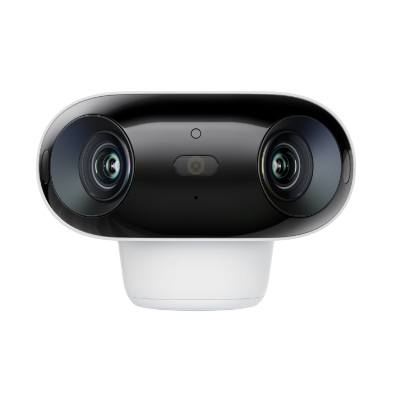
4k 180° Wire-free Color Night Vision Camera
4K UHD 180° Blindspot-free View; Color Vision Day and Night; 30% More Battery Life; Dual-band Wi-Fi 6; Smart detection.
FAQs
How do I stop thieves from opening my garage door?
You can improve garage security by using a smart garage door opener, locking the garage door track, upgrading old locks, and installing security cameras or motion-activated floodlights. Keeping the garage door closed and covering garage windows also helps prevent break-ins.
What size garage door for a Sprinter van?
Most Sprinter vans need a garage door at least 9 to 10 feet wide and around 8 to 10 feet high, depending on the van model and roof height. High-roof Sprinter vans usually require taller garage clearance.
How do you secure a garage door from the inside?
You can secure a garage door from the inside by locking the track with a padlock or latch, reinforcing the strike plate, and adding a manual slide lock. Many homeowners also install security cameras and motion sensors for extra protection.
Conclusion
From the perspectives of both garage owners' awareness of hardware upgrades, this article enlists top effective ways to secure your garage door, including replacing your garage door, installing security cameras, covering garage windows, etc. We hope that you find this article useful. Please leave the comments below and share this article with your friends.
Search
Subscribe for the Latest Updates
Security insights & offers right into your inbox