
Best Wired Security Cameras For Home Buying Guide
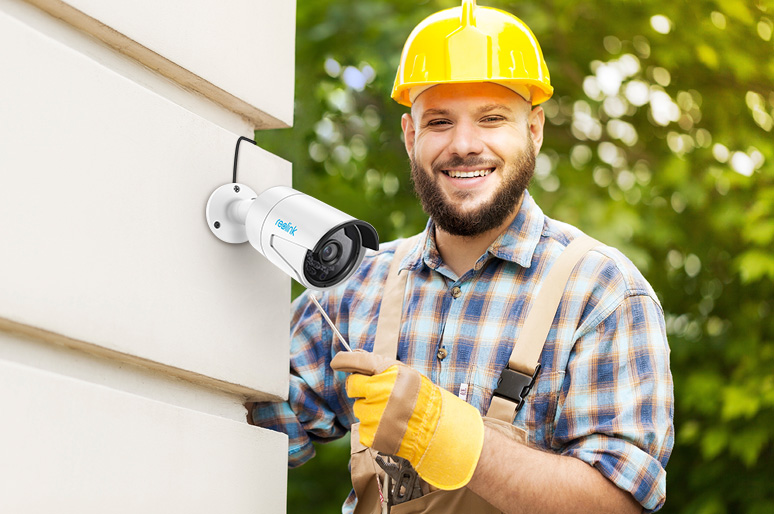
Wired security cameras are modern guardians of safety. They use cables to connect and watch over homes. Today, we'll explore the full aspects of wired cameras, including the reasons to choose them for your house, how to install in the outdoors and what to look for in the best wired home security cameras.
- Wired vs Wireless Security Cameras: Which One's For You
- Types of Wired Home Security Cameras & How They Work
- What to Look Out In A Hardwired Security Camera For Your Home
- Top Picks for Best Wired Security Cameras
- Real World Home Security Camera Use Case
- Installation Tips for Wired Cameras Indoors & Outdoors
- FAQs
- Conclusion
Wired vs Wireless Security Cameras: Which One's For You
When choosing a home security camera, one of the first decisions you'll face is whether to go wired or wireless. Both have their place, but for homeowners who prioritise reliability and long-term performance, wired cameras consistently come out ahead.
Where Wireless Cameras Work in Homes
Wireless cameras are a practical choice if you're renting, need a quick setup, or want to monitor a specific area without running cables. They're flexible and easy to reposition, making them well-suited for temporary setups or homes where drilling isn't an option.
Where Wired Wins for Home Security
For permanent home security, wired cameras offer advantages that wireless simply can't match:
Stable, uninterrupted connection: Wired cameras don't compete for bandwidth with your other smart home devices. Even in households with heavy network traffic, your footage stays clear and consistent.
-
No signal interference: As wireless networks become more crowded, interference becomes a real concern. A hardwired connection eliminates this entirely.
-
Reliable outdoor coverage: For driveways, backyards, and entry points around your home, wired outdoor cameras maintain a consistent connection regardless of distance from your router or physical barriers like walls and landscaping.
-
No battery dependency: Wired cameras run continuously without needing recharging or battery replacements, making them a genuinely set-and-forget solution for busy homeowners.
Types of Wired Home Security Cameras & How They Work
Today's wired home security cameras are a significant step forward from earlier generations. Traditional analog cameras required separate power and video cables, making installation cumbersome. Modern PoE (Power over Ethernet) Cameras cameras changed this entirely as they transmit both power and video footage over a single Cat5 or Cat6 cable. For homeowners, this means cleaner installations, lower setup costs, and a more reliable connection overall.
Wired Indoor Home Security Cameras
Indoor wired cameras are designed to monitor the home interior spaces such as living rooms, hallways, entryways, and staircases. They're typically compact and discreet, built to blend into a home environment rather than draw attention. Because they're protected from the elements, indoor cameras tend to prioritise image clarity and wide field of view over weatherproofing.
Wired Outdoor Home Security Cameras
Outdoor wired cameras work well in outdoor settings. They can handle various weather conditions such as rain, snow, dust, and extreme temperatures. Many outdoor cameras, like those with an IP rating of 66 or higher, provide strong resistance to tough outdoor conditions. A higher IP rating means they can withstand harsh weather better.
Camera Styles: Choosing The Right Shape For Each Area of Your Home
Beyond indoor and outdoor, wired cameras also come in different physical designs, each suited to specific spots around your home:
-
Bullet Cameras: Cylindrical and forward-facing, bullet cameras are highly visible, which makes them an effective deterrent. They work well for driveways, garage entrances, and long outdoor corridors where a clear line of sight is needed.
-
Dome cameras: Mounted flush to a ceiling or overhang, dome cameras have a low-profile design that's harder to tamper with and less intrusive indoors. A good fit for porches, hallways, and indoor common areas.
-
Turret cameras: A versatile middle ground. The ball-and-socket mount makes repositioning easy, and the lack of a dome cover reduces infrared reflection for cleaner night vision. Well suited for corners, entryways, and any spot where you might need to adjust the angle after installation.
What to Look Out In A Hardwired Security Camera For Your Home
Actually, there is no one-size-fits-all security camera to meet everyone’s needs. Based on your diverse requirements, here are the main features you should look for in hardwired security cameras.
-
Good image quality: Good image quality is a key feature of a reliable wired camera. It means that the pictures or videos captured are clear, detailed, and easy to see. This is important for accurately identifying people, objects, or events in the footage.
-
Remote viewing and motion alerts: This feature lets you see live footage remotely on your phone or computer. They also send alerts when they detect motion, helping you stay informed about any unusual activity around your home.
-
Steady network connection: This ensures a reliable and uninterrupted flow of data, supporting functions like remote viewing and motion alerts. A stable network connection is essential for the camera to transmit live footage and maintain effective surveillance.
-
Two-way audio: Two-way audio allows you to listen and speak through the camera. This means you can hear what's happening around the camera and communicate through it. It's useful for monitoring and interacting with people or pets near the camera.
-
IP rating: This two-digit code tells you how well the camera holds up against dust and water. The first digit (6) indicates dust resistance. The second digit indicates water resistance. For most outdoor home environments, an IP66-rated camera is more than sufficient to handle rain, dust, humidity, and general weather exposure year-round.
-
Night vision: Infrared (IR) night vision is the most common, producing black-and-white footage in low light and works well for areas like side gates or backyards where any activity at night is worth flagging. Colour night vision captures full-colour footage in near-darkness, making it easier to identify details like clothing colour or vehicle colour, particularly useful for front doors and driveways.
-
Affordable pricing: Some top security camera brands, like Reolink, offer good and affordable PoE cameras, some priced below $60. Contrary to the belief that lower prices mean bad service, Reolink provides a 2-year warranty for reliable wired cameras bought from their official website.
Top Picks for Best Wired Security Cameras
In this part, we will recommend several best options for you.
Best Wired Home Security Camera for Outdoor Coverage - Reolink Duo 3 PoE
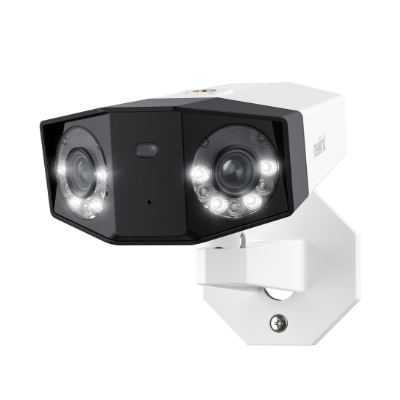
Groundbreaking 16MP Dual-Lens PoE Camera
16MP UHD, Dual-Lens, Motion Track, 180° Wide Viewing Angle, Power over Ethernet, Color Night Vision.
Reolink Duo 3 PoE is a 16MP dual-lens system with a 180° field of view. It is genuinely suited for wide outdoor areas like front yards, driveways, and building perimeters. The IP67 rating means it can withstand outdoor conditions well. Its Motion Track feature can also summarise movement paths, which is useful for monitoring a front yard or driveway over time.
Best Wired Home Security Camera for Night Vision - Reolink CX810
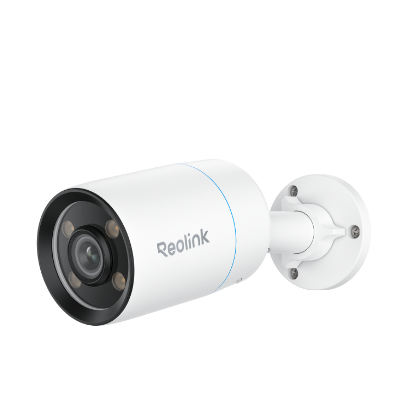
4K PoE ColorX Night Vision Camera
4K Ultra HD with HDR Tech; F1.0 Super Aperture; ColorX True Full Color Night Vision; 3000K Adjustable Warm Light; Advanced 1/1.8'' Sensor
The CX810 is a 4K PoE camera built around Reolink's ColorX technology, featuring an F1.0 super aperture and HDR for true full-colour night vision, even in near-darkness and without visible spotlights. This makes it particularly well suited for entry points like front porches, side gates, and garages where identifying detail at night matters most. The IP67-rated housing keeps it protected year-round in outdoor home environments.
Best Wired Home Security Camera for Large Perimeters - Reolink Trackmix PoE
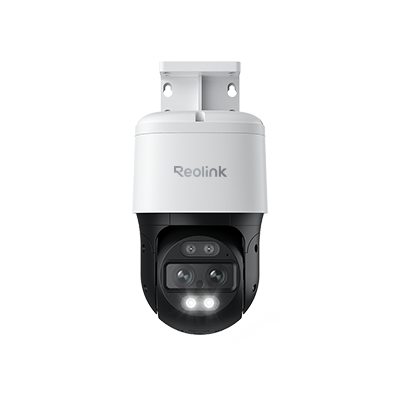
4K Dual-Lens PTZ Camera with Dual Tracking
4K 8MP Ultra HD, Wide & Telephoto Lenses, Pan & Tilt, Auto-Tracking, Person/Vehicle Detection, Power over Ethernet, Two-Way Audio.
The TrackMix PoE is a 4K dual-lens security camera featuring 355° pan-tilt capability and an innovative 6x hybrid zoom. For those securing large perimeters, its unique dual-view system monitors a wide area and a zoomed-in close-up simultaneously, ensuring no detail is lost as subjects move across expansive grounds. Intelligent auto-tracking and motion-activated spotlights further enhance its ability to identify and follow movement in vivid color throughout the night.
Best Wired Home Camera System for Large Perimeters - Reolink RLN8-410
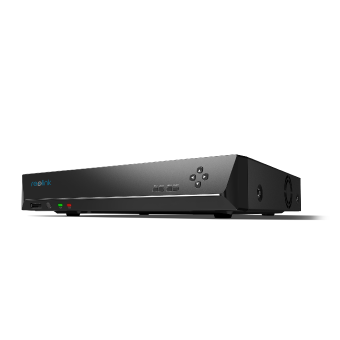
8-Channel PoE Security NVR
2TB Built-in HDD, Work with All Reolink 5MP/4MP Cameras for 24/7 Video Recording, Monitoring, and Management; Plug and Play.
For large perimeters, a hassle-free multi-cam setup works best. The RLN8-410 is an 8-channel NVR with 2TB of built-in storage, designed for homeowners who want whole-home wired coverage from a single system. It supports up to eight PoE cameras at resolutions up to 16MP, records locally without a subscription, and allows remote access via the Reolink app. For households covering multiple outdoor and indoor areas simultaneously, this is the most complete wired home security solution in the lineup.
Real World Home Security Camera Use Case

Homeowners are upgrading to PoE security cameras for the unmatched reliability of a hardwired connection. Users who switched from wireless competitors found models like Reolink's TrackMix PoE to be "game-changers," specifically praising the superior auto tracking and the peace of mind that comes with a stable Cat6 connection over battery-powered alternatives.
Beyond hardware, with seamless Home Assistant (HA) integration Home Assistant (HA) Integration and "no-subscription" model, users are also realising the significant value of owning their data through local storage and free mobile app access, proving that a one-time investment in a wired system offers better long-term privacy and performance than cloud-dependent brands.
Installation Tips for Wired Cameras Indoors & Outdoors
If you purchase a wired security camera system for your home, the cost to install this system can be reduced to almost ZERO, as you can do the installation within minutes even you are unfamiliar with tech.
Before we tap on the step-by-step procedures about how to install these cameras outdoors and indoors, we need to know where to place cameras so as to get the most of them.
According to the home burglary statistics, the most common entry points for burglars are:
- Front doors (34%)
- First-floor windows (23%)
- Back doors (22%)
- Garages (9%)
- Unlocked entrances (4%)
- Second storeys of homes (2%)
With these in mind, you can now be off to install the wired camera system for your home by following the steps below:
-
Decide on where to place wired home security systems (indoors or outdoors) and prepare the essential installation tools, like screws, Ethernet cables, a power adapter, mounting hole template, etc.
-
Drill holes through walls or ceilings and run cables to the location of your Cat 5 cameras. Hide all the ends of the camera cables on the holes to prevent them from wearing out or being damaged.
-
Start installing your wired outdoor home security camera by connecting the cable coming out from the hole to the camera itself. Use your power drill to mount the camera to your house and adjust the camera angle.
-
For the wired devices with DVR/NVR, you simply need to connect each camera cable to its own port and then connect the monitor to the DVR/NVR over HDMI cables.
-
After finishing the installation, now you can set up your hardwired CCTV cameras by downloading the latest software and navigating through the settings to customize some recommended features, like a scheduled recording.
Money-Saving Tip: If you choose indoor and outdoor wired PoE security cameras from reliable and reputable brands like Reolink, essential security camera accessories will be provided free of charge.
FAQs
Can wired security cameras be hacked?
Yes,but it’s far more difficult. Wired (PoE) cameras transmit data over physical cables, making them immune to signal jamming and Wi‑Fi interception. Most breaches happen at the software level, so strong passwords and 2FA on your NVR or app make a wired system highly secure.
Who has the best wired security cameras?
There are many brands offering wired models and devices, and Reolink is one of them. Reolink provides high-resolution wired options with no subscription fees, like the RLC-810A and the CX810.
Are hard-wired security cameras better?
For reliability and performance, yes. Hard-wired cameras use physical cables to ensure a constant power supply and a stable data connection that isn’t affected by Wi-Fi interference or thick walls. This allows them to handle higher resolutions (4K+) and 24/7 continuous recording without the lag or battery drain common in wireless models. While the initial installation is more involved, the result is a more consistent and secure surveillance setup.
Can my neighbor record my backyard?
No, if there’s a reasonable expectation of privacy. Laws vary, but intentionally filming private areas (e.g., bedroom windows or fenced backyards) is typically illegal. If your property is only incidentally visible while they monitor their own, it’s often permitted. Check local surveillance laws if you’re concerned.
Conclusion
A wired cameras provides reliable surveillance for your home. With features like steady network connections, high resolutions, and advanced technologies, these cameras offer peace of mind. Whether you choose an indoor or outdoor camera, they play a crucial role in keeping your property secure.
If you still have any questions about this article, please let me know down in the comments and I'll get back to you soon.
Search
Subscribe for the Latest Updates
Security insights & offers right into your inbox