
Security Cameras Without Power Supply: Top Picks & Step-by-Step Guide to Run Power Cables
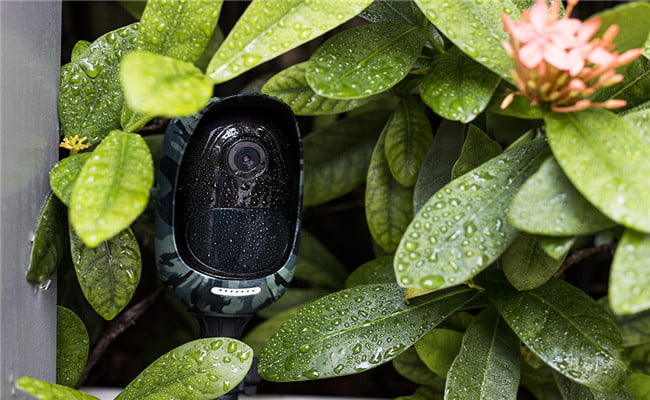
Modern security cameras can monitor your property entirely without a traditional grid power supply by utilizing rechargeable batteries, dedicated solar panels, or Power over Ethernet (PoE) backups. Whether you need to secure a remote off-grid barn, a rental property with strict no-drilling rules, or a suburban home during a total blackout, modern surveillance technology provides the flexibility to maintain 24/7 security without relying on standard wall outlets. The right setup ensures that your property remains fully protected against vandalism and theft, regardless of local utility constraints.
This guide breaks down the top-rated battery and solar-powered camera options, detailing the precise features—like energy-efficient low-light sensors and subscription-free local storage—required for dependable off-grid performance. Additionally, you will find a step-by-step installation guide on how to correctly run backup power cables. This ensures your wired or plug-in systems retain a continuous power supply and keep recording seamlessly even when the main electrical grid fails.
- Will Security Camera Work Without Electricity?
- What Are Common Types of Security Cameras without Power Supply?
- Key Features to Look for in the Best Security Camera
- 3 Best Security Cameras with Power Supply for Different Scenarios
- How to Connect Cameras with Electricity to USB Power Station?
- What Real-World Users Say About Security Cameras Without a Power Supply?
- FAQs
- Conclusion
Will Security Camera Work Without Electricity?
Traditional wired CCTV systems will fail completely during a power outage, but modern battery-powered, solar-assisted, or UPS-backed security cameras can operate without grid electricity.
Standard analog coaxial cameras and plug-in Wi-Fi models rely entirely on active electrical outlets to power the lenses, image sensors, and central recording units (DVR/NVR). If the main power line is cut or fails, these systems shut down instantly.
What Are Common Types of Security Cameras without Power Supply?
Security cameras capable of operating without a traditional electrical outlet are categorized into three main types: battery-powered wire-free cameras, solar-powered systems, and cellular (4G/5G) security cameras. Choosing the right type depends on your property’s proximity to a Wi-Fi network and how much hands-on maintenance you want to perform.
1. Battery-Powered Wire-Free Security Cameras
Battery-powered security cameras run entirely on internal rechargeable lithium-ion cells, making them 100% wire-free and highly portable. Because they require absolutely no drilling or power cabling, they are the ideal solution for apartment renters, indoor room monitoring, or temporary setups like seasonal property surveillance.
To preserve energy, these cameras stay in a low-power standby mode and instantly wake up to record when their built-in Passive Infrared (PIR) sensors detect heat and motion.
Pro Tip: In high-traffic areas or extreme sub-freezing winter temperatures, the battery will drain much faster than the manufacturer's listed estimate, occasionally requiring you to bring the camera indoors to recharge via a USB cable.
2. Solar-Powered Security Cameras
Solar-powered security cameras pair a rechargeable battery-operated camera with an external, weatherproof solar panel to create a self-sustaining power system. This setup provides a virtually maintenance-free, eco-friendly solution for remote outdoor locations—such as detached garages, backyards, roofs, and long driveways—where running electrical wires is physically impossible or too expensive.
The solar panel continually trickles power into the camera’s internal battery during daylight hours. Modern high-efficiency solar panels (typically around 6W) can fully power a camera for continuous daily use with just a few hours of direct sunlight.
Pro Tip: Performance depends on geographic placement and weather. If the panel is mounted in deep shade or covered in heavy winter snow, the battery will eventually deplete, requiring manual intervention.
3. Cellular (4G/5G) Security Cameras
Cellular security cameras eliminate the need for both grid electricity and a local Wi-Fi connection by operating over mobile phone networks. Usually powered by a combination of rechargeable batteries and solar panels, these rugged devices are engineered for off-grid applications like remote farms, barns, construction sites, boats, and deep-nature properties.
Instead of connecting to a Wi-Fi router, these cameras utilize a built-in cellular SIM card to transmit live video streams and motion alerts directly to your smartphone app.
Pro Tip: While they offer unparalleled location flexibility, they do require a monthly or annual cellular data plan, and their performance is entirely dependent on the cellular signal strength of the network carrier in that specific area.
Key Features to Look for in the Best Security Camera
Deploying a CCTV camera without a power supply is a necessity for off-grid applications. However, while many security cameras claim they can seamlessly monitor rural homes, farms, barns, fields, or garages without electricity, not every camera can truly deliver effective video surveillance, real-time recording, or reliable storage.
To protect your property from vandalism and monitor areas without electricity, use this optimized 6-point checklist to find the best security cameras that don't need to be plugged in.
1. Battery & Solar Power — The Core Solution for Off-Grid Properties
Battery-powered security cameras—relying on rechargeable batteries or dedicated solar panels—are the ultimate solution for "no-energy" live video monitoring in unpowered locations.
Most modern off-grid security cameras are entirely wire-free, eliminating the need for daily manual battery replacements or expensive grid installations.
2. Smart Motion Detection — Essential for Saving Energy and Storage
Accurate motion detection is critical for unpowered CCTV cameras, ensuring they only trigger instant mobile alerts and save video clips when a real threat is detected.
Without a direct power cord, a camera cannot waste battery life recording hours of empty footage. A smart motion system serves two vital roles:
-
Instant Intervention: It alerts you immediately via app push notifications or email alerts when activity occurs.
-
Evidence Gathering: It logs precise video clips for later playback, giving you the exact evidence required if a break-in or act of vandalism occurs.
Tip: Make sure to select a security camera with advanced AI algorithm filters (such as person/vehicle detection). Basic motion sensors will constantly wake the camera up—and drain the battery—for every passing bug, falling leaf, or blowing shadow.
3. High Definition — Indispensable for Identifying Intruders
High-definition imaging is an absolute requirement for live video monitoring; higher resolutions provide the structural detail necessary to identify faces and read license plates from a distance.
If you are trying to catch someone stealing assets from your yard, garden, or field, standard definition footage will not suffice. The off-grid market generally features three major resolutions, alongside premium 4K models:
- 720p: The legacy baseline; captures basic shapes but lacks fine detail.
- 1080p (Full HD) & 1440p (2K): The recommended sweet spot for general residential surveillance. A 1080p high-resolution sensor gives you the facial clarity needed for legal identification.
- 4K (Ultra HD): The premium option; delivers forensic-level clarity, allowing you to crop deep into the image without blurring the video.
4. Advanced Night Vision — 24/7 Protection Without Grid Power
With nearly 35% of property burglaries occurring under the cover of darkness, premium night vision is essential to protect unpowered properties overnight.
True wire-free security cameras allow you to monitor dark zones and react quickly to unusual midnight activity. There are two main night vision technologies used in the off-grid market:
- Infrared (IR) Night Vision: These cameras feature built-in IR LEDs that illuminate target areas with invisible light. They substitute infrared light for visible light to capture highly detailed, high-contrast black-and-white images even in total darkness (0 Lux).
- Color Night Vision: This approach provides the most realistic view of a midnight scene. These cameras often utilize ultra-bright, motion-activated spotlights to illuminate the property. By flooding the zone with light, the camera records full-color video, capturing crucial identifying details—like the color of an intruder's jacket or a getaway car—that IR cameras miss.
5. Remote Access & Cellular Options — View Your Property Anytime
Remote access features let you log into your cameras via an Android or iOS smartphone to check on front gates, bike sheds, or remote perimeters at any time.
Whether you are working at your desk or away on vacation, you can open your mobile app to instantly verify the safety of your home and family.
But what happens if you need to monitor a front gate, a remote pasture, or an off-grid cabin that completely lacks a local Wi-Fi router?
The solution is a 4G LTE cellular camera. These cameras operate over mobile networks just like a smartphone, allowing you to maintain full remote access, stream live video, and receive motion notifications even when internet and grid power are completely unavailable.
6. Weatherproof Design — Engineered to Survive the Elements Outdoors
Outdoor wire-free security cameras require an official weatherproof rating (like IP65) to protect their internal electronics from rain, dust, snow, and extreme temperatures.
An unpowered camera must be physically resilient enough to stand guard in harsh, completely exposed environments.
Look for cameras carrying an IP65 weatherproof rating or higher. This certification guarantees the housing can withstand direct environmental exposure, making these cameras perfect for deployment at your front gate, porch, allotment, parking lot, fishing lake, food truck, or campsite.
3 Best Security Cameras with Power Supply for Different Scenarios
Unlike traditional security setups that force you to bind your hardware to proprietary third-party base stations, these standalone off-grid cameras operate entirely independently. They free you from forced hardware ecosystems while offering flexible local video storage options, making them adaptable to distinct real-world deployment challenges.
Best For Large High-Traffic Zones — Reolink Altas PT Ultra
The Reolink Altas PT Ultra is engineered for expansive, unpowered locations requiring wide-angle panning and high-definition 4K continuous recording.
If there are no power outlets near your desired installation point, battery-powered systems are your logical first choice. The Reolink Altas PT Ultra is a premium solution for monitoring open areas like multi-car driveways, large backyards, or busy loading docks.
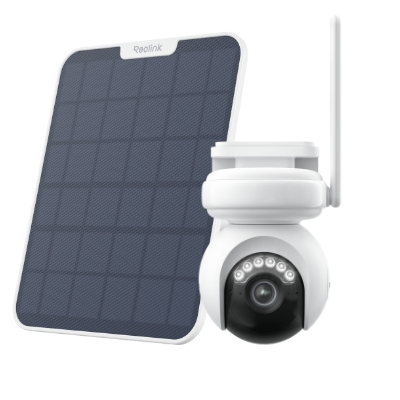
4K Battery-Powered PTZ Camera with Continuous Recording
👍 4K UHD video with continuous recording
👍 ColorX night vision in low light
👍 Pan, tilt, and automatic person tracking
👍 Local storage without monthly fees
-
Continuous Surveillance: Backed by a massive 20,000 mAh internal battery, this 4K camera breaks standard battery constraints by delivering up to 8+ days of continuous, non-stop recording (based on 12 hours of active daily use) on a single charge.
-
Solar Integration: It pairs seamlessly with an external solar panel for continuous backup power, removing the need to manually take down the camera for frequent recharges.
-
Flagship Low-Light Clarity: Using advanced ColorX technology, an upgraded image sensor, and an ultra-large aperture lens, it delivers full-color footage in low-light environments without relying on bright, battery-draining spotlights.
Best for Residential Security & Blind Spots — Reolink Argus 4 Pro
The Reolink Argus 4 Pro provides a high-performance, compact choice for everyday home and business perimeters lacking power cords or data cables.
For entryways, side-yards, or small business storefronts where power outlets are entirely unavailable, the Argus 4 Pro functions seamlessly. It delivers an optimal mix of high-fidelity recording and battery conservation.
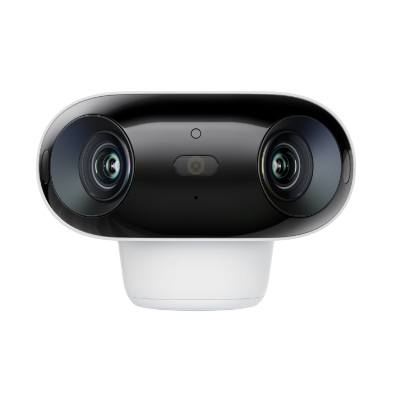
4k 180° Wire-free Color Night Vision Camera
4K UHD 180° Blindspot-free View; Color Vision Day and Night; 30% More Battery Life; Dual-band Wi-Fi 6; Smart detection.
-
Reviewer-Verified Detail: Its sharp 4K 8MP UHD sensor provides absolute image clarity during both day and night monitoring.
-
Spotlight-Free Night Vision: Equipped with standard-setting ColorX technology, it delivers vivid, ambient-light color performance at night while maximizing battery efficiency.
Best for Deep Off-Grid & Remote Property — Reolink Go PT Ultra
The Reolink Go PT Ultra is designed specifically for isolated rural areas entirely devoid of both grid electricity and local Wi-Fi networks.
When you need to secure a remote farm, an RV campsite, a boat slip, a construction worksite, or distant wilderness acreage, traditional Wi-Fi battery cameras will not work. The Reolink Go PT Ultra solves this by operating completely independent of internet and power grids.
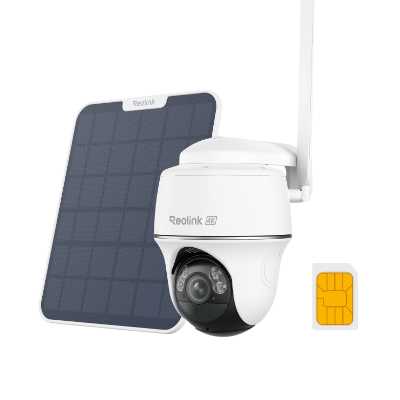
4K 8MP Wire-Free 4G LTE PT Battery Camera
4K 8MP; Smart Detection; 355° Pan & 140° Tilt; Battery/Solar Powered; Color Night Vision; Smart Real-Time Alert.
-
Cellular Setup: This 4K pan-and-tilt camera operates over a dedicated 4G LTE cellular data network instead of a local Wi-Fi router.
-
Remote Access: You can access the camera remotely via your smartphone to stream live video, check status alerts, and adjust the pan-tilt viewing angle even if the property is miles away from civilization.
-
Local Storage: By tracking alerts locally and storing encrypted clips directly onto an on-board microSD card, it prevents data loss even if cellular network coverage temporarily drops out.
How to Connect Cameras with Electricity to USB Power Station?
If you want to deploy a standard plug-in USB wireless camera in a location with absolutely no wall outlets or permanent internet, you can construct a mobile, weather-resistant power and data station.
Items You Will Need:
- A USB-powered wireless security camera
- A high-capacity power bank with multiple USB ports
- A portable cellular (GSM) router to establish a localized Wi-Fi zone
- A heavy-duty weatherproof enclosure box (if deploying outdoors)
- A smartphone
Step-by-Step Installation:
-
Initiate Power: Plug the USB security camera's power cord directly into the portable power bank. (Note: Always verify that the output voltage of the power bank matches the exact electrical requirements of the camera).
-
Boot the Network: Insert the portable cellular router into the second USB port of the power bank to power it up. Wait for the router's LED indicator status light to signal that a live mobile hotspot is active.
-
Launch Remote Access: Connect your mobile phone to the cellular router's Wi-Fi network, then open your security camera app. You will now have full remote live streaming capabilities in an area completely missing traditional utility grids.
-
Weatherproof the Setup: If this system is deployed outside, place the power bank, cellular router, and all associated cabling inside a dedicated waterproof box to shield the hardware from rain, moisture, and dust.
What Real-World Users Say About Security Cameras Without a Power Supply?
Real-world users say that security cameras without a nearby power supply can work well, but expectations need to be realistic. In a Reddit discussion about monitoring remote land, users commonly recommended solar-powered battery cameras or 4G LTE trail cameras for locations without electricity or Wi-Fi.
However, several users emphasized that most battery and solar security cameras do not record continuously. Instead, they remain in standby mode and begin recording when their motion sensors detect activity. This helps conserve battery power but may not suit users who need uninterrupted 24/7 footage.
Continuous recording is possible in some setups, but it usually requires a larger solar panel, sufficient battery capacity, carefully adjusted recording settings, and enough sunlight throughout the year. Cloudy weather, frequent motion events, poor panel placement, and heavy live viewing can all increase power consumption.
Users also warned that building a DIY solar system with external batteries, charge controllers, wiring, and weatherproof boxes can become complex and maintenance-intensive. For most remote properties, an integrated solar camera is the simpler choice. For dependable 24/7 surveillance, a professionally designed solar power system or a wired camera connected to an NVR is generally more reliable.
FAQs
Can a security camera work without electricity?
A security camera cannot operate without any source of energy, but it does not always need household electricity. Battery-powered and solar-powered security cameras can work without a nearby electrical outlet. Solar models use a rechargeable battery and a solar panel to extend operation, making them suitable for farms, construction sites, cabins, and other remote locations.
Do security cameras need a power supply?
Yes. Every security camera needs a power source, but the type varies. Wired cameras may use a wall adapter or receive power through an Ethernet cable with Power over Ethernet, or PoE. Wireless cameras may use rechargeable batteries, solar panels, or both. Note that “wireless” usually describes the camera’s network connection and does not necessarily mean it is wire-free.
Are there cameras that don't need to be plugged in?
Yes. Battery-powered security cameras do not need to remain plugged into an outlet. They can be installed in locations where running power cables is difficult. Some models also support solar charging, which reduces how often the battery needs to be removed and recharged. However, battery life depends on recording frequency, motion activity, live viewing, temperature, and network strength.
Conclusion
By using power sources such as batteries and solar energy, security cameras with electricity empower users to monitor their surroundings with great convenience. Users can install them everywhere to use monitor urban sites or remote locations. Do you think these devices without wires and power are reliable? Share your thoughts with us in the comment section below! Let's discuss together!
Search
Subscribe for the Latest Updates
Security insights & offers right into your inbox