
Security Camera Recorders & Storage: NVR vs DVR vs SD Card vs Cloud
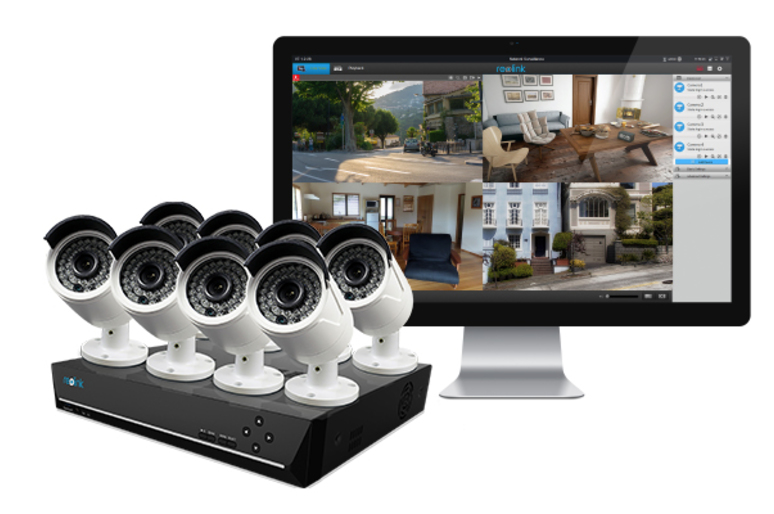
Security camera footage can be recorded to an NVR or DVR, microSD card, cloud storage, computer, or network storage. NVRs are commonly used for centralized multi-camera and continuous recording, while microSD cards work well for local camera-level storage. Cloud storage provides off-site access and backup but may require a subscription.
So what are the common IP camera recorders available? How can you store the CCTV camera videos via the security camera recorder software? And which is the best and inexpensive security camera recorder?
Now, let’s dive deeper into the world of security camera video recorders.
What Is a Security Camera Recorder?
A security camera recorder is a specialized physical video management device that serves as the central hub of a security system. It receives video feeds from connected cameras, encodes or stores the footage locally on dedicated surveillance hard drives, and provides interface tools for live viewing, event playback, and remote access.
Security Camera Recorders Compared
1. NVR — Best for IP Cameras and Multi-Camera Recording
An NVR is a modern recorder that receives pre-encoded digital video streams directly from IP (Internet Protocol) cameras over a local network or Ethernet cables.
Processing happens at the camera level. The IP camera encodes raw video and transmits the digital stream to the NVR, which simply saves and organizes the data.
A PoE NVR supports 4K and higher resolutions, uses single-cable Power over Ethernet (PoE) for data and power, and integrates AI features like smart motion detection.
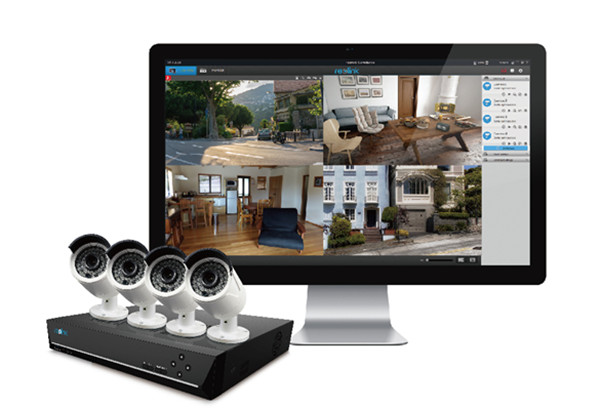
2. DVR — Best for Analog CCTV Systems
A DVR processes raw analog video feeds transmitted from traditional CCTV cameras using coaxial cables.
Processing happens at the recorder level. Analog cameras send raw video signals over coaxial BNC cables to the DVR, where an internal hardware encoder converts the analog signal into a digital video file for storage.
DVRs generally offer a lower upfront cost and leverages existing coaxial cable infrastructure in older buildings.
3. MicroSD Card — Simple Local Camera Storage
MicroSD card storage saves video footage directly inside an individual camera, offering a low-cost, self-contained recording solution with zero recurring fees.
The camera encodes and writes video files straight to an onboard microSD card slot. You can view and manage clips remotely using a smartphone app or remove the card to access files directly on a PC.
High-capacity microSD cards (typically up to 256GB or 512GB) work best for motion-triggered events or scheduled recording rather than 24/7 continuous footage.
4. Cloud Storage — Off-Site Recording and Backup
Cloud storage automatically uploads video clips to secure off-site servers over the internet, keeping your footage accessible from anywhere and safe from physical theft.
When a camera detects motion or triggers an alert, it encrypts the clip and transmits it directly over your Wi-Fi or cellular network to a cloud server.
Cloud recording offers ultimate physical protection—even if an intruder steals or destroys the camera, the event footage remains safe online. It also simplifies multi-camera monitoring through unified app interfaces without managing local storage drives.
However, it requires a continuous monthly or annual subscription per camera and consumes home upload bandwidth, which can impact slow internet connections.
5. PC, NAS, or FTP — Alternative Network Storage
Network-attached storage (NAS) devices, dedicated desktop PCs, or FTP servers allow technical users to build customized, centralized local archives without buying an NVR.
Security cameras send video streams across your local network to third-party software (such as Blue Iris, iSpy, or Synology Surveillance Station) or directly upload video clips to an FTP server running on a host computer or NAS drive.
These network storage options provide massive storage capacity potential, scalable retention windows, and full privacy control without paying cloud subscriptions. However, these methods require more technical setup and maintenance than a plug-and-play NVR, and the host PC or NAS must stay powered on 24/7 to record uninterrupted.
7 Key Features to Consider When Choosing the Best Security Camera Recorder
Selecting a security camera recorder determines how reliably your surveillance system logs, stores, and plays back video feeds. Choosing the right recorder ensures your hardware supports your current camera setup while leaving enough recording and storage capacity for future expansion.
1. Camera Type and Compatibility
A security camera recorder must match your camera's underlying video architecture (IP vs. analog) and protocol standards to function properly.
Network Video Recorders (NVRs) record pre-encoded digital streams from IP security cameras over Ethernet networks, while Digital Video Recorders (DVRs) convert raw analog signals transmitted over coaxial BNC cables.
If mixing camera brands, verify support for open standards like ONVIF or RTSP to guarantee video streaming, PTZ control, and audio compatibility across hardware.
2. Number of Cameras and Channels
Recorders are categorized by channel count (such as 8, 16, or 32 channels), which dictates the maximum number of individual camera feeds the system can record simultaneously.
An 8-channel NVR accommodates up to 8 cameras. If your current property layout requires 6 cameras, purchasing an 8-channel or 16-channel recorder leaves open ports for future expansions without replacing the central hub.
3. Recording Mode
Customizing recording schedules directly controls how much storage space your system consumes and how easily you can review security events.
-
24/7 Continuous Recording: Captures non-stop video footage, ensuring total coverage but requiring significantly higher storage capacity.
-
Motion-Triggered / Smart AI Events: Records only when person, vehicle, or animal movement is detected, saving storage space and streamlining footage playback.
-
Scheduled Recording: Operates on customized timers (e.g., continuous recording during business hours and motion-only recording at night).
4. Storage Capacity and Compression
Storage requirements depend on camera resolution, frame rates, and video compression formats, with advanced codecs doubling effective storage capacity.
- Video Encoding (H.265 vs. H.264): Modern 4K and 12MP recorders utilize H.265 (HEVC) compression, which compresses video file sizes by roughly 50% compared to older H.264 formats without degrading video quality.
Look for recorders featuring internal SATA bays that support high-capacity surveillance hard drives (such as 2TB up to 16TB per drive) or external eSATA expansion ports for long-term retention.
5. Internet and Remote Access
Local recorders continue saving video footage to internal hard drives offline, but internet connectivity is required for remote mobile app viewing and alerts. If your home or business internet drops, a wired NVR or DVR will continue recording 24/7 on-site without losing a frame.
Connecting the recorder to your local router enables remote live monitoring, push notifications on smartphones, and remote clip downloads via desktop software.
6. Scalability
Selecting a system with extra processing bandwidth ensures you can upgrade to higher-resolution cameras down the road.
Beyond unused channel ports, verify the recorder's total incoming bandwidth (measured in Mbps) and maximum supported resolution (such as 4K or 12MP decoding) so adding high-resolution cameras later won't bottleneck system performance.
7. Total Cost
Evaluating a recorder requires factoring in long-term operational costs alongside the initial hardware price tag.
While an NVR or DVR requires an upfront investment in the recorder unit and dedicated surveillance hard drives, local recording eliminates mandatory monthly cloud subscription fees, offering lower overall total cost of ownership over time.
Reolink Security Camera Recording & Storage Options
Reolink offers several ways to record and store security camera footage, including NVRs, microSD cards, Home Hubs, and Reolink Cloud. The right option depends on whether you need continuous recording, simple on-camera storage, centralized wireless storage, or off-site backup.
Reolink NVR: Best for Multi-Camera and 24/7 Recording
A Reolink NVR provides centralized local storage and management for multiple compatible cameras. It is ideal for larger homes and businesses that need continuous recording, longer storage periods, and easy playback across multiple cameras.
Product Recommendation: Reolink RLN16-410. This NVR is designed for larger multi-camera setups, with 16 built-in PoE ports and support for 24/7 local recording. The latest hardware version can manage up to 16 wired cameras plus additional compatible battery Wi-Fi cameras, making it suitable for scalable home or business surveillance.
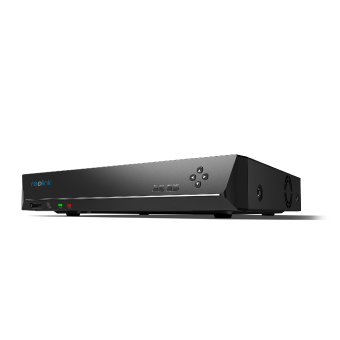
16-Channel PoE Security NVR
3TB Built-in HDD; Work with All Reolink 5MP/4MP Cameras for 24/7 Video Recording, Monitoring, and Management; Plug and Play.
MicroSD Card: Best for Simple On-Camera Storage
A microSD card stores recordings directly inside the camera, eliminating the need for a separate recorder. It is a convenient choice for standalone cameras, smaller setups, and users who want local storage without monthly fees.
Product Recommendation: Reolink Argus 4 Pro. This wire-free camera supports up to a 512GB microSD card for local recording. Its battery-powered design and 180° dual-lens view make it a good example of a standalone security camera that can record locally without an NVR.
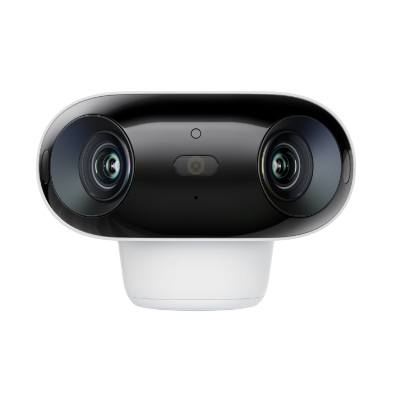
4k 180° Wire-free Color Night Vision Camera
4K UHD 180° Blindspot-free View; Color Vision Day and Night; 30% More Battery Life; Dual-band Wi-Fi 6; Smart detection.
Reolink Home Hub: Best for Centralized Wireless Camera Storage
Reolink Home Hub provides centralized local storage for compatible Reolink cameras, making it especially useful for battery and Wi-Fi camera systems. Instead of keeping recordings only inside individual cameras, users can manage footage from multiple compatible cameras through one hub.
Product Recommendation: Reolink Home Hub. It combines centralized camera management with built-in local storage and expandable storage options, making it suitable for users who want a higher-capacity local storage solution for compatible Reolink cameras without relying on a traditional PoE NVR.
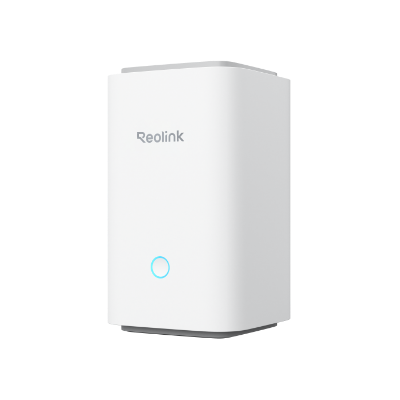
Wireless Security Center with Encrypted Local Storage and Multi-Device Management
64GB microSD Card Included; Exclusive Anti-Theft Algorithms; Expandable System Up to 8 Reolink Cams; No Monthly Fees
Reolink Cloud: Best for Off-Site Storage
Reolink Cloud stores supported recordings remotely, providing an off-site option in addition to local storage. It can be useful when you want recordings to remain accessible even if the camera or local storage device is damaged or removed. Cloud availability and supported features vary by camera model and region.
Product Recommendation: Reolink Argus PT Ultra. This 4K battery-powered pan-and-tilt camera supports Reolink Cloud in supported regions and can also use local storage, giving users flexibility between on-camera and off-site recording.
Troubleshooting Security Cameras Not Recording
- Make sure that motion is enabled and the “Record Channel” is selected for your security camera.
- Confirm that the security camera Micro SD card or security camera DVR/NVR hard drive has been recognized through the device settings.
- Format the security camera SD card recorder or the DVR/NVR hard drive.
- Reboot your security camera DVR/NVR system to see if it works.
- If your security cameras still display no recordings after trying the above methods, contact the support team of the camera sellers for professional advice.
FAQs
What is the best way to record security camera footage?
An NVR is generally best for multiple cameras and 24/7 recording, while a microSD card works well for individual cameras. Cloud storage is useful when off-site backup is a priority.
Do security cameras need an NVR to record?
No. Many security cameras can record directly to a microSD card, Home Hub, computer, or cloud storage without an NVR.
Can security cameras record without Internet?
Yes. Cameras can record locally to an NVR, microSD card, or compatible local hub without Internet. Internet is typically needed for cloud storage and remote access.
Is an NVR better than an SD card?
It depends. An NVR is better for multiple cameras, 24/7 recording, and larger storage capacity, while an SD card is simpler for one or a few cameras.
Is cloud storage better than local storage for security cameras?
Not necessarily. Cloud storage provides off-site backup and convenient remote access, while local storage offers more control and can work without Internet or recurring cloud fees. Using both can provide additional redundancy.
Conclusion
Security camera recorders are a key component of your home security, acting as the indispensable devices to save the footage of your CCTV cameras and systems. Choosing the right recorders depends on your specific security needs.
Search
Subscribe for the Latest Updates
Security insights & offers right into your inbox