
RTSP Cameras Explained 2026: How RTSP Works & Best Cameras
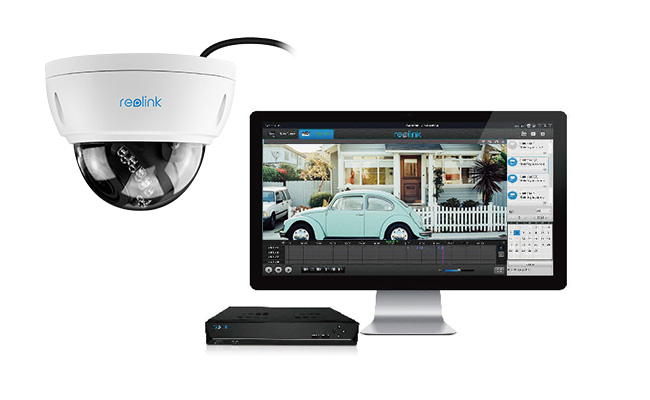
Streaming live video from your security camera to media players like VLC or third-party platforms relies on RTSP (Real-Time Streaming Protocol). RTSP is an open network protocol that establishes and controls direct, low-latency video and audio streams between IP cameras and viewing software across local networks or over the internet.
Whether you want to integrate a camera into a custom smart home setup, stream footage without cloud subscriptions, or manage live feeds across third-party NVRs, understanding RTSP is essential. This guide breaks down how RTSP IP cameras operate, how to locate your camera's RTSP URL, and how to stream live footage securely anywhere.
- What Is an RTSP Camera?
- What Are Common Types of RTSP Cameras?
- 5 Key Features to Look for in the Best RTSP Camera
- 3 Best RTSP IP Cameras for Different Setups
- How to Find RTSP URL of an IP Camera?
- How to Stream IP Camera Videos on RTSP-Compatible Players like VLC Player?
- What Are Possible Issues of RTSP-Compatible Cameras?
- Reolink RTSP Compatibility Explained
- FAQs
- Conclusion
What Is an RTSP Camera?
An RTSP security camera is a network-connected IP camera that supports Real-Time Streaming Protocol (RTSP)—a standardized network protocol designed to establish and control real-time media streams. Instead of locking you into proprietary software, an RTSP-enabled camera broadcasts a direct video feed that can be viewed, recorded, and managed on any third-party media player or platform.
Think of RTSP as the universal rail track for video data. It transports live footage directly from the camera to third-party software like VLC Media Player or QuickTime, or to open-source home automation hubs like Home Assistant.
How Do RTSP Cameras Work?
An RTSP camera operates by generating a dedicated streaming endpoint (an RTSP URL) that acts as an address for client devices to request live video. When a viewer—such as IP Cam Viewer, iSpy, or a web browser—requests the feed, the camera sends encoded video packets directly over the local network using UDP or TCP transport protocols.
Combining RTSP (which handles media streaming) with ONVIF (which handles device discovery and PTZ controls) unlocks several key capabilities:
-
App Independence: View live streams directly on desktop software, NAS drives (like Synology or QNAP), or custom dashboards without using the manufacturer's mobile app.
-
TV & Smart Display Casting: Cast live camera feeds directly to a smart TV using devices like Apple TV or Google Chromecast via RTSP-compatible media apps.
-
Third-Party NVR Integration: Mix and match camera brands on a single centralized NVR without losing video feed compatibility.
Standard RTSP video streams typically transmit on default port 554 using H.264 or H.265 video compression. H.265 compression reduces the stream's network bandwidth requirements by up to 50% compared to H.264, allowing smoother live playback on third-party software over local Wi-Fi.
What Are Common Types of RTSP Cameras?
RTSP security cameras are primarily grouped by how they connect to your network and power supply, or whether they operate as standalone units versus centralized systems.
RTSP PoE Cameras
An RTSP PoE (Power over Ethernet) camera is a wired IP camera that uses a single Ethernet cable to receive power and transmit data while providing an open RTSP video stream.
Best used for: Permanent indoor or outdoor setups where maximum network stability and zero Wi-Fi latency are required.
Plugs into a PoE switch, injector, or NVR. The camera assigns an RTSP stream (typically via port 554) that can be pulled simultaneously by official software and third-party media players like VLC or Home Assistant.
- Advantage: Delivers continuous 24/7 video streaming without draining batteries or dropping off Wi-Fi networks.
Because PoE cameras handle continuous power, they can stream high-bitrate 4K RTSP feeds at 25 fps without throttling resolution or dropping frames, unlike battery-operated models.
RTSP Wi-Fi Cameras
An RTSP Wi-Fi camera is a wireless IP camera that transmits its RTSP video feed over a 2.4 GHz or 5 GHz Wi-Fi network, requiring only a nearby power outlet for its adapter.
Best used for: Indoor monitoring or outdoor areas where running Ethernet cables is difficult or impractical.
Connects to your local Wi-Fi router and broadcasts its RTSP URL across the local network.
- Advantage: Offers flexible placement while maintaining open compatibility with third-party software like iSpy or Blue Iris.
Plug-in Wi-Fi cameras generally support full RTSP streaming, but battery-powered Wi-Fi cameras usually do not. Battery models enter sleep mode to conserve energy, making a continuous open RTSP connection impossible without draining the battery in days.
RTSP Camera Systems
An RTSP camera system is a multi-channel setup—usually anchored by a Network Video Recorder (NVR)—that aggregates multiple PoE or Wi-Fi RTSP feeds into a single centralized hub.
Best used for: Large properties or businesses needing multi-camera recording alongside integration into custom monitoring software.
Individual cameras feed video to the NVR, which records locally to dedicated hard drives while also acting as an RTSP server to re-stream individual camera feeds across your network.
- Advantage: Provides high-capacity local storage with no monthly subscription fees, while giving tech-savvy users the flexibility to export live streams into custom dashboards or third-party NVR software.
5 Key Features to Look for in the Best RTSP Camera
When selecting an RTSP security camera, ensuring the camera supports open streaming protocols is only the starting point. To get a reliable stream that integrates smoothly with third-party platforms, evaluate these five critical features.
1. Dedicated RTSP & ONVIF Support
True RTSP cameras must allow direct, unencrypted RTSP stream extraction (typically via port 554) without forcing you to use proprietary cloud software.
Ensure the camera also supports ONVIF (Open Network Video Interface Forum) protocols Profile S or Profile T. While RTSP handles the raw video/audio stream, ONVIF supplies device discovery, PTZ (Pan-Tilt-Zoom) controls, and motion detection events to third-party platforms.
2. Broad Third-Party Software Compatibility
The best RTSP cameras integrate seamlessly with open-source automation platforms, NAS servers, and VMS (Video Management Software).
Look for verified compatibility with software like Blue Iris, Home Assistant, iSpy, Agent DVR, Synology Surveillance Station, and QNAP. This ensures you can build custom smart home dashboards, trigger home automation rules based on motion, or centralize multi-brand setups under one interface.
3. Stable Network Connectivity & Dual-Band Support
RTSP streams require consistent network throughput; a dropped Wi-Fi connection breaks your third-party stream or recording.
For wired setups, choose PoE (Power over Ethernet) for maximum stability over cable runs up to 328 feet. For wireless setups, choose dual-band Wi-Fi (2.4 GHz / 5 GHz) or plug-in models. Avoid battery-powered cameras, as their power-saving sleep cycles make continuous RTSP streaming impossible.
4. Flexible Local Storage & Continuous Recording Options
RTSP cameras give you total control over where footage is stored, eliminating monthly subscription fees.
Choose a camera offering dual-path storage: an onboard microSD card slot (supporting up to 256GB/512GB) for local backup clips, alongside direct RTSP/ONVIF streaming to a local NVR, NAS, or PC server for continuous 24/7 recording.
5. High Video Resolution & Efficient Codec Support (H.265)
Higher video resolution (2K 4MP to 4K 8MP) provides sharp details for face and license plate identification across your streams.
Ensure the camera supports H.265 (HEVC) video encoding rather than just older H.264. H.265 compresses high-resolution video streams by roughly 50% without losing image quality, saving significant local storage space on your NVR and preventing network congestion during live RTSP playback.
3 Best RTSP IP Cameras for Different Setups
1. Reolink RLC-810A – Best Outdoor RTSP PoE Camera for Driveways & Entrances
You need high-definition 4K monitoring for specific exterior entry points—like a driveway or front porch—that integrates directly into a third-party server without paying monthly cloud subscription fees.
The Reolink RLC-810A is a budget-friendly, outdoor-rated 4K (8MP) PoE bullet camera featuring built-in smart AI detection for person and vehicle filtering. It provides direct RTSP and ONVIF streams over a single Cat 5e/Cat 6 cable, ensuring zero-latency video transmission to third-party software alongside onboard microSD storage (up to 512GB).
For users building a custom local setup, models like the RLC-810A offer high-resolution RTSP output while maintaining full local control over your data.
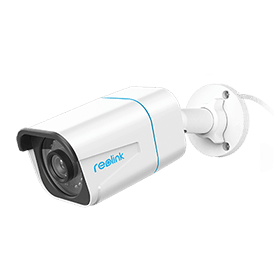
4K PoE IP Camera with Person/Vehicle Detection
Smart Person/Vehicle Alerts; 4K UHD Day; Night; 100ft Night Vision; Time Lapse; IP66 Certified Weatherproof; Audio Recording.
Operating on standard RTSP port 554, the RLC-810A supports both H.264 and H.265 compression, cutting network bandwidth usage in half when streaming uncompressed 3840x2160 footage to local VMS platforms.
2. Reolink E1 Zoom – Best Indoor RTSP Wi-Fi Camera for Pet & Room Monitoring
You want flexible indoor coverage across a living space or nursery with pan-tilt capabilities, but need an open RTSP stream to display live feeds on smart displays or custom dashboards.
The Reolink E1 Zoom is a compact 5MP Super HD indoor Wi-Fi camera with 355° pan, 50° tilt, and 3X optical zoom. It operates on dual-band 2.4 GHz/5 GHz Wi-Fi and provides plug-in power alongside full RTSP and ONVIF support, allowing continuous, stable local streaming to platforms like Synology, iSpy, or Agent DVR.
Compact indoor options like the E1 Zoom demonstrate how dual-band Wi-Fi cameras deliver open RTSP feeds for smart home dashboards without requiring physical network cables.

PTZ Wireless Smart Home Camera
Smart, Powerful and Affordable All-Round Home Protection. 355° Pan and 50° Tilt; 4K Ultra HD, 3X Optical Zoom, Two-Way Audio, 2.4/5 GHz WiFi, with Google Assistant Integration.
3. Reolink RLK8-800B4 – Best Complete 4K RTSP NVR System for Property-Wide Coverage
Monitoring an entire home or business requires multi-angle continuous 24/7 recording, local hard drive storage, and the ability to pull individual camera RTSP streams into secondary monitoring software.
The Reolink RLK8-800B4 is a plug-and-play 8-channel 4K PoE security kit featuring four 8MP outdoor cameras, an NVR with a pre-installed 2TB hard drive, and included Ethernet cabling. While the NVR centralizes local recording with zero subscription fees, it simultaneously serves out individual RTSP streams for each connected channel across your local network.
PoE setups like the RLK8-800B4 provide beginners with a plug-and-play local recorder while leaving the door open for advanced users to pull RTSP feeds into custom automation platforms.
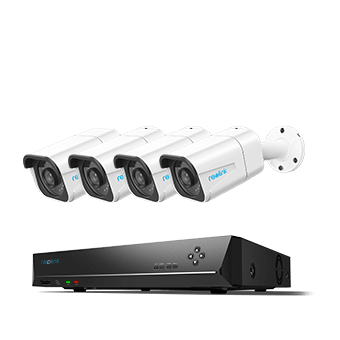
4K 8-Channel PoE Security System
4 pcs 4K Ultra HD Security Cameras; 2TB HDD 8-Channel NVR for 24/7 Recording; Person/Vehicle Detection; Plug & Play; 2 Network Solutions.
How to Find RTSP URL of an IP Camera?
Because RTSP URLs are not standardized across the security industry, every manufacturer uses a slightly different syntax to structure their IP camera streaming addresses. Follow these three steps to locate the exact RTSP URL for your camera model.
Step 1: Check the User Manual or Official Support Documentation
The fastest way to locate your camera's RTSP URL structure is to consult the manufacturer's official documentation.
-
Look for default: Manufacturers typically format URLs using standard variables, such as
rtsp://[username]:[password]@[IP_address]:[port]/[stream_path]. -
Contact support: If the manual omits streaming endpoints, reach out directly to technical support. For example, Reolink users can consult the official Reolink Support portal to get the exact RTSP URL string for specific models.
Step 2: Test Standard RTSP URL Syntaxes
If official documentation is unavailable, test the common URL patterns used by major camera brands in a media player like VLC.
-
Standard main stream (High Resolution):
rtsp://admin:password@192.168.1.100:554/h264Preview_01_main -
Standard sub-stream (Low Resolution):
rtsp://admin:password@192.168.1.100:554/h264Preview_01_sub(Replace
admin,password, and192.168.1.100with your camera's actual login credentials and local IP address.)
Step 3: Inspect Network Traffic Using Packet Sniffing Tools
If standard syntax fails, use a network protocol analyzer like Wireshark to capture the exact RTSP request string directly from your camera.
-
Download and launch Wireshark: Install the software on a PC connected to the same local network as your camera.
-
Start capturing packets: Select your active network interface and click Start.
-
Filter for RTSP traffic: Type
rtspinto the display filter bar at the top and press Enter. -
Trigger the stream: Open your camera's official app or web interface to start a live feed.
-
Extract the URL: Look for
DESCRIBEorSETUPrequests in Wireshark's packet log to copy the full RTSP URL string.
Here is a video showing how to use Wireshark to find IP cameras' RSTP URL:
How to Stream IP Camera Videos on RTSP-Compatible Players like VLC Player?
Streaming an IP camera feed on a media player like VLC allows you to view live, uncompressed video on your PC or Mac without launching proprietary camera software or paying cloud fees. Because VLC supports nearly all video decoding codecs—including H.264, H.265, and MJPEG—it acts as a reliable, universal RTSP viewer.
Follow these three steps to stream your camera's live video feed using VLC Media Player:
Step 1: Obtain Your Camera’s Complete RTSP URL
Before configuring VLC, assemble your camera's full RTSP network string. The URL structure generally follows this format: rtsp://[username]:[password]@[IP_address]:[port]/[stream_path]
Ensure you have:
-
Camera Credentials: The local username and password configured on the camera.
-
Local IP Address: The camera's network location (e.g.,
192.168.1.100). -
RTSP Port: The default network port for RTSP traffic, which is 554.
-
Stream Type: The specific stream path designated for high-resolution (main-stream) or low-resolution (sub-stream) video.
Step 2: Open the Network Stream in VLC
-
Launch VLC Media Player on your computer.
-
Click on Media in the top menu bar and select Open Network Stream... (or press Ctrl+N on Windows / Cmd+N on Mac).
-
In the Network tab, paste your camera's full RTSP URL into the Please enter a network URL field.
Step 3: Start Live Viewing & Adjust Network Caching
-
Click Play at the bottom of the window to initiate the connection.
-
Reduce Playback Latency (Optional): If you experience a delay in the live stream, check the Show more options box in the Network tab before clicking Play. Lower the Caching value from the default 1000 ms to 300 ms for a lower-latency feed.
What Are Possible Issues of RTSP-Compatible Cameras?
RTSP IP cameras enable users to stream live video feeds on an RTSP compatible players, Windows RTSP player, Chrome, IE web browser, RTSP software, or RTSP Client.
However, the convenience of RTSP can lead to serious problems if being used improperly.
For example, some IP cameras were hacked and live footage from homes is being streamed or watched by strangers because some IP cameras shares similar RTSP stream URL and some users are forgetful or indiscreet about their username and password.
To prevent your IP cameras from being hacked and footage being watched, users need to take some safeguards to secure your network.
For example, changing your IP camera account name and creating a strong account password during setup. Besides, if your IP camera is connected to your home router, one way to fend off any potential attack or hacking is to enable WPA2-based encryption. Updating IP camera/NVR firmware on a regular basis helps as well.
Reolink RTSP Compatibility Explained
Reolink PoE and plug-in Wi-Fi cameras support standardized RTSP (Real-Time Streaming Protocol and ONVIF protocols out of the box. This open architecture allows you to integrate your cameras into third-party platforms—such as Home Assistant, Blue Iris, Synology Surveillance Station, iSpy, or VLC Media Player—without paying recurring cloud fees or locking you into a single app ecosystem.
Supported Reolink Product Categories
-
PoE IP Cameras & Systems: All standalone Reolink PoE cameras (such as the RLC-810A) and PoE NVR systems fully support direct RTSP streaming.
-
Plug-in Wi-Fi Cameras: Most DC-powered indoor and outdoor Wi-Fi cameras (such as the E1 Zoom series) offer full RTSP and ONVIF integration.
-
Battery & Solar Cameras: When using Reolink NVR or Reolink Home Hub, each RTSP preview session for battery-powered WiFi cameras can last up to 5 minutes. After that, the camera enters sleep mode and the RTSP connection is disconnected. To continue viewing, a new stream request is required.
Standard Reolink RTSP URL
To connect a Reolink camera to a third-party RTSP viewer or server, use the following URL structures over default Port 554:
-
Main Stream (High Resolution - H.264/H.265):
rtsp://admin:password@192.168.1.100:554/h264Preview_01_main -
Sub-Stream (Low Resolution - Fluent):
rtsp://admin:password@192.168.1.100:554/h264Preview_01_sub
(Replace admin, password, and 192.168.1.100 with your camera's actual admin credentials and local IP address.)
FAQs
Do all IP cameras support RTSP?
No, not all IP cameras support RTSP protocol. Many modern IP cameras do offer RTSP support, such as Reolink cameras, but you need to check the specifications or documentation of the model to confirm whether it supports RTSP functionality.
Is RTSP still being used?
Yes, RTSP is still widely used today, especially in streaming media and surveillance systems. It's an important protocol for streaming audio and video over the internet. At the same, RTSP is compatible with various devices and applications.
Should I use ONVIF or RTSP?
It depends on your specific security requirements and the compatibility of your devices. ONVIF is a standard protocol for IP-based security products. RTSP, on the other hand, is a streaming protocol commonly used for real-time video streaming.
Conclusion
RTSP cameras offer an efficient solution for real-time video streaming and surveillance needs. With their support for standard streaming protocols, they provide compatibility with a wide range of devices and software applications. What are your thoughts on RTSP cameras? Do you think they are useful? Share your thoughts with us in the comment section below!
Search
Subscribe for the Latest Updates
Security insights & offers right into your inbox