
Dual-Band Wireless Security Cameras
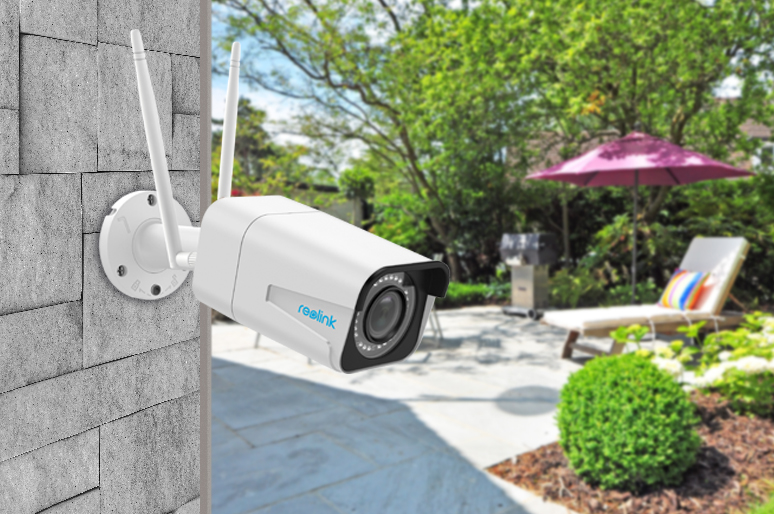
Are you having trouble deciding between 2.4 GHz and 5 GHz wireless security cameras? A dual-band wireless security camera offers the best of both worlds, making your choice much easier.

🎉 Limited-Time Security Camera Prime Deals
- Explore Special Offers on Individual Cameras and Security Systems.
- Protect Your Home for Less with Bundles & Multi-Packs.
What Are Dual Band Wireless Security Cameras?
A dual-band wireless security camera is a WiFi IP camera that connects to either your router's 2.4 GHz or 5 GHz network. You view the live feed and recordings through Reolink's app or an NVR over your home network, the same as any WiFi camera. The difference is that a single-band camera is locked to whichever frequency it shipped with. A dual-band camera can use either one.
You may notice that there are two popular wireless (WiFi) security IP cameras on the market: 2. 4 GHz and 5 GHz (5.8 GHz) wireless security cameras. However, the newest and best wireless security cameras are dual-band wireless security cameras. One of the biggest hits of this kind of IP security cameras is that you can switch freely between 2.4 GHz and 5 GHz (5.8 GHz) frequency bands.
Dual Band Wireless Security Camera Highlights
Why are dual-band wireless security cameras outstanding among other wireless security products? You will get answers below.
-
Two frequency band options. Nowadays, most routers on the market are dual-band. If you find out that either 2.4 GHz or 5 GHz (5.8 GHz) is crowded, then you can change to the other frequency band to get higher data transmission rates.
-
Away from signal interference/loss. Your phones, tablets and microwave ovens all transmit 2.4 GHz frequency, which can hinder your 2.4 GHz security camera live video/feed. Under this situation, you should shift to 5 (5.8 GHz) band immediately. (If you only have a 2.4 GHz single-band security camera, you can't do that.)
-
More installation flexibility. Usually, 2.4 GHz security cameras are ideal for long-range while 5 GHz (5.8 GHz) counterparts are optimal for shorter range. With dual band wireless security cameras, you can install this camera wherever you like as long as the WiFi signal range allows.
Some of you may ask: Why not just go for a 5 GHz (5.8 GHz) security camera since 2.4 GHz frequency band is congested?
Well, if everyone uses 5 GHz frequency band, this band will become crowded soon just like 2.4 GHz band now. Under this situation, should you just abandon your 5 GHz security cameras and go back to 2.4 GHz wireless security cameras? At this point, dual band WiFi security cameras should be your most ideal option.
Dual Band WiFi Security Cameras — Your Best Wireless Security Camera Choice
Dual band wireless security cameras, with the newest 802.11ac technology, combining the advantages of 2.4 GHz and 5 GHz (5.8 GHz) security cameras, are your best wireless security camera choice.
In Reolink, there are two models that stand out. There's the wire-free Argus PT and the wired WiFi 6-equipped E1 Outdoor Pro.
Argus PT
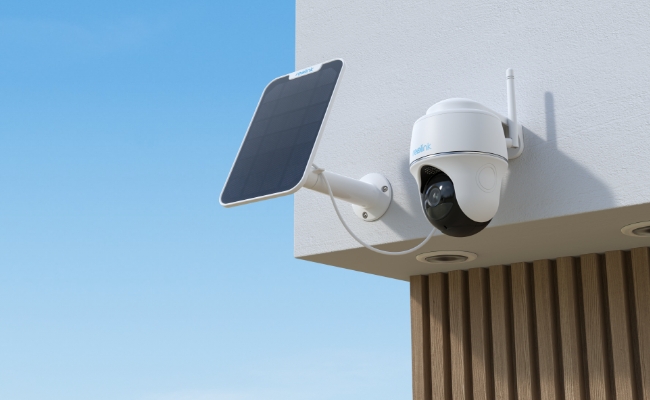
This camera supports both 2.4 GHz and 5 GHz WiFi, so it holds a stable connection even with interference nearby. It also gives you 355° pan and 140° tilt for wide coverage, 5MP Super HD video, plus both infrared (33ft) and color night vision. It runs on a rechargeable battery, and pairs with a Reolink Solar Panel for continuous power without needing an outlet.
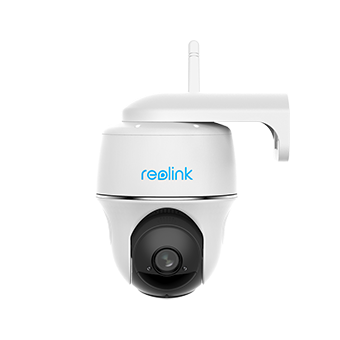
100% Wire-Free PT Camera
2K+ 5MP Super HD; 5GHz/2.4GHz WiFi; Rechargeable Battery & Solar Powered; 355° Pan & 140° Tilt; IP65 Certified Weatherproof; Color Night Vision; 2-Way Audio; 122° Wide Viewing Angle.
E1 Outdoor Pro
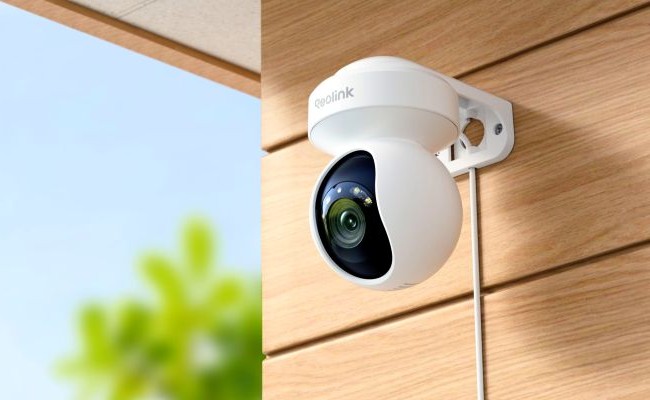
The E1 Outdoor Pro is Reolink's newer dual-band pick, built for WiFi 6 (802.11ax) instead of the older standard most dual-band cameras still use. It records 4K (8MP) with 3X optical zoom, plus 355° pan and 50° tilt. Night vision covers both infrared (40ft) and color modes. It plugs into power instead of running on battery, a better fit for a spot near an outlet that needs sharper detail or reach.
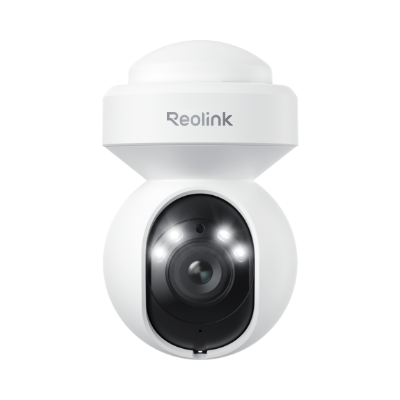
4K WiFi PTZ Camera with Auto-Tracking
4K 8MP Super HD, Smart Person/Vehicle Alerts, 355° Pan & 50° Tilt & 3X Optical Zoom, Auto Tracking, Color Night Vision.
FAQs
Does a Lorex camera need 2.4GHz or 5GHz WiFi?
It depends on the model. Lorex's budget and older pan-tilt cameras are usually 2.4GHz-only, but newer 4K and Wi-Fi 6 models, like the W891UAD-E, support both bands. Check your exact model's spec sheet to be sure.
Is the Imou Cruiser Dual 2 dual-band?
No. Despite the name, "Dual" refers to its two lenses, not to WiFi. Imou's own datasheet lists it as 2.4GHz-only (note: the separate Cruiser Dual 2 Pro model does support 5GHz). If you specifically want a camera that works on both bands, look for one advertised as dual-band. The Reolink Argus PT and E1 Outdoor Pro above both qualify.
Do most wireless security cameras use 2.4GHz?
Yes. Most WiFi security cameras, including many battery models, only support 2.4GHz. The reason is range. A 2.4GHz signal travels farther and passes through walls better than a 5GHz signal does. That matters when a camera sits far from the router. 5GHz is faster, but its range is shorter and it struggles with obstacles. A dual-band camera sidesteps the tradeoff. It can use whichever band fits where you're mounting it.
Conclusion
If you only need to reach a router through a wall or two, a single-band 2.4GHz camera is fine. But, if you're unsure, a dual-band camera removes that guesswork. It can lean on 2.4GHz for range or switch to 5GHz for a cleaner signal, whichever the install calls for.
Between the two picks above, let the spot decide. If there are no nearby outlet points a wire-free option like the Argus PT could be the more suitable model. If you have a fixed installation spot with access to power, especially if optical zoom is a priority, the E1 Outdoor Pro is the better choice. If you have any questions, feel free to leave them down in the comments below!
Search
Subscribe for the Latest Updates
Security insights & offers right into your inbox