
Farm Security Cameras — How to Choose the Best One
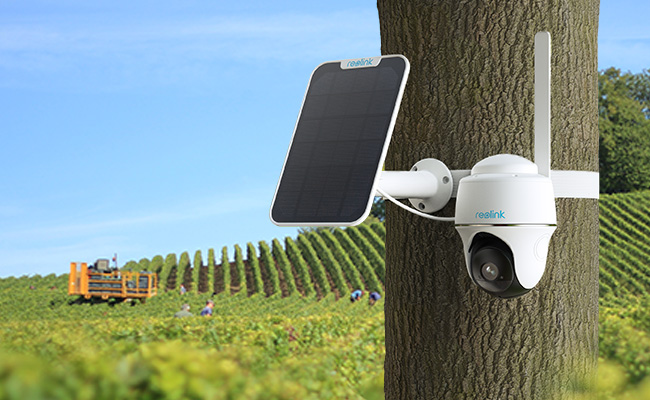
Farms and ranches are important properties that need protection. Farm security cameras/ systems are real winners in the battle against farm thieves or ranch burglars.
Here you'll know how to choose the best farm cameras including long-range farm surveillance cameras and outdoor security cameras for remote locations without WiFi & power cords.
Benefits of Using Farm Security Cameras
Farms may seem safe, but they are not immune to threats. Whether you're at home, away, or asleep, trespassers can act, putting your assets like livestock, crops, fuel, and equipment at risk.
Installing farm surveillance cameras offers significant benefits:
-
They can keep your farm safe by monitoring your assets and property remotely all the time. Even if you're not there you'll know what happens.
-
Farm CCTV cameras can record trespassers who enters your property. If a crime happens you can keep the recorded videos as evidence and report them to the local police.
-
You can use the farm security cameras to see how your crops grow, whether your livestock is safe, or whether there is extremely harsh weather.
Types of Farm Security Cameras
PoE (Power over Ethernet)
Best for barns and permanent structures with existing infrastructure.
4G/Cellular
No Wi-Fi needed; ideal for remote paddocks or grain storage.
Solar-Powered
Eco-friendly and wire-free for off-grid monitoring.
PTZ (Pan-Tilt-Zoom)
For wide-area surveillance of open fields.
Wired CCTV Systems (NVR/DVR)
Centralized management for farm offices.
Thermal/Infrared
For nighttime livestock monitoring without disturbing animals.
Farm Security Camera Key Features to Look Out For
When choosing the best farm CCTV cameras for your farm ranch and other large properties in rural areas you have to be fully prepared. Figuring out the key features of farm cameras can help you make a quick purchase.
Long-range video surveillance
A great security camera for farms with a long monitoring distance can let you see things far away and gain more details from live feed or recorded pictures and videos. Farms can easily monitor their whole land with only a few long range farm surveillance cameras.
Generally speaking a long range farm surveillance camera can focus at least 75 feet away from its mounting point and still recognize a person or vehicle. You can choose cameras with different detection range based on where you're using them.
To monitor stables or farm gates security cameras with detecting range of 20-50 feet will meet your need. To observe crops on farmland or stuff in the warehouse you can choose 50-100 feet long range security cameras. For farms and ranches large in size long range (100 feet or further) farm cameras are recommended.
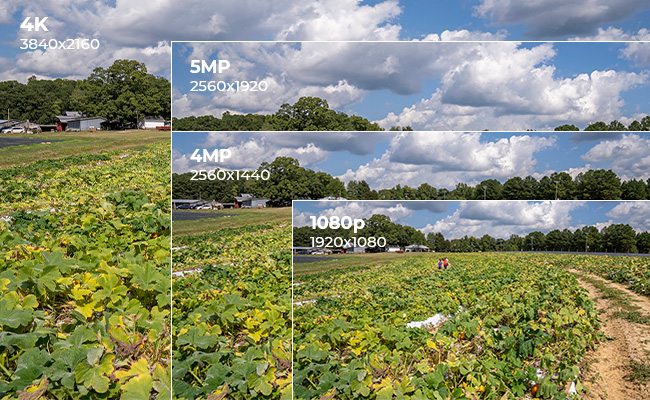
Most security cameras and systems for farm on the market come with 1080p resolution which is fine but not enough. For sharp and clear pictures & videos you'd better invest in 4K or higher definition cameras.
4G cellular capabilities
If your farm or ranch is located in a rural area with weak WiFi or power supply, having a 4G-powered farm security camera or jobsite camera in place is essential to keep your assets, such as beehives, secure.
A 4G farm security camera can work without WiFi or power supply by running on cellular network and getting power from the battery.
You can place the 4G farm camera anywhere without the limitation of troublesome wires. Installation work can be done in just a few minutes. Also, you can remove the camera quite easily by unscrewing the screws.
Besides it can transmit data from faraway such as sending images and videos from a remote farm to your phone wherever you are.
Solar panel compatibility
Solar-powered farm cameras can be a good choice, especially if the farm is located in a remote area. 4G farm cameras with solar panel work even better.
Because the camera is 4G, video and pictures are transmitted via cellular data, and you don't have to worry about connecting a network cable to the camera. This solution is particularly suitable for use on remote farms because the installation is simple and maintenance costs are low.
Choosing a solar powered farm CCTV camera can save you from frequent battery charging. Solar panels can be used to keep the batteries charged and farm security cameras can stay working for long periods of time if there is enough sunlight to shine on them.
Motion detection, alerts and notifications
Modern farm surveillance goes beyond simple video recording. It serves as an intelligent sentry that distinguishes between routine activity and a genuine threat.
Advanced motion detection now uses AI to identify specific objects which means you’ll receive a precise alert for a person at the paddock gate or a vehicle entering the equipment shed, rather than a notification for every swaying branch or passing shadow.
These instant push notifications and email alerts allow you to respond in real-time, whether that involves checking on a calving cow or deterring a potential vandal before they reach your high-value machinery.
By filtering for specific triggers like humans, vehicles, or pets, the system minimizes "notification fatigue," ensuring that when your phone buzzes, it matters. This targeted detection is essential for large rural properties where environmental movement is constant, but security presence is sparse.
Night vision infrared light
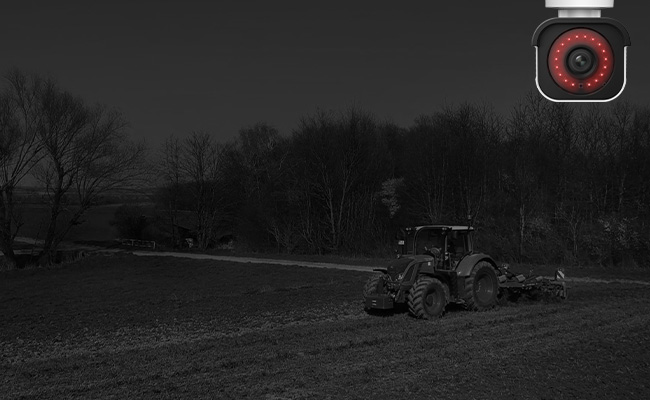
Darkness can be a cover for rural crimes. To protect your agricultural or livestock farms day and night you should go for long range night vision security cameras.
Most farm or ranch security cameras are equipped with IR LEDs that will emit light in the darkness. Even at night your camera can keep recording and offer you black and white images of the animals and plants. Anyone attempting to break in will also get caught.
But some may ask, "Will the infrared light from the camera disrupt the biological cycle of the plant or harm it?" .
Don't worry. Plants on your farm will only absorb the spectrum under 700 nm. IR light of your farm security cameras with night vision is typically above 700 nm so the infrared night vision security camera will not do harm to your plants.
IP protection ratings
If you want to install your farm security cameras for outdoor use for rural areas, weatherproof security cameras with an IP65 or above rating are your best choice. Even on a rainy day these waterproof security cameras can perform very well.
The IP rating is an important factor that determines how weatherproof a product is. The IP code consists of two numerals. The first numeral refers to the protection against solid objects and is rated on a scale from 0 (no protection) to 6 (no ingress of dust).
The second numeral rates the enclosure’s protection against liquids and uses a scale from 0 (no protection) to 9 (high-pressure hot water from different angles).
For daily use on a farm or ranch an IP65 or IP66 camera is solid enough to withstand sunlight or heavy rain. With a weatherproof farm security camera you can monitor the farm ranch or barn regardless of harsh weather conditions and get reliable protection year-round.
Best Farm Security Cameras Recommendation
Based on the 5 key features mentioned above we've shortlisted several top-rated farm CCTV cameras.
For large property, get farm security systems
A farm CCTV system is the better choice for the large property as you will likely need more than one camera to cover the entire property, providing 24/7/365 protection. A farm camera system kit that includes multiple cameras will also be more cost-effective than purchasing individual cameras.
In addition, one NVR can be connected to all of the cameras and can record centrally. This allows you to monitor all farm activities from one location. No tying up your local network while doing 24/7 video surveillance. Plus, the video is recorded on the NVR or DVR's built-in HDD disk and does not consume memory on any of your devices.
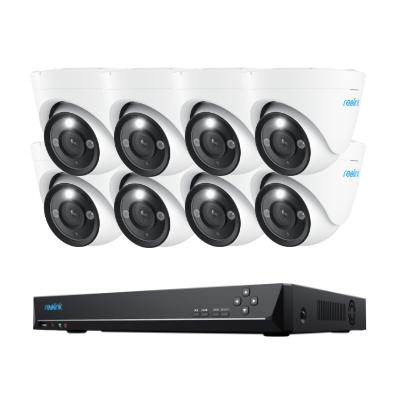
12MP PoE Security System with Color Night Vision
12MP Ultra HD, Person/Vehicle Detection, Power over Ethernet, 16-Channel NVR.
Reolink's security camera system RLK16-1200D8-A is one of the most popular systems for farms. It includes eight 12MP cameras 16-channel NVR (Network video recorder) and a 4TB built-in HDD enabling you to record day and night.
Also, it can detect people and vehicles as they pass by and send you real-time alerts. Its 18pc Infrared LEDs allow you to monitor from 100 feet even at night. Install cameras of this surveillance system in critical spots of the farm to maximize coverage so that you can secure your farms and ranches from thieves.
Pros and cons of this farm security system:
Pros:
- You can connect multiple cameras to cover a larger area
- Systems with up to 24 channels provide excellent scalability for future expansion.
- PoE (Power over Ethernet) ensures a more stable and reliable connection
Cons:
- The cable length is limited by Ethernet standards, which may restrict placement in very large or remote farms.
For remote locations, get farm security cameras without WiFi
Wireless battery-powered 4G security cameras are a great option for farms that are remote and have no power or WiFi connection. These cameras use a 4G data connection to send live video footage to your smartphone or other device, so you can keep an eye on your property even when you're not there.
Thanks to their battery power, these cameras can be placed anywhere on the farm without needing to be plugged into an outlet.
Unlike other wired and wireless security cameras and systems using a dedicated Internet connection for remote viewing, cellular security cameras operate over a 4G/5G cellular network making them applicable on your farm and other remote locations where Internet access and power cords are unavailable.
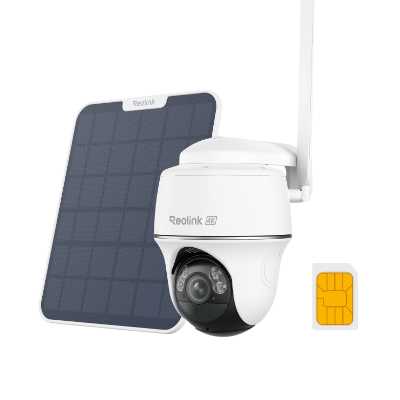
4K 8MP Wire-Free 4G LTE PT Battery Camera
4K 8MP; Smart Detection; 355° Pan & 140° Tilt; Battery/Solar Powered; Color Night Vision; Smart Real-Time Alert.
The Reolink Go PT Ultra is a 100% wire-free cellular farm security camera that can be placed indoors and outdoors. It offers clear day and night images with its 4K 8MP UHD and advanced night vision.
Powered by a rechargeable battery and built‑in solar panel, it works completely wire‑free, which is perfect for outdoor use. Setup takes just minutes and costs nothing. With the mobile app, you can view live streams of your farm or ranch anytime, anywhere, even when you’re off‑site.
Pros and cons of this 4G cellular camera:
Pros:
-
4G connectivity ensures fully wireless, which makes it ideal for remote locations without Wi-Fi access
-
355° pan and 140° tilt control offers extensive coverage and flexibility in monitoring angles
-
Built-in smart detection reduces false alerts
Cons:
- Battery life may be limited
For easy installation, get PoE farm security cameras
Compared to traditional wired security systems, PoE cameras are simpler and more practical for farms and ranches. Each camera runs on a single Ethernet cable for both power and data, which makes installation straightforward. Most setups can be done on your own as no specialized tools or technician will be required.
Standalone PoE security cameras are ideal for monitoring large farm areas, and the Reolink Duo 3 PoE is a standout choice. With an ultra‑clear 16MP resolution and advanced smart features, it delivers reliable, detailed coverage across your entire property. Its 180‑degree panoramic view covers as much ground as multiple fixed ranch cameras, which can help you secure more of your farm while saving on equipment and installation costs.
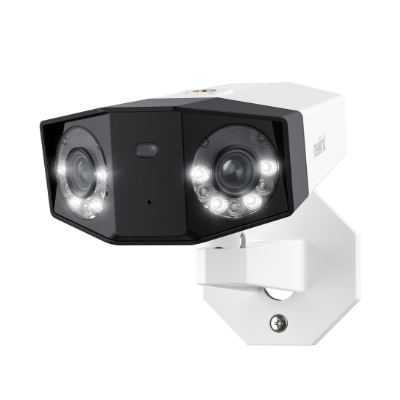
Groundbreaking 16MP Dual-Lens PoE Camera
16MP UHD, Dual-Lens, Motion Track, 180° Wide Viewing Angle, Power over Ethernet, Color Night Vision.
Pros and cons of Reolink Duo 3 PoE:
Pros:
- 16MP resolution offers better clarity and finer details
- 180-degree field of view offers extensive coverage
- IP67 designed for outdoor use in fluctuating conditions
Cons:
- Potential for lens flare in bright sunlight
For strategic surveillance, get solar farm security cameras with pre-motion recording
Traditional battery cameras only start recording after the PIR sensor is triggered, often missing the critical first few seconds of an event. With pre-motion recording enabled, cameras like the Altas PT Ultra can record critical moments before motion is detected, ensuring you capture any vehicles approaching the gate or predators entering the paddock, rather than just the tail end of the action.
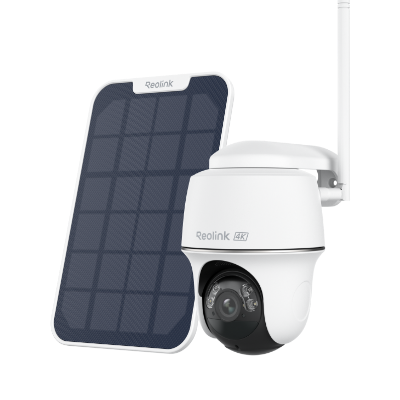
4k 100% Wire-Free PT Camera
4K 8MP Ultra HD; 5GHz/2.4GHz WiFi; Rechargeable Battery & Solar Powered; 355° Pan & 140° Tilt; IP65 Certified Weatherproof; Clear Night Vision; 2-Way Audio; 122° Wide Viewing Angle.
Pros:
- 4K UHD resolution and auto-tracking capability
- Completely wire-free design for flexible placement
- Solar panel compatibility for maximized energy efficiency
Cons:
- Non-removable battery
Note: You can read more Reolink camera reviews if you are interested in other farm security cameras.
How to Install and Set Up Farm Cameras?
Identify key surveillance locations
When installing farm cameras, make sure you cover the key areas. Take some time to note or map them down if you need. Some examples could include:
• Your farm entrances, exits, or driveways
• The holding pens to monitor or track animal behavior and employee working operations
• High-risk areas such as machinery storage farmhouse fuel tanks and water supplies
Secure the mounting hardware
Once you’ve chosen the best locations for surveillance, use a drill to secure the mounting bracket to a solid surface, such as a barn wall or a sturdy utility pole. Attach the camera to the bracket and adjust the angle until it fully covers the pasture or driveway, then tighten the screws to lock it in place. A stable mount is essential for maintaining clear, long‑range footage, especially during strong winds or storms.
For the best field of view and added protection against tampering, install your cameras at a height of at least 8 feet. This elevated position provides a clearer view over livestock and helps motion sensors better distinguish between ground‑level movement and activity at the perimeter.
Establish power and network connections
The wiring process depends on your chosen model. For PoE (Power over Ethernet) systems, run a single Cat5 or Cat6 cable from the camera back to your router or NVR. If you are installing wireless or battery-powered units, ensure the batteries are fully charged or connect the solar panel for a maintenance-free energy supply. For remote setups, verify that your 4G or LTE cellular signal is strong at the installation point.
Integrate with the app
Most modern security cameras can be operated through a mobile or desktop app. For Reolink cameras, simply download the Reolink app to start the setup process. Follow the on-screen instructions to add a new device, typically by scanning the camera’s QR code and connecting it to your local network. Once connected, you can customize motion detection zones and set alerts for people or vehicles entering restricted areas of the farm.
Battery-powered rural farm surveillance cameras are especially easy to install. Simply insert the batteries to get started. For continuous power, you can also connect the cameras to a solar panel, ensuring uninterrupted operation in remote locations.
Assess system performance
Test the live feed to ensure the resolution and frame rate meet your expectations. Walk through the detection zone to confirm that push notifications arrive instantly on your phone. Checking these features early ensures your system is ready to protect your property and track animal behavior without interruption.
Real World Farm Surveillance Camera Use Case

Managing livestock across vast acreage is a 24/7 job that often requires being in two places at once. One family simplified their workload by installing a wireless camera system to monitor newborn calves on their in-laws' property.
By setting up security cameras, they were able to zoom in on animals located over a kilometer away to check their health and safety. This simple, high-reach setup allowed the family to keep a constant eye on the herd from their home, saving hours of travel time and ensuring a quick response to any issues. It proves that remote monitoring isn't just a convenience. It is a vital necessity for protecting a farm's most valuable assets.
Bonus: Farm Security Tips
There are many measures you can take to protect your property and livestock. The following tips are some feasible and effective methods.
1. Build solid fences: One of the easiest ways is to build solid fences around your property. Build them high if possible and use electric fencing or barbed wire for extra protection.
2. Lock your assets: When you leave your tractor trailer or other vehicles on the farm make sure you never forget to remove the keys and store them in a safe place, or you can park the vehicles in a lockable garage.
3. Use motion-activated devices: Put motion-activated lights or alarm devices around your important equipment. Once someone sneaks in and tries to move the equipment, these alarm devices can deter the criminal instantly.
4. Install security systems: Use a CCTV security camera system to monitor everything in the fields. With pictures and videos captured by the camera, you'll always keep an eye on your property.
FAQs
Are there farm security cameras without WiFi?
A 4G farm security camera is designed for remote rural areas without WiFi or power. It uses a 4G LTE (or 5G) cellular network to send live video directly to your phone or computer. These cameras are battery‑powered and can be paired with a solar panel for continuous operation. Footage can be stored locally on an SD card or backed up to the cloud. With features like 2K HD video, person and vehicle detection, and night vision, it’s an ideal security solution for farms and ranches.
How to monitor a large farm property?
1.Install security cameras around the perimeter of the property.
2.Use motion-activated and solar-powered security cameras to reduce energy consumption and extend battery life.
3.Set up a security system that sends alerts to your phone or computer when movement is detected.
4.Install security lights in strategic locations to deter intruders.
5.Monitor the property regularly to ensure that it is secure.
What cameras are used in agriculture?
RGB cameras are commonly used in agriculture drones. They're great for basic crop mapping and monitoring. These cameras take high-quality pictures, perfect for spotting plant health issues and growth patterns.
What is the leading cause of fatalities in farms?
The leading cause of fatalities in farms is tractor-related accidents. Tractors and other heavy machinery are involved in most fatal farm incidents, often due to rollovers, runovers, or collisions.
Conclusion
Farm security cameras could be costly but losses incurred by farm theft or vandalism can be much heavier. The fees you pay for farm security systems will undoubtedly be less than the financial and emotional aftermath that follows a farm burglary.
All in all, farm cameras are efficient tools to prevent farm or ranch theft and can also be used to monitor plants and animals. Now is the time to choose the best one for your farm! You are welcome to share this article with your friends or leave your opinion on the topic of farm safety in the comments below.
Search
Subscribe for the Latest Updates
Security insights & offers right into your inbox