
Fisheye vs Multi-lens vs PTZ camera, Which's the Best?
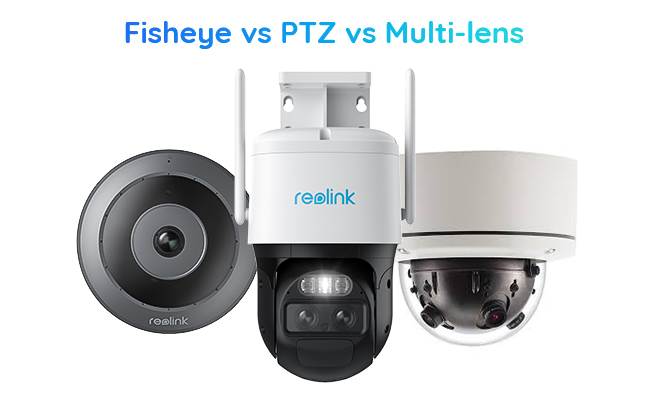
For those searching for wide-angle home security cameras, choosing among a fisheye camera, multi-lens camera, and PTZ (pan-tilt-zoom) camera can be extremely hard. With each option featuring its unique set of strengths and weaknesses, it may take you some time to decide which one is really worth your money.
Don't worry. In this article we will review some key features of each of the above security camera types, which will help you know what security camera within your budget and sastisfy your surveillance needs.
What Are Fisheye, Multi-Lens, and PTZ Cameras?
There is a lot to talk about when making a comparison between fisheye cameras, multi-lens cameras, and PTZ cameras. But before we dive into their differences, it's necessary to understand what these three kinds of security cameras refer to as well as how they work.
Fisheye cameras
A fisheye camera is a type of security camera designed to provide a wide-angle view of the area being monitored. These cameras usually utilize one single lens with a very short focal length to cover an area with an extremely wide view angle, offering from 180 to 360 degrees field of view.
Fisheye cameras can be used for both indoor and outdoor surveillance applications, such as monitoring large areas like parking lots or stadiums.
Multi-lens cameras
Multi-lens cameras are also known as multi-sensor or panoramic cameras. They feature several lenses arranged in a particular pattern to allow for multiple angles of viewing simultaneously.
With a multi-lens security camera, several frames can be recorded at once from different angles for users to see all sides of an event or incident at the same time. Multi-lens cameras are often used in high-traffic areas where an intruder may appear from any direction.
PTZ (pan-tilt-zoom) cameras
PTZ (pan-tilt-zoom) cameras feature a motorized base that allows them to rotate up and down, left and right, as well as zoom in and out on the scene they’re monitoring.
This enables users to get a wide view and get to know what is happening without having to change the camera's position. PTZ cameras are especially useful for monitoring large and open areas and tracking suspects or intruders in real time.
Pros & Cons of Fisheye, Multi-Lens, and PTZ Cameras
All three camera types can provide up to 360° coverage, helping reduce blind spots and the need for multiple devices. However, each has different strengths and limitations depending on use cases.
1. Fisheye Cameras
Key Points
- A fisheye camera provides a single-camera panoramic view
- Compact and less noticeable
- Best placed in central ceiling positions
- Can suffer from warping/distortion (partly fixable with de-warping tech)
2. Multi-Lens Cameras
Key Points
-
A multi-lens camera combines multiple lenses into one wide, detailed image
-
Better clarity than fisheye (less distortion)
-
Can mix lens types (wide + zoom)
-
Relies heavily on stitching quality
3. PTZ Cameras
Key Points
-
PTZ cameras allow real-time remote control
-
Supports auto-tracking of people/vehicles
-
Suitable for active monitoring
-
Mechanical movement increases cost and wear risk
Quick Comparison Summary
- Fisheye: Best for full-area overview, low maintenance
- Multi-lens: Best for high-detail wide coverage
- PTZ: Best for flexible, active surveillance and tracking
Which Is the Best, Multi-Lens, PTZ, or Fisheye?
There is no single “best” security camera type. The best choice depends on environment size, monitoring purpose, and required features. Each camera type is optimized for very different real-world scenarios.
PTZ Cameras – Best for Large, Dynamic, High-Mobility Monitoring
- PTZ cameras are designed for wide-area surveillance with active control and tracking.
- They are most effective when users need to actively monitor and follow movement in real time.
Best Use Cases
- Large parking lots with moving vehicles and pedestrians
- School or university campuses requiring security patrol coverage
- Construction sites with changing layouts and high-value equipment
- Warehouses and logistics centers with large storage zones
- Public squares or outdoor event spaces requiring live monitoring
Key Strength
- Ability to zoom in and actively track people or vehicles makes PTZ ideal for security teams or operators.
Fisheye Cameras – Best for Compact Spaces Requiring Full 360° Awareness
- Fisheye cameras are designed for maximum coverage from a single fixed point.
- They are most effective in small to medium indoor environments where full situational awareness is needed.
Best Use Cases
- Retail stores needing full-floor surveillance with one camera
- Hotel lobbies and reception areas with constant foot traffic
- Office entrances and reception desks
- Elevator lobbies and building corridors
- Small cafes or compact indoor commercial spaces
Key Strength
- Provides complete 360° visibility from a single installation point, minimizing blind spots in tight spaces.
Multi-Lens Cameras – Best for Balanced Coverage with High Detail
- Multi-lens cameras combine multiple viewpoints into one unified system.
- They are best for environments requiring both wide coverage and detailed image clarity at the same time.
Best Use Cases
- Residential properties requiring front yard + driveway + entrance coverage
- Retail environments needing both customer overview and checkout detail
- Office buildings requiring both entrance monitoring and hallway coverage
- School perimeters where different angles must be monitored simultaneously
- Small-to-medium commercial sites needing efficient multi-angle surveillance
Key Strength
- Delivers multi-angle coverage without multiple cameras, reducing system complexity while maintaining high image quality.
Price & Practical Considerations
- PTZ cameras: Higher cost due to mechanical movement, tracking, and advanced features
- Fisheye cameras: More cost-efficient for single-point wide coverage
- Multi-lens cameras: Mid-to-high range depending on lens count and stitching technology
Recommendations of Fisheye, Multi-Lens, and PTZ Cameras
Choosing a quality security camera for your home or business can be difficult even if you've decided which type to look for. Here we've rounded up a list of the best security cameras that can suit your security needs. Save your time by directly selecting from the following products.
6MP HD panoramic fisheye camera - Reolink FE-W
The newly launched fisheye security camera by Reolink comes with quite a lot of fantastic features. It gives a whole 360° panoramic view and can cover every corner. Also, the 6MP super HD allows you to check every detail from crystal-clear images and videos.
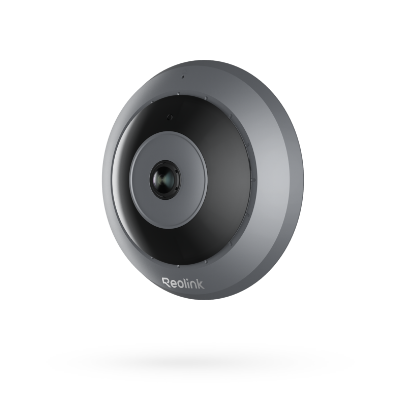
6MP WiFi 360° Panoramic Indoor Fisheye Camera
6MP Super HD, 360° Panoramic View, 5/2.4 GHz Dual-Band WiFi, Multiple Display Modes, Smart Person Detection, Two-Way Audio, Clear Night Vision.
There are PoE and WiFi versions of Reolink fisheye security cameras for your to choose FE-W. It has smart person detection and a built-in siren to deter intruders before they break in.
Also, Reolink adopts the de-warping mechanism and enables you to check flattened and natural images on Reolink App/Client.
4K dual-lens PoE PTZ security camera - TrackMix PoE
Reolink’s new TrackMix series combines multi-lens and PTZ technology in one device. The TrackMix PoE is one of these models. It features a 4K wide-angle lens and a 1080p telephoto lens. The camera can pan and tilt to cover a wide area. Its auto-tracking feature lets it follow people and vehicles. Users can also zoom in for detailed close-ups.
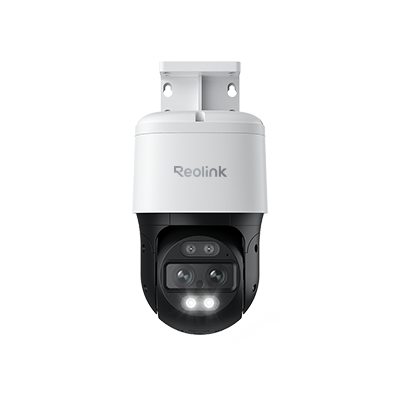
4K Dual-Lens PTZ Camera with Dual Tracking
4K 8MP Ultra HD, Wide & Telephoto Lenses, Pan & Tilt, Auto-Tracking, Person/Vehicle Detection, Power over Ethernet, Two-Way Audio.
16MP dual-lens security camera - Reolink Duo 3 PoE
Looking for a multi-lens security camera to monitor a large area? Try Reolink Duo 3!
Reolink Duo 3 is one of the best dual-lens security cameras on the market. It has twin lenses that capture 16MP images from different angles. With advanced stitching technology, you'll finally get a seamless 180° wide field of view.
This dual-lens camera is packed with rich features including smart detection and color night vision. Most importantly, it comes with no subscription fees. You can store footage locally using a microSD card or connect it to a Reolink NVR for secure, encrypted storage.
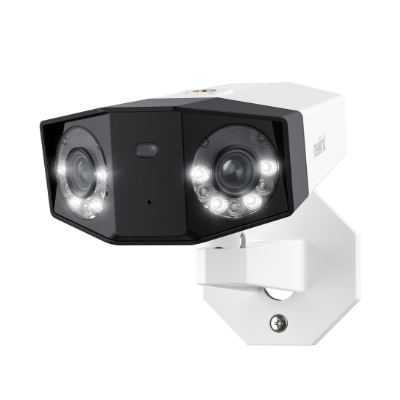
Groundbreaking 16MP Dual-Lens PoE Camera
16MP UHD, Dual-Lens, Motion Track, 180° Wide Viewing Angle, Power over Ethernet, Color Night Vision.
4K 360° PoE PTZ security camera - RLC-823A
If you prefer a PTZ security camera for outdoor monitoring, RLC-823A is a perfect choice because this security camera offers 4K 8MP ultra HD and provides a 360° view without distortion at all.
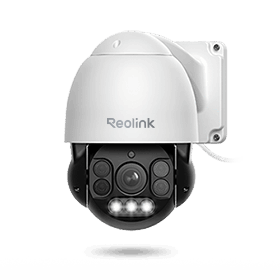
Smart PTZ PoE Camera with Spotlights
4K 8MP Ultra HD, Person/Vehicle Detection, 5X Optical Zoom, Auto Tracking, Manual Pan & Tilt, Two-Way Audio, 190ft Night Vision, Live View.
In addition to 360° pan and 90° tilt, RLC-823A has 5X optical zoom for you to zoom in or out and check details far away. Furthermore, this PTZ camera features smart person/vehicle/pet detection, which allows it to send you instant and accurate alerts.
With a motion-activated spotlight, RLC-823A can keep working both day and night and effectively deter any intruders.
FAQs
What is a multi-lens camera?
A multi-lens camera is a security camera that uses two or more lenses in one device to capture different angles at the same time. It combines these views into a single, wider image, helping users monitor large areas with fewer blind spots.
What does a multi lens do?
A multi-lens system works by capturing multiple perspectives simultaneously and merging them into one unified view. This allows the camera to:
- Cover a wider area
- Reduce blind spots
- Capture more detail from different angles at once
- Improve overall surveillance efficiency
What is the difference between fisheye and normal cameras?
The main difference is the field of view and image style:
- Fisheye cameras use a single ultra-wide lens to capture a 180°–360° panoramic view, but the image can look curved or distorted.
- Normal (standard) cameras usually capture a narrower, flat, and more natural-looking image, focusing on a specific direction rather than a full area.
In short, fisheye cameras prioritize wide coverage, while normal cameras prioritize clear, undistorted detail in a specific view.
Conclusion
Fisheye cameras, multi-lens cameras, and PTZ security cameras are widely used in our daily life. The most common feature of all these three types of cameras is the ability to cover large areas. After weighing their pros and cons, now you can make a reasonable decision. If you have any ideas or questions, don't hesitate to leave a comment below!
Search
Subscribe for the Latest Updates
Security insights & offers right into your inbox