
Motion Tracking Cameras: How Auto Tracking Works& Best Picks 2026
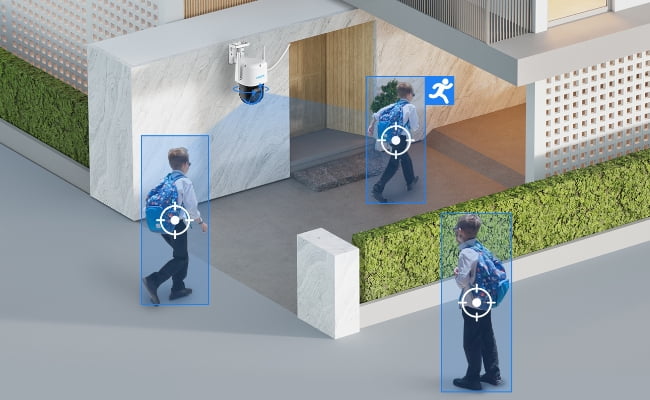
Auto motion tracking security cameras automatically detect and follow moving subjects such as people, vehicles, or animals. Unlike standard motion detection cameras that only trigger alerts or recording, auto tracking cameras can adjust their pan, tilt, zoom, or digital framing to keep a target in view as it moves.
These cameras that track movement are especially useful for driveways, yards, parking areas, and other spaces where subjects may move across a wide field of view. Depending on the model, tracking may rely on PTZ movement, AI object recognition, digital tracking, or dual-lens technology to provide both wider coverage and clearer target details.
Key Takeaways:
- Motion detection and motion tracking are different: Motion detection identifies activity, while auto tracking actively follows a moving subject.
- Tracking methods vary: Cameras may use PTZ movement, AI object tracking, digital zoom, or dual-lens tracking depending on the design.
- AI improves tracking accuracy: AI-enabled cameras can distinguish people, vehicles, and animals from less relevant motion.
- The right tracking method depends on the scenario: PTZ cameras suit large open areas, dual-lens cameras balance overview and close-up detail, and digital tracking works well in smaller or more controlled spaces.
- Auto tracking is most useful where subjects move across large areas: Common applications include driveways, backyards, entrances, parking lots, and commercial properties.
- What Is a Motion Tracking Camera?
- What Are the Different Types of Camera Tracking?
- How Does an Auto Tracking Security Camera Work?
- What Are Benefits of Auto Tracking CCTV Cameras?
- Where Should You Use a Motion Tracking Camera?
- 7 Key Features to Look for in the Best Motion Tracking Camera
- 3 Best Motion Tracking Cameras for Different Scenarios
- THow to Install a Motion Tracking Camera for Better Tracking?
- FAQs
- Conclusion
What Is a Motion Tracking Camera?
A motion tracking security camera is a camera that detects a moving person, vehicle, or animal and automatically follows the subject as it moves. Unlike a standard motion detection camera, which only triggers recording or alerts, an camera that tracks movement actively changes its view—typically through pan, tilt, digital tracking, zoom, or a combination of these technologies.
What Are the Different Types of Camera Tracking?
-
PTZ Auto Tracking: Pans and tilts physically to track targets across large spaces like parking lots or expansive yards.
-
Digital Tracking: Crops and enlarges moving targets electronically while preserving the broader camera perspective.
-
Zoom Tracking: Adjusts focal length automatically to capture clear details on distant subjects.
-
Dual-Lens Tracking: Pairs a wide-angle overview lens with a dedicated close-up tracking lens to maintain complete environmental context.
-
Motion Path Visualization: Maps an entire movement trail into a single composite image for rapid security reviews.
Comparison Table:
How Does an Auto Tracking Security Camera Work?
Auto tracking security cameras combine real-time visual analysis with dynamic lens adjustment to follow movement across a property. By actively maintaining focus on a subject rather than relying on a fixed field of view, a single auto-tracking unit can cover areas that would otherwise require multiple static cameras.
PTZ Auto Tracking: Physical Pan, Tilt, and Zoom
Pan-Tilt-Zoom (PTZ) tracking relies on internal servo motors to shift the camera’s physical lens direction.
When the sensor detects motion along the edge of its frame, internal motors drive the camera horizontally (pan) up to 360 degree and vertically (tilt) to center the subject.
Advanced PTZ units engage optical zoom during tracking, physically adjusting internal glass elements to magnify distant details—like license plates or faces—without losing image resolution.
The camera tracks the subject continuously until it crosses outside the designated detection perimeter, at which point the lens automatically returns to its baseline "home" position.
AI Object Tracking: Intelligent Motion Filtering
Traditional motion tracking reacts to any change in pixels, leading to false tracking events caused by swaying tree branches, rain, or passing street shadows.
Modern tracking cameras utilize onboard AI processing chips trained on thousands of security images.
The algorithm categorizes detected shapes into specific entities—primarily people, vehicles, or pets.
Motorized tracking or digital magnification triggers only when a designated target class is confirmed, ensuring the camera remains focused on genuine security threats.
Dual-Lens & Zoom Tracking: Overview and Close-Up Combination
A common limitation of single-lens PTZ tracking is "blind spot creation"—when the camera turns to follow a target in the west, it stops monitoring the east. Dual-lens architecture eliminates this trade-off.
fixed, wide-angle lens remains stationary, continuously recording the entire broad scene and monitoring for new activity.
A secondary telephoto lens receives positioning data from the fixed lens and dynamically zooms in to track the moving subject.
The system captures two video feeds at once, giving you the complete context of the environment alongside high-definition detail of the moving target.
What Are Benefits of Auto Tracking CCTV Cameras?
1. Expanded Coverage with Fewer Units
Auto-tracking cameras have endless pan and more zoom capability than regular stationary cameras. These features allow a single auto-tracking camera to replace multiple fixed cameras easily.
The endless pan allows the auto-tracking camera to cover much wider areas. The powerful optical zoom provides clearer picture quality of faraway objects, making it less likely to miss details.
2. Time-Saving
Rather than trying to piece footage from multiple fixed cameras to understand an event, auto-tracking cameras provide one seamless, high-quality feed. This way, you can better understand what's happening without wasting time on irrelevant footage.
3. Programmable Detection Zones
Auto-tracking cameras can be personalized to track and record certain types of events and areas you are interested in.
To give you an idea, you can set the camera to ignore certain movements like leaves or debris blowing in the wind and focus on specific areas, such as driveways or gates. You can even specify the object size to be recorded or ignored.
4. Higher Level of Security
Compared to fixed cameras that only record motion in their field of view, auto-tracking cameras also monitor intruders' movement over distances to provide longer recordings and more information on them.
5. Automated Hands-Free Operation
The cameras follow a subject around, and once it is out of range, it returns to its default position. Hence, you don't have to manually pan/tilt the camera.
Where Should You Use a Motion Tracking Camera?
-
Churches: Big church buildings can benefit from using auto tracking ptz cameras. By having a camera trained on the altar, for example, they can ensure that everyone in the congregation has a clear view of the service. Additionally, auto-tracking cameras can provide a live feed of the service to those unable to attend in person.
-
Classrooms: Teachers in school classrooms can use tracking cameras to keep an eye on students and ensure they are all paying attention in class. Auto-tracking cameras can be used to record lectures or class presentations for later review.
-
Yards: Yards and personal properties are the most common places you'd find these tracking cameras. Their features make them effective in spotting trespassers and other suspicious individuals in the area and improve any property's security/surveillance system.
7 Key Features to Look for in the Best Motion Tracking Camera
1. Tracking Method
The tracking method determines how a camera follows a moving subject and how much of the surrounding area remains visible during tracking. Choose based on the size of the area, how much detail you need, and whether continuous overview coverage matters.
-
PTZ Auto Tracking: Best for large yards, driveways, parking lots, and other open areas. The camera physically pans and tilts to follow a moving subject, making it suitable when wide-area coverage is more important than keeping the original view fixed.
-
Dual-Lens Tracking: Best when you want both broad situational awareness and close-up target details. One lens maintains a wider overview while another tracks or zooms in on the subject, making this method useful for entrances, driveways, and large outdoor spaces where context matters.
-
Digital Tracking: Best for smaller or more controlled areas where physical camera movement is unnecessary. It digitally crops and enlarges a moving subject within the camera's existing field of view, offering quieter operation and fewer moving parts, but with more limited tracking range than PTZ systems.
2. Target Detection
Basic motion sensors trigger alerts on any pixel change, causing constant false alarms.
-
Onboard Edge AI: Select cameras with built-in processors trained to recognize specific shapes—primarily people, vehicles, and pets.
-
Filtered Activation: Ensures physical pan-tilt routines and phone notifications only trigger for genuine security events rather than passing shadows or blowing leaves.
3. Tracking Range
Pan-tilt coverage dictates how far a camera can monitor before hitting mechanical limits.
-
Pan/Tilt Angles: A camera with horizontal pan and vertical tilt eliminates blind spots around broad home perimeters.
-
Preset Points: Advanced auto-tracking cameras automatically reset to a designated "home" position once a target leaves the detection zone, ready for the next event.
4. Zoom Capability
Zooming keeps subject details—like license plates—legible over distance.
-
Optical Zoom: Physically adjusts internal glass lenses to magnify targets without sacrificing video resolution.
-
Digital Zoom: Enlarges pixels electronically, which can lead to grainy or pixelated footage over longer distances.
5. Night Tracking
Motion tracking must operate effectively after dark, when most security incidents occur.
-
Infrared (IR) Night Vision: Uses invisible IR LEDs to track targets in total darkness, outputting clear black-and-white video.
-
Color Night Vision / Spotlight: Uses motion-activated spotlights or low-light sensors to maintain full-color auto-tracking in dimly lit areas.
6. Storage and Subscription
Avoid unexpected recurring costs by evaluating how tracking footage is stored.
-
Local Storage Options: Look for devices supporting standalone microSD cards, local Network Video Recorders (NVRs), or centralized smart hubs (like the Reolink Home Hub).
-
Subscription-Free AI: Ensure camera's tracking and AI target detection functions are processed on-device, requiring no ongoing paid cloud plans.
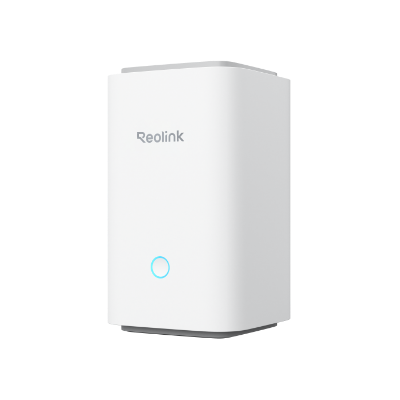
Wireless Security Center with Encrypted Local Storage and Multi-Device Management
64GB microSD Card Included; Exclusive Anti-Theft Algorithms; Expandable System Up to 8 Reolink Cams; No Monthly Fees
7. Installation Environment
Where you mount the camera dictates the required build quality and power delivery.
-
Weatherproofing: Outdoor tracking cameras require an IP65 or higher IP rating to withstand heavy rain, dust, and temperature extremes.
-
Power & Mounting Height: Ensure consistent power via Power over Ethernet (PoE) or solar panel configurations, and mount the unit 8 to 10 feet high to maximize the AI detection angle.
3 Best Motion Tracking Cameras for Different Scenarios
Matching a security camera to a specific property layout prevents common tracking mistakes, like creating blind spots or dealing with dead batteries.
1. Best for Large Properties & Perimeter Security: Reolink OMVI 3i PoE
A Power over Ethernet (PoE) camera uses a single cable to handle power and high-speed data transfer. It provides uninterrupted continuous recording without relying on battery levels or ambient Wi-Fi quality.
You need to cover broad, open areas—like a wide driveway, commercial front yard, or multi-car garage—where a moving subject could easily walk past a standard camera's field of view.
The Reolink OMVI 3i PoE uses an 18MP triple-lens system. Two top lenses stitch together a permanent 180-dgree panoramic view, while a lower 4K motorized lens actively tracks targets using SyncTrack. Because the panoramic view stays fixed while the bottom lens moves, it eliminates the single-lens PTZ "blind spot" problem.
3. Best for High-Traffic Entryways & Residential Yards: Reolink TrackMix WiFi
Wi-Fi tracking cameras connect wirelessly to standard home networks, requiring only a nearby power outlet for installation.
You want detailed close-up tracking of visitors, vehicles, or package deliveries at a front porch or side yard without running long Ethernet lines through walls.
The Reolink TrackMix WiFi pairs a wide-angle 4K lens with a telephoto lens to capture dual views simultaneously. Onboard AI distinguishes people, vehicles, and pets from minor background motion, triggering auto-tracking routines only for true security events.
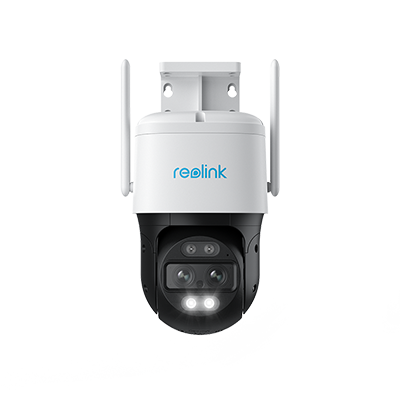
4K Dual-Lens PTZ Camera with Motion Tracking
4K 8MP UHD, Wide-Angle & Telephoto Lenses, Pan-Tilt-Zoom, Auto-Tracking, Person/Vehicle Detection, 2.4/5 GHz Dual-Band WiFi, Two-Way Audio.
3. Best for Off-Grid, Renters, & Wire-Free Setups: Reolink Altas PT Ultra
Battery-powered pan-tilt cameras run completely wire-free, providing flexible placement on rental properties, sheds, or remote mounting locations.
You need full-perimeter tracking in a location where drilling, mounting junction boxes, or running physical power cords is impossible.
The Reolink Altas PT Ultra delivers 4K UHD resolution with a pan-and-tilt motor driver to track movement in every direction. Its high-capacity battery supports continuous recording, giving off-grid or rental setups long-term tracking power without routine maintenance.
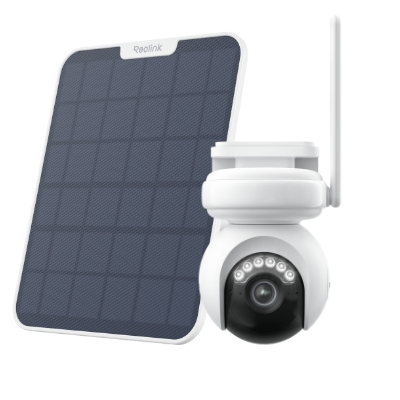
4K Battery-Powered PTZ Camera with Continuous Recording
👍 4K UHD video with continuous recording
👍 ColorX night vision in low light
👍 Pan, tilt, and automatic person tracking
👍 Local storage without monthly fees
THow to Install a Motion Tracking Camera for Better Tracking?
Here are some tips to help you get the most out of your auto-tracking security camera system:
-
Place the camera in the best vantage possible to get an unobstructed coverage of its surroundings.
-
Mount the camera properly and high enough, so it doesn't get knocked over or damaged
-
Configure the tracking settings as needed. You want the cameras to be able to track moving objects but not so sensitive that they're easily distracted by irrelevant events.
-
Test the system regularly. Keep an eye on the footage to ensure everything is working as it should be. If you notice any problems, make sure to address them right away.
FAQs
Can security cameras automatically follow a person?
Yes. Auto-tracking security cameras can detect a person and automatically adjust their pan, tilt, zoom, or digital framing to keep the person in view. AI-enabled models can also distinguish people from vehicles, animals, and other motion, helping reduce unnecessary tracking.
What are the best cameras for live streaming with auto tracking?
For live streaming with auto tracking, look for cameras that combine reliable subject tracking with smooth real-time video, strong network connectivity, and wide coverage. PTZ cameras are suitable for large areas, while dual-lens models are better when you want both a wide overview and a close-up view of the tracked subject.
What features should I look for in a camera tracking system?
Prioritize the tracking method, AI target recognition, pan-and-tilt range, zoom capability, video resolution, night tracking, connectivity, storage, and installation environment. For large outdoor spaces, PTZ tracking is useful; for maintaining both context and close-up detail, a dual-lens tracking camera may be a better choice.
Is optical zoom or digital zoom better for tracking?
Optical zoom is better when preserving image detail at longer distances is the priority because it magnifies the subject through the lens. Digital zoom enlarges part of the recorded image, making it useful for flexible tracking but with less retained detail at higher magnification. Dual-lens cameras can combine wide-area coverage with a dedicated zoomed view.
Conclusion
Everyone wants to keep their home/business as safe as possible. Although security cameras with regular motion sensors can be useful, it is worth upgrading to motion tracking cameras if you can afford it.
Plus, you really don't need to break the bank for a good motion tracking camera. Whatever your budget, we are sure you will find something right for your needs.
Search
Subscribe for the Latest Updates
Security insights & offers right into your inbox