
Best Off-Grid Security Cameras for Remote Properties (2026 Buyer's Guide)

Choosing the best off-grid security camera depends entirely on your property's cellular signal strength, your power storage capacity, and whether you want a completely independent local network or a plug-and-play cellular option. Unlike standard smart home setups, true off-grid monitoring means you are operating without traditional Wi-Fi or shore power, so reliability is your absolute highest priority.
The truth is, many out-of-the-box consumer options come with severe hidden friction points that retail listings rarely mention. To help you navigate these power and connectivity trade-offs, we have broken down the top off-grid setups based on real-world reliability, power independence, and local storage capability.
- What Is an Off-Grid Security Camera?
- Why Users Need Reliable Off-Grid Security Cameras?
- 7 Key Features to Look for in the Best Off-Grid Security Camera
- 3 Best Off-Grid Security Cameras Recommendations
- Specific Use Scenarios: Which Off-Grid Camera Is Best for Your Situation?
- Tips for Installing and Setting Up Off Grid Security Cameras
- Alternative: How to Set Up a Network Connection for Off-Grid Security Cameras?
- FAQs
- Conclusion
What Is an Off-Grid Security Camera?
An off-grid security camera is a standalone surveillance device designed to operate entirely independent of traditional public utility infrastructure—specifically meaning it requires no hardwired grid electricity (shore power) and no standard landline internet or home Wi-Fi networks.
Instead of plugging into a wall outlet and connecting to a home router, these systems are engineered to be completely self-sustaining.
How do off-grid security cameras work?
Off-grid security cameras combine alternative power with wireless data transmission to operate independently of traditional infrastructure. They are usually powered by rechargeable batteries paired with solar panels, which keep the camera running day and night, even during cloudy periods.
Instead of relying on Wi‑Fi, these cameras use built-in 4G LTE or 5G cellular modules to send live video and alerts to your phone. In areas without cellular coverage, they can still function offline by storing footage locally on a MicroSD card or a nearby NVR.
Types of off-grid options
Why Users Need Reliable Off-Grid Security Cameras?
When you look past the marketing materials and look at community feedback on forums like Reddit, a clear pattern of mechanical and software failures emerges.
Ghosting and Reconnection Bug
For highly remote properties, users frequently rely on LTE cellular cameras. However, a massive pain point is systemic software freezes where devices completely stop communicating with cellular networks.
For instance, Vosker VKX users report that the solar-cellular units frequently lock up and stop communicating randomly, requiring a physical power cycle to regain a signal. If your off-grid cabin or job site is a 90-minute drive away, a camera that requires a manual restart every single week becomes useless the moment it glitches.
Severe Alert Delays and Poor Tracking
Many property owners try using hunting trail cameras for security because they are ruggedly built for the elements, but trail cameras are optimized for wildlife, not home defense. Standard trail cameras often suffer from multi-minute delays before sending a push notification to your phone. By the time you receive the alert, an intruder is already gone.
Forced Cloud & Fake Local Storage
Many off-grid users want total independence from the internet, but mainstream consumer brands frequently build software that forces users into a paid ecosystem. Users note that some brands market their devices as having local storage, but their software interfaces still require active internet connectivity to review footage properly, or they bundle the hardware with apps that heavily push mandatory monthly cloud storage fees.
Narrow Motion Detection Range
Off-grid properties usually involve wide-open spaces, but consumer-grade battery and solar cameras use weak Passive Infrared (PIR) sensors to aggressively save battery power. For example, specialized cellular options like the Reolink Go Ranger PT max out at a realistic detection distance of around 30 feet under real-world conditions.
Weather Vulnerabilities (The Solar Shadow)
Relying strictly on small, integrated solar panels that attach directly to the camera chassis creates severe physical design flaws. Some users have pointed out that the cellular models with antenna itself actually cast a physical shadow over its own built-in solar panel, significantly reducing its charging efficiency. Furthermore, flat-angled panels easily accumulate snow and dust, which can quickly drain and kill the battery during winter months.
7 Key Features to Look for in the Best Off-Grid Security Camera
Evaluating off-grid security systems requires a different set of standards than evaluating standard home Wi-Fi cameras. When you are miles away from the nearest power outlet or utility pole, efficiency and environmental resilience matter just as much as raw video specifications.
Power Options: Solar vs. Battery vs. Combined
True off-grid cameras must rely on a combined solar-and-battery setup to ensure continuous operation. Relying strictly on pre-charged batteries means regular check to the site to swap them out, while solar power requires an integrated battery reservoir to keep the camera alive through the night and during consecutive overcast days.
-
Battery-Only Systems: These rely entirely on high-capacity rechargeable lithium-ion packs. They work well for short-term monitoring or low-traffic areas but are prone to sudden drainage in extreme cold weather, so models may lose up to 50% of their operational capacity when temperatures drop below freezing.
-
Solar-Assisted Systems: These use an external photovoltaic panel to continuously trickle-charge the internal battery array during daylight hours.
-
Standalone 12V Solar (The DIY Alternative): Advanced off-grid users often bypass small, integrated panels entirely. Instead, they pair standard wired cameras with a heavy-duty 100W rigid solar panel hooked up to a dedicated 100Ah deep-cycle AGM or battery inside a weatherproof job box. This provides weeks of power backup even during major winter storms.
Network Connectivity
Because off-grid locations lack standard landline internet or Wi-Fi, these cameras must use mobile cellular networks or operate as completely closed-loop, local-only transmission systems.
-
4G LTE / 5G Cellular Security Cameras: These devices feature an integrated cellular SIM card slot that communicates directly with mobile towers, so you can stream live footage and receive push alerts on your phone from anywhere in the world. They require a monthly data plan and a stable cellular signal at the mounting location.
-
Closed-Loop (No Signal Required): If the site has absolutely zero cellular coverage, the cameras are wired directly to a local recorder on-site. The system operates entirely offline, storing data to physical drives that you must review in person.
Storage Options: Local vs. Cloud
Local storage is the gold standard for off-grid security. Cloud storage is highly data-intensive, costly over cellular networks, and becomes completely useless if your remote cellular network drops its connection.
-
Local Storage (MicroSD / NVR): Footage is saved directly onto an on-camera MicroSD card or sent back to a centralized local hard drive or Network Video Recorder (NVR). This keeps your data 100% private, operates seamlessly without an internet connection, and incurs no monthly subscription costs.
-
Cloud Storage: This requires the camera to constantly compress and upload video files over a cellular connection. This can rapidly burn through mobile data plans (potentially costing hundreds of dollars a month) and will fail to record during network outages.
If your primary goal is to avoid ongoing monthly fees and maintain strict data privacy, systems built around local recording are your best option. Certain off-grid ready systems from Reolink are designed with this specific framework in mind, offering extensive, high-capacity local storage options that require zero cloud subscription dependencies.
Outdoor Weatherproofing
An off-grid camera must possess a minimum rating of IP65 to survive open exposure to rain, dust, and snow without physical degradation over time.
-
IP65 Rating: Dust-tight and capable of surviving normal rainfall, splashing, and low-pressure water streams from a garden hose. It is perfectly adequate for under-eave mounting or lightly sheltered areas.
-
IP66 Rating: Built to withstand heavy, high-pressure water jets and intense downpours. If your camera is completely unsheltered on a fence pole, a marine dock, or an open tree trunk, an IP66 rating is mandatory to prevent moisture ingress.
Night Vision Capability
The type of night vision you choose dictates how identifiable an intruder will be after dark. In off-grid zones with zero ambient street lighting, your hardware must have high-sensitivity sensors or strong integrated illuminators.
Standard infrared (IR) night vision provides reliable black-and-white footage in complete darkness, while advanced low-light sensors can capture full-color video using only moonlight or starlight. Some cameras also feature motion-activated spotlights that deliver vivid color footage and help deter intruders, though they typically consume more battery power.
AI Motion Detection
Standard motion sensors trigger false alerts from moving tree branches, shadows, or passing animals, which rapidly drains battery life and cellular data. Off-grid systems require onboard AI edge computing to filter alerts.
-
Basic Passive Infrared (PIR) Sensors: These simply look for changes in heat and movement. In an outdoor, off-grid environment, wind-blown brush or a stray deer will trigger continuous false alarms.
-
Onboard AI Detection: The camera's internal processor analyzes the shapes in the frame in real time to categorize them specifically as a person, vehicle, or animal. This ensures you are only interrupted with a phone alert when an actual threat is present, reducing false alarms by up to 90% and preserving critical battery reserves.
Video Resolution and Image Quality
While higher resolution provides cleaner digital zooming, off-grid properties require a careful balance. Higher resolutions generate much larger file sizes, which can fill local storage quickly and take longer to stream over a mobile connection.
-
1080p (Full HD): The most energy-efficient option with the smallest file footprints. It provides basic situational awareness but details quickly blur if you try to zoom in on a distant object.
-
2K (4MP / 5MP): The ideal sweet spot for off-grid properties. It delivers sharp enough clarity to identify facial features and license plates at moderate distances without overwhelming your storage or cellular bandwidth.
-
4K (8MP Ultra HD): Offers maximum forensic detail and allows you to zoom far into a scene without pixelation. However, it requires robust local hard drives and excellent cellular upload speeds to stream smoothly.
Buyer's Feature Checklist
To help bring further clarity to what’s best for you, we created a Buyer Decision Table to make it easier for you to compare feature priorities with confidence.
3 Best Off-Grid Security Cameras Recommendations
When choosing off-grid security cameras for completely isolated areas, your main constraints are power and network connectivity. If your campsite, cabin, or rural property completely lacks grid electricity and has no local Wi-Fi signal, you cannot use standard smart home hardware. Here are top 3 Reolink's picks for the best off-grid security cameras.
1. Reolink Go Ranger PT: Best Option for Wildlife & Property Boundaries
Designed specifically for deep-woods locations, pastures, and remote boundaries with zero Wi-Fi, the Reolink Go Ranger PT combines a built-in 4G LTE cellular module, rugged camouflaged hardware, and advanced 4K pan-tilt tracking to capture high-fidelity details in unforgiving environments
Key Features:
- Camouflage housing for discreet deployment in natural settings
- 4G LTE connectivity for completely Wi-Fi-free monitoring
- 940nm invisible IR night vision with no visible red glow
- Smart AI detection for people, vehicles, and animals
- Pan-and-tilt coverage for wider area monitoring
- Rugged weatherproof design built for harsh outdoor conditions
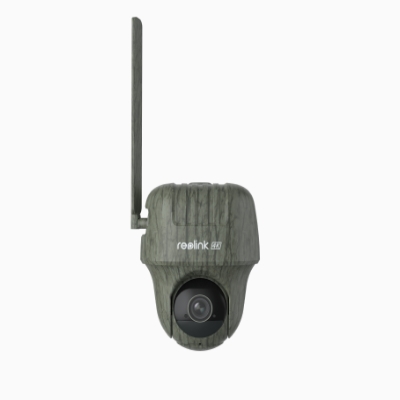
4K 4G LTE Wildlife Camera with 360° All-Around View
4G LTE Network, 4K 8MP Ultra HD, No-Glow IR LEDs, Person Detection, Animal Detection, Two-Way Audio, Battery/Solar Powered.
2. Reolink Altas Go PT: Best for Extended Recording & 10-Second Pre-Recording
The Altas Go PT solves the common cellular camera issue of "late recordings" by combining a massive 20,000mAh battery array with a pre-recording buffer that captures events before they are triggered.
Key Features:
- 10-second pre-recording captures activity before motion is detected
- Massive 20,000mAh battery for extended off-grid operation
- ColorX full-color night vision without spotlights
- 4G LTE cellular connectivity for remote access anywhere with coverage
- 355° pan-and-tilt monitoring for broader coverage
- Solar panel compatibility for continuous power
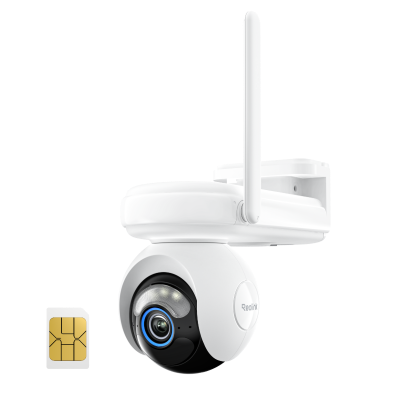
2K 4G LTE 360° PT Battery/Solar Security Camera
2K 10s Pre-recording; ColorX Night Vision; Pan, Tilt & Auto-Tracking; 6-Month Battery Life.
3. Reolink TrackMix LTE: Best All-Around 4K Resolution & Active Deterrence
The Reolink TrackMix LTE is a 4G LTE powerhouse designed for vacation homes, construction sites, and open assets, bringing sharp 4K clarity and automatic tracking to areas with zero infrastructure.
Key Features:
- 4K Ultra HD resolution for sharp, detailed footage
- Dual-Lens to minimize blind spots
- Auto-tracking technology to follow moving subjects
- Dual spotlights and built-in siren for active deterrence
- 4G LTE connectivity with no Wi-Fi required
- 100% wire-free installation with battery and solar power support
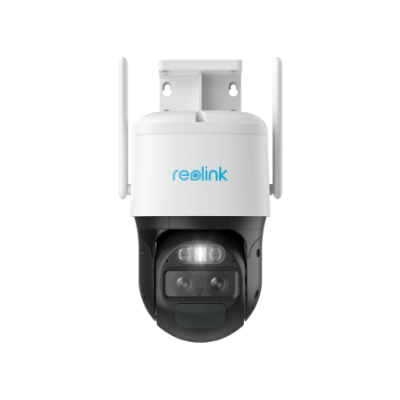
2K Dual-Lens PTZ Camera with Motion Tracking
2K 4MP Quad HD, Wide-Angle & Telephoto Lenses, Pan-Tilt-Zoom, Auto-Tracking, Person/Vehicle Detection, 4G LTE Network, Two-Way Audio, Time-Lapse.
Comparison of Reolink Off-Grid 4G Solutions
To help you determine which model fits your specific site conditions, this breakdown highlights how each Reolink cellular camera balances resolution, field of view, and recording capability over a mobile network.
Specific Use Scenarios: Which Off-Grid Camera Is Best for Your Situation?
Tips for Installing and Setting Up Off Grid Security Cameras
The success of an off-grid security camera depends as much on installation as it does on the camera itself. Even the best camera can perform poorly if it has weak cellular reception, inadequate solar exposure, or is mounted in the wrong location.
1. Test Cellular Signal Before Installation
For 4G LTE cameras, signal strength is often more important than camera resolution. Before mounting the camera, use your mobile phone to check cellular reception at the intended location. Areas with weak or inconsistent coverage may experience delayed alerts, failed uploads, or connectivity issues.
Tip: If monitoring a large property, test several locations before deciding where to install the camera.
2. Maximize Solar Panel Exposure
Solar-powered cameras need consistent sunlight to maintain battery levels throughout the year. Mount solar panels where they receive the most direct sunlight and avoid locations shaded by trees, buildings, or fences.
Tip: In the Northern Hemisphere, south-facing installations generally receive the most sunlight.
3. Consider Seasonal Weather Changes
A location that works well in summer may not perform as well during winter. Shorter days, cloudy weather, snow accumulation, and lower temperatures can reduce charging efficiency and battery performance.
Tip: Choose a camera with sufficient battery capacity to handle several days of poor weather.
4. Monitor Entry Points, Not Just Buildings
Many property owners focus only on protecting structures, but entrances are often the most important locations to monitor. Position cameras to capture gates, driveways, access roads, and pathways where people or vehicles first enter the property.
Priority locations include:
- Main entrances and gates
- Driveways
- Equipment storage areas
- Livestock pens
- Boat docks and marinas
- Fuel or machinery storage locations
5. Install Cameras Out of Easy Reach
Visible cameras can deter theft, but they can also become targets. Mount cameras high enough to reduce the risk of tampering while still capturing clear facial details.
Recommended height: Approximately 8–10 feet (2.5–3 meters) above ground level.
6. Enable Smart Motion Detection
Remote properties often experience motion from wildlife, livestock, moving vegetation, or changing weather conditions. Configure person, vehicle, or animal detection settings to reduce false alerts and conserve battery life.
Tip: Create activity zones to focus on critical areas while ignoring roads, trees, or neighboring properties.
7. Use Local Storage as a Backup
Cellular coverage may occasionally drop in remote areas. Cameras with local storage can continue recording footage even when network connectivity is temporarily unavailable.
This ensures important events are still captured and accessible once the connection is restored.
8. Perform Regular Maintenance Checks
Although off-grid cameras require minimal maintenance, periodic inspections help ensure reliable operation.
Check:
- Solar panel cleanliness
- Battery health
- Camera lens condition
- Cellular signal quality
- Firmware updates
- SD card storage capacity
A quick inspection every few months can prevent performance issues and extend the life of the system.
Installation Checklist
Before finishing your setup, confirm that:
✓ The camera has strong cellular coverage
✓ The solar panel receives adequate sunlight
✓ Motion detection settings are configured correctly
✓ Local storage is enabled
✓ The camera covers key entry points
✓ Firmware is updated to the latest version
✓ The camera is mounted securely and out of easy reach
Taking the time to optimize installation can significantly improve reliability, reduce maintenance, and help ensure your off-grid security camera performs effectively year-round.
Alternative: How to Set Up a Network Connection for Off-Grid Security Cameras?
If you choose not to use a standalone 4G LTE cellular camera, you can connect standard Wi-Fi security cameras to the internet in remote areas by deploying a dedicated portable 4G cellular router or utilizing a mobile phone hotspot.
However, these multi-device methods are significantly more complex to configure, introduce multiple points of hardware failure, and are generally more expensive than utilizing a single, purpose-built cellular camera.
While standalone cellular cameras are the easiest path to remote monitoring, understanding the alternative networking methods allows you to choose the best architecture for your specific property layout.
Option 1: Using a Dedicated Portable 4G Wi-Fi Router
- How It Works: You purchase a rugged, battery- or solar-powered portable cellular router that broadcasts a local Wi-Fi bubble across your remote site. You then connect standard wire-free Wi-Fi cameras to that network.
This method requires separate cellular data plans and SIM cards for the router, and you must build a secondary power supply just to keep the router alive 24/7. It is highly complicated but can be cost-effective if you need to connect three or more Wi-Fi cameras within a small radius.
Option 2: Utilizing a Mobile Phone Hotspot
- How It Works: An old smartphone is left permanently on-site with its temporary mobile hotspot feature enabled, serving as the local Wi-Fi router for your solar security cameras.
This is the least reliable method for off-grid deployment. Mobile phones are not built to withstand extreme outdoor temperature fluctuations, their hotspot software frequently times out or disconnects automatically, and constant battery charging creates a significant fire hazard in remote locations.
FAQs
What is the best off-grid security system?
The best off-grid security system combines a solar-powered camera, rechargeable battery, and 4G LTE connectivity. This setup provides reliable surveillance, remote access, and motion alerts without requiring electricity or Wi-Fi.
How do off-grid security cameras work?
Off-grid security cameras run on battery and solar power and use 4G LTE cellular networks to send alerts and footage to your phone. If cellular service is unavailable, recordings can be stored locally on a microSD card or other on-site storage devices.
Can off-grid security cameras work without Wi-Fi?
Yes. Cellular cameras use LTE networks and can operate completely without Wi-Fi.
Conclusion
The best off-grid security camera is the one that fits your property’s real conditions: cellular signal, sunlight, battery life, and storage needs. For cabins, farms, RVs, and remote sites, a solar-powered 4G LTE camera with local storage often offers the most reliable, low-maintenance protection.
Search
Subscribe for the Latest Updates
Security insights & offers right into your inbox