
Can My Neighbor Record Me on My Property? Know Your Rights
Finding a neighbor's camera pointed at your house is one of those situations nobody anticipates until it happens. It immediately raises a question most homeowners aren't prepared to answer: can my neighbor legally record me on my property?
The short answer is: sometimes yes, sometimes no. The line between legal and illegal comes down to where you were standing and what your neighbor did with the footage. This guide breaks down exactly where that line sits and what you can do if it's been crossed.
- What 'Reasonable Expectation of Privacy' Means and Why It Decides Your Case
- When Can a Neighbor Legally Point Their Security Camera at Your Property
- When Does a Neighbor's Security Camera Cross the Legal Line
- Does It Matter If Your Neighbor's Camera Records Audio
- What to Do If a Neighbor's Camera Is Pointed at Your House
- What You Cannot Legally Do to Your Neighbor's Camera
- How to Tell If Your Neighbor's Camera Is Pointed at Your Property
- Physical Security Options: What Works and What to Check First
- Setting Up Your Own Security Camera Without Crossing Privacy Lines
- FAQs
- Conclusion
What 'Reasonable Expectation of Privacy' Means and Why It Decides Your Case
Courts don't use the word 'privacy' loosely. Whenever a camera dispute reaches a courtroom, judges apply a specific two-part test rooted in the 1967 Supreme Court case Katz v. United States, and most homeowners don't know this test exists until they need it.
This doctrine forms the backbone of how courts assess privacy violations. The reasonable expectation of privacy test has two parts:
- The individual has a genuine, personal expectation of privacy in that space.
- Society broadly agrees that this expectation is reasonable.
In other words, if a reasonable person would expect to be unobserved in a given location, they have privacy rights there. If the space is visible to anyone passing by, those rights are weaker.
In practice, this creates two categories:
- Low privacy expectation areas: your front yard, driveway, front porch, and any area visible from the street. Recording here is generally lawful.
- High privacy expectation areas: your bedroom, bathroom, and a fenced or enclosed backyard. Capturing these spaces may constitute an illegal invasion of privacy.
This distinction is the foundation for everything that follows.
When Can a Neighbor Legally Point Their Security Camera at Your Property
When security cameras capture only publicly visible areas
Your neighbors are generally allowed to install security cameras on and around their home. If those cameras happen to capture portions of your property that are visible from the street (your driveway, front yard, or porch) that is generally lawful.
Private individuals may use visible surveillance cameras for security purposes as long as the cameras are not placed in private spaces like bathrooms, dressing rooms, or areas where people have a clear expectation of privacy.
Pro Tip: If you have difficult neighbors to handle, it is best to find a mediator to negotiate in a calm and legal manner.
What About Doorbell Cameras Specifically?
Doorbell cameras are worth their own discussion because they operate under slightly different practical expectations than a mounted outdoor camera.
A standard doorbell camera typically uses a wide-angle lens in the 140 to 180 degree range. That width inherently captures the sidewalk, street, and portions of adjacent driveways, not because the camera is aimed at those areas but because the lens physically covers them. In most states, this incidental capture is legal when the camera's primary aim is the homeowner's own entryway.
The legal question shifts if a doorbell camera is tilted outward to face a neighbor's driveway rather than the home's own front door. That positioning changes the camera's primary purpose from home security to neighbor surveillance, and that distinction matters legally.
Most modern doorbell cameras support configurable privacy zones that let homeowners limit what gets recorded. If a neighbor's doorbell camera is capturing your driveway, asking them to enable a privacy mask is a reasonable first request. One point most homeowners don't know: audio recording from doorbell cameras is subject to the same state consent laws as any other audio-capable camera.
When the footage is used for lawful purposes
How your neighbor handles the footage matters just as much as where the camera points. If recordings are used solely for security purposes (such as monitoring for package theft or deterring burglars), that use is generally protected.
Footage may also serve a legitimate purpose when provided to law enforcement as evidence. Security camera recordings have helped resolve disputes, prosecute crimes, and protect homeowners.
When Does a Neighbor's Security Camera Cross the Legal Line
When cameras invade spaces where you expect privacy
A camera aimed at your fenced backyard, bedroom window, or bathroom hits a different legal standard than one pointing at your driveway. Once a camera crosses into spaces you've actively shielded from public view, your neighbor's right to record shrinks significantly. In most states, it disappears entirely.
Most state laws reflect this. The more targeted and deliberate the surveillance of a private space, the more likely it is to cross into illegal territory.
State-Level Video Surveillance Laws: Beyond Audio Consent
The reasonable expectation of privacy doctrine operates at the federal level, but several states have passed statutes that set stricter standards for video recording specifically.
California Penal Code Section 647(j) prohibits using any device, including a security camera, to look into areas where people have a reasonable expectation of privacy: bathrooms, bedrooms, and dressing areas. This law applies even when the recording device is off the subject's property.
Texas Penal Code Section 21.15 (the invasive visual recording statute) criminalises recording someone in a private space without consent. Like California's law, it reaches across property lines.
Illinois Biometric Information Privacy Act (BIPA) creates additional exposure if a neighbor's camera system uses facial recognition, a growing concern as AI-capable security cameras become more common.
If you are in California, Illinois, Washington, or New York, it is worth 10 minutes searching your state's specific surveillance statutes before deciding how to escalate. The federal reasonable expectation framework sets the floor. State law may give you considerably stronger ground.
When footage is misused
Even lawfully captured footage can become illegal depending on how it's used. If a neighbor posts recordings of you on social media, shares footage without your consent, or uses it to harass or intimidate, those actions may constitute a separate legal violation, even if the original recording was lawful.
Intentional misuse of security footage is treated seriously by courts. The key legal test, as noted by legal experts, is whether the recording was intentional and whether a reasonable person would find the content offensive or deeply objectionable.
When homeowners' association (HOA) rules or local ordinances apply
State law isn't the only framework that governs camera placement. Many homeowners association agreements and local municipal ordinances impose restrictions that go beyond what state law requires, including minimum distances, prohibitions on cameras that face neighboring properties, and disclosure requirements.
If you live in an HOA community, your CC&Rs (Covenants, Conditions & Restrictions) may give you stronger grounds to challenge a neighbor's camera placement than state law alone. Legal experts at Nolo note that HOA rules frequently set stricter standards than state privacy law.
Quick Reference: Legal vs. Illegal Camera Scenarios
Does It Matter If Your Neighbor's Camera Records Audio
Yes, Here's why.
Video recording and audio recording operate under separate legal frameworks in the US. Most homeowners know the video rules. The audio side surprises almost everyone.
The federal baseline: one-party consent
Under the federal Wiretap Act (18 U.S.C. § 2511), audio recording of a conversation is legal as long as at least one party to the conversation consents. For a security camera recording in public spaces, this generally means the neighbor can record audio without your consent.
State Law: What Your State May Require Beyond the Federal Baseline
Many states have stricter rules than the federal baseline. They fall into two categories:
If your neighbor's security camera is recording audio of conversations in your backyard without your knowledge and in an all-party consent state, that may constitute a violation of your state's wiretapping statutes.
Audio recording laws vary significantly by state so be sure to always check your specific state's statutes or consult a local attorney if audio is involved.
What to Do If a Neighbor's Camera Is Pointed at Your House
If you believe a neighbor's camera is invading your privacy, here's how to handle it effectively.
Step 1: Assess the camera's angle and scope
Before taking any action, observe where the camera is actually pointed. Is it capturing your front yard visible from the street, or is it aimed into a fenced backyard? Is it a doorbell camera or a mounted outdoor camera? The answers shape what options you have.
Step 2: Document the Situation
Take more than a quick photo. If this dispute escalates, what you captured in the early stages can make or break your case. Here are a few things worth documenting:
Written incident log: Start a running log with the date, time, and what you observed. Notes made at the time carry more legal weight than recollected accounts made later. Record any changes to the camera's position, angle, or activity, including whether it appears to track movement.
Photos from the camera's position: A photo of the camera from your yard shows what it looks like. What an attorney needs is a photo taken from approximately the camera's location, showing the field of view and confirming that your private space falls within it. That's the visual argument.
Screenshots if footage appears online: If your neighbor has posted footage of your property on social media or shared it in a neighborhood forum, screenshot it immediately with the URL and timestamp visible. Content gets deleted quickly once a dispute begins.
Witness statements: If anyone else has observed the camera's positioning or seen footage being shared, ask them to write a brief statement while their memory is fresh.
If your own camera records 24/7: check your existing footage. You may already have recordings documenting the neighbor camera's angle and field of view before you need to gather new evidence.
Important Note: Do not attempt to access or record the neighbor's camera feed. Doing so creates Computer Fraud and Abuse Act exposure for you regardless of what the camera was doing.
Step 3: Talk to your neighbor amicably first
A calm, direct conversation resolves more disputes than any legal action. You might be surprised, but many neighbors genuinely don't realize their camera's field of view extends onto your property. Most outdoor cameras cover 90 to 120 degrees, wider than it looks from the street. Approaching your neighbor with the assumption of ignorance rather than intent will get you further.
Step 4: Create physical barriers
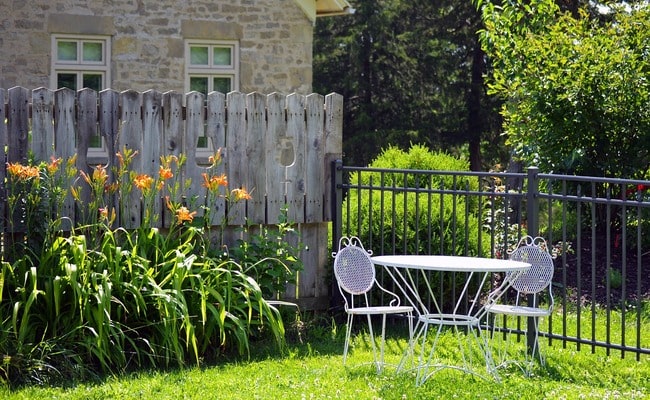
If conversation doesn't resolve it, you can block the camera's view from your own property. Privacy fencing, strategically placed landscaping, and lattice panels are among the most effective options. See the 'Physical Blocking Options' section below for a complete breakdown by situation, including options for renters.
Step 5: Contact your HOA or local authority
If you live in an HOA community, file a formal complaint citing the relevant CC&R provisions. For non-HOA situations, your local code enforcement office or municipal authority may be able to intervene if local ordinances are being violated.
Step 6: Request Formal Neighborhood Mediation
Before retaining an attorney, most counties offer a faster and less adversarial option: free or low-cost neighborhood dispute mediation services.
Community mediation centres pair disputing neighbors with neutral third-party facilitators who guide a structured conversation. It is not a legal proceeding. The session creates a written record of any agreement reached, which matters if the dispute escalates later.
In most major metro areas, these services are available through the county courthouse, the city's community relations office, or a local nonprofit mediation centre. Search '[your county] neighborhood mediation' to find the nearest programme.
Mediation typically resolves disputes in one or two sessions. Bringing the offer to mediate to your neighbor is itself a low-stakes next step before filing any formal complaint. If your neighbor declines, that refusal is useful context for any subsequent HOA or legal action.
Step 7: Consult law enforcement or an attorney
If the camera is clearly targeting a private space, footage has been misused, or your neighbor refuses to cooperate after you've raised the issue formally, contact local police or consult a privacy attorney. At this stage, the documentation from Step 2 becomes essential.
What not to do: Never attempt to physically block, disable, jam, or damage your neighbor's camera. Even if the camera is pointing somewhere it shouldn't, tampering with it could expose you to criminal liability. See the full legal breakdown in the section below.
What You Cannot Legally Do to Your Neighbor's Camera
Even when a neighbor's camera is clearly crossing a line, your options are more limited than most people expect. Acting unilaterally can flip the legal situation against you.
Signal jamming
Wi-Fi jammers and RF interference devices are prohibited under the Federal Communications Act (47 U.S.C. Section 333). The FCC has issued fines for using signal jammers against neighbors' wireless cameras. The camera's placement doesn't change this. Jamming is illegal regardless of your justification.
Physical interference
Touching, repositioning, spray-painting, or physically obstructing your neighbor's camera constitutes vandalism, even if the camera is pointed somewhere it shouldn't be. Courts treat damage to property as vandalism regardless of what that property was doing.
Laser targeting
Shining a laser at a camera lens to blind or damage it is treated as deliberate equipment damage. If it creates any risk to a person near the camera, charges can escalate to assault.
Hacking the security camera feed
Accessing a neighbor's camera footage or network without permission violates the Computer Fraud and Abuse Act (18 U.S.C. Section 1030), regardless of what the camera is recording.
The practical reality is that acting against the camera unilaterally puts you in a legally vulnerable position while the neighbor's original complaint stays intact. The steps in this guide (documentation, direct conversation, formal mediation, and legal escalation) keep you on solid ground throughout.
How to Tell If Your Neighbor's Camera Is Pointed at Your Property
Most outdoor cameras don't announce where they're pointing. A few practical checks can tell you whether a neighbor's camera is aimed at your property versus their own.
Check the physical orientation
Stand on your side of the property line and look at where the camera's lens is directed. Most outdoor cameras have a 90 to 120 degree field of view (narrower than people assume) so the direction they face matters. If the lens and housing angle toward your yard, driveway, or windows rather than toward the neighbor's entryways, that's a clear indicator.
Try the IR glow test at night
Cameras with night vision emit near-infrared light that the naked eye often misses. Hold your smartphone camera toward the neighbor's camera in low light; phone cameras detect IR frequencies humans can't see. A ring of faint red-orange LEDs pointing in your direction confirms the camera's night vision covers your property.
Watch for PTZ movement
Pan-tilt-zoom cameras that visibly track movement toward your side of the fence, rather than toward the neighbor's own entry points, suggest deliberate targeting rather than incidental coverage.
Check doorbell camera tilt
A doorbell camera angled outward toward the street or your property, rather than straight at the front door porch, is positioned to capture more than package deliveries.
Important Note: Security cameras with 180-degree lenses naturally pull in a wide scene including adjacent properties without deliberate intent. The question courts ask is whether the primary aim is at the neighbor's own property, not whether your yard happens to appear in frame.
Physical Security Options: What Works and What to Check First
A privacy fence is the most effective long-term solution but not always the fastest or the most accessible one. These alternatives cover more situations, including those where a fence isn't an option.
Fast-growing privacy hedges
Leyland cypress grows 3 to 4 feet per year and reaches 15 to 20 feet at maturity. Arborvitae and clumping bamboo establish quickly and stay dense year-round. These take 2 to 3 seasons to provide meaningful coverage but require no permit in most jurisdictions.
Lattice panels and decorative trellises
These can go up in a weekend and are often HOA-friendly where a fence would require approval. Pair with fast-growing climbing plants for added density. Effective for blocking a specific camera angle without covering the full property line.
Pergolas and shade sails
Effective for blocking elevated camera angles, such as a second-storey mounted camera. Most areas don't require a permit for structures under 200 square feet, but check your local code first.
Before installing anything, it's important to check two things, namely your local ordinances on fence and structure height limits, and your HOA rules if applicable. Installing without pre-approval can create a separate dispute that shifts attention away from the original camera issue.
Setting Up Your Own Security Camera Without Crossing Privacy Lines
Understanding your rights as someone being recorded is one thing. If you're also a homeowner with security cameras or planning to install them, here are some ways you can position them responsibly to avoid creating the same problem for your neighbors.
Point security cameras toward your own property, not beyond it
Your camera's field of view should cover only key points of your property. Never point it across a neighbor's yard or aim at their windows.
Whether you choose a wireless outdoor camera or a wired outdoor security camera, the placement principle is the same: aim coverage at your entry points, driveway, and perimeter, not beyond your property line.

Something like Reolink's RLC-842A is perfect for privacy as its 5x optical zoom lets you physically crop out neighbors' yards and windows. Pair that with custom privacy masks and a vandal-proof dome design.
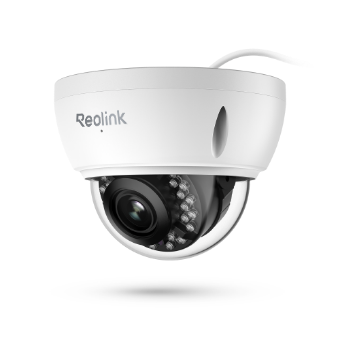
4K PoE IP Camera with Intelligent Detection
4K 8MP Ultra HD, Person/Vehicle Alerts, 5X Optical Zoom, IK10 Vandal Proof, Audio Recording, Live View Anytime, IP66 Certified Weatherproof.
Use privacy masking for unavoidable overlap
If your camera's field of view unavoidably captures a portion of a neighbor's property (a common situation with wide-angle cameras), use your camera's privacy masking feature to block out that area entirely.
Pro Tip: Reolink cameras' privacy masking features support customizable privacy zones, letting you block out specific areas so neighbors' properties don't appear in your footage.
Disable audio recording unless you need it
Given the stricter laws around audio, if your camera records sound and you're in an all-party consent state, disable audio recording unless you have a specific reason to need it and have checked your state's consent requirements.
Mount cameras in visible locations
Openly mounted cameras are less likely to cause neighbor disputes than hidden ones, and in many states, visible placement reduces legal risk.
Posting a visible security camera notice sign near your camera's coverage area reduces the likelihood of neighbor objections and in some states lowers your legal exposure.
A floodlight camera or outdoor light with camera is a practical dual-purpose option: the light deters intruders while the camera documents activity, and the visible fixture signals to neighbors that coverage exists.
FAQs
Can I sue my neighbor for recording me?
You can sue your neighbor for recording you, but only in specific circumstances. You generally have legal grounds if a camera records an area where you have a reasonable expectation of privacy, if audio is recorded without consent in an all-party state, or if footage is being misused to harass or intimidate you.
Can my neighbor record my backyard?
It depends on how your backyard is set up. If the area is open and visible from public spaces or neighboring properties, recording it may be legal because there is little expectation of privacy in open areas. If your backyard is fenced or clearly enclosed, recording it may constitute an invasion of privacy.
How do I block my neighbor's camera in my yard?
The most effective and legally safe option is to install a physical barrier on your own property, such as a privacy fence. You can also speak with your neighbor and ask them to adjust the camera's angle, or request they enable privacy masking on areas of your property.
What are the laws around home cameras?
Federal law on privacy expectations states that it's generally legal to record video in public places. This includes doorbell cameras and security cameras. However, anyone being recorded should not have a reasonable expectation of privacy in that location.
Conclusion
Most neighbor camera disputes never reach a courtroom. A direct conversation resolves the majority of them, especially once you understand the specific legal line between lawful surveillance and an invasion of privacy. If a neighbor's camera is clearly targeting a private space, you now have the framework to recognize it, document it, and escalate it the right way.
Search
Subscribe for the Latest Updates
Security insights & offers right into your inbox