
Bullet vs. Dome vs. PTZ Cameras: Which One Should You Choose
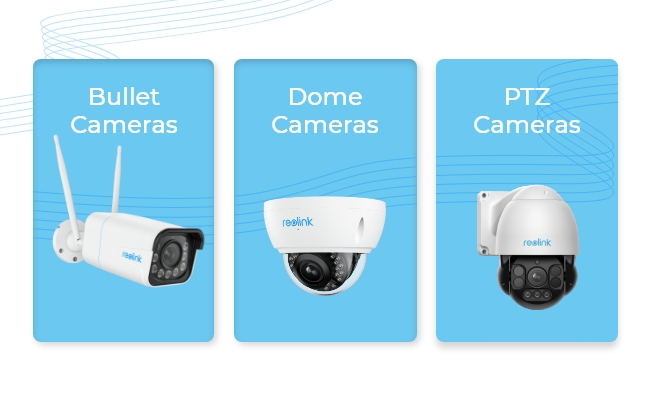
Security cameras can be catagorized into different types by their shapes, such as dome, bullet and PTZ cameras. Their shapes are important when you try to choose the right camera model for home. Anyone new to the video surveillance field may wonder the differences between them. And you’ll figure out all these issues in this passage.
- Bullet vs. Dome vs. PTZ Cameras Definition
- Bullet vs. Dome vs. PTZ Camera: Key Differences Explained
- PTZ vs. Dullet vs. Dome Cameras: Pros and Cons
- Bullet, Dome and PTZ Cameras: Real-world Use Cases
- How to Choose Between Bullet, Dome and PTZ Cameras?
- Best Dome, Bullet and PTZ Camera Recommendations
- FAQs
- Conclusion
Bullet vs. Dome vs. PTZ Cameras Definition
Before we dive into the differences between dome, bullet, and PTZ cameras, let’s make it clear about what a dome camera, bullet camera and PTZ camera is, and their own advantages in home and business monitoring.
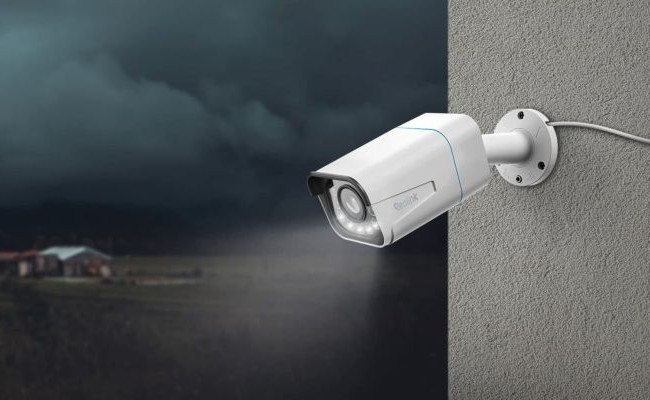
What is a Bullet Camera?
A bullet camera is a type of video surveillance camera with the shape of a rifle bullet. Bullet security cameras are usually small (2 to 8 inches long) and the smaller ones are oftentimes referred to as lipstick cameras specially. Bullet IP cameras have a fixed or variable focal length lens with a strong point for specific spaces.
What is a Dome Camera?
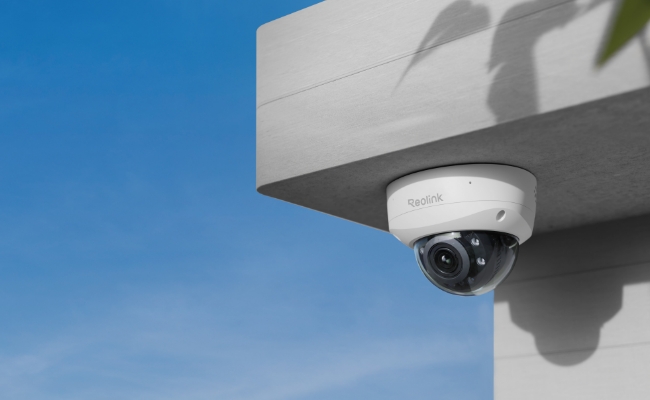
Dome cameras are named for its dome shape. A dome camera is usually mounted on the ceiling, under the eaves or the soffit, indoors and outdoors. A vandal proof dome security camera usually has a solid metal base and poly-carbonate plastic cover to protect it from vandalism or tampering.
Check out our other blog post for a complete guide to dome cameras, including benefits, types, comparisons, and best options.
What is a PTZ Camera?
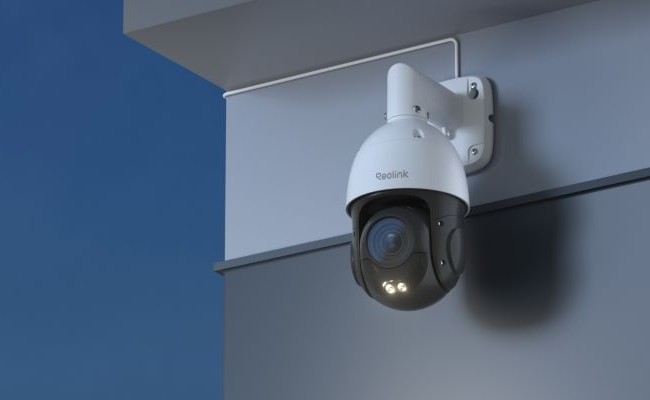
A PTZ camera (pan-tilt-zoom camera) is a speed dome camera that is capable of remote directional and zoom control. PTZ security cameras can pan left and right, tilt up and down, and zoom in and out. The PTZ dome cameras are usually larger in size for outdoor uses with super high resolution.
Bullet vs. Dome vs. PTZ Camera: Key Differences Explained
Bullet cameras, dome cameras, and PTZ security cameras can all be used for home and business surveillance. They share similar features such as IR night vision, remote viewing, motion detection, and weatherproof design. However, they differ in installation, mounting location, field of view, visibility, and more.
Location
The installation location plays a key role in choosing between these cameras.
Dome cameras are more commonly used indoors because they are compact and less intrusive. They blend well with most interiors and offer better aesthetics. Some high-IP-rated and vandal-proof dome cameras are also suitable for outdoor use, as they are well-protected and harder to tamper with.
Bullet cameras are typically the best choice for outdoor use. They are weatherproof and offer longer range, making them suitable for areas like backyards or parking lots.
PTZ cameras are often used in outdoor spaces or large indoor areas. They are ideal for monitoring wide spaces such as yards, offices, or large rooms.
Field of View
These cameras differ significantly in coverage.
PTZ cameras are designed for large-area monitoring, supporting up to 360° horizontal and wide vertical rotation.
Bullet and dome cameras usually have a fixed field of view, typically around 80°.
The actual viewing range depends on factors like lens type, sensor, and resolution, so checking product specifications is recommended.
Camera Visibility
Camera size and design affect how visible they are.
Bullet cameras are the most visible and can deter potential intruders. However, they should be installed out of reach, usually around 9 feet high.
Dome cameras are more discreet and harder to notice, making them suitable for less obvious surveillance.
PTZ cameras are larger and usually mounted high, making them less accessible and less noticeable.
Night Vision Capability
Most bullet, dome, and PTZ cameras come with infrared or LED night vision.
Bullet and dome cameras typically offer night vision up to about 100 feet.
PTZ cameras usually provide longer night vision range due to more powerful lighting and zoom capabilities.
Installation
Bullet and PTZ cameras are generally easy to install, with mounting brackets that allow flexible positioning.
Dome cameras can be more complex to install, as they may require additional steps. However, many modern dome cameras are designed for easier installation with improved mounting systems.
PTZ vs. Dullet vs. Dome Cameras: Pros and Cons
Bullet, Dome and PTZ Cameras: Real-world Use Cases
Based on discussions from Reddit home security communities and installer forums, users often choose bullet, dome, and PTZ cameras depending on property layout, visibility needs, and how active they want monitoring to be.
Bullet Cameras: Visible Outdoor Deterrence
In many Reddit home security threads, users say they install bullet cameras in visible outdoor areas like driveways, front doors, and garages because the clear direction and shape act as a strong deterrent. They are commonly used for long, straight views such as fences, parking areas, and alleyways, where fixed-angle coverage is enough.
Dome Cameras: Discreet Indoor Monitoring
Community discussions often highlight dome cameras as a preferred choice for indoor spaces such as living rooms, hallways, and retail stores. Users like them because they are less noticeable and make it harder to tell where the camera is pointing, which helps with subtle monitoring in shared or public-facing environments.
PTZ Cameras: Active Monitoring for Large Areas
On Reddit, PTZ cameras are frequently recommended for larger properties like backyards, farms, warehouses, or commercial lots. Users value the ability to pan, tilt, and zoom in real time, especially when one camera needs to cover a wide area instead of installing multiple fixed cameras. However, some users also note they work best when paired with fixed cameras for full coverage.
Hybrid Setups: Common Community Recommendation
A common takeaway from both Reddit users and installers is that mixed systems work best. Many homeowners combine bullet cameras for perimeter deterrence, dome cameras for indoor discretion, and a PTZ camera for wide-area monitoring to balance coverage, visibility, and flexibility.
Choosing between dome, bullet, and PTZ cameras depends on your surveillance goals, environment, and control needs. Below is a structured breakdown of the key factors to help you decide.
How to Choose Between Bullet, Dome and PTZ Cameras?
Purpose of Surveillance
Your main security goal should guide your choice.
Dome cameras are best for discreet indoor monitoring in homes, offices, or retail spaces where appearance and subtle surveillance matter.
Bullet cameras are ideal when visibility is important, such as deterring intruders in outdoor areas like driveways, entrances, or parking lots.
PTZ cameras are suited for active monitoring, where you need to track movement and adjust the viewing angle dynamically over large areas.
Location and Environment
Where you install the camera affects performance and durability.
Dome cameras are mainly used indoors or in sheltered areas with limited exposure to weather.
Bullet cameras are designed for outdoor environments and typically offer strong weather resistance.
PTZ cameras can be used indoors or outdoors, but they are best installed in protected locations to avoid damage from extreme weather conditions.
Zoom and Focus Needs
Different cameras offer different levels of detail and zoom capability.
Dome cameras usually have fixed wide-angle lenses, making them suitable for general area coverage but limited for zooming in.
Bullet cameras often support optical zoom, making them useful for long-distance monitoring.
PTZ cameras provide the most flexibility with motorized pan, tilt, and zoom functions for precise focus and tracking.
Remote Monitoring and Control
All three camera types can support remote access via mobile apps or PC software.
Dome and bullet cameras typically offer standard remote viewing and basic control features.
PTZ cameras go further by allowing remote control of movement, enabling users to rotate, tilt, and zoom the camera in real time for full coverage control.
Best Dome, Bullet and PTZ Camera Recommendations
After seeing the differences between bullet cameras, dome cameras and PTZ cameras, you may ask what is best, a dome camera or bullet. You can choose the most appropriate type depending on your needs.
Best Bullet Security Camera: Reolink RLC-811A
As one of the best selling cameras, the mini bullet camera Reolink RLC-811A is the top choice if you want to mount it on the wall to watch your front door, backyard, garage or the driveway area.
Key features:
- 4K 8MP Ultra HD
- Excellent IR night vision and color night vision to capture thieves in low-light night vision
- Smart motion detection alerts you if anything happens
- Easy to install (plug and play)
- IP67 waterproof rating for outdoor uses
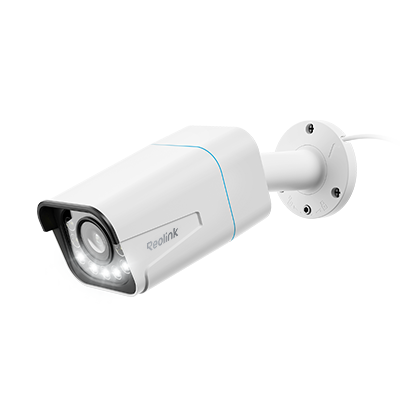
4K Smart PoE Camera with 5 Spotlights
4K 8MP Ultra HD Day & Night, Person/Vehicle Alerts, 5X Optical Zoom, Two-Way Audio, Built-in Siren, Color Night Vision, Live View Anywhere.
Best Dome IP Camera: Reolink RLC-1240A
If you prefer a less obvious video monitoring indoors and outdoors, the dome camera RLC-1240a may suit you better.
Key features:
- 12MP Ultra HD images to capture sharp videos
- IK10 vandal proof
- Painless installation with self-holding screws
- IP67 waterproof rating for outdoor uses
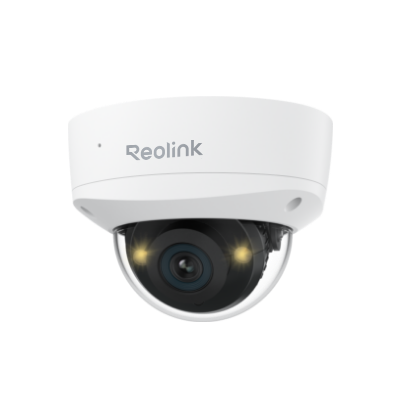
12MP IK10 Vandal Proof Wide FOV Security Camera
12MP UHD with 145° FOV, Color Night Vision, IK10 Vandal-Proof, Two-Way Audio.
Best PTZ Surveillance Camera: Trackmix PoE
The Trackmix PoE is a top recommendation for a PTZ (pan-tilt-zoom) surveillance camera. It offers smooth, remote-controlled movement with high-resolution video, allowing you to monitor large areas effortlessly.
Key features:
- 8MP resolution offers the best chance to see every image details
- 360° endless pan and 90° tilt
- 6X hybrid zoom to see far-away objects clearly
- Color night vision
- IP65 waterproof rating for outdoor uses
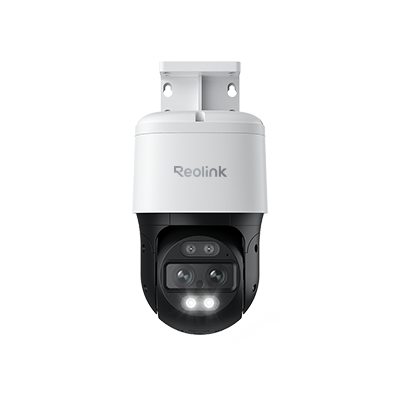
4K Dual-Lens PTZ Camera with Dual Tracking
4K 8MP Ultra HD, Wide & Telephoto Lenses, Pan & Tilt, Auto-Tracking, Person/Vehicle Detection, Power over Ethernet, Two-Way Audio.
Best PTZ Camera with Auto-Tracking - Reolink Argus PT Ultra
Reolink has integrated the dual-lens technology with PTZ security cameras for a larger field of view. The brand new Argus Track is a compact comsumer-level PTZ camera with great auto-tracking capability.
Key features:
- 4K 8MP resolution offers enhanced clarity and image quality.
- Wire-free design allows for quick installation and easy use.
- Pan and tilt and auto-tracking methods reduce false alarms and accurate identification.
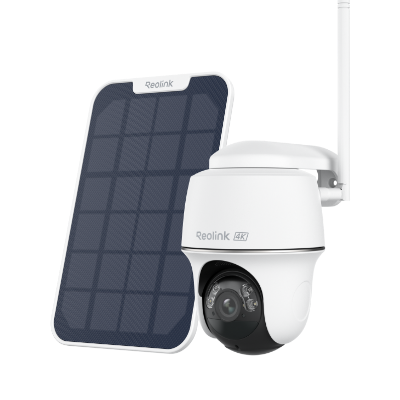
4k 100% Wire-Free PT Camera
4K 8MP Ultra HD; 5GHz/2.4GHz WiFi; Rechargeable Battery & Solar Powered; 355° Pan & 140° Tilt; IP65 Certified Weatherproof; Clear Night Vision; 2-Way Audio; 122° Wide Viewing Angle.
FAQs
What is the main difference between dome and bullet security cameras?
The main difference between dome and bullet security cameras lies in their design. Dome cameras are characterized by their dome-shaped casings, which conceal the direction the camera is pointing. Bullet cameras have a long, cylindrical shape and are easily noticeable.
Are bullet cameras better?
Bullet cameras are better for long-range surveillance because they offer optical zoom. But PTZ cameras are the better if you have specific focus or zoom-in requirements.
Can dome cameras be used outside?
The answer is yes. You can check the camera's IP rating before using it in outdoor spaces. IP ratings like IP66 or higher is recommended.
Conclusion
The choice between dome, bullet and PTZ cameras ultimately depends on your unique security requirements. Consider the location, purpose, visibility, and control you need, along with your budget and maintenance capacity.
Which one do you use? How do you like it? Share your thoughts in the comment section below and let's talk together!
Search
Subscribe for the Latest Updates
Security insights & offers right into your inbox