
Dome Security Cameras 2026: Buying Guide & Top Picks
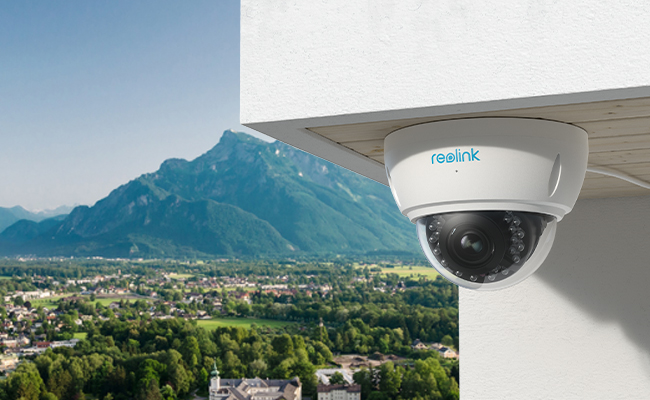
Dome security cameras feature a low-profile, vandal-resistant housing that conceals lens direction and delivers wide-angle coverage for indoor and outdoor monitoring. While bullet cameras extend outward to target long-range focal points, dome cameras mount flush against ceilings or walls to provide discreet, tamper-proof surveillance.
This guide breaks down how dome CCTV cameras work, key performance factors like impact resistance and infrared range, and how they stack up against bullet cameras to help you choose the right design for your setup.
What Is a Dome Security Camera?
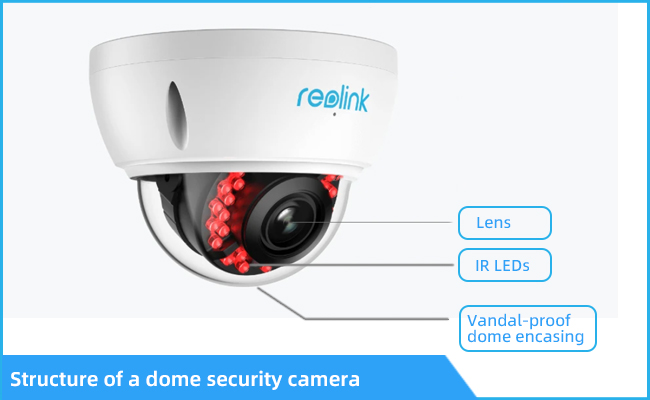
A dome security camera is a compact surveillance camera enclosed in a protective, rounded casing that shields the lens, protects against physical tampering, and conceals the exact direction the camera is pointing.
Typically mounted upside down on ceilings, eaves, or walls, their low-profile design allows them to blend naturally into both indoor and outdoor spaces—such as retail stores, homes, schools, banks, and offices.
Key Feature: Impact Resistance (IK Ratings)
The primary advantage of a dome design is its resistance to vandalism and physical impact. A camera's durability is measured by its IK rating (ranging from IK00 to IK10), which indicates how much kinetic energy the housing can absorb without breaking.
-
IK00 to IK05: Basic protection against minor accidental contact.
-
IK06 to IK08: Standard protection suitable for low-risk residential and office areas.
-
IK09 to IK10: Heavy-duty vandal-proof protection capable of absorbing up to 20 Joules of impact (equivalent to a 5 kg mass dropped from 40 cm).
For outdoor locations or public spaces where tampering or severe weather is a concern, selecting a dome camera with an IK10 rating ensures long-term reliability and physical protection.
What Are Different Types of Dome Cameras?
Dome security cameras are categorized by their connectivity, coverage capabilities, and video resolution. Depending on your monitoring needs, the most common types include Power over Ethernet (PoE), Pan-Tilt-Zoom (PTZ), and high-resolution 4K dome cameras.
1. PoE Dome Cameras
A Power over Ethernet (PoE) dome camera relies on a single Ethernet cable (CAT5 or CAT6) to transmit both network data and power from a router or Network Video Recorder (NVR). This single-cable setup eliminates the need for nearby power outlets, simplifies installation, and delivers a stable wired connection that won't suffer from Wi-Fi dropouts. It is ideal for property owners who want reliable 24/7 recording and remote smartphone monitoring.
2. PTZ Dome Cameras
Pan-Tilt-Zoom (PTZ) dome cameras feature motorized internal lenses that pan horizontally, tilt vertically, and zoom optically to cover expansive areas. Because the lens mechanism rotates smoothly within the protective dome housing, a single PTZ dome camera can achieve 360-degree coverage. This design allows you to monitor large spaces—such as parking lots, warehouses, or large backyards—without creating visual blind spots or needing multiple fixed cameras.
3. 4K Dome Cameras
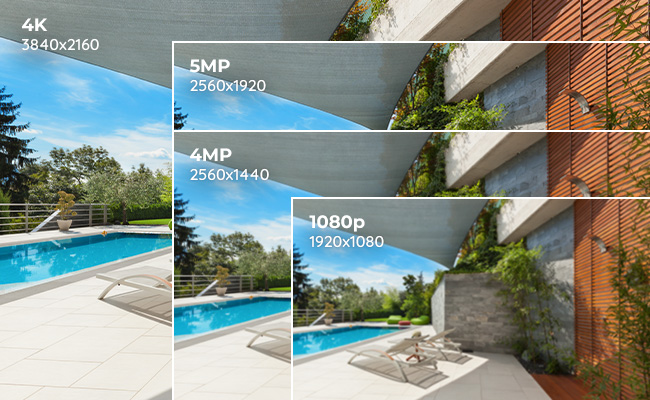
A 4K dome camera delivers 8-megapixel (3840 x 2160) video quality, providing roughly four times the pixel detail of standard 1080p (2MP) security cameras. The higher pixel density allows you to zoom in on live or recorded footage without losing image clarity. This high resolution makes it far easier to read license plates, recognize facial features, and capture critical forensic evidence across longer distances.
4 Key Features to Look for in the Best Dome Security Camera
Selecting the right dome security camera comes down to evaluating four critical specifications: weatherproofing, physical durability, coverage range, and operational temperature limits.
1. Weather Resistance (IP Ratings)
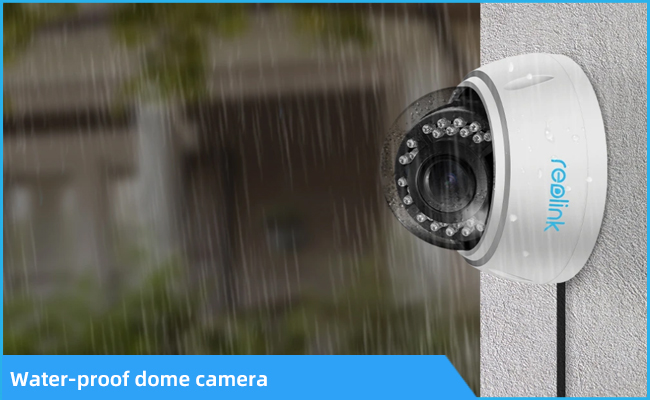
Outdoor dome cameras require an IP65 or IP66 rating to withstand rain, dust, and environmental moisture.
-
Indoor Use: Indoor environments only require basic features like 1080p resolution and standard infrared night vision, as weatherproofing isn't necessary.
-
Outdoor Use: Cameras installed outside need an Ingress Protection (IP) rating. An IP65 rating protects against rain and low-pressure water streams, while an IP66 rating ensures the housing can survive high-pressure water splashes and heavy storms without leaking.
2. Physical Vandal Resistance (IK Ratings)
Look for an IK10 vandal-proof rating if your camera is mounted in a high-traffic or easily accessible location.
Dome cameras installed on low overhangs, front porches, or retail storefronts are vulnerable to physical tampering, direct impacts, or attempt strikes. A camera's vandal resistance is measured by its IK rating. Choosing a model with an IK10 rating ensures the protective dome casing can absorb heavy kinetic impact (up to 20 Joules) without cracking or exposing the internal lens.
3. Coverage Area and Camera Quantity
Large open areas need a PTZ dome camera for wide coverage, while smaller spaces benefit from multiple fixed dome cameras.
-
Wide Spaces (Parking Lots, Large Yards): A single Pan-Tilt-Zoom (PTZ) dome camera can cover an extensive area by rotating 360 degrees and zooming in on specific points, reducing the total number of cameras you need.
-
Targeted Zones (Hallways, Entrances): Placing multiple fixed dome cameras across key entry points provides continuous, simultaneous coverage of distinct locations without missing activity while a PTZ lens is panned elsewhere.
4. Operating Temperature and Climate Limits
Check the camera's working temperature range to ensure it can operate in extreme heat or freezing winter conditions.
Most outdoor dome security cameras operate reliably in temperatures ranging from 14°F to 131°F (-10°C to +55°C) with humidity levels between 10% and 90%. If you live in an environment with harsh winter freezes or extreme summer heat, exceeding these limits can degrade battery life or fog the internal lens casing. For extreme climates, verify the manufacturer's temp specs before buying or install a protective external enclosure.
3 Best Dome Security Cameras for Different Scenarios
Choosing the right dome security camera depends on your specific setup, whether you need heavy-duty vandal protection, wide-angle coverage for large yards, or multi-camera continuous recording for a whole business or property. Below are three top recommendations tailored to common monitoring scenarios.
1. Best Outdoor Dome Security Camera for High-Risk Areas: Reolink RLC-843A
Best for: Driveways, front porches, low eaves, or public-facing storefronts where cameras are within arm's reach and vulnerable to physical tampering or extreme weather.
The Reolink RLC-843A is built specifically to resist physical attacks and harsh conditions, combining an IK10 vandal-proof housing with an IP66 weatherproof rating. It features 4K (8MP) Ultra HD resolution paired with a 5X optical zoom lens, allowing you to zoom in on distant details without sacrificing image quality. With onboard smart detection, it accurately identifies people, vehicles, and pets to deliver relevant real-time alerts without false alarms.
Incredible 4K 8MP Video Captured by RLC-842A in the Daytime
2. Best Ultra-Wide Dome Camera for Expansive Spaces: Reolink Duo 3V PoE
Best for: Large front yards, wide parking lots, or commercial warehouses that usually require multiple cameras to eliminate blind spots.
The Reolink Duo 3V PoE delivers a seamless 180° panoramic view using dual lenses, offering full coverage of wide environments in a single camera feed. It boasts an ultra-high 16MP resolution for exceptional clarity and image detail across broad distances.
Protected by an IK10 vandal-proof dome shell, it connects via a single Ethernet cable (Power over Ethernet) for reliable power and data transmission without Wi-Fi instability.
3. Best All-in-One Dome System for Whole-Property Protection: Reolink RLK8-800V4
Best for: Large homes, multi-story properties, or small business premises requiring 24/7 continuous recording across multiple entry points without monthly subscription fees.
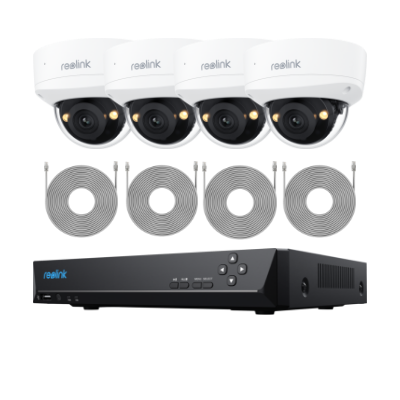
The Reolink RLK8-800V4 is a complete 8-channel PoE security system that includes four 4K (8MP) dome security cameras and a dedicated Network Video Recorder (NVR).
The NVR provides centralized local storage (expandable up to 16TB) for continuous 24/7 recording across all four channels—ensuring total privacy and zero ongoing fees. You can easily monitor live feeds or review historical footage via the Reolink App or desktop client.
 Hot
Hot
8-Channel PoE Dome Security System
4 pcs 8MP Dome Security Cameras; 2TB HDD 8-Channel NVR for 24/7 Reliable Recording; Plug and Play; PoE Network Solutions.
Real-World Feedback on Dome Surveillance Camera
When browsing community discussions in home security forums like r/homesecurity and r/SecurityCamera, user feedback highlights both distinct practical advantages and specific maintenance drawbacks regarding dome security cameras:
Pros: Physical Security and Discretion
-
Vandal Resistance & Anti-Redirection: Users consistently praise dome cameras for outdoor or low-mounting scenarios. Unlike bullet cameras, which intruders or kids can easily grab, knock out of alignment, or turn away, dome cameras are direct, flush-mounted units that resist physical interference.
-
Aesthetics and Deterrence: Homeowners note that domes look less aggressive and blend better with residential architecture than long bullet-style cameras. Additionally, observers cannot easily tell where the internal lens is aiming, creating broad visual deterrence across entryways.
Cons: Lens Maintenance and Infrared Reflection
-
IR Reflection at Night: A frequent complaint in community forums involves infrared (IR) night vision. Because the IR illuminators sit behind the transparent plastic dome cover, light can bounce or refract off the internal glass. This reflection—especially when the dome accumulates moisture, dust, or scratches—can distort night footage or create glare.
-
Frequent Cleaning Needs: Users report that outdoor dome covers tend to gather water spots, pollen, dirt, and spider webs faster than flat-fronted turret or bullet styles. Over time, direct sunlight can also oxidize or cloud the plastic shell, degrading video clarity unless cleaned regularly or protected under a deep roof eave.
Buyer's Decision Table
FAQs
Which is better, a dome or bullet camera?
Neither is universally better — the right choice depends on your installation needs. Dome cameras are ideal for discreet monitoring, vandal resistance, and indoor or outdoor areas where a clean appearance matters. Bullet cameras are better when you need a visible deterrent and longer-range viewing, such as monitoring driveways, yards, or large outdoor areas.
Choose a dome camera for a compact, protected design. Choose a bullet camera for easier angle adjustment and highly visible surveillance.
Are dome cameras any good?
Yes. Dome cameras are a good choice for users who want durable, discreet, and flexible security monitoring. Their enclosed housing helps protect the lens from dust, weather, and tampering, while the dome design makes it harder to identify the camera’s viewing direction.
However, camera performance depends on more than the shape. Check factors like video resolution, night vision, AI detection, storage options, and weather protection ratings before buying.
What is the range of dome cameras?
The range of a dome camera depends on its lens, resolution, sensor, and night vision capability. Most dome cameras can cover areas from small indoor spaces to larger outdoor areas like entrances and yards. For longer distances, choose a camera with higher resolution, a wider field of view, or a varifocal lens for clearer details. The actual coverage depends on the camera model and installation location.
Conclusion
Dome cameras are good to use both indoors and outdoors for their many benefits. Such a security camera helps a lot in building home security systems.
From this article you've learned how to choose the best one for your home. Now it's your turn. Leave a comment below and share your ideas about dome security cameras, how you use them, and any related experience!
Search
Subscribe for the Latest Updates
Security insights & offers right into your inbox