
How Far Can Security Cameras See? Day & Night Range Explained
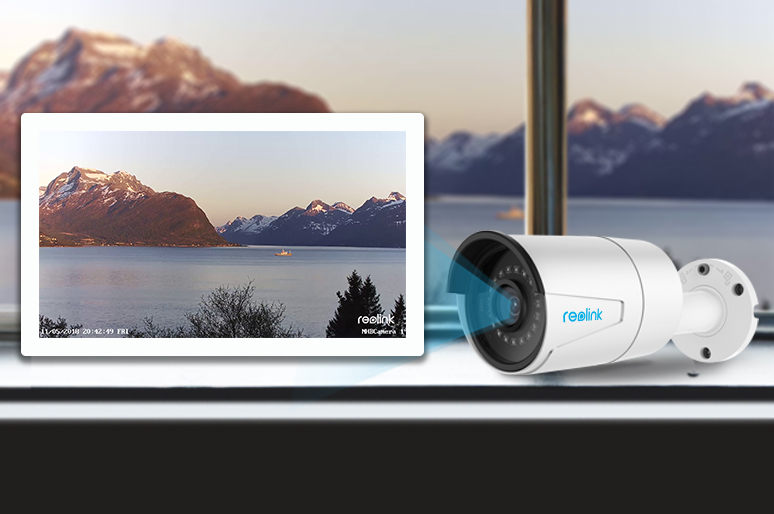
How far a security camera can see depends on its lens, resolution, lighting, sensor, and the level of detail you need. A typical home security camera may provide useful monitoring within tens of feet, while cameras with optical zoom and long-range infrared night vision can monitor objects much farther away.
The key question is not only how far a camera can “see,” but how far it can clearly detect, recognize, or identify a person, vehicle, or other detail. This guide explains those differences and helps you choose the right camera for entrances, driveways, yards, and large properties.
Key Takeaways:
-
Most home security cameras can monitor useful activity at around 30–100 ft (9–30 m), while long-range PTZ or varifocal cameras can cover 100–200+ ft (30–60+ m) depending on the lens and conditions.
-
Detection, recognition, and identification are different. A camera may detect a person at 100 ft but still lack enough detail to identify their face.
-
For front doors and porches, about 15–30 ft is usually sufficient; standard driveways often need 30–100+ ft, while large properties and farms may require 100–200+ ft of coverage.
-
At night, IR range is not the same as identification range. A camera rated for 100 ft of infrared illumination may light the scene at that distance without capturing a clearly identifiable face.
-
Optical zoom matters more than resolution alone for distant details. A PTZ or varifocal camera can frame far-away subjects more tightly, making it a better choice for long driveways, gates, farms, and parking areas.
-
Match the camera to the scenario: wide-angle fixed cameras for close areas, high-resolution or varifocal cameras for medium distances, and PTZ cameras with optical zoom for long-range monitoring.
- How Far Can Security Cameras See Clearly?
- How Far Can Security Cameras See at Night?
- How Far Can a Doorbell Camera See at Night?
- What Determines How Far a Security Camera Can See?
- What Long-Range Camera Range Do You Need?
- How to Make a Security Camera See Farther?
- Best Reolink Cameras for Different Viewing Distances
- FAQs
- Conclusion
How Far Can Security Cameras See Clearly?
Most home security cameras can monitor useful activity at roughly 30–100 feet (9–30 m), while long-range cameras with optical zoom and powerful infrared illumination may monitor areas 100–200 feet (46–61 m) or farther. However, the distance at which a camera can see something is usually greater than the distance at which it can clearly identify a person or fine detail.
For example, a wide-angle camera may easily detect a person 50 feet away, but the face may occupy too few pixels for reliable identification. A PTZ camera with optical zoom can narrow the field of view and capture more detail on the same distant subject.
At night, IR range also matters: Reolink RLC-810A (2.8mm) can illuminate up to about 100 feet (30 m). These IR figures describe illumination range rather than guaranteed facial-identification distance.
Detection vs Recognition vs Identification
A useful way to understand camera range is to separate it into three levels:
-
Detection: At around 50–100+ feet, depending on the camera, you may be able to tell that a person or vehicle has entered the scene without seeing identifying details.
-
Recognition: At a closer distance, the footage may show enough detail to recognize a familiar person, clothing, or vehicle. For example, a 4K camera monitoring a 30–50 ft driveway may provide substantially more useful detail than the same camera monitoring a subject 100 feet away.
-
Identification: For fine details, the subject generally needs to occupy much more of the image. A longer focal length or optical zoom can therefore be more important than simply choosing a higher-resolution camera.
For Example: If your driveway gate is 120 feet (37 m) from your house, an ultra-wide fixed camera may detect someone at the gate but provide limited facial detail. A PTZ or varifocal camera with optical zoom is a better choice because it can frame that distant area more tightly.
Typical Camera Types and Viewing Needs
How Far Can Security Cameras See at Night?
Nighttime viewing distance depends on the camera’s infrared LEDs, spotlight output, lens, image sensor, and available ambient light. Many home security cameras provide usable night monitoring at around 30–100 feet (9–30 m), while long-range models can illuminate areas 150–200 feet (46–61 m) or more.
For example, some Reolink battery cameras provide night vision around 33 feet (10 m), while optical zoom models can reach about 100 feet (30 m) with infrared illumination.
Infrared Night Vision
Infrared night vision uses IR LEDs to illuminate dark areas in wavelengths that are mostly invisible to the human eye. The camera then records black-and-white footage, making IR especially useful for discreet nighttime monitoring.
Typical use cases include:
- 30–50 ft: porches, entrances, and small yards
- 50–100 ft: driveways, backyards, and property edges
- 100–190+ ft: long driveways, large yards, farms, and parking areas
IR performance can drop if there are reflective walls, heavy rain, fog, or objects close to the lens, because these can cause glare or reduce contrast.
Color Night Vision
Color night vision uses visible light, low-light sensors, or built-in spotlights to capture more natural color detail after dark. It can make it easier to distinguish clothing, vehicle colors, and other visual details that black-and-white IR footage may not show clearly.
Color night vision works best when there is some ambient light or when the camera has built-in illumination. For example, a camera monitoring a driveway 30–60 feet away may provide useful color detail if the area has porch lights, streetlights, or integrated spotlights.
For completely dark areas, infrared night vision is usually more reliable for longer-range visibility.
Does IR Range Equal Identification Range?
No. IR range tells you how far the camera can illuminate a scene, not how far it can reliably identify a person.
For example, a camera rated for 100 ft of IR night vision may clearly show that someone is standing 100 feet away, but their face may be too small or too dark for reliable identification. Identification distance also depends on:
- Lens focal length
- Resolution
- Field of view
- Subject size
- Camera angle
- Motion blur
- Available light
A useful rule is:
IR range = how far the camera can light the scene
Identification range = how far it can capture enough detail to tell exactly who or what is there
For long-distance nighttime identification, a camera with optical zoom, a narrower field of view, and strong low-light performance is usually more effective than simply choosing the model with the longest advertised IR range.
How Far Can a Doorbell Camera See at Night?
Most video doorbell cameras provide clear night visibility up to 15–30 feet (5–9 m), which is specifically calibrated to cover front porches, entry steps, and immediate walkways.
Because doorbells are designed for entrance monitoring rather than long-range perimeter defense, their night vision illuminators are optimized to clearly capture human faces and packages within 30 feet without washing out subjects close to the lens.
What Determines How Far a Security Camera Can See?
A security camera's clear viewing range is determined primarily by its lens focal length and video resolution, which control how many pixels are focused on a subject at a specific distance.
Lens Focal Length and Optical Zoom
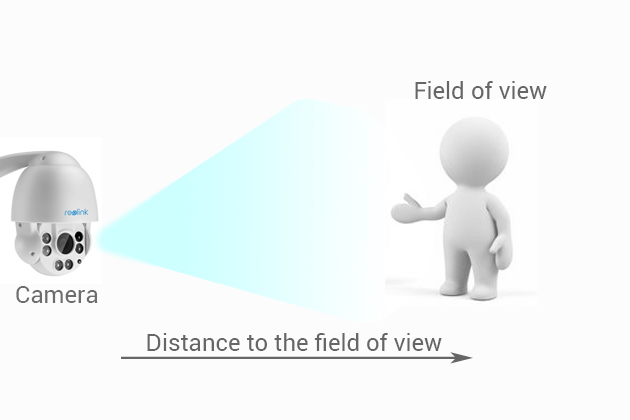
Lens focal length (measured in mm) directly controls viewing distance; smaller focal lengths provide wider fields of view, while larger focal lengths narrow the view to focus further away.
A standard 4.0mm fixed lens typically handles viewing distances up to 40 feet (12 m) effectively. Variable focal length cameras and PTZ models with optical zoom are ideal when monitoring targets beyond 40 feet (12 m), maintaining image clarity over long distances.
Resolution and Pixel Detail
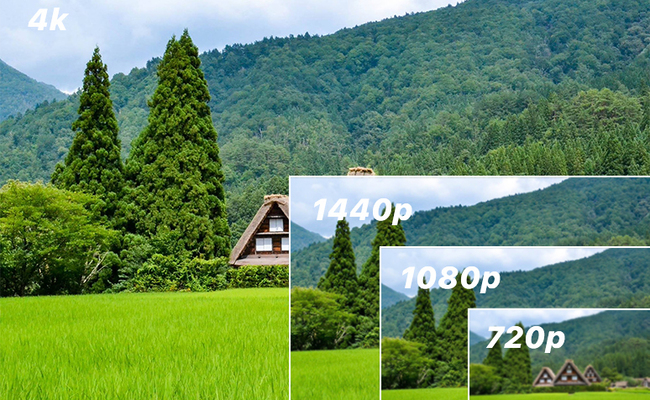
Rather than just detecting movement, high camera resolution determines whether fine details remain readable at a distance. Upgrading to 4MP, 5MP, or 4K security camera systems provides the pixel density needed to zoom in on distant subjects without losing clarity.
Camera Placement and Signal Obstructions
Mounting locations heavily impact performance; physical obstacles like brick, concrete walls, floors, and dense foliage can severely degrade wireless signal strength and reduce video quality.
Image Sensor and Low-Light Performance
High-quality image sensors with low lux ratings determine how well a camera retains image contrast and fine detail in dimly lit environments before switching to noise-heavy video.
Lighting Conditions
Surrounding illumination—such as streetlights or porch lights—directly impacts a camera's ability to maintain clear night vision or full-color video coverage over longer distances.
What Long-Range Camera Range Do You Need?
Match your security camera choice to your target monitoring distance—use wide-angle fixed lenses for close-up areas under 30 feet (9 m), and upgrade to varifocal or PTZ optical zoom cameras for distances exceeding 100 feet (30 m).
Front Door and Porch (15–30 ft / 5–9 m)
-
Focus: Wide viewing angles, close-range night vision, and immediate clarity.
-
Best Fit: Video doorbells or wide-angle fixed-lens cameras designed to capture visitors and packages right at your doorstep.
Driveway (30–100+ ft / 9–30+ m)
-
Focus: High-resolution detail and adjustable focal length.
-
Best Fit: Standard high-resolution fixed cameras handle short driveways, while long driveways over 100 feet require varifocal or optical zoom lenses to identify vehicles and distant license plates.
Backyard (30–80 ft / 9–24 m)
-
Focus: Broad coverage and smart motion detection.
-
Best Fit: Wide-angle cameras offer a complete view of typical yards, while PTZ cameras allow active panning across larger open spaces to monitor pets, wildlife, or rear perimeter lines.
Large Property, Farm, or Parking Lot (100–200+ ft / 30–60+ m)
-
Focus: Optical zoom and long-range infrared illumination.
-
Best Fit: PTZ or varifocal cameras equipped with 5× (or higher) optical zoom and powerful IR LEDs (reaching up to 190 feet) to pull in distant targets without pixel loss.
How to Make a Security Camera See Farther?
So, if you need to keep tabs on a site from a distance, below are some feasible tips to serve your purpose:
- Choose the varifocal lens security cameras which can see a larger field of view. You can zoom in to identity visible details at a distance without degrading the image quality.
- Higher resolution security cameras, like 5MP and 4K ones, can increase the odds to deliver usable images and videos from a distance.
- If you intend to buy a wireless security camera, make sure there are few blocks between the camera and the monitoring site.
- Go for the security cameras from reputable brands to avoid possible disputes and unnecessary trouble later.
- Ensure that your security cameras can also see far enough with recognizable details at night.
Best Reolink Cameras for Different Viewing Distances
Matching your camera selection to your specific monitoring distance and scene layout ensures you capture actionable details—like faces or license plates—without wasting budget on unnecessary optical zoom or sacrificing field of view.
Short-Range Entryways & Porches (15–30 ft): Reolink Argus 4 Pro
Ideal for suburban front doors, small driveways, apartment balconies, and package delivery zones where wide coverage and immediate close-up detail matter most.
The Reolink Argus 4 Pro delivers a 180-degree ultra-wide view that captures entire entryways corner-to-corner without blind spots.
- Key Specs: 4K 8MP Ultra HD resolution, ColorX full-color night vision without harsh spotlights, 100% wire-free battery/solar power, smart person/vehicle/animal detection, and directsetup via QR code.
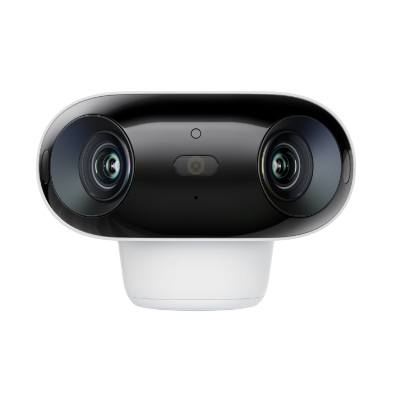
4k 180° Wire-free Color Night Vision Camera
4K UHD 180° Blindspot-free View; Color Vision Day and Night; 30% More Battery Life; Dual-band Wi-Fi 6; Smart detection.
Medium-to-Long Driveways & Large Backyards (30–80 ft): Reolink Argus PT Ultra
Best for medium-to-large residential backyards, side yards, and standard driveways where activity can happen in multiple directions and requires pan-tilt flexibility.
The Argus PT Ultra provides high-density pixel coverage, allowing you to pan 355° and tilt 140° remotely to sweep across wide open spaces.
- Key Specs: 4K 8MP resolution, dual-band Wi-Fi (2.4/5 GHz), motorized pan-tilt, rechargeable battery or solar power, and subscription-free onboard microSD card storage.
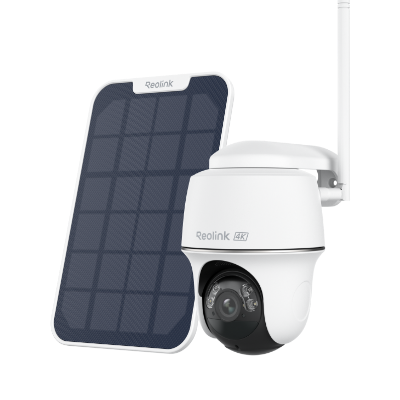
4k 100% Wire-Free PT Camera
4K 8MP Ultra HD; 5GHz/2.4GHz WiFi; Rechargeable Battery & Solar Powered; 355° Pan & 140° Tilt; IP65 Certified Weatherproof; Clear Night Vision; 2-Way Audio; 122° Wide Viewing Angle.
Expansive Properties, Farms & Perimeter Gates (100–200+ ft): Reolink RLC-823S2
Designed for large rural properties, open farmland, commercial parking lots, long private roads, or distant gate entrances that demand clear long-range identification.
The Reolink RLC-823S2 features 16× optical zoom to physically pull distant targets closer without sacrificing 4K image quality, combined with an intense IR night vision range that illuminates targets up to to 80 meters (260ft) in complete darkness.
- Key Specs: 4K 8MP Ultra HD, 16× motorized optical zoom, 360° pan/90° tilt with auto-tracking, PoE wired connection, and long-range infrared LEDs.
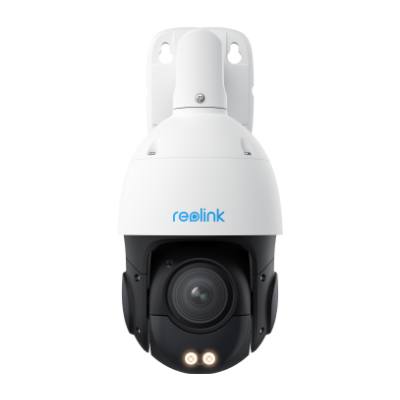
Smart 4K PTZ PoE Security Camera with 16X Optical Zoom
16X Optical Zoom, 360° Coverage in 4K UHD, Auto Tracking, Color Night Vision.
FAQs
How far can a camera identify a face?
There is no fixed identification distance. In many home setups, a camera may capture usable facial detail at roughly 15–40 feet (5–12 m), while longer focal lengths or optical zoom can extend that range. Resolution, lens, lighting, camera angle, and how large the face appears in the frame all matter.
How far can a 4K camera see?
A 4K security camera can often monitor activity at 50–100 feet (15–30 m) or more, but 4K resolution alone does not determine viewing distance. A wide-angle 4K camera may cover more area but show less detail on distant subjects than a zoom camera with a narrower field of view.
Can a security camera see 100 feet?
Yes. Many security cameras can detect people, vehicles, or movement at 100 feet (30 m), especially in good lighting. However, seeing activity at 100 feet does not mean the camera can reliably identify a face or license plate at that distance.
Which camera is best for a long driveway?
For a long driveway, choose a varifocal or PTZ camera with optical zoom rather than an ultra-wide fixed-lens camera. For driveways around 50–100 feet, a high-resolution fixed or varifocal camera may be sufficient. For gates or entrances 100–200 feet away, optical zoom and long-range night vision become more important.
Does optical zoom help cameras see farther?
Yes. Optical zoom helps capture more detail from distant subjects by changing the lens focal length, rather than simply enlarging existing pixels. This makes it especially useful for long driveways, gates, parking areas, farms, and other locations where important activity occurs far from the camera.
Conclusion
How far a security camera can see depends on its lens, resolution, lighting, and viewing conditions. For close areas, wide-angle cameras work well, while long driveways and large properties benefit from optical zoom, PTZ, and long-range night vision. Choose based on the distance and level of detail you actually need.
Search
Subscribe for the Latest Updates
Security insights & offers right into your inbox