
How to Get Rid of Chipmunks in Your Yard Humanely

Spotting a chipmunk scurrying under the patio or finding a prized spring bulb dug up overnight is incredibly frustrating. Chipmunks might appear harmless but they can create extensive burrow systems that undermine home foundations, ruin garden beds, and collapse concrete walkways.
The first sign for most homeowners is a set of clean, round holes appearing near an exterior staircase, and once those show up, the population behind them tends to grow quickly. If you are trying to figure out how to get rid of chipmunks without resorting to poison or harmful methods, this guide covers the full picture: why chipmunks become a problem, what actually works to deter and remove them, and how to keep them away safely.
Are Chipmunks Really That Destructive?
Chipmunks DO pose a genuine threat to residential structures. WBZ NewsRadio reports that chipmunk populations in the northeast United States are actively growing, a trend confirmed by New Hampshire Fish and Game wildlife biologist Patrick Tate.
Chipmunks tend to burrow mainly for survival reasons or store food. Frequent burrowing activity under stairs and decks can become a severe structural risk, something the Internet Center for Wildlife Damage Management confirms in its review of homeowner complaints.
A single burrow can extend up to 30 feet underground, hollowing out the soil beneath walkways and patios until those surfaces start to shift. Beyond the structural side, chipmunks dig up bulbs, raid bird feeders, and chew through stored bags of pet food.
Their droppings are a hygiene concern too, particularly in vegetable gardens and around play areas. Chipmunks live two to three years in suburban environments and breed twice a year, so a handful of animals turns into a yard-wide problem faster than most homeowners expect.
How to Know if You Have Chipmunks in Your Yard
Identifying an infestation early prevents extensive burrowing damage to residential properties. Property owners often confuse chipmunk activity with squirrel or rat problems. Here are some specific signs that point directly to chipmunk activity.
Look for Droppings and Tracks
Finding hard, dark, and pill-shaped droppings near bird feeders is a clear indicator of an infestation. Chipmunk tracks feature four toes on the front feet and five toes on the back feet, typically clustered around retaining walls. Inspecting dirt paths after a rainstorm helps homeowners locate footprints easily.
Monitor Activity with Smart Security Cameras
Deploying high-resolution outdoor security cameras provides undeniable visual proof of rodent activity. Security cameras feature smart animal detection technology, which instantly sends real-time alerts to a smartphone exactly when a rodent enters the yard.
Because these animals also move incredibly fast in the night, utilizing cameras with color night vision helps property owners track exact travel routes and identify hidden burrow entrances even in complete darkness.
How to Get Rid of Chipmunks: 6 Humane Methods That Actually Work
1. Remove What's Attracting Them First
This is a step many people tend to skip and it is the most important one. Deterrence without source removal is a temporary fix at best.
- Switch to no-mess bird feeders with seed catchers, and clean up spilled seed daily. Loose seed on the ground is one of the biggest attractants.
- Remove other food sources: fallen fruit and nuts, unsecured compost, and any pet food stored outdoors.
- Clear wood piles, brush piles, and dense ground-cover plantings near the house. These give chipmunks the shelter they need to burrow confidently.
2. Apply Natural Repellents
Humane World for Animals notes that no repellent is formally registered specifically for chipmunks, but squirrel-labeled products work on the same basic principle. Several common household and garden natural options can also help discourage chipmunks when applied around garden beds and burrow entrances.
- Scatter cayenne pepper or crushed red pepper flakes around garden beds and burrow entrances. Chipmunks dislike capsaicin and will avoid treated areas.
- Apply peppermint oil to cotton balls and place them near active burrow openings. It’s a low-cost option that’s widely used.
- Use commercial squirrel repellents made from natural ingredients
- Plant daffodils and Allium species in and around garden beds. They act as a natural, perennial deterrent that needs no reapplication.
3. Use Exclusion Barriers Around Key Areas
If chipmunks already have a path under the foundation or into the garden bed, physical barriers are the only thing that holds long-term.
- Install L-shaped footer barriers made from hardware cloth (bent at a 90-degree angle and buried a few inches underground) around foundations, walkways, retaining walls, and patios to physically block burrowing.
- Lay quarter-inch wire mesh just below the soil surface over garden beds containing bulbs, and extend it at least one foot beyond the planting area on every side.
- Seal gaps where utility cables, gas lines, or vents enter the home so chipmunks don’t migrate indoors.
- Add a plant-free gravel border around the perimeter of the house. Removing cover near the foundation makes the area too exposed for them to burrow with confidence.
4. Deploy Motion-Activated Deterrents
Chipmunks are creatures of routine. They follow the same routes, feed at the same spots, and are most active at dawn and dusk. Breaking that sense of safety in your yard is what makes deterrents effective.
- Motion-activated sprinklers deliver a harmless burst of water that startles chipmunks and discourages them from coming back to treated areas.
- Motion-activated security cameras with built-in spotlights or floodlights are an even stronger disruption. When a chipmunk triggers the sensor, the sudden light startles the animal without causing harm. The footage also shows you where chipmunks are entering, where burrows are forming, and whether your other methods are working, which turns guesswork into information.
5. Live Trap and Relocate
When deterrence alone isn’t keeping up with the population, live trapping is the most reliable humane removal method. Keep it simple and follow these steps.
- Choose a wire-mesh live trap sized for small rodents, at least 3 x 3 x 10 inches, with a two-door design.
- Bait with peanut butter mixed with oatmeal, or plain sunflower seeds. According to Kansas State University, these are the most reliable options. Simple and familiar beats elaborate bait combinations.
- Pre-bait for two to three days before setting the trigger. Wire the doors open and let the bait sit, so the chipmunk learns to associate the trap with a reliable food source. It makes a real difference in catch rate.
- Place the trap directly beside an active burrow entrance, along a wall or path the chipmunk uses regularly, or under the bird feeder. Chipmunks move along edges, so position accordingly.
- Check traps every few hours, especially in warm weather. A trapped animal left in direct sun will suffer.
- Wear gloves throughout and avoid direct contact with the animal.
- Relocate at least five miles from your home, in a wooded area away from residential properties. Chipmunks have a homing instinct and will return if released too close.
Check local wildlife regulations first. Some states restrict release on public lands.
6. Call a Professional for Severe Infestations
If five or more rodents appear consistently, or burrowing occurs directly under a heavy retaining wall, calling a licensed wildlife control specialist is the practical next step.
- Look for services that use live-trap-based removal. Ask explicitly before booking, because some pest control companies default to lethal methods.
- Local animal control departments can also advise on larger infestations, especially where structural damage is involved.
The Best Security Cameras for Your Yard to Deter Chipmunks
One of the most underrated tools for keeping chipmunks under control is one that earns its place well beyond the rodent problem: a motion-activated outdoor camera. The right camera does two things at once. The sudden activation of a bright floodlight or spotlight startles chipmunks and disrupts their patterns without harming them.
Because the footage is accessible in real time via your phone, you can see exactly where they are active, when they are busiest, and whether your other deterrent measures are having any effect. Three models stand out for this specific use case.
Reolink Duo Floodlight WiFi: Best for Full Backyard Coverage
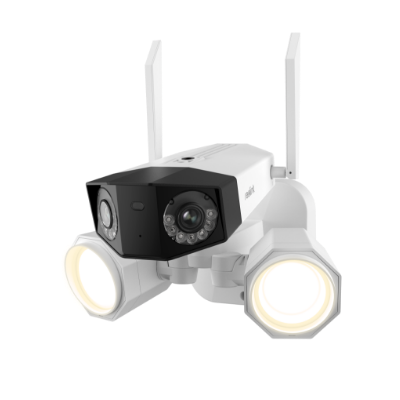
4K WiFi Camera with Floodlights
Dual Lens, 5GHz/2.4GHz WiFi, 180° Wide-Angle Panorama, Person/Vehicle Detection
This is the go-to pick for homeowners who want a single device to cover their entire backyard or garden. The dual-lens system delivers a 180-degree ultra-wide field of view in 4K resolution, meaning one camera covers the garden beds, bird feeder zone, and patio perimeter.
Its two built-in 15W floodlights produce 1,800 lumens total and activate automatically when the AI motion detection registers animal movement. Smart animal detection reduces false alerts from wind or shadows. There is no subscription fee, and it is best placed on a rear wall angled toward the yard.
Reolink Elite Floodlight WiFi: Best for Larger Properties
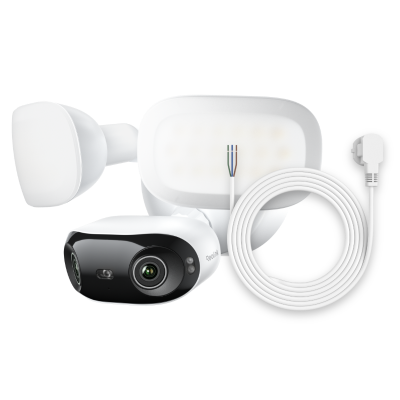
4K 180° Ultra-Wide Wired Floodlight Security Camera
3000-Lumen Dimmable Lighting, Adjustable Color Temperature, Local AI Video Search, Local Storage, Dual-Band Wi-Fi 6.
For larger yards where coverage needs to extend to driveways or wide lawns, the Elite Floodlight WiFi steps up considerably. Its dual 4K lenses deliver a 180-degree panoramic view, while the floodlight output reaches an intense 3,000 lumens across a 12-meter radius.
When animal movement is detected, the camera responds with light, a built-in 105dB siren, or a custom voice alert. The dual-band Wi-Fi 6 ensures a reliable connection across expansive plots. It is known to perform best when mounted on garage walls or elevated eaves.
Reolink Solar Floodlight Cam: Best for Wire-Free Flexibility
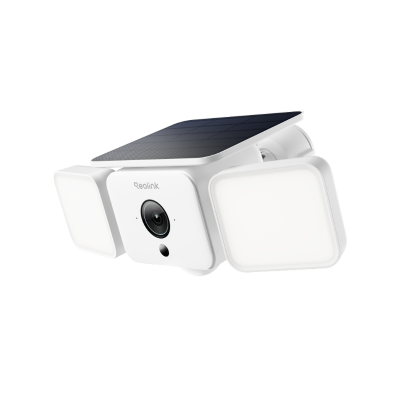
Smart 2K Solar Floodlight Security Camera
150° Ultra-Wide View, 2K 4MP HD Resolution, AI-Based Adaptive Floodlight, Endless Power with Reolink SolarEase™.
Not every chipmunk hotspot is near a power outlet. Fully wire-free and solar-powered, the Solar Floodlight Cam can be positioned exactly where the problem is happening, such as beside a garden bed or along a distant fence line.
The camera also delivers 2K HD resolution with a 150-degree wide-angle view, AI-powered animal detection, 1,000-lumen floodlights, and a 110dB siren. The ability to place this camera exactly where it is needed makes it uniquely practical for tracking edge-of-property burrows.
FAQs
How do I get rid of chipmunks in my yard fast?
The fastest results come from combining two steps at once: remove the food source attracting them and set a pre-baited live trap beside the most active burrow entrance. Do both on the same day. Deterrents like cayenne pepper or motion-activated lights backed by security cameras can be added immediately to support the process and get rid of chipmunks effectively.
What is the best chipmunk repellent?
No repellent is formally registered specifically for them in the United States, but commercial squirrel repellents are effective and widely available. Natural options like cayenne pepper and peppermint oil work well for garden beds. The key trade-off to know: all repellents need reapplication after rain, meaning the best chipmunk repellent works as one layer of a broader plan.
How do I deal with chipmunk holes in my yard?
Once you confirm a chipmunk burrow is no longer active, fill it with compacted soil or gravel and tamp it down firmly. For burrows near structures, consider placing an L-shaped hardware cloth barrier underground after filling to prevent re-digging. A motion-activated camera pointed at the area will confirm whether any rodents have returned to those chipmunk holes.
Can chipmunk burrows cause structural damage to my home?
A single chipmunk rarely causes serious damage. However, when populations grow and multiple burrows form beneath a patio or foundation, the hollow spaces become unstable as soil shifts over time. A chipmunk burrow can extend up to 30 feet long. If you are wondering are chipmunks destructive, the risk increases proportionally with infestation size.
Conclusion
A layered approach works better than any single method, and acting early matters because populations grow faster than most homeowners expect. Cutting off food and cover comes first; repellents, exclusion, and traps handle the rest. A reliable monitoring layer makes the whole plan more efficient, because you stop guessing and start seeing what’s actually happening in your yard. Explore Reolink’s outdoor security camera range to find the right fit, or browse our related articles on home and yard security.
Search
Subscribe for the Latest Updates
Security insights & offers right into your inbox