
3 Best Outdoor Wireless Night Vision Security Cameras

Many break-ins and package theft can happen at night leading to a surging global demand night vision security cameras. Yet a surprising number of outdoor security cameras, even those marketed as “night vision” deliver footage that’s too dark or too grainy to be useful when it matters.
Wireless cameras have made it easier than ever to cover spots like detached garages or side gates where drilling isn’t an option. But, that flexibility only pays off if the camera can actually see clearly in the dark.
This guide covers the best outdoor wireless security cameras with night vision available today, including what separates the good from the mediocre, and which models are worth your money.
Key Features to Look for in Outdoor Wireless Night Vision Security Cameras
When choosing a night vision security camera, don't just turn your attention to the "1080p" or "4K" label. Low-light performance is a combination of technology and brains. Here's how to use this filter.
Night Vision Type: IR vs. Color Night Vision
Most cameras come with Infra-red (IR) LEDs that emit invisible light, making the view in black and white. It's invisible and works in pitch black, but you miss details such as the color of a fleeing car or criminal's coat.
A color night vision security camera, such as one using spotlights or high-sensitivity sensors (like Reolink’s ColorX), captures full-colour details by making the most of available light.
In summary, color is best for recognition while IR is ideal if presence of the camera is a concern.
Resolution: 1080p vs. 2K vs. 4K
A small outdoor security camera with night vision can deliver acceptable results at 2K (4MP) resolution, but 4K (8MP) is ideal for most outdoor applications. That’s because digital zoom doesn’t truly magnify an image. It simply crops and enlarges the existing pixels.
At around 20 feet from a driveway, footage from a 1080p camera typically becomes blurry when digitally zoomed in to read a license plate. 2K video holds up slightly better, but still offers limited room for cropping.
A 4K sensor, on the other hand, retains far more detail, allowing zoomed‑in footage to remain clear enough for vehicle identification and evidence that can actually be useful to police.
Night Vision Range
Night vision range typically falls between 30 and 100 feet and matching that range to your specific location matters more than going for the highest number on the spec sheet. A camera covering a front door or side gate doesn't need the same reach as one monitoring a 60-foot driveway or an open backyard perimeter.
Pro Tip: Especially on lower end night vision cameras, Infra-red range tends to outpace color spotlight range, so if coverage distance is a priority, it’s best to check both figures before buying rather than relying on the headline spec.
Weatherproofing (IP Rating)
An outdoor camera needs to be weatherproof. IP65 should be the minimum standard, which means the camera is protected against rain and dust. For regions with frequent heavy rainfall or cases of flash flooding, consider getting a camera with IP66 or IP67 to be safe.
Pro Tip: Note that even the most rugged "all-weather" cameras will degrade with UV damage after a few years if exposed to unfiltered sunlight. It is best practice to install them under some form of shade.
Motion Detection & Smart AI Alerts
Earlier generations of motion sensor cameras with night vision relied on PIR sensors, which were prone to false alarms triggered by environmental movement such as wind or animals. Today's AI-powered motion sensors can tell the difference between animals and even cars or humans.
This prevents a flood of false alerts at night. So when you do receive a notification, it’s far more likely to be a real event.
Power Source: Battery, Solar, or Plug-In
Wireless night vision security cameras have 3 power options.
-
Battery-powered cameras: Most versatile. No wiring or sunlight needed, so it works almost anywhere. However, the trade-off is upkeep. Most battery cameras need recharging every one to three months, though larger batteries and low-power modes can extend that window considerably.
-
Solar-powered cameras: The closest to maintenance free: with proper sun exposure, the integrated solar panel can keep it running indefinitely. Location and weather is key as shade or long overcast periods respectively can reduce charging and may require occasional recharging.
-
Wi-Fi plug-in cameras: These connect wirelessly but need a nearby outlet, providing constant power with no need for recharging. The downside is limited placement so it’s best suited for fixed spots like garages or covered porches with easy access to power.
Storage: Local vs. Cloud
Most cameras require a monthly subscription to access your recordings. Cameras with local storage (e.g. microSD card or NVR) can provide you the option of keeping footage without recurring costs.
Some manufacturers like Reolink supports both local and cloud storage with no mandatory subscription, so you get the redundancy of the cloud without being locked into it.
Pro Tip: if you need continuous 24/7 recording or want to run a wired system alongside your wireless cameras, Reolink’s PoE camera range is worth exploring.
Wi-Fi Connectivity and Range
If you have a night security camera that relies on Wi‑Fi, its performance is limited by the signal strength available at the mounting location, though modern Wi‑Fi standards have made this easier to manage.
Wi‑Fi 6 with dual‑band support is now the standard, offering lower latency and more reliable performance than older 2.4 GHz‑only systems, especially in challenging environments. If you’re placing a small outdoor security camera with night vision at the far end of your property, this specification matters more than most buyers realize.
Top 3 Outdoor Wireless Night Vision Security Cameras
Here are three Reolink cameras that cover the most common outdoor security scenarios, each suited to a different setup, budget, and location type.
Reolink Argus 4 Pro - Best for Wireless, "Set-and-Forget" Outdoor Coverage
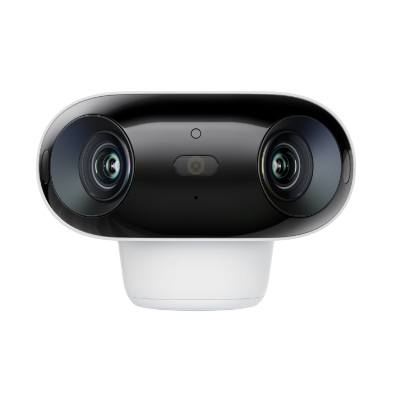
4k 180° Wire-free Color Night Vision Camera
4K UHD 180° Blindspot-free View; Color Vision Day and Night; 30% More Battery Life; Dual-band Wi-Fi 6; Smart detection.
Reolink's Argus 4 Pro is a suitable model for users who want premium 4K security without ever touching a drill or a charging cable. It is the ideal solution for renters or homeowners who need a zero-wiring setup that stays out of the way.
By leveraging ColorX technology, the Argus 4 Pro captures full‑color detail in near‑total darkness by maximising available ambient light, eliminating the need for harsh, attention‑drawing spotlights. This allows the camera to be installed discreetly while still clearly monitoring entry points overnight.
When paired with a Reolink solar panel, it can operate year‑round in most climates without ever needing to be taken down for charging.
Reolink Altas PT Ultra - Best for Wide-Area Coverage with Pan & Tilt
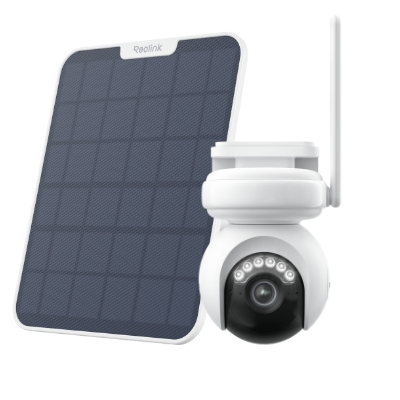
4K Battery-Powered PTZ Camera with Continuous Recording
👍 4K UHD video with continuous recording
👍 ColorX night vision in low light
👍 Pan, tilt, and automatic person tracking
👍 Local storage without monthly fees
If you have a large backyard, a multi-car driveway, or a corner lot, a fixed-lens camera will inevitably leave blind spots. Reolink's Altas PT Ultra solves this with a motorized 360° pan-and-tilt range, allowing one unit to do the work of two or three fixed cameras.
The standout feature here is the massive 20,000mAh battery. While most wireless cameras only record when they detect motion to save power, the Altas PT Ultra is robust enough to support continuous recording.
Combined with Wi-Fi 6 connectivity, you get a faster, more stable stream that reduces dropout even when the camera is placed at the edge of your router's range.
Did You Know: PC Mag praised the Altas PT Ultra for its excellent 4K video quality and its ability to record continuously despite being battery-powered. A combination the editors noted is rare in this category.
Reolink Go PT Ultra (4G) - Best for Remote Outdoor Locations Without Wi-Fi
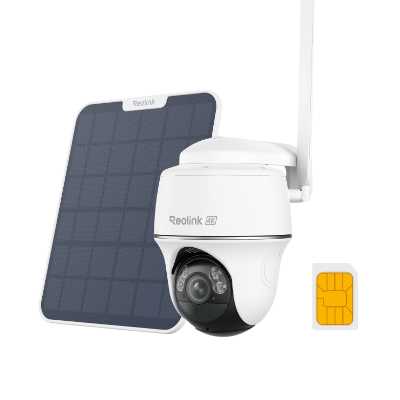
4K 8MP Wire-Free 4G LTE PT Battery Camera
4K 8MP; Smart Detection; 355° Pan & 140° Tilt; Battery/Solar Powered; Color Night Vision; Smart Real-Time Alert.
If you are a property manager or SMB owner, some areas might fall outside Wi-Fi reach. Whether it be a job site, a marina, or a livestock gate, the Reolink Go PT Ultra solves this by operating on a 4G LTE cellular network instead of Wi Fi.
This night vision surveillance camera functions entirely on cellular data, sending real-time AI alerts to your phone from miles away. It is particularly useful for property managers or SMB owners who need to monitor off-grid assets.
Because it supports solar power and pan and tilt control, you can remotely scan your property without ever needing to visit the site to replace batteries or check local storage.
Camera Installation, Placement & Night-Vision Optimization Tips
Getting the right camera is only part of the equation. Placement and configuration have just as much impact on what your outdoor wireless cameras with night vision captures at night. Here’s what to get right before you drill a single hole.
The 7-10 Feet "Sweet Spot" Mounting Height
Mounting height matters more than most people expect. Go too high around 15 feet and you’ll get clear footage of the top of someone’s head, not their face. The 7-10 foot range is the practical sweet spot. It’s high enough to be out of arm’s reach and resistant to tampering, low enough to capture the facial features and licence plates that are actually useful for identification.
Avoiding Infra-red Washout
That white blob in the centre of a night vision clip is called washout. It happens when Infra-red LEDs bounce off a nearby surface like a white wall, a glass panel, or a glossy door frame and floods the sensor with reflected light. To fix the issue, maintain at least 30 cm of clearance between the lens and any reflective surface, and avoid pointing the camera directly at a wall.
Test Your Wi-Fi Signal Before Drilling
Full bars on your porch may mean good phone reception, but that doesn’t always translate to reliable performance for a security camera.
Cameras transmit high‑quality video, which requires far more data than typical mobile apps. To be sure, place the night vision security camera at its intended mounting location and check the live view in the app. If you notice lag or dropouts, a Wi‑Fi extender or a camera with dual‑band Wi‑Fi 6 may be needed for better connectivity.
Plan Your Field of View (FOV)
Pointing a camera directly at a streetlight or bright porch light is one of the most common installation mistakes. The intense light source overexposes that area of the frame, which forces the camera to reduce exposure compensation across the entire image. This could leave the rest of the scene underlit and dark. It is best to aim the night vision security camera slightly away from existing light sources and let its built-in Infra-red or spotlight illuminate the scene on its own terms.
Smart Mode: The Best of Both Worlds
Most advanced cameras offer 3 night vision modes:
- Full Color: Spotlights stay on all night (can be distracting to neighbors).
- Pure IR: Always black-and-white (discreet but lacks color detail).
- Smart Mode: The camera is always in Infra-red mode, but when it detects motion, the spotlights switch on and it begins recording in color. Smart Mode is generally the best option. It's battery efficient, not a nuisance to your neighbors and it gives you the best quality colored video when you need it.
Maximizing Solar Panel Efficiency
If you're using solar power, location is key. The camera should be exposed to the sun for at least 4-6 hours. If even part of the panel is shaded, say by a branch, this can reduce the charging efficiency by half or more.
Conclusion
A good outdoor wireless night vision camera doesn't need to be the most expensive one on the market. More importantly, it needs to be the right fit for the location, lighting conditions, and how you intend to power it.
For most homes, a battery or solar-powered Wi-Fi camera with color night vision covers most outdoor scenarios without any wiring. If you need to watch a large open area from a single point, a pan-and-tilt model removes the need for multiple fixed cameras.
If the location is genuinely off grid, a 4G cellular camera is the most practical option. Whatever you choose, placement has just as much impact as the hardware. Be sure to get the mounting height, angle, and night vision mode right, and the camera will do its job quietly and reliably in the background.
FAQs
1. How does night vision work?
Most security camera’s night vision is achieved either using Infra-red (IR) light or sensitive image sensors. IR cameras emit light invisible to the human eye, which the camera detects to capture black‑and‑white images, typically in low‑light or nighttime conditions. Newer cameras can use high-aperture lenses and sensors to draw light from the night sky or streetlights to produce a color image without IR.
2. How does infra-red vision work?
Infra-red vision works by emitting light from LEDs built into the camera housing at a wavelength just beyond what the human eye can see (around 850nm), which sits outside the visible spectrum at the longer-wavelength, lower-frequency end. That light reflects off objects in the scene and back onto the camera’s image sensor and processes reflected light into a black-and-white video stream, effectively letting the camera see in conditions that appear completely dark to humans.
3. Are night vision cameras better than normal CCTVs?
Regular CCTV cameras will often be "noisy" or reveal completely dark footage after sunset. Night vision cameras are designed with special hardware (such as IR cut filters and sensitive sensors) to improve their operation in darkness. For outdoor security, a night vision security camera is strongly recommended since most incidents happen at night.
Search
Subscribe for the Latest Updates
Security insights & offers right into your inbox