
Understanding 2 Megapixel Resolution: Is It Right for Your Security Needs?

You might have seen 2MP resolution while buying security cameras. It’s a common resolution in the industry, but buyers often do not have an idea of what it actually means.
In this article, we will explain what 2MP resolution is. We will compare it with other resolutions to help you decide which one is a better option for your needs.
What Is 2MP Resolution?
2MP camera resolution means the camera captures images made up of approximately two million individual pixels. Pixels are the tiny dots that form a digital image. More pixels generally mean more detail, but other factors like sensor size, lens quality, and lighting conditions matter just as much.
The most common 2MP resolution is 1920 × 1080 pixels, which is widely known as Full HD or 1080p. This format has an aspect ratio of 16:9 (widescreen). Other 2MP configurations exist, such as 1600 × 1200 pixels (4:3 aspect ratio), but 1920 × 1080 is the industry standard for security cameras and displays.
2MP Resolution vs Other Resolutions
Choosing the right resolution depends on your specific needs. Security cameras are available in a wide range of megapixel options. Here is how 2MP compares to higher-resolution alternatives.
4MP
4MP resolution is typically 2688 × 1520 pixels, totaling about 4 million pixels. This is roughly twice the detail of 2MP. A 4MP camera provides noticeably sharper images, making it easier to see important details when you zoom in. According to security experts, 4MP has become a popular choice for many homes and small offices because it balances detail, storage, and cost effectively.
5MP
5MP resolution is typically 2592 × 1944 pixels, totaling about 5 million pixels. A quality 5MP camera can capture facial details up to 45 feet away, which is perfect for many homes and small businesses. Security cameras with 5MP resolution offer an excellent balance of quality and cost, making them a common choice for outdoor deployments where greater detail is needed.
8MP (4K)
8MP resolution is 3840 × 2160 pixels, totaling about 8 million pixels. This is often called 4K UHD, and it captures nearly four times the detail of 1080p. The biggest advantage is with digital zoom. On 8MP footage, you can zoom in much further while maintaining usable, clear details. A professional 8MP camera can typically capture clear facial details from 50 to 80 feet away in daylight, compared to 30-40 feet for 2MP.
12MP
12MP resolution is typically 4000 × 3000 pixels, totaling about 12 million pixels. For forensic-level detail, 12MP cameras offer uncompromising clarity. These are considered specialty devices for uses requiring extreme detail or a wider field of view. However, 12MP cameras are typically reserved for specific use cases where the higher resolution is justified, such as covering large parking lots or commercial perimeters.
16MP
16MP resolution is approximately 4928 × 3264 pixels, or about 16 million pixels. Cameras at this resolution and above (including 18MP) are considered niche and are typically used only for specialized applications like large-scale commercial surveillance or industrial monitoring. The storage, bandwidth, and processing power requirements for 16MP cameras are substantial, making them impractical for most standard home or small business security needs.
18MP
18MP resolution represents approximately 18 million total pixels. Like 16MP, these ultra-high-resolution cameras are viewed as specialty devices. According to security professionals, while stadiums and large venues may use a small number of ultra-high-resolution cameras, the majority of cameras deployed are 8MP or lower. 18MP cameras require extremely robust network infrastructure and significant storage capacity, limiting their use to high-budget commercial applications.
Is a 2MP Camera Good?
A 2MP (1080p) camera remains a solid choice for many applications. These cameras have been the industry standard for over a decade and are still the most common camera size due to their reliability in controlled lighting and at shorter distances. They work very well indoors, on smaller outdoor fields of view, and in applications with relatively short distances to the target. 2MP cameras are also the most affordable option and are sufficient for short-distance applications, fitting the needs of most end users who typically use them for general visibility.
However, higher resolutions offer clear advantages for specific scenarios. According to Security Camera King, a professional 4K (8MP) camera can identify faces from 50 to 80 feet away in daylight, compared to just 30-40 feet for a 2MP camera. The difference is dramatic: where a 1080p camera shows a blur, a 4K camera delivers an identifiable face, the kind of evidence that helps solve crimes. For outdoor deployments where greater detail is needed, there has been a noticeable shift towards 4MP or 4K cameras.
Bonus: High Resolution Camera Recommendation
OMVI 3i PoE
OMVI 3i PoE is an 18MP triple-lens security camera for robust security. Its two lenses capture a 180° panoramic view in 10MP. And its pan-and-tilt security camera covers 360° in 4K. It's equipped with SyncTrack, which allows the camera to frame every object and track its motion. The AI detection of the camera ensures accurate detection and real-time alerts. It also offers local AI video search, which means
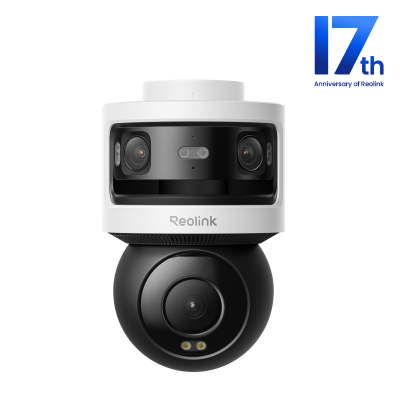
All-in-one Triple-Lens 180° Panoramic Pan-Tilt Security Camera
10MP Dual-Lens 180° View, 4K 360° Full Coverage, SyncTrack with auto framing & auto tracking, Local Storage (No Monthly Fees), Local AI Video Search.
Duo 3 PoE
Duo 3 PoE is a 16MP dual-lens security camera. It's an incredible option to capture a 180° panoramic view. It's suitable for large areas and summarizes a 15-second video in one picture. It automatically tracks the motion of objects and sends real-time alerts. Its spotlight night vision illuminates the area at night and captures clear videos.
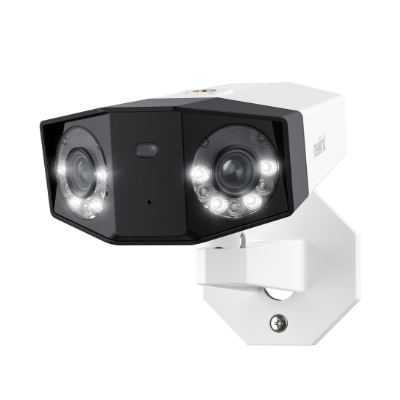
Groundbreaking 16MP Dual-Lens PoE Camera
16MP UHD, Dual-Lens, Motion Track, 180° Wide Viewing Angle, Power over Ethernet, Color Night Vision.
Altas PT Ultra
Altas PT Ultra is a 4K security camera. With pan-and-tilt motion, it covers 360° and automatically tracks the motion of objects. It also has Reolink ColorX night vision, which ensures true colors even in complete darkness. It's a battery/solar-powered security camera that offers up to 500 days of battery life in PIR mode. Most importantly, the camera starts recording 10 seconds earlier, before the event starts, to capture every detail.
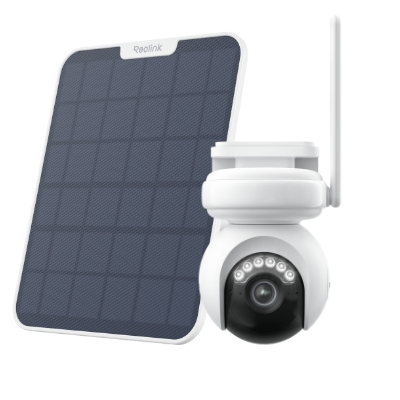
4K Battery-Powered PTZ Camera with Continuous Recording
👍 4K UHD video with continuous recording
👍 ColorX night vision in low light
👍 Pan, tilt, and automatic person tracking
👍 Local storage without monthly fees
FAQs
Is 2MP the same as 1080p?
Yes, 2MP and 1080p refer to the same resolution: 1920 × 1080 pixels. 1080p indicates the vertical resolution (1080 rows of pixels), while 2MP indicates the total pixel count (approximately 2 million).
Is 2MP the same as 4K?
No, 4K (8MP) has four times the pixels of 2MP. 2MP is 1920 × 1080 (2 million pixels), while 4K is 3840 × 2160 (8 million pixels).
Is 2MP enough for security?
For many indoor applications and short distances (10-15 feet), yes. For larger areas, longer distances, or when you need to zoom in on details like license plates, consider higher resolutions like 4MP or 8MP.
Conclusion
2 megapixel resolution delivers 1920 × 1080 pixels, the same Full HD quality as your television. For indoor applications, short hallways, and close-range monitoring, 2MP is often the right choice at an affordable price point. However, higher resolutions like 4MP, 8MP, and 12MP offer advantages for larger fields of view and longer distances. Choose the resolution that matches your specific scene width and requirements. You don't always need to go with a high-resolution camera.
Search
Subscribe for the Latest Updates
Security insights & offers right into your inbox