
12 Megapixel Security Cameras: Benefits, Drawbacks, and Comparisons
While buying security cameras, you might come across a 12 megapixel resolution. But often people don't understand what it actually means. They have no idea whether it is better or inferior to 4K.
Let's understand what 12 megapixel resolution is. We will compare it with different common resolutions to give you a better idea of its capabilities, applications, and pros & cons.
What Is 12 Megapixel Resolution?
A 12 megapixel security camera captures images at approximately 4000 x 3000 pixels, totaling around 12 million pixels per frame. Professional 4K (8MP) cameras can identify objects from 50 to 80 feet away in daylight, while lower-resolution cameras struggle beyond 30-40 feet. The difference is evident, where a 1080p camera shows a blur, a high-resolution camera delivers an identifiable face, the kind of evidence that helps solve crimes.
The key advantage of 12MP is the intricate details. You can digitally zoom into footage to identify faces, license plates, or package labels without the image turning into a blurry mess. One 12MP camera can monitor a parking lot or warehouse that might otherwise require two or three lower-resolution units. Some 12MP models also use a 4:3 aspect ratio, which is ideal for covering vertical spaces like stairwells and doorways.
However, the trade-off is significant. A 12MP security camera produces larger file sizes, requires more storage space, and demands higher network bandwidth than lower-resolution alternatives. The CCTV storage calculator shows that a 12MP camera recording continuously can consume 80-150 GB per day, depending on compression settings and frame rate. Modern cameras use H.265 compression to reduce file sizes, but the storage requirements remain substantial.
Pros and Cons of 12MP Security Camera
Before investing in 12MP, understand what you gain and what you sacrifice. These trade-offs matter for both home and business use.
Pros:
- Exceptional detail for evidence: You can zoom in on faces, license plates, and small objects without pixelation. This is crucial for identifying suspects after an incident, especially when reviewing footage from a distance or across a large parking lot.
- Wide coverage with fewer cameras: One 12MP camera can cover a large area, such as a parking lot, driveway, or warehouse, while still capturing usable details. You might need only one camera, where a 4K system would require two or three.
- Forensic-ready footage: The high pixel density provides the clarity needed for legal evidence and police investigations. Courts accept footage that clearly shows faces and identifying features, which lower resolutions may miss.
- Future-proof resolution: As display technology improves and screens get larger, 12MP footage will remain sharp and clear. Investing now means your system won't look outdated in five years.
Cons:
- High storage requirements: Continuous recording from a 12MP camera can consume 80-150 GB of storage per day, requiring large hard drives or costly cloud storage plans. A four-camera system could fill a 2TB drive in less than a week.
- Lower frame rates: Most 12MP cameras record at 15-20 fps, compared to 30 fps for 4K. Fast-moving subjects like cars or running people may show motion blur, which can make identification more difficult.
- Potential low-light challenges: Smaller pixels on the same sensor size can struggle in very dark conditions unless the camera has a large sensor and strong IR lighting. This is less of an issue with modern sensors, but budget 12MP cameras may disappoint at night.
- More expensive upfront: Both the camera and the recorder (NVR) must support 12MP input, raising the total system cost. You cannot simply add a 12MP camera to an older 4K system; the recorder must be compatible.
12MP vs Other Camera Resolutions
Choosing the right resolution depends on your specific security needs. Here is how 12MP compares to common alternatives.
12MP vs 1080p
1080p (2MP) is 1920 x 1080 pixels, or about 2 million pixels. 12MP is roughly six times the pixel count. With 1080p, digital zoom blurs faces beyond recognition after just 2x magnification. With 12MP, you can zoom in 4-6x and still identify key details. However, 1080p files are tiny, require minimal storage, and work with any recorder. They are suitable for video calls on laptop cameras and affordable video doorbells.
12MP vs 5MP
A 5MP camera captures 2560 x 1920 pixels (4.9 million pixels), roughly a 4:3 aspect ratio like 12MP. 12MP vs 5MP gives you about 2.5 times more detail. The real-world difference is that a 5MP camera can identify a face from 20-30 feet away. A 12MP camera can do the same from 40-50 feet, or capture a wider area while keeping the same detail level. You can use a 5MP for video doorbells, indoor monitoring, and small areas.
12MP vs 4K (8MP)
[4K (8MP)](What is 4K Resolution? Unleash the UHD Secret) is 3840 x 2160 pixels (16:9 widescreen). 12MP has about 45% more pixels. But 4K records at 30 fps (smoother motion) while 12MP typically runs at 15-20 fps. 4K also uses less storage and bandwidth, about 6-12 Mbps vs 8-16 Mbps for 12MP. Choose 4K for general home security, and choose 12MP for large areas requiring detailed zoom.
12MP vs 16MP
16MP is approximately 4608 x 3456 pixels, or about 16 million pixels. 12MP vs 16MP gives the edge to 16MP for sheer detail, but 12MP is more practical for most users. A 16MP camera requires even more storage, bandwidth, and processing power. Very few consumer NVRs support 16MP natively. For most applications, 12MP offers the right balance between extreme detail and practical usability.
Comparison Table: 12MP vs Other Resolutions
Best 12 Megapixel Camera Recommendations
When choosing a 12MP security camera, prioritize sensor quality, low-light performance, and smart detection features. Here are two excellent options.
Reolink RLC-1240A
The Reolink RLC-1240A is a vandal-proof outdoor camera with an IK10 rating, meaning it can withstand physical tampering and impact. It delivers 12MP UHD footage with a 145° field of view, significantly wider than the standard 80-100° found on conventional cameras.
It offers color night vision with built-in spotlights, smart detection for people/vehicles/animals with real-time alerts, two-way audio, IP67 weatherproofing, and PoE for simple plug-and-play installation. H.265 compression reduces storage needs, and there are no monthly fees for local storage. This camera is ideal for sensitive areas like parking lots, construction sites, or commercial perimeters.
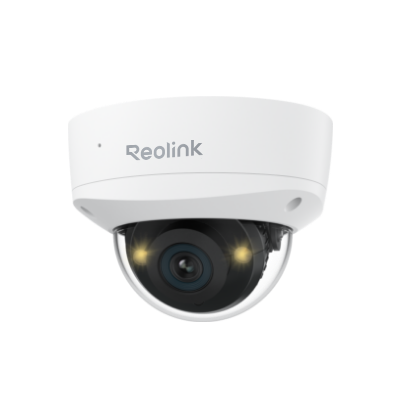
12MP IK10 Vandal Proof Wide FOV Security Camera
12MP UHD with 145° FOV, Color Night Vision, IK10 Vandal-Proof, Two-Way Audio.
While the RLC-1240A delivers stunning 12MP Ultra HD sharpness across a single wide-angle view, massive perimeters often require even more forensic horsepower. If you want to jump from a fixed 12MP view to a mind-blowing 18MP triple-lens ecosystem—giving you a 180° sweeping panoramic overview alongside a separate 4K motorized lens that automatically zooms in on moving targets—it’s time to meet Reolink’s ultimate powerhouse.
Reolink OMVI 3i PoE
OMVI 3i PoE is an 18MP PoE security camera with triple lenses. The dual lenses capture a 180⁰ field of view in 10MP resolution, while the pan-and-tilt lens captures 360⁰ in 4K (8MP). The camera ensures optimal clarity and intricate details with high resolution. With SyncTrack, it automatically frames the object and tracks the movements. It does not leave any blind spots and allows you to pinpoint specific areas for quick monitoring.
The camera features local AI detection, which reduces the chances of false alerts. It can smartly distinguish between animals, persons, and vehicles. It also has local AI video search, which allows users to search for the desired video or event using keywords. It’s meant for covering massive areas with only one camera.
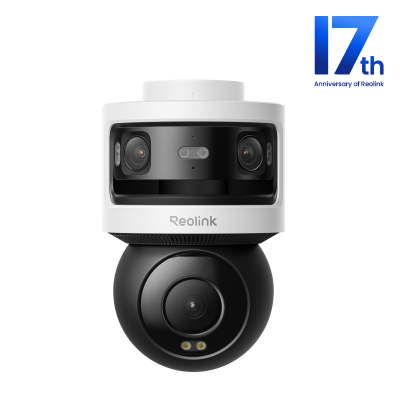
All-in-one Triple-Lens 180° Panoramic Pan-Tilt Security Camera
10MP Dual-Lens 180° View, 4K 360° Full Coverage, SyncTrack with auto framing & auto tracking, Local Storage (No Monthly Fees), Local AI Video Search.
FAQs
Is 12 megapixels good quality?
Yes, 12MP delivers excellent details with clarity. You can digitally zoom in to identify faces and license plates from a distance. However, it requires more storage and bandwidth than 4K.
Is 12 MP better than 4K?
12MP has about 45% more pixels than 4K, allowing deeper zoom without blur. But 4K runs at a smoother 30 fps and requires less storage. Choose 12MP for wide areas needing zoom; choose 4K for balanced performance.
Is 12MP the same as 1080p?
No. 1080p has 2 million pixels. 12MP has 12 million pixels, six times more detail. The difference is visible when zooming into the footage.
Conclusion
12 megapixel resolution gives you intricate details for security applications. You get approximately 4000 x 3000 pixels per frame, 45% more than 4K. But it leads to larger files, more storage, and 15-20 fps instead of 30. Choose 12MP for parking lots, warehouses, or any large area where you need to zoom in on details after the fact. For general home security, 4K may serve you better.
Search
Subscribe for the Latest Updates
Security insights & offers right into your inbox