
Best Window Security Cameras: What Works Through Glass?
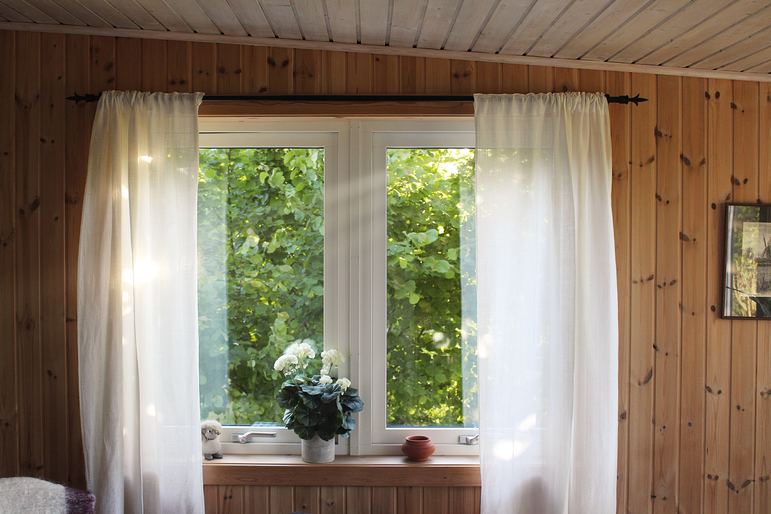
Placing a window security camera is an effective way to monitor high-risk entry points, but achieving clear footage through glass requires the right installation setup. With home burglary statistics showing that roughly 23% of break-ins occur through first-floor windows, securing these areas provides a critical layer of home protection . However, pointing a camera directly through a window pane introduces technical challenges like glass glare and nighttime infrared (IR) reflection.
Choosing the best window security camera setup depends on whether you plan to position an indoor camera on a window sill looking out, use an exterior weather-resistant camera mounted on the window frame, or disable internal IR lights to prevent night reflection . This guide breaks down the feasibility of shooting video through glass, key features to look for—such as smart AI detection and wide-angle coverage—and how to select the ideal setup for your home.
- Can You Use a Security Camera Through a Window?
- What Security Camera Works Through a Window?
- 4 Key Features to Look for in the Best Window Security Camera
- 3 Best Window Security Cameras for Different Setups
- What Are Possible Limitations of Security Cameras Through Windows or Glass
- Buyer's Decision Table
- FAQs
- Conclusion
Can You Use a Security Camera Through a Window?
Yes, you can use a security camera through a window, but performance may be limited. During the day, most cameras can capture clear footage through glass. At night, however, infrared night vision can reflect off the window and cause glare or washed-out images. For better results, disable IR lights and use outdoor lighting or a window camera with color night vision.
What Security Camera Works Through a Window?
Not all security cameras perform equally when placed near or behind glass. Selecting the right type depends on whether you plan to install the hardware on the interior window sill looking out or mount a weather-resistant camera directly on the exterior window frame.
Below are the two most common camera types used for window security setups and how they perform in real-world scenarios.
1. Outdoor Security Cameras (Exterior Frame Mount)
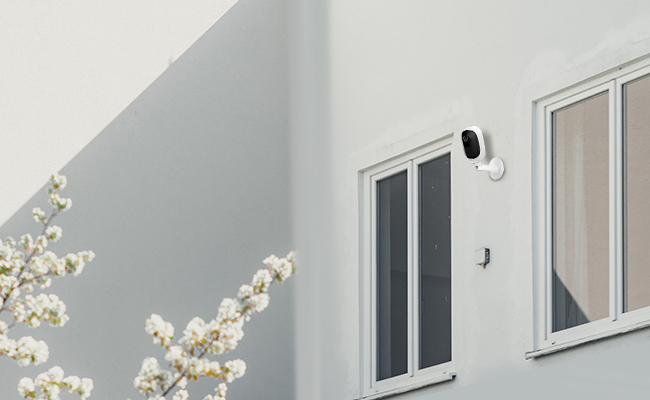
An outdoor security camera is a weather-resistant surveillance device installed on the exterior window frame, outer wall, or soffit to monitor the surrounding property. Mounting an outdoor camera on the outside of your window frame is the most reliable way to monitor window entry points. By placing the lens outside the glass, you eliminate indoor window glare, reflections, and infrared (IR) light bounce-back during nighttime recording.
2. Window-Mounted & Indoor Window Sill Cameras
An indoor window mount camera is a compact, plug-in or battery-operated camera positioned on an interior window sill or mounted directly to the inside glass using a suction bracket.
Indoor cameras placed on a window sill are popular for quick, non-invasive home monitoring . They require no exterior mounting, making them an appealing option for apartment renters or homeowners who prefer a low-maintenance setup.
4 Key Features to Look for in the Best Window Security Camera
Evaluating a window security camera requires looking beyond standard image resolution. Positioning a camera near or on a window frame introduces environmental and technical factors—such as glass reflection, weather exposure, and installation height—that directly impact performance.
1. Weatherproof and Vandal-Resistant Housing
An outdoor window camera must carry at least an IP66 weather rating and a high vandal-resistance rating to survive harsh elements and physical tampering.
Mounting a security camera on an exterior window frame or sill exposes the hardware to direct rain, snow, and potential tampering.
-
IP Weather Ratings: Look for an IP66 rating, which ensures the housing can withstand direct, high-pressure water jets and heavy dust without internal damage.
-
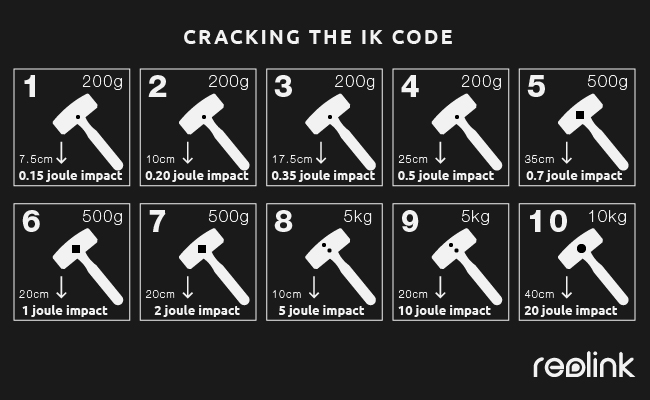
Vandal-Proof Ratings (IK10): An IK10 vandal-proof rating means the camera casing can absorb a 20-joule impact (equivalent to a 5kg mass dropped from 40cm) without breaking. This deters intruders from easily disabling or knocking down the camera .
2. Low-Maintenance Installation with Flexible Cabling
A battery-powered or Power over Ethernet (PoE) camera simplifies window frame installation by minimizing or eliminating the need for drilling through exterior walls .
Exterior window installations often require ladder work, making complex cable routing through window sills difficult . Selecting the right power method keeps setup simple:
-
Battery-Powered & Solar-Assisted: Operates 100% wire-free using rechargeable batteries or an attached solar panel. Perfect for renters or temporary setups where drilling holes into exterior window frames is prohibited .
-
Power over Ethernet (PoE): Transmits both high-speed data and electrical power over a single Cat 5/6 network cable. This eliminates the need for an AC power outlet near the window while providing a rock-solid, uninterrupted connection.
3. Advanced Night Vision and Glare Management
Shooting video through glass at night causes blinding infrared (IR) glare, making external mounting or dedicated low-light sensors essential for usable nighttime footage .
If a security camera is placed behind an indoor window pane, its built-in infrared LEDs will reflect off the glass at night, rendering the image pitch black. To achieve clear night vision around windows:
-
Outdoor Mounting (Recommended): Mounting the camera on the external side of the window frame eliminates glass glare entirely .
-
Color Night Vision & Spotlights: Uses ambient low-light sensors (typically effective down to 0.001lux or motion-activated spotlights to record full-color footage overnight instead of grainy black-and-white .
-
Disabling Built-In IR: If an indoor camera must face through glass, choose a model that allows you to disable its internal IR lights via software, then rely on an external light source or streetlamp.
4. Flexible Storage Options (Local NVR vs. MicroSD Card)
Window security cameras should store video locally on a microSD card, NVR recorder, or local storage drive to avoid recurring monthly cloud subscription fees .
Depending on how many window and entryway points you monitor, selecting the right video storage hardware keeps data accessible and affordable:
-
MicroSD Card (Onboard Storage): Ideal for standalone single-camera setups monitoring a single window. Saves motion-triggered clips directly to the camera with no ongoing costs.
-
Dedicated NVR (Network Video Recorder): Best for multi-camera systems covering windows, front doors, and perimeters simultaneously. An NVR centrally manages multiple channels, records 24/7 continuous footage, and expands storage capacity up to several terabytes without monthly fees .
Note: Systems designed specifically around subscription-free local recording—such as Reolink’s NVRs and standalone microSD cameras—allow you to store months of footage safely inside your home.
3 Best Window Security Cameras for Different Setups
Selecting the right window camera comes down to how your property is structured and where you plan to position the hardware. Below are three top-performing setups tailored for specific window monitoring scenarios .
1. Best Wire-Free Window Security Camera: Reolink Argus 4 Pro
Ideal for renters or property owners who need to cover an exterior window sill or porch area without drilling holes, running cables, or plugging into indoor outlets .
-
Key Strengths: Operates 100% wire-free on a long-lasting rechargeable battery with continuous solar panel support, eliminating manual recharging cycles .
-
Performance: Captures ultra-wide 4K footage using dual-lens stitching to cover broad exterior window perimeters without edge distortion.
-
Features: Features ColorX full-color night vision—which utilizes a large lens aperture sensor to capture vibrant color video in ultra-low light without blinding infrared glare—along with an IP66 weatherproof rating, dual-band Wi-Fi, and smart person/vehicle/pet detection .
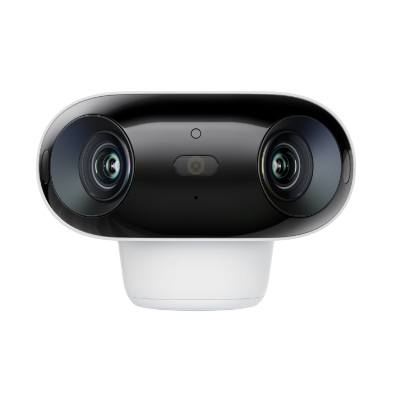
4k 180° Wire-free Color Night Vision Camera
4K UHD 180° Blindspot-free View; Color Vision Day and Night; 30% More Battery Life; Dual-band Wi-Fi 6; Smart detection.
2. Best Wireless Security Camera for Windows: Reolink Lumus
Ideal for homeowners looking for uninterrupted, 24/7 continuous monitoring on an exterior window frame or sill where an outdoor AC outlet is nearby .
-
Key Strengths: Combines continuous plug-in power with Wi-Fi video transmission, giving you non-stop coverage without worrying about battery drain .
-
Performance: Delivers crisp 2K (4MP) Super HD video clarity, providing clear image detail across driveways, walkways, and window entry points.
-
Features: Equipped with motion-activated spotlights that serve as a strong visual crime deterrent, two-way audio to speak with visitors near the window, and onboard microSD card storage (up to 256GB) for subscription-free local recording .
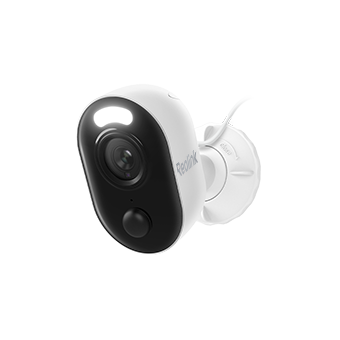
Outdoor WiFi Security Camera with Motion Spotlight
Bright, Motion-Activated LED Spotlight, Instant Siren Alarm, and Remote 2-Way Audio; 2K 4MP and Full Color Night Vision.
3. Best Outdoor Window-Mount Security Camera with Removable Camera: Argus Magicam
Ideal for users who want maximum installation flexibility, such as placing a compact, detachable camera directly onto a window frame or narrow ledge without bulky mounting brackets .
-
Key Strengths: Features a modular, detachable design that allows the core camera unit to be easily unclipped from its base for convenient indoor recharging or repositioning .
-
Performance: Records in high-definition resolution to capture sharp facial detail and movement outside ground-floor windows .
-
Features: Includes a compact magnetic window mount, smart motion filtering to eliminate false alerts from passing shadows, and local microSD card backup to keep footage secure on-site .
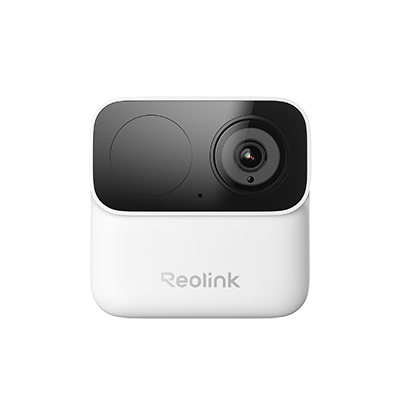
2MP Wireless Power-Efficient Camera
Magnetic Mounting for Easy Installation, Max. 9-Month Battery Life, Dual-Band 2.4/5GHz Wi-Fi, No Monthly Fees.
What Are Possible Limitations of Security Cameras Through Windows or Glass
1. Infrared (IR) Night Vision Glare
The built-in infrared (IR) LEDs on security cameras reflect directly off glass surfaces at night. When the IR lights activate in low light, the light bounces back into the lens, causing blinding white glare that renders nighttime footage completely unusable .
Fixes: You must turn off the camera's internal IR LEDs in the app settings and rely on ambient exterior lighting (like a porch light) or external IR illuminators installed outside .
2. Reduced Motion Detection Accuracy
Most battery-powered and compact smart cameras rely on Passive Infrared (PIR) motion sensors, which detect changes in thermal heat signatures. Standard window glass blocks infrared radiation (heat signatures), meaning PIR sensors will fail to trigger or record motion through a window pane.
Fixes: Continuous recording cameras or models using pixel-based/AI software motion detection are required to detect activity through glass, though software detection can still be impacted by window cleanliness.
3. Glass Reflections and Double Images
During daylight hours, internal room lights, bright background objects, or sun glares can reflect off the interior side of the glass. This creates a mirror effect on the camera lens, reducing contrast and making it difficult to capture sharp details. Dual-pane (double-glazed) windows can also cause a double-image distortion.
Fixes: Place the camera lens as close to the glass as possible (or use a rubber window-mount hood) and keep the surrounding indoor lights turned off.
4. Limited Field of View and Fixed Placement
Positioning a camera on an interior window sill limits its angle of view . The camera's lens is often restricted by the window frame, blinds, screen meshes, or window sills, leaving significant blind spots along the exterior walls and directly underneath the window sill.
5. Inability to Use Two-Way Audio or Sirens
Cameras placed indoors behind closed double-pane windows cannot capture clear exterior audio or project your voice outside effectively . Built-in sirens will also be muffled inside the home, reducing their effectiveness as an immediate outdoor crime deterrent.
Buyer's Decision Table
FAQs
Are window security cameras worth it?
Yes. Window security cameras can be useful for monitoring entry points, driveways, porches, and other areas around your home. For the clearest results, mounting the camera outside the window is usually better because glass can cause reflections, infrared glare, and motion-detection issues.
Is it legal for my neighbor to have a camera pointed at my window?
It depends on local privacy laws. In many places, security cameras may record areas visible from public or neighboring property, but deliberately recording inside a private space such as a bedroom or bathroom can raise legal concerns. Check your local laws or speak with a legal professional if the camera appears to invade your reasonable expectation of privacy.
Can I put a security camera in my window?
Yes. You can place a security camera inside a window facing outdoors, but glass may reduce performance. Infrared night vision can reflect off the window, and some PIR motion sensors may not detect movement through glass. For better results, position the lens close to the glass, disable built-in IR, and use outdoor lighting when needed.
Conclusion
If you have any more questions about the selection of window security cameras, or you want to share your successful experience installing home security camera through windows, please feel free to leave your comment below.
Search
Subscribe for the Latest Updates
Security insights & offers right into your inbox