
Front Door Security Camera: How to Choose, Best Picks 2026 & Reviews
- What Are Common Types of Front Door Security Cameras?
- 5 Key Features to Look for in the Best Front Door Security Camera
- 3 Best Front Door Security Cameras for Different Setups
- How Much Does a Front Door Camera Cost?
- Front Door Camera vs, Front Doorbell Camera: Which One to Choose
- What Users Say About Security Cameras for Front Door?
- Buyer's Decision Table
- FAQs
- Conclusion
What Are Common Types of Front Door Security Cameras?
Front door security cameras are categorized primarily by their power source, data transmission method, and recording style—ranging from damage-free battery Wi-Fi cameras to ultra-stable wired PoE systems and interactive intercom doorbells.
1. Wire-Free Wi-Fi Cameras (Battery or Solar-Powered)
Completely wireless cameras powered by rechargeable batteries or solar panels, offering maximum placement flexibility with zero wiring or drilling.
To preserve power, these cameras run on a standby cycle. They use motion-activated sensors to "wake up" and record only when a person, vehicle, or animal triggers them, rather than recording continuously 24/7.
- Best For: Renters and apartment dwellers. Because they require no permanent holes or wiring, you can install them on your front porch without violating rental agreements and take them with you when you move.
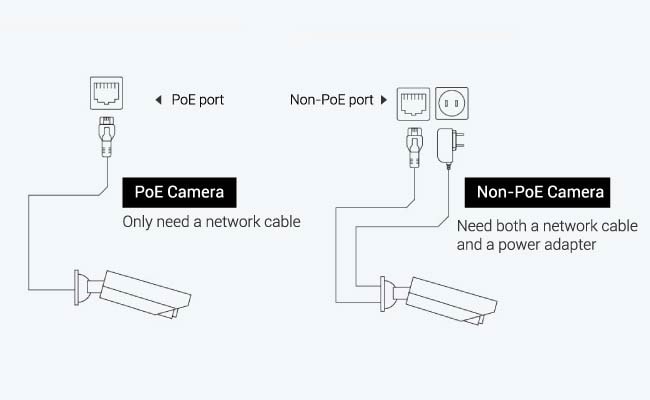
2. Power over Ethernet (PoE) Cameras
High-performance wired cameras that run a single network cable to deliver both continuous power and high-speed data transmission.
Unlike analog models, a PoE camera plugs directly into a network switch or a Network Video Recorder (NVR). This single-cable architecture supports continuous, uninterrupted 24/7 recording at high resolutions (2K or 4K) without any wireless interference.
- Best For: Homeowners and DIY enthusiasts who want bulletproof reliability. It offers long-distance signal integrity (up to 240 feet without degradation) and is highly compatible with third-party local storage software.
3. Interactive Intercom & Smartphone-Linked Cameras
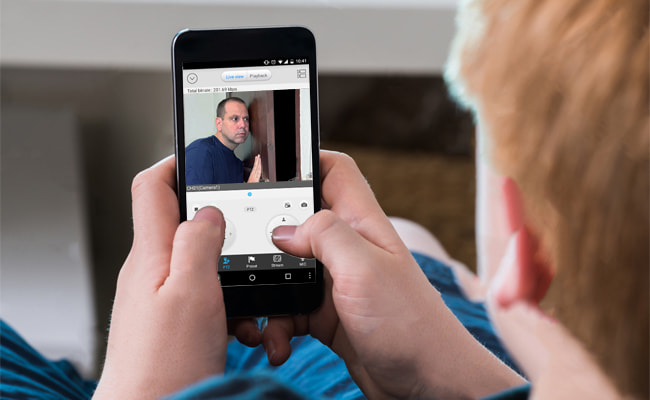
Cameras equipped with built-in speakers and microphones (two-way audio) that connect directly to mobile applications for real-time communication.
These cameras link directly to your smartphone, tablet, or home monitor via secure P2P encryption. When a visitor approaches, the system alerts you and streams a live, interactive view.
- Best For: Active families, remote delivery management, and children’s safety. They allow kids home alone to safely identify visitors from a mobile screen before answering the door. Additionally, you can remotely instruct couriers on where to hide packages or verbally warn trespassers to leave.
4. High-Definition Motion-Activated cameras
Security cameras specifically optimized to remain in standby mode, firing up instantly upon detecting motion to deliver targeted, high-definition security alerts.
Utilizing advanced onboard sensors, these cameras capture crisp video (such as 1080p, 2K, or 4K quality) the moment physical movement crosses their path, sending instant push notifications to your phone.
- Best For: Targeted entry-point surveillance where you want to capture faces and license plates clearly without wasting massive amounts of storage or battery power on empty, static footage.
5 Key Features to Look for in the Best Front Door Security Camera
The ideal front door security camera must actively protect your home's most vulnerable entry point by combining high-resolution video, intelligent AI alerts, and zero-subscription storage options.
When evaluating cameras for your front porch or entryway, look past basic specs and focus on these five essential features:
1. High Resolution (2K or 4K) with High Dynamic Range (HDR)
Clear video quality is essential for identifying visitor faces, reading delivery labels, and providing usable evidence to law enforcement.
While older, legacy cameras rely on low-detail $1080\text{p}$ feeds, modern front door security requires at least 2K (4MP or 5MP) or 4K resolution to ensure details don't pixelate when you zoom in.
Possibe problem: Front porches are prone to harsh backlighting, deep shadows, and sudden sunlight shifts.
Ensure your camera features High Dynamic Range (HDR) to balance high-contrast environments, preventing dark silhouettes and ensuring faces remain perfectly visible even when backlit.
2. "Head-to-Toe" Field of View (FOV) & Package Detection
A vertical, wide-angle lens allows you to monitor both standing visitors and packages left directly on your doormat.
Traditional widescreen cameras (16:9 aspect ratio) capture broad side-to-side landscapes but leave a blind spot right beneath the lens.
Look for cameras featuring a taller 3:4 or 1:1 aspect ratio, offering a "head-to-toe" vertical view. This allows you to check if a delivery has arrived and confirm it is still safely on the ground.
Advanced front door cameras offer dedicated package detection, sending a specific alert when a box is placed in or removed from your designated porch zone.
3. Smart On-Device AI Detection (Person & Vehicle)
On-device artificial intelligence filters out up to 90% of false alerts by identifying real human or vehicular shapes, sparing you from constant notification fatigue.
Older motion sensors trigger an alarm for every passing car, swaying shadow, or neighborhood cat.
The best front door cameras process data locally using edge-computing algorithms to immediately classify targets.
By pairing smart AI detection with customizable activity zones, you can configure your system to ignore busy public sidewalks and only notify you when someone steps directly onto your porch.
4. Interactive Two-Way Audio & Quick Replies
Built-in microphones and speakers let you use your smartphone as a real-time intercom to greet guests, instruct delivery drivers, or warn off trespassers.
A high-quality audio system acts as your first line of defense without requiring you to physically open the door.
-
Two-Way Talk: High-fidelity, delay-free audio enables you to communicate naturally with visitors from anywhere in the world.
-
Pre-Recorded Quick Replies: For busy moments when you cannot answer a live notification, top-tier cameras allow you to play preset voice messages (e.g., "Please leave the package at the door") with a single tap on your screen.
5. Local Storage Options with Zero Monthly Fees
Local storage keeps your private front door footage completely secure on-site while saving you from costly monthly cloud subscription traps.
Many security brands lock essential features like video playback or smart alerts behind a cloud subscription paywall.
-
Subscription-Free Options: Choose front door cameras that support direct local recording via an on-board microSD card, a centralized network video recorder (NVR), or a secure local smart hub.
-
Absolute Privacy: Storing your files locally keeping your family's daily patterns completely off third-party servers while providing fast, secure access to your historical footage at any time.
3 Best Front Door Security Cameras for Different Setups
No single camera fits every porch layout; securing your main entry point requires selecting a device tailored to your specific mounting restrictions, power availability, and network signal strength.
To help you find the perfect fit, we have mapped out our top-performing front door cameras based on real-world scenarios and installation constraints.
1. Best Battery-Powered Panoramic Camera: Reolink Argus 4 Pro
Best for: Renters, apartment dwellers, or homeowners with zero outdoor power outlets who want complete porch coverage without any blind spots.
Traditional security cameras leave massive blind spots right below the lens, allowing package thieves to slip away unnoticed. Furthermore, landlords typically forbid drilling holes into exterior walls to run power cords.
The Reolink Argus 4 Pro is a completely wire-free, battery-powered security camera that uses dual-lens technology to stitch together a seamless, blind-spot-free $180^\circ$ panoramic view in stunning 4K resolution.
Why It Works:
-
180-degree Panoramic Coverage: Captures a wide horizontal view across your entire porch, allowing you to monitor both standing visitors and packages left on your doormat simultaneously.
-
No-Drill, Wire-Free Installation: Requires zero power or data cables, making installation as simple as screwing the camera into a mounting bracket with no lease-violating modifications.
-
Smart Home Integration: Fully compatible with Google Assistant, letting you cast your live porch feed directly to your living room TV or smart display.
-
Smart AI Filtering: Onboard algorithms instantly distinguish humans, vehicles, and pets from falling leaves or shadows, eliminating false alert fatigue.
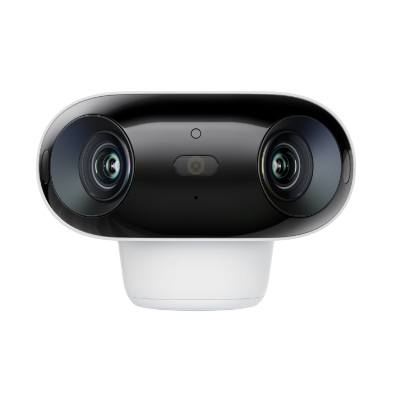
4k 180° Wire-free Color Night Vision Camera
4K UHD 180° Blindspot-free View; Color Vision Day and Night; 30% More Battery Life; Dual-band Wi-Fi 6; Smart detection.
2. Best Off-Grid / Wi-Fi-Free Alternative: Reolink Go Plus
Best for: Long driveways, detached front gates, or properties where your front door area sits completely out of range of your home Wi-Fi.
If your front gate or entryway is too far from your house, standard Wi-Fi security cameras will constantly suffer from buffering, lag, or complete signal dropouts.
The Reolink Go Plus runs entirely on standalone $4\text{G}$ LTE cellular networks and battery power, delivering high-definition security to remote entries without needing a router.
Why It Works:
-
Independent 4G LTE Connection: Connects directly via cellular data using a nano-SIM card, keeping your property secure even during local Wi-Fi outages.
-
Solar Panel Compatibility: Can be paired with a compact solar panel to provide continuous, self-charging power with virtually zero maintenance.
-
2K 4MP Clarity & AI Alerts: Delivers sharp visual evidence of visitors and vehicles while utilizing smart classification filters to prevent cellular data waste.
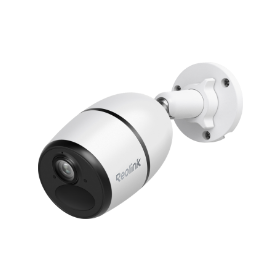
Smart Wireless 4G Battery Camera
Rechargeable Battery/Solar Powered, Person/Vehicle Detection, 2K 4MP Super HD, Two-Way Audio, High-Quality Night Vision, Live View Anytime.
3. Best Ultra-Stable Wired Solution: Reolink RLC-810A
Best for: Permanent homeowners seeking high-speed data transmission, zero Wi-Fi interference, and continuous 24/7 video recording.
Battery-powered cameras only wake up and record short clips after motion is detected, meaning you might miss the critical context immediately preceding an incident. You need a permanent, hardwired system that never drops a single frame.
The Reolink RLC-810A is an ultra-sharp $4\text{K}$ PoE IP camera that delivers both power and high-speed data over a single network cable for continuous 24/7 surveillance.
Why It Works:
-
One-Cable PoE Setup: Combines power and internet connection into a single Ethernet cable, making local DIY installation exceptionally clean and straightforward.
-
4K (8MP) Ultra HD Resolution: Provides exceptional pixel density, allowing you to digitally crop in on faces, clothing styles, or delivery labels without losing image clarity.
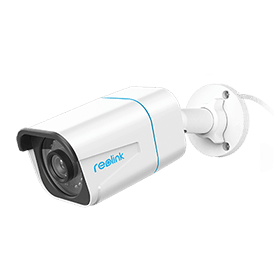
4K PoE IP Camera with Person/Vehicle Detection
Smart Person/Vehicle Alerts; 4K UHD Day; Night; 100ft Night Vision; Time Lapse; IP66 Certified Weatherproof; Audio Recording.
How Much Does a Front Door Camera Cost?
The cost of a front door camera typically ranges from $50 to over $250, depending on its resolution, power configuration, and whether it requires professional installation or recurring monthly subscription fees.
Total Cost Breakdown
When budgeting for a front door security camera, it is important to look beyond the initial purchase price of the hardware. A true cost assessment includes the upfront hardware, installation fees, and potential long-term subscription costs:
-
Entry-Level Cameras ($50 to $100): This tier generally includes basic 1080p or 2K battery-powered Wi-Fi cameras or entry-level video doorbells. While affordable upfront, many brands in this range lock essential features—like video playback, package detection, and smart alerts—behind a monthly cloud subscription fee.
-
Mid-Range Cameras ($100 to $180): This tier features advanced smart cameras, such as high-definition 4K PoE cameras (like the Reolink RLC-810A) and dual-lens panoramic models. These devices offer local on-board processing, which gives you access to smart AI alerts and local storage (via microSD card) with absolutely zero subscription fees.
-
Premium & Specialized Cameras ($180 to $250+): This tier includes top-tier hardware, such as dual-lens 180-degree panoramic battery cameras (like the Reolink Argus 4 Pro), high-end PTZ (Pan-Tilt-Zoom) cameras, and 4G LTE cellular cameras designed for remote gates.
Hidden Costs to Keep in Mind
To ensure you do not encounter unexpected expenses after purchasing your camera, watch out for these three hidden cost factors:
-
Cloud Subscription Traps: Many popular security brands charge $3 to $10 per month (per camera) to save your footage to the cloud. Over five years, a single "cheap" camera can end up costing you an extra $180 to $600 in subscription fees. Opting for cameras with local storage (microSD card or NVR) completely eliminates this recurring expense.
-
Installation Expenses: Wireless battery-powered and PoE cameras are highly optimized for simple, tool-free DIY setup, which costs you $0. However, if you choose a complex system that requires running wire conduits through your walls or lack existing low-voltage doorbell wiring, hiring a professional electrician can add $150 to $300 to your total bill.
-
Power & Accessories: Depending on your setup, you may want to purchase optional accessories to maximize performance. For battery-powered cameras, adding a $20 to $30 solar panel accessory provides continuous, self-charging power and saves you the physical effort of manually recharging the battery several times a year.
Front Door Camera vs, Front Doorbell Camera: Which One to Choose
A traditional front door security camera offers higher video resolution, wider placement choices, and robust 24/7 recording, whereas a video doorbell camera provides a low-angle, interactive visitor interface that installs directly onto your existing doorbell wiring.
Key Differences at a Glance
To help you decide which setup fits your entryway, evaluate how these two options compare across key functional areas:
Option A: The Front Doorbell Camera (Peephole or Button Mount)
Best for close-up, face-to-face communication and quick package management directly at your door frame.
-
Interactive Design: Video doorbells are built to replace your traditional doorbell button. They excel at capturing visitors at eye level and letting you speak with them via two-way audio.
-
Installation: Many doorbell cameras on the market require functional, low-voltage doorbell wiring to operate continuously. Additionally, many popular brands force you into a monthly cloud storage subscription just to view your recorded clips.
Option B: The Traditional Front Door Security Camera
Best for full-porch security, long-range night vision, and continuous recording with zero monthly subscription fees.
-
Superior Coverage & Placement: Mounted high above the door (typically around 9 feet), a standard security camera remains protected from vandalism and captures a much wider field of view.
-
No Monthly Subscriptions: If your home or condo lacks pre-existing doorbell wiring, a wireless or PoE security camera (such as Reolink's subscription-free local storage models) offers a hassle-free, cost-effective alternative. You get the exact same "phone-alert-to-live-view" benefits with far superior video resolution and absolutely no hidden fees.
What Users Say About Security Cameras for Front Door?
In a Reddit discussion about affordable front door cameras, users consistently prioritized local storage, no monthly subscription, and easy remote access over the lowest upfront price. Several recommended cameras that record to a microSD card, home base, or local NVR, allowing homeowners to review footage through an app without ongoing cloud fees.
One Reolink user specifically highlighted using a local NVR for in-home recording and remote viewing, while another praised the Reolink doorbell’s compatibility with third-party platforms.

Users also pointed out important trade-offs. Battery-powered cameras are easier to install, but battery life and slower access to locally stored clips can be concerns. Wired cameras or NVR systems may cost more initially, yet users viewed them as more reliable and economical over time. The discussion also raised the risk of storing footage only on an SD card inside the camera, since recordings could be lost if the device is stolen. Overall, real-world feedback suggests choosing a front door security camera with reliable local storage, mobile viewing, simple installation, and no required subscription.
Buyer's Decision Table
Choose a setup based on your property type, power source, network access, and recording needs.
Quick recommendation: Choose a video doorbell for close-up visitor monitoring, a battery camera for easy installation, or a PoE camera for continuous and reliable front door surveillance.
FAQs
Can I put a security camera on my front door?
Yes. A front door security camera can help monitor visitors, deliveries, and suspicious activity around your main entrance. Choose a weatherproof model for outdoor use and make sure its placement follows local privacy rules, especially in apartments or shared buildings.
Do front door cameras need Wi-Fi?
Not always. Most wireless front door cameras use Wi-Fi for live viewing, alerts, and app access. However, PoE cameras can use an Ethernet cable for both power and data, while 4G cameras work through a cellular network. Some models can also record locally to a microSD card or NVR when internet access is unavailable.
Where is the best place to put a security camera on the front door?
Mount the camera near the door at about 7 to 9 feet above the ground, angled slightly downward. This height provides a clear view of faces, packages, and the surrounding entrance while making the camera harder to reach. Avoid pointing it directly at bright lights or placing it where walls, plants, or decorations block the view.
Conclusion
The best front door security camera depends on your entrance layout, available power, Wi-Fi coverage, and recording preferences. Battery-powered cameras are ideal for renters and quick installation, while PoE cameras provide a more stable connection and reliable 24/7 recording. Video doorbells are better suited for monitoring visitors, packages, and two-way communication.
For better protection, choose a weatherproof camera with clear video, smart person or package detection, mobile alerts, and flexible local storage. Reolink front door cameras offer battery, Wi-Fi, PoE, and 4G options, making it easier to secure apartments, houses, gates, and other entry points without relying on a monthly subscription.
Search
Subscribe for the Latest Updates
Security insights & offers right into your inbox