
What Is the Coldest City in Canada?
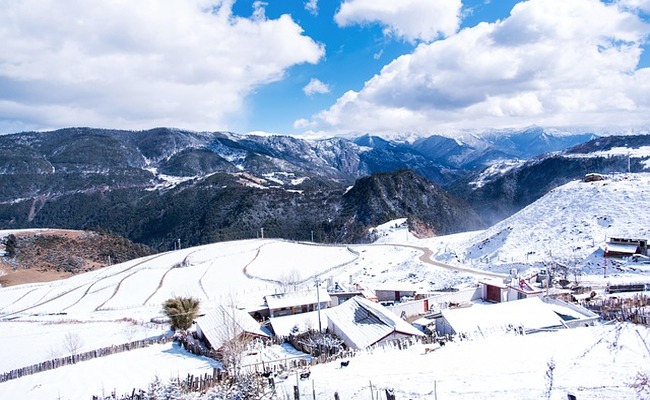
Canada is known for the roughest ice and snow. Finding the coldest province in Canada leads us into the heart of the Arctic. The title of coldest city, however, is a fierce competition among remote outposts.
In this article, we will rank the coldest cities and provinces along with the official climate data. Discover the science behind the deep freeze. Learn how Canadians not only survive but thrive.
Top 10 Coldest Cities in Canada
Recent climate assessments from Environment and Climate Change Canada highlight that while these 10 locations remain the coldest in the country, the Canadian Arctic is experiencing rapid warming, losing an average of roughly 4.9 days of extreme cold (-30°C or lower) per decade
1. Eureka, Nunavut
- Average Annual Temperature: -19.7°C (February monthly mean dips to -38.4°C) .
Eureka remains the absolute coldest permanently inhabited weather and research station in Canada. It endures a polar night lasting nearly five months, experiencing some of the lowest average minimum temperatures on the continent.
2. Alert, Nunavut
- Average Annual Temperature: -17.7°C
As the northernmost permanently inhabited settlement on Earth, this military and signals intelligence outpost features relentless sub-zero conditions, averaging roughly 127 days per year where temperatures sit at or below -30°C.
3. Iqaluit, Nunavut
- Average Annual Temperature: -9.3°C
The capital city of Nunavut experiences long, bitterly cold winters deeply impacted by the icy Labrador Current, leaving the surrounding ocean locked in sea ice for the majority of the year.
4. Churchill, Manitoba
- Average Annual Temperature: -6.7°C
Moving Churchill up to its rightful spot! Located on the shores of Hudson Bay, Churchill is heavily influenced by Arctic marine air masses and lingering spring sea ice, making its subarctic climate significantly colder than inland cities further south.
5. Yellowknife, Northwest Territories
- Average Annual Temperature: -4.3°C
The capital of the Northwest Territories sees winters where temperatures routinely plunge past -40°C. However, its slightly warmer summers pull its overall annual average just above Churchill’s.
6. Whitehorse, Yukon
- Average Annual Temperature: -0.1°C
Whitehorse is the warmest of the three territorial capitals. While its winters are dry and deeply cold, its valley location and proximity to Pacific weather systems shield it from the absolute harshest Arctic air masses.
7. Regina, Saskatchewan
- Average Annual Temperature: 3.1°C
Regina edges out Winnipeg as the coldest major prairie city. Its wide-open, flat landscape offers no protection against severe Arctic high-pressure systems rushing down across the plains in the winter.
8. Winnipeg, Manitoba
- Average Annual Temperature: 3.0°C
"Peggo" is famous for its brutal winter wind chills. Positioned at the absolute center of North America, it acts as a battleground for conflicting polar and continental air masses.
9. Saskatoon, Saskatchewan
- Average Annual Temperature: 3.3°C
Sharing a highly similar dry, continental climate with Regina, Saskatoon undergoes extreme seasonal temperature swings, boasting incredibly sunny but brutally cold winter months.
10. Edmonton, Alberta
- Average Annual Temperature: 4.2°C
As Canada's northernmost metropolitan area, Edmonton rounds out the top 10. While its winters are long and frozen, it frequently benefits from brief respites brought on by warming, westerly Chinook winds.
Quick List of Coldest City in Canada
Top 5 Coldest Provinces in Canada
According to the latest spatial climate tracking from Environment and Climate Change Canada (ECCC), here is the updated, precisely ordered top 5 list of coldest provinces in Canada.
1. Nunavut
- Territory-Wide Average Annual Temperature: ~ -11.0°C to -15.0°C (depending on the latitude band)
Nunavut remains the undisputed coldest jurisdiction in Canada. Because the majority of its massive 2 million square kilometer landmass sits above the Arctic Circle, it experiences permanently frozen subsoil (permafrost) and extreme polar nights. Even its "warmest" southern regions struggle to average above freezing across the entire year.
2. Northwest Territories (NWT)
- Territory-Wide Average Annual Temperature: ~ -5.0°C to -9.0°C
Securing the second spot, the NWT’s climate ranges from subarctic in the south to true polar Arctic in the north. Unlike the Yukon, which features steep mountain topography that can block cold air masses, the NWT features vast low-lying tundra and large glacial lakes (like Great Slave and Great Bear) that hold the cold late into the spring.
3. Yukon
- Territory-Wide Average Annual Temperature: ~ -3.0°C to -6.0°C
While the Yukon holds the record for Canada’s lowest single recorded temperature (-63°C at Snag in 1947), its territory-wide average is slightly warmer than the NWT. This is because its southern valleys benefit from Pacific air masses moving over the mountains. However, its high latitude and interior mountain valleys still trap incredibly dense, freezing air for most of the winter.
4. Manitoba
- Province-Wide Average Annual Temperature: ~ -1.5°C to 0.0°C
Manitoba is officially the coldest of Canada’s 10 provinces. While southern Manitoba features a humid continental climate with warm summers, more than half of the province’s landmass stretches far north into subarctic territory bordering Hudson Bay. The completely flat geography allows harsh Arctic high-pressure systems to sweep downward entirely unobstructed.
5. Saskatchewan
- Province-Wide Average Annual Temperature: ~ 0.5°C to 1.5°C
Rounding out the top five, Saskatchewan closely mirrors Manitoba’s extreme continental temperature swings. Its northern half is dominated by the cold boreal shield, while its wide-open southern prairies are notorious for severe winter wind chills. It edges out Alberta for the final spot, as Alberta benefits more frequently from the warm, mountain-driven Chinook winds.
According to the Climate Atlas of Canada, regional averages are shifting due to climate change. The Canadian North is warming at roughly three times the global average rate. While these five regions remain the coldest, their average winter baselines have risen significantly over the last few decades.
What Makes Canada So Cold?
-
Northern Latitude and Limited Sunlight: Canada's high northern latitude means much of the country receives weak, oblique sunlight, especially in winter.
-
Large Interior Landmass: Large landmasses in the interior cool rapidly without oceanic moderation. This creates a powerful continental climate zone.
-
Polar Vortex and Arctic Air: Key weather systems drive the cold southward. The polar vortex and persistent Arctic high-pressure systems generate dense, cold air masses.
-
Open Prairie Geography: These cold air masses slide unimpeded across the flat Canadian Prairies.
-
Long-Lasting Cold Snaps: The resulting cold snaps can freeze regions for weeks.
How People Adapt to Extreme Cold in Canada?
Adaptation begins with purpose-built infrastructure and technology if living in coldest places in Canada.
-
Buildings are constructed with deep foundations below the frost line and high-grade insulation to retain heat.
-
Cities maintain vast fleets of snowplows and spread salt or sand for traction.
-
Many urban centers, like Montreal, feature extensive underground pedestrian networks to avoid the cold entirely.
-
Social habits and specialized gear are equally vital. Canadians master the art of layering clothing, using moisture-wicking base layers and insulated, windproof outer shells.
-
There is a strong community ethos of checking on vulnerable neighbors during extreme cold warnings.
Cold Winter Security Camera Recommendation
To buy a suitable camera for cold winters, consider the local temperature in the season. After that, check the operating temperature of the camera you want before buying. Cort-cutting battery options can sometimes struggle in extended sub-zero weather, making a Power over Ethernet (PoE) camera a much better choice for uninterrupted, reliable performance.
The OMVI 3i PoE is a heavy-duty, hardwired security camera designed to thrive in freezing environments. Built with a robust IP66 weatherproof rating, it is fully sealed to withstand driving rain, heavy snow, and dust. It operates smoothly in extreme winter conditions ranging from -10°C to 55°C (14°F to 131°F) without losing functionality.
Instead of relying on a single lens, the OMVI 3i features an innovative 18MP triple-lens system. This setup pairs a 10MP upper dual-lens for a sweeping 180° panoramic view with a lower 4K (8MP) pan-tilt lens. Backed by SyncTrack automatic motion tracking and local AI detection (for people, vehicles, and animals), it ensures total property coverage with zero blind spots, even during the darkest winter nights.

All-in-one Triple-Lens 180° Panoramic Pan-Tilt Security Camera
10MP Dual-Lens 180° View, 4K 360° Full Coverage, SyncTrack with auto framing & auto tracking, Local Storage (No Monthly Fees), Local AI Video Search.
FAQs
Is Winnipeg the coldest city in Canada?
No, Winnipeg is among the coldest major cities. Many smaller communities in Nunavut and the Northwest Territories are significantly colder year-round.
What is the coldest province in Canada?
Nunavut is the coldest province/territory in Canada, based on average annual temperature data from Environment Canada.
What is the coldest city in Canada?
Based on average annual temperature, Eureka, Nunavut, is considered the coldest permanently inhabited city in Canada.
Is Alberta or Ontario colder?
On average, Alberta is colder than Ontario due to its more northern latitude and distance from the moderating Great Lakes.
Where is it coldest in Canada right now?
For real-time extremes, check the Environment Canada website; Alert or Eureka, Nunavut, are typically the coldest.
What is the snowiest province in Canada?
The province of Newfoundland and Labrador often records the highest average annual snowfall amounts, particularly on its eastern coast.
Conclusion
Canada experiences extreme snow and cold weather. Some cities, like Eureka, Alert, Iqaluit, and Yellowknife, have the lowest winter temperatures and are considered the coldest. In fact, the provinces of Nunavut and the Northwest Territories are known for the harsh weather conditions during winter. We have shared the coldest cities and provided and explained why Canada experiences extreme weather, and how you can ensure your safety.
Search
Subscribe for the Latest Updates
Security insights & offers right into your inbox