
The Ultimate Guide to Solar Flood Lights
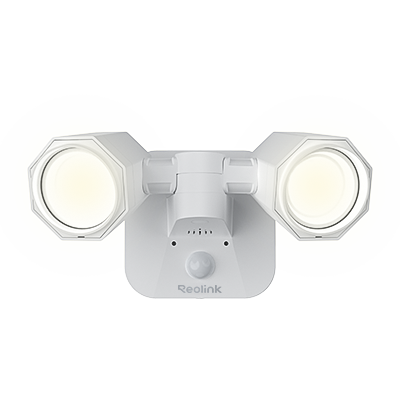
Individuals prefer solar-based products. Flood lights are one of them, providing people with illumination, aesthetics, and security.
In this article, we will discuss how solar flood lights work. We will explain the benefits and how to select the right floodlight for you. We will also highlight some drawbacks and help users install floodlights with minimal effort.
How Do Solar Flood Lights Work?
Solar flood lights are equipped with a solar panel that converts sunlight into electrical energy. This energy is stored in the built-in rechargeable battery.
At night and in low-light conditions, the battery stores energy that powers the floodlight. The floodlights have a built-in sensor to detect the darkness. They automatically turn on when the ambient light is low.
Usually, these floodlights have multiple modes. They can either be left on continuously in the dark or turned on only when motion is detected to save energy.
Benefits Of Solar Flood Lights
Flood lights offer various benefits, from saving energy to enhancing security in commercial and residential spaces. Let's see the advantages more clearly.
- Solar flood lights reduce the need for complex wiring.
- They eliminate the dependency on electric power.
- They can withstand longer and are considered an affordable option.
- The floodlights enhance your home's aesthetics and help deter criminal activity.
- The maintenance cost is minimal.
- They are environmentally friendly, offering a sustainable option.
- They usually come with IP ratings to withstand harsh weather conditions.
How To Choose The Best Solar Flood Lights
Brightness And Coverage
Brightness is the amount of light produced by a light source and is called luminance. There is a standard light for every area, such as the kitchen, bedroom, garage, or any other area.
For small areas like garages, yards, and porches, usually 400-1000 lumens are required. Similarly, for large home spaces, 2000-5000 lumens are required. However, 5000+ lumens are required for commercial areas such as construction sites.
Battery Capacity And Charging Time
You should always go for a mid-level or higher-level battery capacity for longer backup. It is typically shown in mAh, and a mid-level battery ranges from 600 mAh to 8000 mAh. Usually, lithium-ion and LiPO4 batteries offer better backup and can withstand higher temperatures. They need around 6 to 10 hours of direct sunlight to completely charge the battery.
Outdoor Usage
It is necessary to check the robustness of solar flood lights. You should buy a flood light with an IP65 or IP66 rating for strong water resistance. Also, check for a highly durable alloy casing or high-quality ABS plastic to withstand higher temperatures.
Lighting Mode
The solar flood light should have multiple lighting modes. It should have a dusk-to-dawn mode that detects the darkness and automatically turns on. A timer mode should also be available for automation. It should also have motion and dim mode, in which the light turns on when any movement is detected.
Motion Sensor
A motion sensor is a mandatory feature for a floodlight to optimize battery life. You should check the response time, which should be less than 1 second, and also the detection range and angle must be greater.
Remote Access
The solar floodlight should have remote access to adjust everything with just a tap. It should have options to adjust brightness, set a timer, turn on/off, and switch modes.
How To Install Solar Flood Lights?
Installing a solar flood light is way easier than the wired one. However, a proper guide is necessary to achieve the maximum irradiance capture at the tilt angles.
-
Choose a wall or ceiling where you want to install the solar flood light. Ensure you avoid shady areas so the solar panel receives maximum sunlight.
-
Mark the bracket and screw it into the wall. Mount the solar panel and adjust its tilt angle to at least 45°, or choose the one best suited to that location.
-
Mount the floodlight and adjust its position as required. Maintain the height standard for optimal luminance.
-
Connect the floodlight and solar panel with each other and switch on the light. Test all the functions, and please ensure there are no loose connections. You should cover the connections to keep them secure in case of harsh weather.
Drawbacks Of Solar Flood Lights
While solar flood lights offer many advantages, they also have some disadvantages.
- Batteries may require frequent replacements due to degradation after a few years.
- If the panels are not monocrystalline, they will fail to generate the required power on cloudy days.
- Higher initial cost compared to wired lights.
- You might face placement challenges to get the optimum tilt angles.
- Due to solar power, the luminance will be lower compared to wired lights.
- The applications are also limited as they cannot cover larger areas that require higher luminance.
Alternative to Solar Flood Lights
Reolink offers a security camera with a built-in floodlight. Let’s check out the Reolink Elite Floodlight.
Reolink Solar Floodlight Cam
The Reolink Solar Floodlight Cam is a top wireless security camera powered by solar energy and featuring Wi‑Fi 6 for fast, stable connection. It offers 2K HD video, a 150° wide view, AI motion detection, and bright adjustable floodlights that trigger on movement. Footage is stored locally on a microSD card—no cloud fees—while two-way audio and app access let you monitor and communicate remotely.
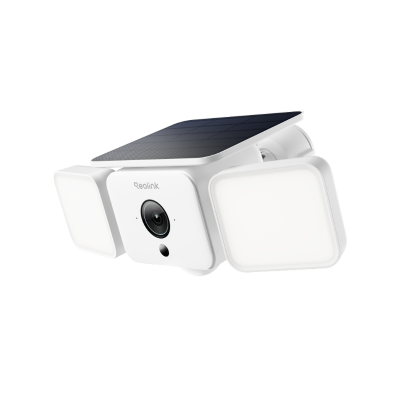
Smart 2K Solar Floodlight Security Camera
150° Ultra-Wide View, 2K 4MP HD Resolution, AI-Based Adaptive Floodlight, Endless Power with Reolink SolarEase™.
Reolink Elite Floodlight WiFi
Reolink Elite Floodlight WiFi is another incredible option with a 3000-lumen floodlight. It's extremely bright, and the best part is that users can adjust its brightness and color temperature. It can illuminate a very large area and is ideal for residential or commercial applications.
It's also a 4K security camera with a 180⁰ wide field of view. Its notable feature is Local AI search, which allows users to find the desired event using keywords, saving them time. It offers incredibly clear night-vision video and deters intruders with its floodlight and 105dB siren.
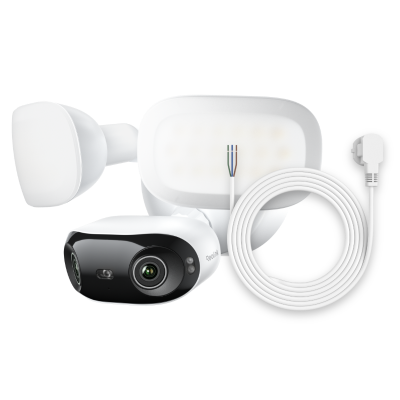
4K 180° Ultra-Wide Wired Floodlight Security Camera
3000-Lumen Dimmable Lighting, Adjustable Color Temperature, Local AI Video Search, Local Storage, Dual-Band Wi-Fi 6.
FAQs
1. Are solar flood lights worth it?
Yes, they are worth it and considered an affordable option for both commercial and residential places. However, it depends on your application, but it generally works for larger spaces. It is also environmentally friendly and keeps your bills lower.
2. Why do solar lights fail so quickly?
Solar floodlights usually fail due to poor sunlight exposure, degraded batteries, dirty solar panels, or harsh weather conditions. Their lives depend on the quality of manufacturing.
3. Can the batteries in solar lights be replaced?
Yes, but you will need the battery to be physically the same size and have similar specs to the previous one. You can use high-end batteries, such as LiFePO4, for greater durability and a longer lifespan.
Conclusion
Solar flood lights illuminate the area and require no wiring or recharging. They automatically recharge using a solar panel, and the battery powers it at night. We have outlined the key factors to consider when choosing a solar flood light. Along with the benefits, also consider the drawbacks of a solar flood light to make the right decision.
he Ultimate Guide to Solar Flood Lights
Search
Subscribe for the Latest Updates
Security insights & offers right into your inbox