
Best Outdoor Security Cameras for Home | Newest Buying Guide
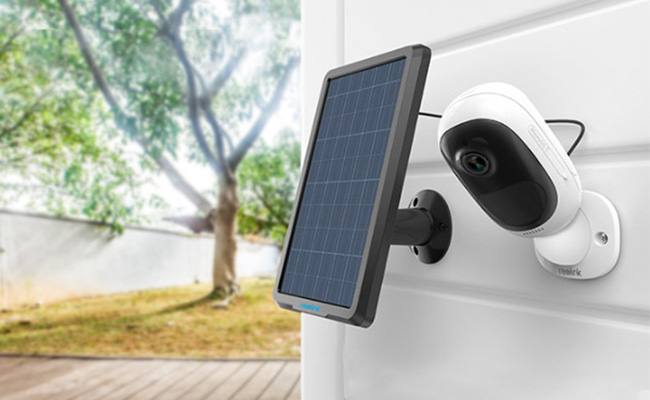
An outdoor security camera is only useful if it captures footage that helps you understand what actually happened on your property. When someone approaches or enters your property, you need enough image detail to identify them at the distance that matters for your home. You also need alerts that are accurate enough to trust. If every passing car, moving branch, or neighborhood cat triggers a notification, most homeowners eventually stop paying attention.
Outdoor conditions make these requirements more challenging. A camera may perform well during a product demonstration but struggle in bad weather or low-light conditions. Consistent performance throughout the year is often more important than an impressive specification sheet.
Reolink offers a wide range of outdoor security cameras designed for different homes and security priorities. Some focus on installation flexibility, while others prioritize continuous recording, higher image quality, or long-term reliability. This guide looks at the best Reolink outdoor security cameras for real-world home use and explains which models are best suited to different situations.
- Types of Outdoor Security Cameras for Home
- Best Wireless Outdoor Security Cameras for Home
- Best Wired Outdoor Security Cameras for Home
- Best Outdoor Security Camera System - Reolink RLK12-800WB4
- How to Choose an Outdoor Security Camera for Home
- Common Mistakes When Buying an Outdoor Security Camera for Home
- Outdoor Security Camera Buyer Decision Table
- FAQs
- Conclusion
Types of Outdoor Security Cameras for Home
Outdoor security cameras for home use fall into four main types. The core capabilities are consistent across all four. What varies is the power source, and that is what determines where each camera can go and how much ongoing maintenance it needs.
Battery Security Cameras

Wire-free cameras run entirely on a rechargeable internal battery, with no power cable and no cable run. They mount on fascia boards, fence posts, garden walls, and outbuildings anywhere you can drive a screw.
Where it's best for home use: Wire-free cameras work best where your home's exterior wiring does not reach. A side gate or garden shed can both be covered without a cable run or an electrician. It is also the practical choice for renters who need to keep installations reversible.
Install time: Under 10 minutes per camera. Mount the camera and pair to app, done.
Wired PoE Security Cameras

Power over Ethernet cameras receive both power and data through a single Ethernet cable connected to a PoE switch or NVR, so no power outlet is needed at the camera’s mounting location.
Where it's best for home use: Permanent outdoor installations covering driveways, garages, and main entry points. PoE cameras support continuous 24/7 recording with no battery maintenance and are significantly harder to disable than wire-free cameras. Cutting the WiFi signal does not interrupt recording.
Install time: 30 minutes to 2 hours per camera depending on how much cable routing through eaves, walls, or conduit is needed. Most homeowners route cables through attic space to exterior mounting points.
Solar-Powered Security Cameras

Solar cameras are wire-free models paired with a solar panel that keeps the battery topped up during daylight hours. In locations receiving 4 or more hours of direct sunlight per day, the battery stays charged indefinitely with no manual recharging.
Where it's best for home use: Full wire-free coverage with self-charging power at garden corners, detached garages, and remote outbuildings. Same image quality and AI detection as the battery-only wire-free models, with no manual recharging required once the panel is oriented correctly. In the northern hemisphere, a south-facing panel at 30–45-degree tilt maximises output year-round.
Install time: Under 15 minutes, the same as wire-free cameras. The solar panel requires a separate bracket and orientation decision but no additional cabling.
PTZ Auto-Tracking Security Cameras

Pan-tilt-zoom cameras use a motorised mount to rotate horizontally and tilt vertically, covering a wide area from a single fixed installation point. Auto-tracking models lock onto a moving subject (a person, a vehicle) and follow it across the scene automatically.
Where it's best for home use: Properties where a single camera needs to actively track subjects across a large area, including long driveways over 15 metres, open gardens, and corner positions covering two paths simultaneously. Auto-tracking keeps the subject in frame and retains detail at distance rather than relying on a fixed wide-angle view that loses resolution at range.
Install time: Determined by the power type. Wire-free PTZ models install in minutes. PoE PTZ models require a cable run.
Best Wireless Outdoor Security Cameras for Home
Best Outdoor Solar Security Camera: Reolink Argus 4 Pro

Suppose you just need one wireless video camera for outdoor surveillance. In that case, you can use the new Reolink Argus 4 Pro. This battery-powered security camera boasts a 180° panoramic 4K dual-lens stitched view and ColorX true full-color night vision. It is capable of providing full color night vision footage at night without relying on spotlights. You can watch real-time recordings with vivid colors to monitor your outdoor spaces. The IP66 rating ensures the camera withstands outdoor dust, heavy rain, wind, and snow.
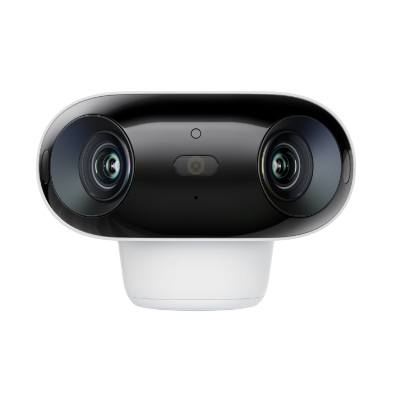
4k 180° Wire-free Color Night Vision Camera
4K UHD 180° Blindspot-free View; Color Vision Day and Night; 30% More Battery Life; Dual-band Wi-Fi 6; Smart detection.
Pros:
- Wide field of view
- Wireless design and very easy to install
- Secure local storage with SD card
- 4K video quality and color night vision
Cons:
- Non-removable battery
- Narrow vertical view
Best for: Homeowners without exterior power outlets who need wire-free coverage of side gates, back fences, or outbuildings.
Did You Know?: The Reolink Argus 4 Pro was awarded an Excellent rating by PCMag Middle East, claiming the camera "nails the big stuff" by delivering a seamless panorama without forcing you to blast blinding LED spotlights at night, calling it a "high-value upgrade."
Best Outdoor Security Camera without Subscription: Reolink Altas PT Ultra

The Reolink Altas PT Ultra is an exceptional wireless outdoor security camera, offering 4K ultra-clear resolution with 360° pan-and-tilt coverage and WiFi 6 connectivity for fast, stable performance. Designed with a durable, weatherproof build, it features ColorX technology for full-color night vision and smart detection to differentiate between humans, vehicles, and pet movements, reducing false alerts.
The built‑in battery supports continuous recording. According to Reolink’s own usage estimates, with around 12 hours of recording per day, a full charge lasts up to eight days. Under heavy continuous‑recording use, it's best to plan for weekly charging, or switch to motion‑triggered recording to extend battery life significantly.
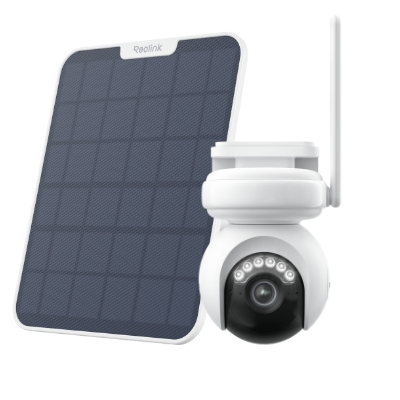
Industry-leading 4K Continuous Recording Battery Camera
4K UHD Continuous Recording; ColorX Night Vision; Pan & Tilt; Automatic Tracking; All Recordings Stored Locally.
Pros:
- 4K video quality
- Intelligent pre-record options
- Continuous and motion-triggered recording modes
- Smooth mechanical pan and tilt
Cons:
- Bulky design
- MicroSD card is sold seperately
Best for: Homes with large open yards, wide driveways, or corner positions where a single camera needs to cover multiple angles without a second mounting point.
Did You Know?: The Reolink Altas PT Ultra was awarded Editor's Choice by PCMag, highlighting that its massive 20,000mAh battery can provide up to a full year of standby protection on standard motion-triggered settings, a rare feat for a camera capable of continuous local recording.
Best Wired Outdoor Security Cameras for Home
Best WiFi Outdoor Security Cameras: Reolink Trackmix WiFi
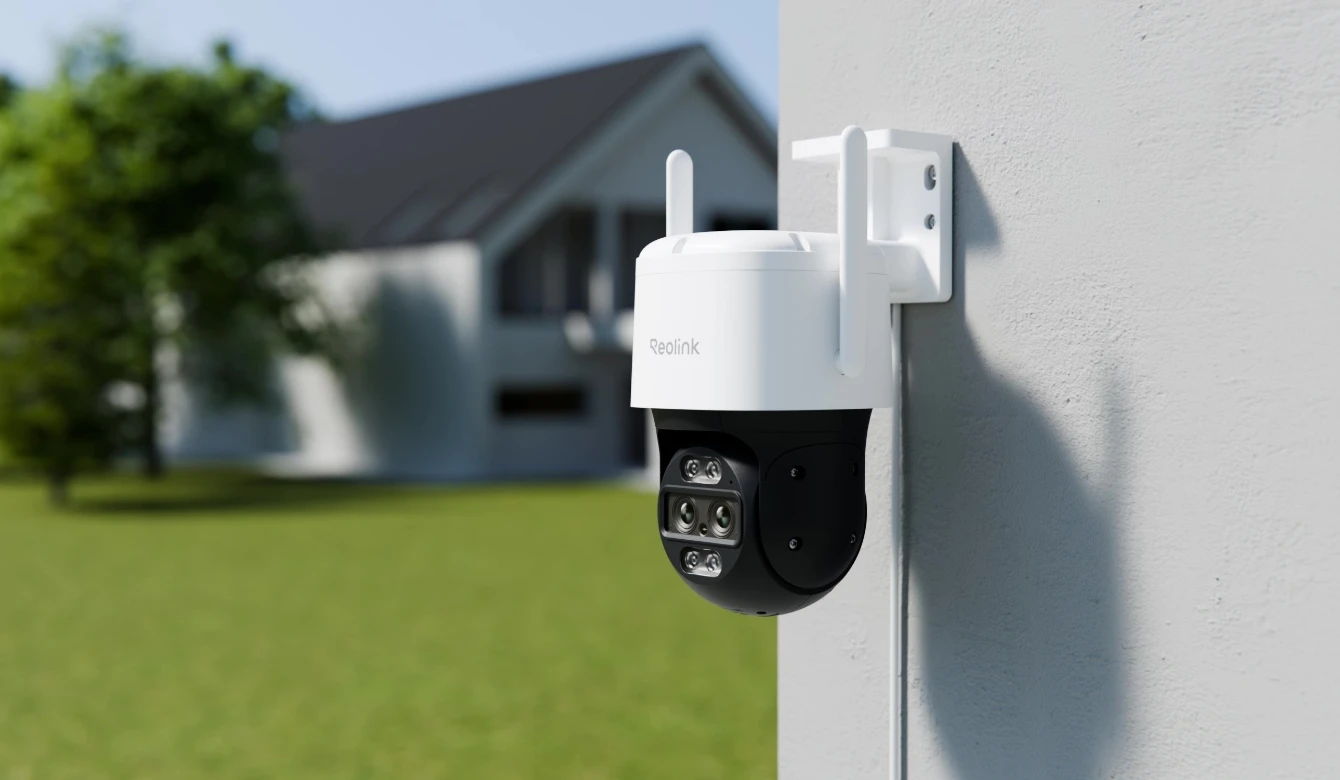
This camera features both wide-angle and telephoto lenses, allowing for dual view and dual tracking, providing comprehensive coverage of your property. With 4K 8MP Ultra HD resolution, it delivers crystal-clear video footage, while its 2.4/5GHz dual-band WiFi ensures stable, high-speed connectivity.
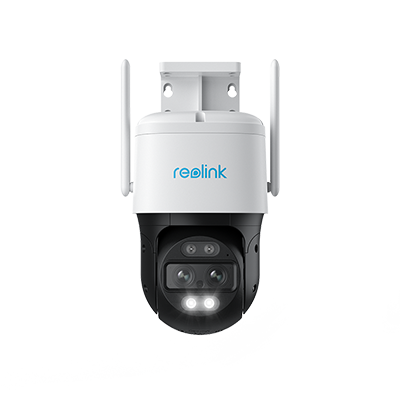
4K Dual-Lens PTZ Camera with Motion Tracking
4K 8MP UHD, Wide-Angle & Telephoto Lenses, Pan-Tilt-Zoom, Auto-Tracking, Person/Vehicle Detection, 2.4/5 GHz Dual-Band WiFi, Two-Way Audio.
Pros:
- Great video quality
- Combination of telephoto and wide-angle lenses provides more details
- Robust build for outdoor use
- PTZ functionality is easy to use
Cons:
- No cloud storage option
- Some app features are hard to find
- A little bit bulky and heavy
Best for: Residential driveways and garages where you want dual-lens tracking without running long Ethernet data cables back to a central router.
Best PTZ Outdoor Security Cameras: Reolink Trackmix PoE

The brand-new Reolink TrackMix PoE can be a perfect choice for outdoor use. This 4K PTZ outdoor security camera supports pan, tilt, and auto-tracking functions, allowing it to follow moving objects and monitor large outdoor areas with flexible coverage. Its solid housing and IP65 weatherproof rating help protect the camera from rain, dust, and other harsh outdoor conditions.
The Reolink TrackMix PoE is ideal for monitoring large outdoor spaces such as driveways, parking areas, front yards, warehouses, farms, and business entrances. Its PTZ functionality allows the camera to pan, tilt, and automatically track moving people or vehicles, helping homeowners and businesses maintain wider coverage with fewer blind spots.
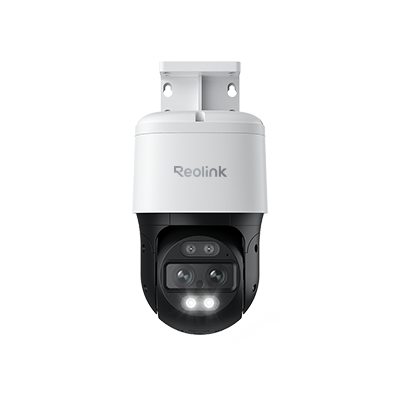
4K Dual-Lens PTZ Camera with Dual Tracking
4K 8MP Ultra HD, Wide & Telephoto Lenses, Pan & Tilt, Auto-Tracking, Person/Vehicle Detection, Power over Ethernet, Two-Way Audio.
Pros:
- Excellent night IR vision with 4K resolution
- Customizable floodlighting options
- Motion detection for pets, cars, and people
- Good Ethernet weather protection
Cons:
- Limited installation options
Best for: Permanent home installations where 24/7 continuous recording is the priority, including driveways and back gardens where motion-only recording would leave evidence gaps.
Best 16MP Outdoor WiFi Security Camera - Reolink Duo 3 WiFi

If you need a WiFi camera for outdoor settings, consider the Reolink Duo 3 WiFi. This dual-lens security camera comes with an IP67 rating, making it durable in various weather conditions. It operates over dual-band WiFi 6, allowing you to switch between 2.4GHz and 5GHz for better coverage and faster speeds. The 16MP resolution provides excellent detail, and the night vision capability is superb.
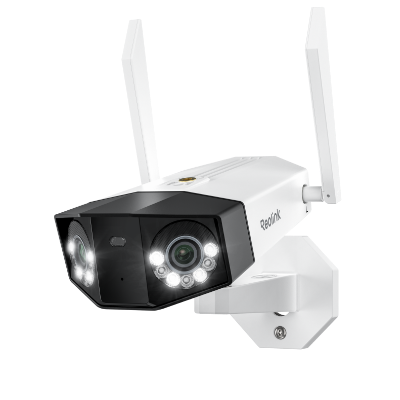
Groundbreaking 16MP Dual-Lens WiFi Camera
16MP UHD, Dual-Lens, Motion Track, 180° Wide Viewing Angle, Plug-In WiFi, Color Night Vision.
Pros:
- Excellent clarity with 16MP.
- The 180-degree field of view covers a wide area.
- Dual-band WiFi 6 provides robust network stability.
Cons:
- The wide screen can cause vertical details to be easily overlooked.
- Some features are difficult to locate within the Reolink app.
Best for: Homes where a single camera must cover the full width of a driveway, backyard, or front facade. The 180-degree field of view eliminates the blind spots that appear with two poorly positioned fixed cameras.
Best Outdoor Security Camera System - Reolink RLK12-800WB4

Sometimes, more than a single outdoor camera is needed for outdoor use. In this case, you can purchase an outdoor camera system for comprehensive surveillance, for example, the Reolink RLK12-800WB4. This wireless system has four WiFi 6 security cameras with an IP67 rating. You can install this system outside your house, store, or office for comprehensive outdoor surveillance.
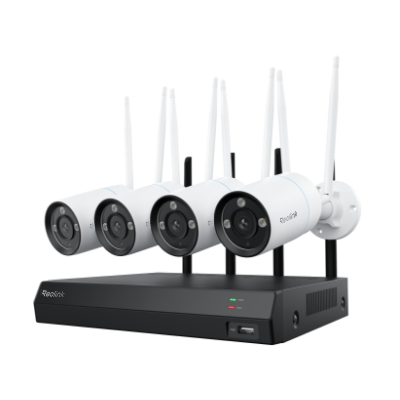
4K Security Kit with Next-Gen WiFi 6
4 pcs 4K Ultra HD Security Cameras; Dual-Band WiFi 6; 2TB HDD 12-Channel NVR for 24/7 Recording; Peron/Vehicle/Animal Detection; IP67 Weatherproof.
Pros:
- Great functionality
- Excellent image quality
- 12-channel NVR for future expansion
Cons:
- Connectivity isn't stable enough
Best for: Homeowners who want complete multi-zone coverage in one system, covering all entrances with 24/7 local recording and no monthly subscription fees.
How to Choose an Outdoor Security Camera for Home
IP Rating
For most residential outdoor locations, IP65 is the minimum acceptable rating and IP66 is the better choice for exposed positions.
The two digits in an IP rating each measure a different type of protection. The first digit (6 in both IP65 and IP66) means the camera is fully dustproof, with no dust particles entering under any conditions. The second digit measures water protection. A rating of 5 protects against water jets from any direction. A rating of 6 protects against powerful, sustained water jets. IP67 adds temporary submersion protection up to 1 metre for 30 minutes, relevant for ground-level placements in flood-prone areas.
In practice, IP65 handles normal rain and garden hose spray. IP66 handles sustained heavy rain and pressure washer overspray, including exposed positions without overhead cover. An indoor camera placed outside, regardless of how rugged it appears, will fail within weeks of moisture exposure. Indoor cameras carry no IP rating for a reason.
Note: Check the IP rating on the specific model page, not the brand's general marketing. Different cameras within the same product range can carry different IP ratings.
Wireless or Wire-Free or PoE
"Wireless" means the camera transmits data over WiFi. It says nothing about how the camera receives power. A wireless camera may still need a power cable to an outdoor socket. "Wire-free" means no cables at all, combining battery or solar power with WiFi data.
For home use, the decision maps to installation constraint and recording needs:
Resolution
Resolution determines how much detail is captured at distance. Outdoors, distances are longer than they appear on a floorplan.
- 2K (4MP): Identifies a face at 6–8 metres in good light. Adequate for front door, side gate, and porch positions at standard residential scale.
- 4K (8MP): Captures facial and licence plate detail at 10–15 metres in daylight. The right choice for driveways where cameras are mounted further back, or any position where digital zoom will be used to review footage.
- 16MP dual-lens: Reolink Duo 3 WiFi delivers a 180-degree field of view while maintaining 4K-equivalent detail per lens, useful when one camera must cover a wide residential frontage without the blind spot that two fixed cameras positioned poorly would leave.
One practical consideration is storage. A 4K camera recording continuously fills a 128GB microSD card in approximately 3–4 days. For continuous recording, a Reolink NVR with a dedicated hard drive is more practical than relying on microSD alone.
Night Vision
Night vision type determines the quality and usefulness of footage captured after dark, during the hours when most residential break-ins occur.
- Infrared (IR) night vision: Black-and-white footage. Works in complete darkness. A 30-metre IR range covers a standard two-car driveway end to end. Look for IR range above 30m for longer driveways or open backyard perimeters.
- Color night vision: Full-color footage using ambient light sensors. Requires some ambient light nearby, such as a streetlamp, porch light, or motion-activated light. Produces more identifiable footage than IR in lit conditions, but does not work in complete darkness without supplemental lighting.
- ColorX (Reolink): ColorX is Reolink's state-of-the-art night vision technology. It works by combining ambient light sensing with a soft-trigger spotlight that activates only when needed, producing color footage in near-darkness without the disruptive full-floodlight effect.
For unlit back gardens or perimeter positions where complete darkness is common, IR range is the more important spec. For lit driveways, entry paths, and covered porches, color night vision provides more useful identification detail.
Pro Tip: If your primary concern is deterrence rather than evidence quality, a spotlight camera that visibly activates on motion is the strongest signal to an intruder that they have been seen.
AI Motion Detection
Standard PIR (passive infrared) motion detection responds to any heat source that moves. In a residential garden, a tree branch shifting in the wind triggers the same alert as a person crossing the frame. Most properties generate 20–40 irrelevant alerts per day as a result.
AI-powered detection analyses the video frame and distinguishes people and vehicles from background movement. You get a notification when a person walks up your driveway, not when a bush shifts in the wind. For homeowners who rely on their phone for security alerts, that distinction is usually the difference between a system they check and one they eventually mute.
All Reolink outdoor cameras support AI person and vehicle detection without a subscription plan.
Local vs. Cloud Storage
Where footage is stored affects both your privacy and your ongoing costs.
Local storage (microSD card or NVR hard drive) keeps footage on your property. It never leaves your home network unless you actively download it. There are no monthly fees. Recording continues even if your internet connection goes down.
Cloud storage keeps footage on remote servers, accessible from anywhere via the app. It requires a paid subscription on most platforms and means your video is transmitted off-site automatically.
All Reolink outdoor cameras support local microSD storage at no extra cost. The Reolink NVR system extends this to continuous multi-camera recording on a local hard drive. Reolink cloud plans are available but optional. AI detection and live view work fully without a subscription.
Privacy note: Cameras storing footage locally eliminate the risk of footage being accessed through a third-party server breach. For households with strong privacy requirements, a fully local NVR setup provides the lowest-exposure configuration.
Power Source
For home installations, power source determines where a camera can go and how much attention it needs. Image quality and AI performance are consistent across Reolink's outdoor lineup. Power type is the only real variable.
Battery-powered cameras can mount anywhere you can reach. The constraint is maintenance frequency. Battery life claims are measured under controlled conditions, typically 10 motion events per day at 20°C. In real residential use, expect 2–4 months between charges depending on motion frequency and temperature. Below 5°C, lithium-ion batteries lose 20–30% of rated capacity, reducing charge intervals further.
Solar panels offset this in locations with adequate sun exposure. A south-facing panel at 30–45-degree tilt in the northern hemisphere typically maintains battery charge through spring, summer, and autumn. Deep winter months in higher latitudes may still require occasional top-up charging.
PoE cameras have no battery constraint. The Ethernet cable delivers both power and data from the NVR, with a maximum cable run of 100 metres. The constraint is routing. The cable needs a path from your NVR location to the mounting point, through walls, ceiling voids, or external conduit.
Common Mistakes When Buying an Outdoor Security Camera for Home
Not Checking the IP Rating Before Buying
A camera described as suitable for "outdoor use" on a product listing may carry an IP54 rating, which protects against splashing water but not sustained rainfall. For an eave-mounted or fence-post camera exposed to direct rain on a UK or northern European property, IP65 is the minimum. IP66 is the better choice for any unprotected position. Verify the IP rating on the product specification page before purchasing.
Installing Before Testing WiFi Signal at the Mounting Location
A wireless camera mounted 15 metres from your router, through a wall or around a corner of the house, will often produce weak signal and missed recordings. Test the WiFi signal at your intended mounting spot with your phone before committing to a bracket position. If signal strength is below three bars, consider either moving the mounting point closer to the router or switching to a PoE camera for that location.
Assuming Motion-Triggered Recording Captures Everything
Motion-triggered cameras start recording after detection, which means the first 1–2 seconds of an event are often missing from the clip. For any primary entry point, a driveway especially, a camera with continuous recording (available on PoE models connected to an NVR) eliminates this gap. If your priority is evidence-quality footage rather than alerts, a continuous recording setup is worth the PoE installation.
Skipping AI Detection to Reduce Cost
Basic PIR sensors trigger on any heat and movement. In a standard front garden, that is usually car headlights sweeping across the driveway at night or foliage in the wind. Either way, most properties generate 20–40 irrelevant alerts per day. AI-powered detection that distinguishes people from vehicles from animals reduces this to the events that matter. All Reolink outdoor cameras include AI detection at no subscription cost. There is no budget reason to skip it.
Not Planning Storage Capacity in Advance
A 4K camera recording continuously produces approximately 30–40GB of footage per day depending on scene activity. A 128GB microSD card fills in 3–4 days of continuous recording. For a single-camera motion-triggered setup, a 64–128GB card typically covers 2–4 weeks of activity at standard residential levels. For a multi-camera continuous recording setup, a dedicated NVR with a hard drive is the practical solution. microSD cards are not designed for the write cycles that continuous recording demands.
Outdoor Security Camera Buyer Decision Table
Choosing between Reolink's outdoor camera models is straightforward once you match your home situation to the camera's core strength. Use the table below as a starting point, then review the full product section for detailed specs.
FAQs
What is the best outdoor security camera without a subscription?
If you want the best outdoor security camera without a subscription, Reolink
is one of the strongest choices because it offers local storage, smart detection, high-resolution video, and no mandatory monthly fees. The best option depends on whether you want wireless flexibility, 24/7 recording, or wider outdoor coverage. Reolink cameras are especially popular because most features remain available without paying for cloud subscriptions.
Do all outdoor security cameras need Wi-Fi?
Yes, some outdoor security cameras can work without WiFi and they use other methods to connect to Internet. For example, PoE outdoor cameras use physical Ethernet cable for Internet connection and 3G/4G cellular cameras use mobile networks to transmit data and do not rely on WiFi.
What type of outdoor security camera is best?
The best type of outdoor security camera depends on your property size, installation preference, and security needs. For most homeowners, the most important features are weather resistance, video quality, night vision, smart detection, and whether the camera supports 24/7 recording or wireless flexibility.
Are outdoor cameras worth it?
The answer is yes. They can enhance home security by acting as a deterrent to potential intruders and provide surveillance. They offer remote monitoring capabilities and allow homeowners to keep an eye on their property from anywhere. The peace of mind, evidence in case of incidents, and potential property value enhancement further contribute to their overall value.
Is 4K resolution necessary for outdoor security cameras?
While not strictly mandatory, 4K resolution is highly recommended for outdoor security cameras if your priority is accurate threat identification rather than general monitoring. While 1080p or 2K serves as a functional baseline, outdoor environments introduce challenges like long distances, unpredictable lighting, and harsh weather that easily blur lower-resolution footage. A 4K security camera delivers four times the clarity of standard 1080p, giving you the power to digitally zoom in and capture crisp, actionable evidence.
Conclusion
The right outdoor security camera for your home comes down to what it needs to capture and where it can actually go. Use the Buyer Decision Table above to match the right model to your property, or browse Reolink's full outdoor camera range to compare specs directly. Every camera in this guide supports local storage with no mandatory subscription. Share your experiences with us in the comment section below! Let's discuss together!
Search
Subscribe for the Latest Updates
Security insights & offers right into your inbox