
Best Night Vision Security Cameras - Read This Guide Before You Buy
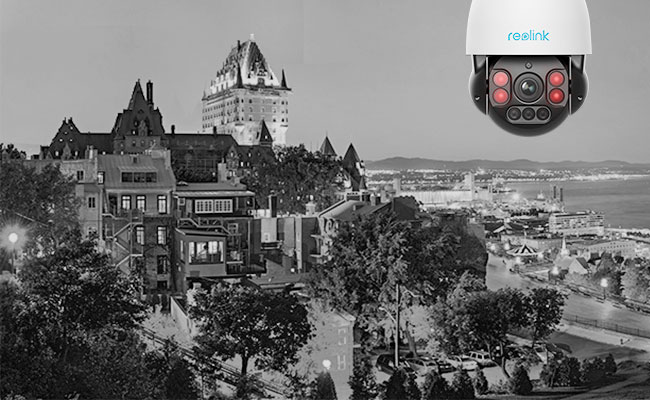
Night vision security cameras help you see what happens after dark, but the best night vision security camera is not simply the one with the highest resolution. The right choice depends on where you install it, how dark the area gets, whether you need color footage, and whether the camera can still capture useful details or movement at a distance.
Many buyers run into the same problems: footage looks clear in the daytime but turns blurry at night, infrared night vision only shows black-and-white images, headlights or porch lights overexpose the scene, and distant objects become hard to identify. Some users also find that “color night vision” still needs enough ambient light to work well, while spotlight cameras may improve clarity but can draw attention to the camera.
In this guide, we’ll explain what good night vision actually means, including the differences between infrared night vision, color night vision, and spotlight night vision. We’ll also walk through the key features to compare before buying and recommend the best night vision security cameras for different real-life needs, from front doors and driveways to backyards, garages, and business entrances.
- What Is a Night Vision Security Camera?
- What Are Common Types of Night Vision Security Cameras?
- 5 Key Features to Look for in the Best Night Vision Security Camera
- 4 Best Night Vision Security Cameras for Different Scenarios
- Buyer's Decision Table for Color Night Vision Security Camera
- 3 Common Mistakes Buyers Make When Choosing a Night Vision Security Camera for Home
- Setup and Troubleshooting Tips for Reolink Night Vision Security Cameras
- FAQs
- Conclusion
What Is a Night Vision Security Camera?
A night vision security camera is a specialized surveillance device designed to capture clear video footage in low-light or completely dark environments. While standard cameras require external lighting to see, night vision models utilize specialized sensors, wide apertures, or invisible infrared (IR) light spectrums to render visible images when normal human vision cannot.
Investing in a night vision camera ensures that your property remains fully protected during peak overnight hours, giving you continuous coverage without needing to leave bright, energy-consuming house lights on 24/7.
What Are Common Types of Night Vision Security Cameras?
Choosing the right night vision type depends on the functional differences that affect your property's environment. Modern security cameras break down into three primary low-light subcategories, each utilizing distinct technology to capture overnight footage.
1. IR (Infrared) Night Vision
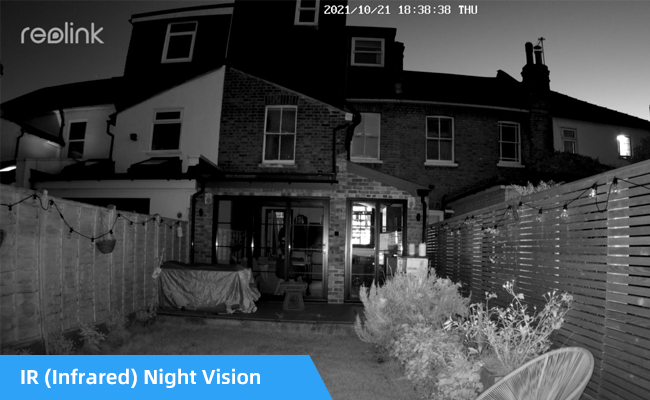
Infrared (IR) cameras use invisible light arrays to produce highly detailed black-and-white footage in absolute darkness. They are the most reliable option for total darkness but are constrained by a limited illumination range and a lack of color data.
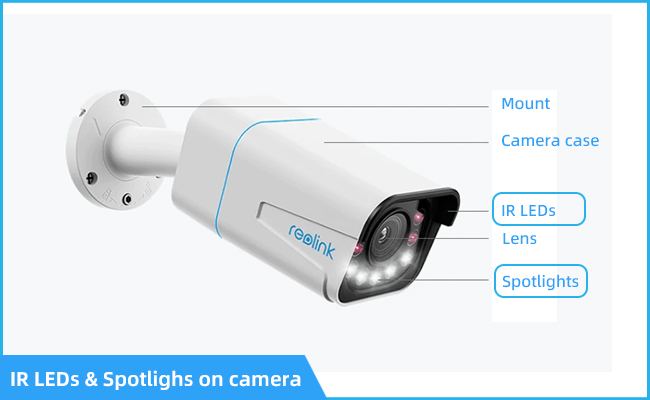
Traditional infrared cameras depend entirely on the reflected light of objects illuminated by built-in IR LEDs. While they bring incredible convenience for standard home protection, the onboard LEDs have mechanical limits and can only illuminate things within a fixed distance.
Night vision clarity and distance are dictated by two main factors:
-
LED Count: The number of IR LEDs determines how much light returns to the image sensor. Historically, expanding the night vision range from 30 feet up to 250 feet required scaling from 8 LEDs up to 64 LEDs.
-
LED Power: Modern, high-efficiency LEDs allow cameras to achieve long-distance illumination with fewer physical bulbs, preventing excessive power draw and heat.
Note: A common complaint in user communities like r/homesecurity is that IR light spectrums attract spiders and night-flying insects. This often results in frequent false motion alerts from webs spun directly over the camera lens.
2. Color Night Vision with Spotlight
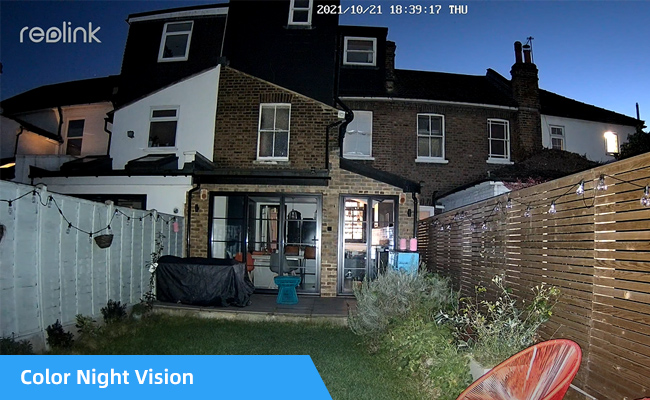
Spotlight-assisted cameras use bright, integrated white LEDs to force the environment into full color at night. This format provides excellent legal evidence (like clothing colors) and doubles as a powerful active physical deterrent.
Instead of relying on invisible spectrums, these cameras actively introduce visible light sources to illuminate everything in front of the lens. The integrated spotlights can be set to turn on manually, run on a schedule, or activate instantly when the camera detects human or vehicle motion.
-
Budget-Friendly Protection: While ultra-premium low-light sensors can be expensive, spotlight-equipped color cameras offer a highly accessible, cost-effective alternative for mainstream buyers.
-
Active Crime Deterrence: The primary strategic benefit of a spotlight camera is proactive defense. A sudden burst of bright white light instantly alerts a prowler that they have been detected, frequently stopping a crime before it happens.
-
3000K Warm Light Integration: Recent advancements include 3000K warm lighting systems (such as Reolink floodlight cameras). These systems gradually increase environmental brightness with natural, warm tones, capturing clear color details without creating harsh, blinding light pollution.
3. Starlight & ColorX Night Vision
Starlight technology utilizes oversized sensors and ultra-wide apertures to collect ambient environmental light, producing color footage in near-total darkness without relying on bright spotlights.
Unlike standard hardware, true starlight cameras do not need to emit harsh light beams. They function by collecting and digitally amplifying natural light from distant stars, the moon, or faint streetlamps. In low-light conditions down to nearly 0.001 lux, they render images sharper and brighter than the naked human eye can see.
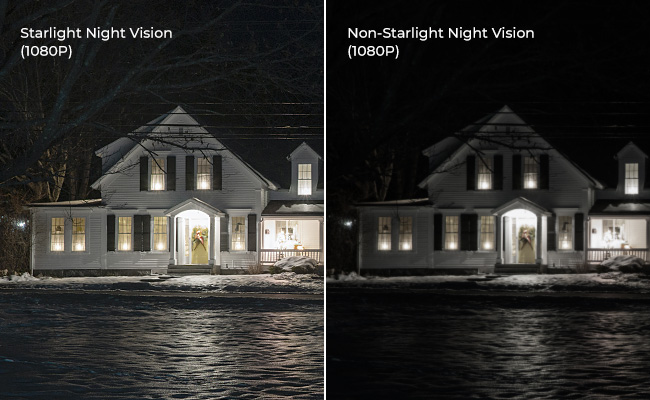
This performance is achieved by modifying raw hardware specifications into real-world visual advantages:
-
Large Sensors (1/1.8"): A larger digital canvas catches significantly more incoming light particles than standard security sensors.
-
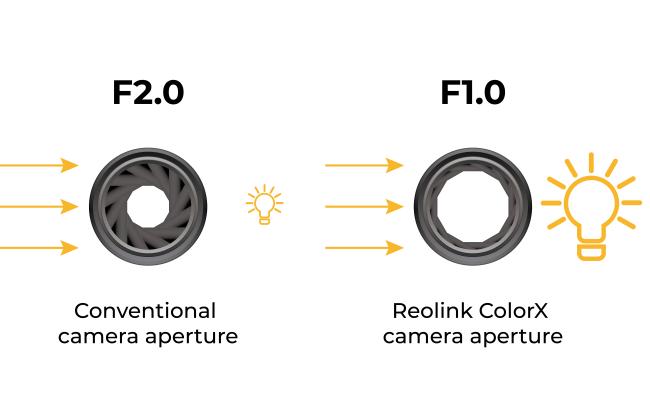
Super-Wide Apertures (f/1.0 to f/1.6): A lower f-number means a physically wider lens opening. An f/1.0 aperture allows a massive volume of light to flood the sensor continuously, maintaining bright images in dimly lit areas.
-
Noise Suppression & Shutter Tuning: Advanced algorithms clean up digital graininess, while optimized shutter speeds capture moving objects cleanly.
5 Key Features to Look for in the Best Night Vision Security Camera
When choosing between color or black-and-white night vision for areas with little to no light, there is no single "right" or "wrong" answer. Every technology balances different pros and cons depending on your environment. To choose a system that delivers reliable overnight performance, you must evaluate the following five aspects.
1. Super Aperture (f/1.0 to f/1.6)
The aperture determines how much light physically enters the camera lens. A lower f-number indicates a larger opening, which drastically improves image brightness and clarity without relying on external spotlights.
Standard cameras often use f/2.0 apertures, which can struggle in low-light environments like dimly lit garages or side yards. Upgrading to a super aperture (such as f/1.6 or f/1.0) allows a massive volume of light to flood the image sensor.
2. High Resolution (2K or 4K)
Higher video resolution translates directly into finer visual detail. While 1080p handles general indoor spaces, 2K or 4K resolution is required if you need to zoom in on distant objects overnight.
Your baseline standard for a security camera should be at least 1080p. However, 2K or 4K models provide exponentially more pixels, allowing you to capture crisp, usable evidence rather than pixelated shapes.
Note: Higher-resolution footage generates significantly larger file sizes. To prevent your storage drive from filling up too quickly, ensure your system utilizes efficient encoding methods like H.265, which compresses files to half the size of older H.264 formats without degrading image quality.
3. Long-Range Illumination
This specification tells you exactly how far a camera can see in total darkness before the image fades into a black void. A reliable outdoor night vision camera should offer an illumination range of at least 30 feet.
Range varies wildly depending on product design. Compact, wire-free battery cameras are built for targeted areas and typically cover 33 feet. In contrast, heavy-duty PoE (Power over Ethernet) cameras use advanced LED arrays to cover targets withing longer range.
- For front doors or small apartments, a short-range battery camera is perfectly adequate.
- For expansive properties, farms, or commercial yards, choosing a high-power, long-range wired camera prevents critical blind spots at the edge of your property line.
4. 3D DNR (Multidimensional Digital Noise Reduction)
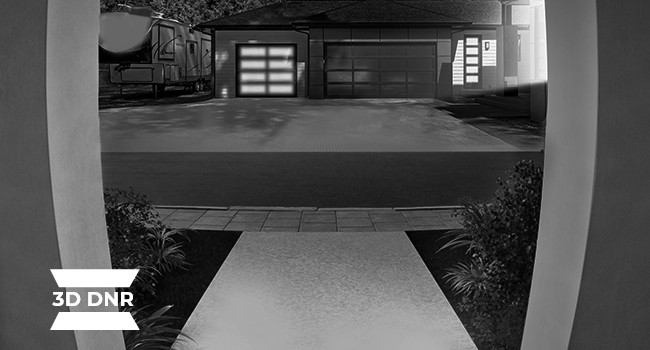
3D DNR is a processing technology that clears up the grainy, fuzzy "static" that naturally plagues digital video sensors in low-light conditions.
Traditional noise reduction filters each frame individually, which can cause motion blur. 3D DNR works by dynamically comparing multiple sequential video frames to isolate and filter out random digital artifacts and color-blending errors.
By mathematically removing visual noise from the video feed, 3D DNR prevents image distortion. This keeps the background sharp and ensures that moving subjects remain clean and identifiable instead of turning into a blurry silhouette.
5. Wide Field of View (FOV)
A larger viewing angle expands the camera's horizontal and vertical coverage, allowing a single device to monitor a broad expanse and eliminate physical blind spots.
The interaction between the camera lens size and the physical dimensions of the internal image sensor dictates the exact viewing angle.
A wide-angle lens is essential for high-intent zones like front entryways, where you need to track package deliveries directly on the porch while simultaneously monitoring the walkway leading up to the door.
4 Best Night Vision Security Cameras for Different Scenarios
Choosing the right night vision security camera comes down to matching your specific real-life scenario to the correct low-light technology. Rather than relying on a universal ranking, the best choice depends on your property's ambient light, power access, and structural layout. Below are the 3 top recommended models designed to solve specific overnight security challenges.
1. Best Battery-Powered Security Camera with Night Vision: Reolink Altas PT Ultra
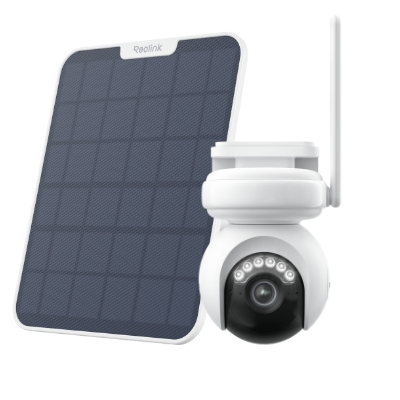
The Reolink Altas PT Ultra is a wire-free, pan-tilt camera that solves the industry-wide limitation of battery-powered models being unable to record continuously. Powered by a massive 20,000 mAh battery and ColorX technology, it delivers continuous overnight recording and full-color footage.
Why the specs matter in real use:
- 4K ColorX night vision: Helps capture color details at night, such as clothing, car color, or objects in the yard, instead of relying only on black-and-white IR footage.
- 20,000mAh battery: Reduces the need for frequent charging, especially useful for hard-to-reach mounting spots.
- Pre-recording: Helps capture what happened before a person, vehicle, or animal triggered the camera.
- 355° pan and 90° tilt: Lets you monitor a wider area without installing multiple fixed-angle cameras.
- Local storage with no monthly fees: Footage can be stored locally through microSD or Home Hub options, which is useful for privacy-focused users.
- F/1.0 Aperture & 1/1.8” Sensor: Standard security lenses restrict light, resulting in dark, grainy footage unless a bright light is turned on. The Altas PT Ultra pairs an industry-leading f/1.0 super-aperture lens with an oversized 1/1.8” sensor.
4K Battery-Powered PTZ Camera with Continuous Recording
👍 4K UHD video with continuous recording
👍 ColorX night vision in low light
👍 Pan, tilt, and automatic person tracking
👍 Local storage without monthly fees
Best for:
Backyards, gates, detached garages, rural homes, and users who want a battery-powered camera with more complete night coverage.
Potential limitation:
For smooth live view, remote access, and uploads, it still needs a stable Wi-Fi connection. Battery life also varies depending on recording mode, temperature, and how often motion is triggered.
Community Insight: Testing notes and user reviews highlight that because the ColorX technology doesn't rely on traditional infrared light spectrums, it naturally avoids attracting night-flying insects. Users report a dramatic drop in overnight false alarms caused by spiders spinning webs over the lens.
2. Best wireless outdoor security camera with night vision - Reolink Argus 4 Pro
The Reolink Argus 4 Pro is ideal for users who want a wide, wire-free outdoor view with full-color night footage. A common problem with single-lens outdoor cameras is that they leave blind spots near driveways, porches, and backyards. Argus 4 Pro solves this with a dual-lens 180° panoramic view, so one camera can cover a much wider area.
It uses ColorX technology, an F/1.0 aperture lens, and a 1/1.8" CMOS sensor to capture more light in low-light conditions. In simple terms, the larger aperture and sensor help the camera “see” more light at night, so the footage can keep more color and detail without always depending on bright spotlights.
Why the specs matter in real use:
- 4K 180° panoramic view: Helps cover a full front yard, driveway, or backyard with fewer blind spots.
- ColorX night vision: Makes it easier to identify useful details like clothing color, vehicle color, or movement around your home.
- Dual-band Wi-Fi 6: Helps support smoother 4K live streaming with lower latency when the camera is within good Wi-Fi range.
- Battery-powered and wire-free: Works well for users who do not want to drill through walls or run Ethernet cables.
- Local storage: Supports microSD and Home Hub storage options without mandatory monthly cloud fees.
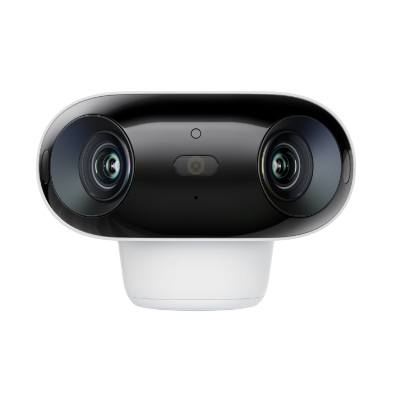
4k 180° Wire-free Color Night Vision Camera
4K UHD 180° Blindspot-free View; Color Vision Day and Night; 30% More Battery Life; Dual-band Wi-Fi 6; Smart detection.
Best for:
Front yards, backyards, side yards, patios, and users who want wide outdoor coverage without wiring.
Potential limitation:
Because it is battery-powered, heavy night activity, frequent live viewing, cold weather, or poor Wi-Fi signal may reduce battery life. For 24/7 continuous recording, a wired PoE or NVR-based setup is usually more suitable.
3. Best Super Aperture Color Night Vision Camera: Reolink CX810
The Reolink CX810 is designed for users who want high-detail, full-color night monitoring with a more stable wired connection. It is a PoE camera, which means one Ethernet cable provides both power and data. This makes it a better fit for users who want continuous recording and do not want to worry about battery charging.
The CX810 features a 4K 8MP resolution, an F1.0 super aperture lens, and a 1/1.8" sensor, which means the camera can produce brighter and more detailed footage in dim areas.
Why the specs matter in real use:
-
F1.0 super aperture: Lets more light enter the lens, helping the camera capture brighter nighttime images.
-
1/1.8" sensor: Improves low-light sensitivity, which helps reduce dark, muddy footage.
-
4K 8MP resolution: Makes it easier to zoom in on faces, clothing, vehicles, or objects without losing too much detail.
-
WDR technology: Helps balance bright and dark areas, such as a porch light next to a dark driveway.
-
PoE connection: Provides more stable recording than Wi-Fi in areas where wireless signal is weak.
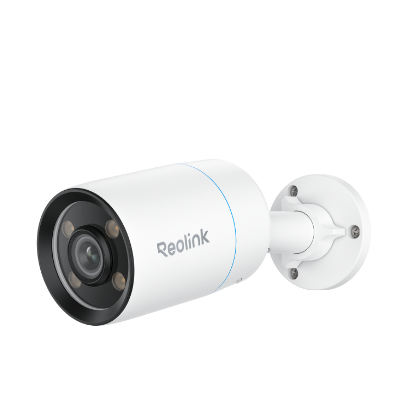
4K PoE ColorX Night Vision Camera
4K Ultra HD with HDR Tech; F1.0 Super Aperture; ColorX True Full Color Night Vision; 3000K Adjustable Warm Light; Advanced 1/1.8'' Sensor
Best for:
Driveways, garages, front doors, store entrances, and outdoor areas where clear color footage matters at night.
Potential limitation:
The CX810 has a fixed field of view and does not support pan and tilt. Once installed, it monitors the area it is aimed at, so placement angle is important.
4. Best 4K Long-Range Night Vision Security Camera: Reolink RLC-811A
The Reolink RLC-811A is a good option for users who need long-range night monitoring, optical zoom, and reliable PoE recording. It is especially useful for driveways, side entrances, garages, and property perimeters where objects may be farther away from the camera.
Unlike cameras that only use digital zoom, the RLC-811A has 5× optical zoom, which means it can zoom in on distant areas while keeping more image detail. It also supports both infrared night vision and color night vision with spotlights, giving users more flexibility depending on whether they want discreet black-and-white monitoring or more visible full-color deterrence.
Why the specs matter in real use:
-
4K 8MP resolution: Captures more detail than 1080p, which helps when reviewing faces, vehicles, or activity around entrances.
-
5× optical zoom: Useful for checking distant objects, such as a car at the end of a driveway or movement near a gate.
-
Up to 30m infrared night vision: Covers longer outdoor spaces even when there is no visible light.
-
Spotlight color night vision: Helps capture color details and can also act as a visible deterrent.
-
PoE setup: One cable handles power and data, making it suitable for stable 24/7 recording.
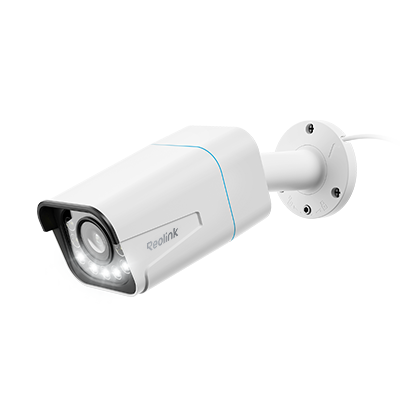
4K Smart PoE Camera with 5 Spotlights
4K 8MP Ultra HD Day & Night, Person/Vehicle Alerts, 5X Optical Zoom, Two-Way Audio, Built-in Siren, Color Night Vision, Live View Anywhere.
Best for:
Driveways, garages, side yards, long entrances, and users who need zoomed-in details at night.
Potential limitation:
Spotlight-based color night vision is more visible than low-light color night vision. If you want a more discreet nighttime setup, infrared mode or a ColorX model may be a better fit.
Buyer's Decision Table for Color Night Vision Security Camera
3 Common Mistakes Buyers Make When Choosing a Night Vision Security Camera for Home
One of the most common complaints among night vision security camera owners is that their footage becomes blurry, grainy, or completely unreadable overnight. While a camera might look perfect during the day, nighttime physics and lighting conditions present entirely different challenges.
To capture high-intent search traffic and avoid a bad decision, steer clear of these three critical mistakes that directly cause nighttime blurriness.
Mistake 1: Aiming the Lens Directly at Walls or High-Reflective Surfaces
Mounting a night vision camera too close to a sidewall or reflective object causes its infrared (IR) light to bounce straight back into the lens, blinding the sensor and turning the rest of your yard pitch black.
Many users completely ignore the physical placement angle during installation. When invisible IR LED or white LED light strikes a nearby wall, the camera's internal processing algorithm automatically darkens the rest of the frame to balance the extreme contrast. This leaves a massive, overexposed white area on the wall while plunging your actual yard into a "dead black" void where details are lost.
How to fix it: Pay strict attention to your mounting angles. Position the camera lens away from immediate solid obstructions to maximize its active coverage range and eliminate blind spots.
Mistake 2: Installing an IR or Color Night Vision Camera Behind a Glass Window
Pointing an indoor security camera out through a glass window at night creates a catastrophic glare, rendering your overnight security footage completely useless.
Glass acts like a mirror to night vision fill lights. When the camera’s infrared LEDs or white spotlights activate, the light cannot penetrate the window pane; instead, it bounces directly off the glass surface and flashes back into the digital sensor. This triggers massive lens flare and ghosting (double images), creating a washed-out, blurry mess. Furthermore, indoor reflections of house lights will completely distort the exterior view.
How to fix it: Never place a night vision camera behind glass. If you need to monitor an outdoor driveway, side alley, or porch, use a dedicated outdoor camera with a proper weatherproofing rating mounted directly on the exterior wall.
Mistake 3: Relying on Inadequate Light Fill or Poor Software Processing Algorithms
Choosing a cheap camera that lacks sufficient hardware fill lights forces its internal software to artificially over-amplify the video, generating heavy digital noise and motion blur.
To see in pitch black, cheap cameras increase the "gain" of the image sensor. This math creates heavy digital static and graininess. To fix this, the camera applies a digital noise reduction filter. While this filter cleans up the static, it inherently smears moving objects—turning a walking trespasser into a blurry, unrecognizable ghost.
Setup and Troubleshooting Tips for Reolink Night Vision Security Cameras
If you use a Reolink night vision camera for home security surveillance, you may face these problems. Sometimes your home security camera is on but the night vision system doesn't work at all; or sometimes the infrared light doesn't show up in the night vision system; or the camera works during the day but loses video at night and doesn't work anymore.
If you are experiencing problems with your night vision surveillance camera not working or not recording, following these troubleshooting steps may help you:
-
Make sure cameras are powered on, especially for wireless models, and check all cables and wiring connections for secure and proper alignment.
-
Check the lens for dust or debris and, if necessary, clean the lens with a soft cloth. and check that the lens is not obscured.
-
Make sure that the environment is dark enough for the night vision system to work. The camera's night vision system can only be activated and used if the light environment is below a certain lux value.
-
Check that the infrared sensor in the camera is working (see if the infrared sensor lights up red in the dark). If the IR light still does not appear in night vision mode, try resetting the camera.
-
If the camera is working with an NVR, swap the camera to a different port on the NVR.
FAQs
What security camera has the best night vision?
The best night vision security camera depends on how and where you use it. For full-color night footage, look for a camera with a large aperture, a sensitive image sensor, and color night vision technology. For complete darkness, infrared night vision is still the most reliable option because it does not need visible light to work.
For example, Reolink CX810 is a strong choice for fixed color night vision, Reolink Argus 4 Pro works well for wide outdoor coverage, Reolink Altas PT Ultra is ideal for battery-powered night monitoring, and Reolink RLC-811A is better for long-range night vision with zoom.
Can night vision cameras work in complete darkness?
Yes, it is possible to have night vision security cameras that work in complete darkness. These cameras are equipped with infrared technology that allows them to capture images in the dark. This type of camera is a great option for businesses or homes that want added security during the night hours.
What is the difference between an infrared camera and night vision?
Night vision is the broader term. It refers to any camera technology that helps the camera see in low-light or dark conditions.
An infrared camera is one type of night vision camera. It uses infrared LEDs to capture black-and-white footage in complete darkness. Other night vision types include color night vision, which uses low-light sensors to capture color images, and spotlight night vision, which turns on a visible light to brighten the scene.
Conclusion
Overall, night vision security cameras are a great way to keep your home or business safe and secure at all hours of the day and night. There are many different types of night vision security cameras available, so be sure to do your research before buying one to make sure you get the best camera for your needs.
Thanks for reading! We hope this post has been helpful in deciding whether or not a night vision security camera is right for you. If you have any questions or comment, please leave us a message below. And don't forget to share this post with your friends if you found it helpful!
Search
Subscribe for the Latest Updates
Security insights & offers right into your inbox