
Neighborhood Security Cameras: Types, Placement & Best Options

Neighborhood security cameras are surveillance cameras used to monitor homes, entrances, streets, shared spaces, parking areas, and other community locations. They can help deter unwanted activity, provide video evidence, and give residents or authorized community managers better visibility of common areas. Depending on the location, they may include home security cameras, PTZ cameras, PoE systems, or specialized license plate cameras.
The right setup depends on who owns the cameras, the areas being monitored, available power and network connections, recording requirements, and local privacy laws.
- What Are Neighborhood Security Cameras?
- What Are the Benefits of Neighborhood Security Cameras and Systems?
- What Are Common Types of Neighborhood Security Cameras?
- What to Consider When Choosing Neighborhood Security Cameras?
- What Type of Camera Is Best for a Neighborhood?
- Best Reolink Cameras for Neighborhood Security
- Where Should Neighborhood Security Cameras Be Placed?
- Are Neighborhood Security Cameras Legal?
- FAQs
- Conclusion
What Are Neighborhood Security Cameras?
Neighborhood security cameras refer to surveillance systems deployed in residential communities to enhance public safety, deter crime, and monitor shared spaces.
Homeowner vs HOA vs Public Security Cameras
What Are the Benefits of Neighborhood Security Cameras and Systems?
Crime Deterrence
Visible security cameras may discourage some trespassing, theft, vandalism, and other unwanted activity by making surveillance more apparent. However, cameras cannot prevent every incident, so they should be part of a broader neighborhood security plan.
Remote Monitoring and Alerts
Connected cameras allow residents or authorized users to check live video remotely and receive alerts when people, vehicles, or other configured events are detected.
Video Evidence
Recorded footage can help document incidents and provide useful details such as appearance, vehicles, direction of travel, and event timing. Relevant footage may also assist police or insurance investigations.
Shared-Area Monitoring
What Are Common Types of Neighborhood Security Cameras?
Fixed Cameras
Point in a stationary direction to monitor a specific target area, such as a neighborhood entry gate or mailbox station. They offer high reliability, lower cost, and simple maintenance.
PTZ Cameras
PTZ cameras provide remote directional and optical zoom control, allowing operators or automated AI tracking to pan left/right, tilt up/down, and zoom in on moving vehicles or individuals across wide open areas.
Panoramic Cameras
Use multi-sensor designs or fisheye lenses to deliver continuous 180° or 360° field-of-view coverage without blind spots, ideal for central park areas, cul-de-sacs, and community intersections.
LPR/ALPR Cameras
Equipped with specialized high-speed shutters, infrared illumination, and optical character recognition (OCR) software to capture clear, readable vehicle license plates day or night at neighborhood entry/exit points.
What to Consider When Choosing Neighborhood Security Cameras?
Resolution and Image Quality
The resolution of the security camera should be at least 2K, and 4K is a better option. It is necessary if you want clear videos with rich details. Along with high resolution, you need clear night vision. If the camera offers both colored and black-and-white night vision, it is better.
Field of View and Coverage
A wide field of view allows you to capture a massive area. If it is a stationary camera, checking the field of view is necessary to understand what it will cover. PTZ cameras also have a limited range of motion, and you can check whether they cover 360 degrees or not.
Smart Detection
Neighborhood security cameras should have a smart detection feature. It should detect the movement of persons, vehicles, and pets. It should be able to distinguish between the objects and send accurate alerts.
Remote Viewing and Alerts
Make sure the camera offers the remote viewing feature to monitor the live preview from any location. There should not be any subscriptions. Secondly, it should send real-time alerts on the connected devices after detecting any motion.
Continuous vs Motion-Triggered Recording
24/7 recording provides a complete timeline and can capture activity before and after an incident, making it useful for entrances and busy common areas. Motion-triggered recording can reduce storage and power consumption and may be sufficient for lower-traffic locations. Choose based on the site's risk level, available power, and storage capacity.
Privacy Controls
Privacy masking can help block areas that should not be recorded, such as neighboring windows or other sensitive spaces. Detection zones can separately control where motion events trigger alerts.
Storage and Data Ownership
Neighborhood security cameras can store footage on a microSD card, NVR, local hub, or cloud service, depending on the system. For HOA or community-wide cameras, consider not only storage capacity but also who owns, controls, and can access the recordings. Clear policies should define authorized users, retention periods, data sharing, and when footage may be provided to law enforcement or other third parties.
What Type of Camera Is Best for a Neighborhood?
Best Reolink Cameras for Neighborhood Security
Best for Wide Entrances – Duo 3 WiFi
Duo 3 WiFi is an incredible security camera that offers optimal reliability and robust performance. It’s a dual-lens security camera that captures a 180⁰ panoramic view. It is an ideal option for outdoor surveillance as it offers 16MP resolution with exceptional clarity.
It can detect the motion of objects instantly. It also tracks their motion and sends real-time alerts to the connected devices. At night, it uses its colored or black-and-white night vision to record extremely clear videos. It also facilitates communication through two-way audio. Most importantly, it’s IP67-rated and can work in all weather conditions.
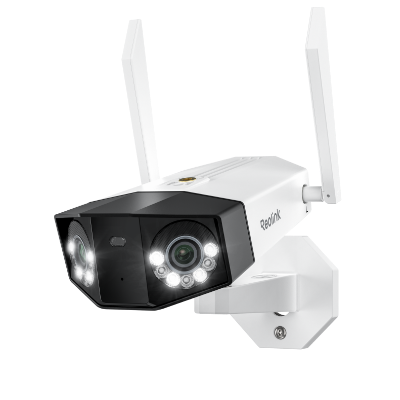
Groundbreaking 16MP Dual-Lens WiFi Camera
16MP UHD, Dual-Lens, Motion Track, 180° Wide Viewing Angle, Plug-In WiFi, Color Night Vision.
Best for Detailed Fixed Monitoring – RLC-811A
RLC-811A is a PoE security camera with unmatched reliability and powerful performance. It records videos in 4K resolution, which offers incredible clarity and rich details. You can also use its 5X optical zoom to see a close-up view.
It smartly detects the person and vehicles around and sends instant alerts. You can even control it hands-free through Alexa and Google Assistant. Its night vision captures true colors and excellent details. It is made for harsh weather conditions and can work in rain and snow.
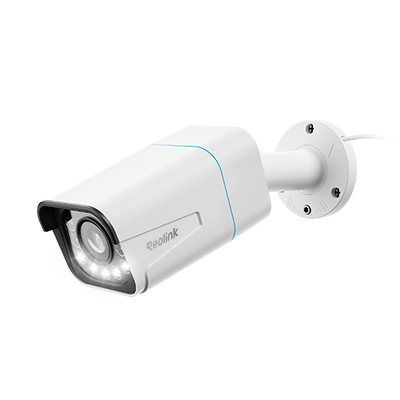
4K Smart PoE Camera with 5 Spotlights
4K 8MP Ultra HD Day & Night, Person/Vehicle Alerts, 5X Optical Zoom, Two-Way Audio, Built-in Siren, Color Night Vision, Live View Anywhere.
Best for Large Areas & Tracking – TrackMix WiFi
TrackMix WiFi is a PTZ camera equipped with dual lenses. One is the wide-angle lens to capture a wider area, and the other is the telephoto lens to record the zoomed view. You get to see both videos at the same time. Plus, you can use the 6X hybrid zoom for more details.
It’s a Wi-Fi 6 security camera, saving you from the hassle of Ethernet wiring and offering stable and fast connectivity. It offers dual night vision, and you can use any of them for clear videos a night. It can detect persons, pets, and vehicles smartly and send alerts to the devices. Besides that, it offers flexible storage, smart home compatibility, dual warnings, and much more.
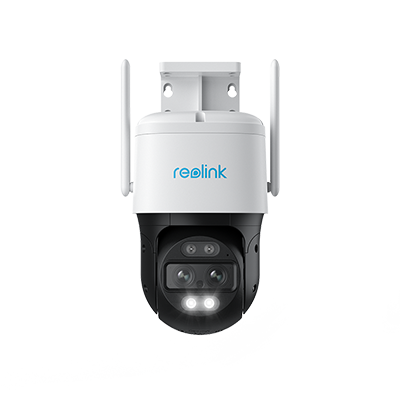
4K Dual-Lens PTZ Camera with Motion Tracking
4K 8MP UHD, Wide-Angle & Telephoto Lenses, Pan-Tilt-Zoom, Auto-Tracking, Person/Vehicle Detection, 2.4/5 GHz Dual-Band WiFi, Two-Way Audio.
Where Should Neighborhood Security Cameras Be Placed?
-
Entrances and Exits: Position LPR/ALPR or fixed narrow-angle cameras at community main gates and access roads, angled 3 to 5 feet off the ground, to capture vehicle license plates, driver faces, and traffic flow.
-
Common Areas and Pathways: Install panoramic or wide-angle fixed cameras at central hubs (parks, clubhouses, mail kiosks, and walking trails) at a height of 8 to 10 feet to record general pedestrian activity while avoiding residential windows.
-
Parking Areas: Mount PTZ or high-resolution bullet cameras on elevated light poles (12 to 15 feet high) angled downward across parking stalls to minimize vehicle headlight glare and monitor for vehicle break-ins or hit-and-runs.
-
Driveways: Place fixed bullet or turret cameras under soffits or garage eaves facing out toward the street (7 to 9 feet high) to track approaching visitors, package deliveries, and vehicle movements.
-
Approved Community Mounting Points: Utilize existing HOA or municipal infrastructure—such as utility light poles, clubhouse facades, entry gatehouses, and perimeter fence posts—ensuring proper power access, network backhaul, and community board permission.
Are Neighborhood Security Cameras Legal?
Video vs Audio
-
Video Recording: Generally legal in public view where people have no reasonable expectation of privacy (e.g., streets, sidewalks, open yards).
-
Audio Recording: Strictly regulated under state and federal wiretapping laws. Recording conversations without consent (one-party or all-party depending on jurisdiction) can be a federal crime, so audio features are typically disabled or restricted on community cameras.
Private Property vs Common Areas
-
Private Property: Homeowners can install cameras on their own property pointing at public streets or common elements, provided they do not record areas where neighbors have a reasonable expectation of privacy.
-
Common Areas: Homeowners Associations (HOAs) or municipalities can install cameras in shared spaces (pools, entry gates, park areas) if authorized by community bylaws and local ordinances.
Privacy and Camera Placement
-
Expectation of Privacy: Cameras must never capture the interior of private residences (e.g., through a neighbor's bedroom or bathroom window) or secluded areas like private backyards.
-
Signage Requirements: Many jurisdictions and HOA guidelines require visible notice (such as "Area Under Video Surveillance" signs) at community entrances and common areas to notify the public legally.
Access, Storage and Data Sharing
-
Access Control: Bylaws should strictly define who can view live or recorded video (e.g., designated board members, security personnel, or local law enforcement).
-
Retention Rules: HOAs generally establish specific retention policies (e.g., auto-deleting footage after 30 to 90 days) to minimize liability and storage costs.
-
Law Enforcement Requests: Footage is generally only shared with police for active criminal investigations, either voluntarily by the board or via formal subpoena/search warrant.
FAQs
How much do neighborhood security cameras cost?
A single security camera may cost roughly $50 to several hundred dollars depending on resolution, connectivity, power, and features. A community-wide system can cost substantially more because it may require multiple cameras, NVR storage, PoE switches, network infrastructure, installation, and maintenance.
Is it legal for my neighbor's security camera to record my yard?
No, people expect privacy in their own property, be it their yard or patio. Your neighbor cannot record you in that area or face the camera towards the yard.
What is the best security camera for HOA?
HOA can choose different types of cameras. However, PTZ, bullet, and LPR cameras are quite common. Depending on the requirement, they can select a suitable one.
Can an HOA record public streets?
Yes, an HOA security camera may capture public streets or other areas visible from authorized camera locations, but the rules vary by state and locality. HOAs should consider camera placement, the purpose of surveillance, resident privacy, and any applicable laws or community policies. Audio recording may be subject to separate consent laws.
Who can view HOA security camera footage?
Access to HOA security camera footage should generally be limited to authorized people, such as designated board members, property managers, or security personnel. HOA policies should clearly define who can view recordings, how long footage is retained, and when it may be shared with residents, law enforcement, insurance companies, or other third parties.
Conclusion
Neighborhood security cameras are needed at homes, societies, communities, parking lots, etc. These help in recording every moment, which could be helpful in deterring crimes and getting details for the incidents. We explained different types and how you can select them. You can also go with the recommendations we have shared to save time.
Search
Subscribe for the Latest Updates
Security insights & offers right into your inbox