
LED vs Halogen: Which Light Bulb Offers the Best Performance?
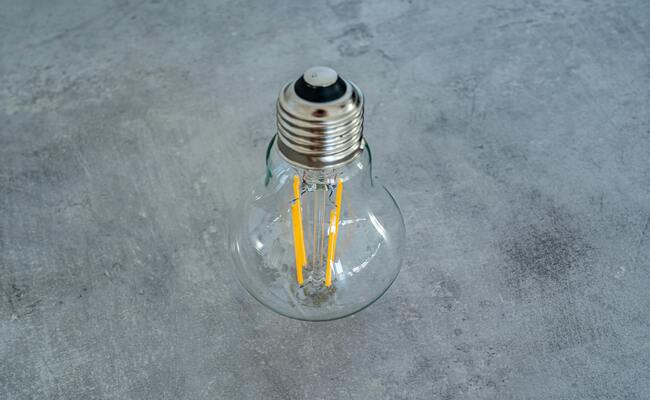
Halogen and LED are two standard bulb technologies we use today. Both offer lighting, but they are meant for different purposes and applications.
In this article, we will discuss Halogen vs LED. We will compare both these technologies and help you understand their pros & cons, benefits, and where you can use them for the best results.
Halogen vs LED: Key Difference Between Them
The key difference between Halogen and LED is the technology on which they work.
A Halogen bulb is a type of incandescent bulb. It has a thin tungsten filament that produces light on heating. It differs from an incandescent bulb due to the halogen gas that recycles tungsten particles, thereby improving the bulb's lifespan.
An LED works on diodes that emit light due to electroluminescence. When current is passed through the diode, it produces light and minimal heat.
Halogen vs LED: Basic Of Halogen
What Is Halogen?
A Halogen bulb is a better version of incandescent bulbs that also contains a tungsten filament. However, the filament is enclosed in quartz glass filled with Halogen gas, usually iodine, bromine, or helium.
When the bulb is switched on, it starts to glow, and the temperature gradually rises to a maximum of 2500-3000 °C. The gas reacts with the tungsten vapors coming from the filament, and it sticks again through which the cycle continues.
The increase in temperature will allow the bulb to glow more than incandescent bulbs. Only 10-15% of the electricity is converted into light; the rest is dissipated as heat energy. The technology is used in several applications such as headlamps, vehicle headlights, and floodlights.
Pros And Cons Of Halogen
Pros:
- Lower cost
- Usually compact in size
- Natural and warm light
- Can be used at any place due to its multiple shapes
- Objects under natural light appear in true colors
Cons:
- High power consumption
- High heat dissipation
- Shorter lifespan
- Environmental hazards issues
- Low light emission on start
Halogen vs LED: Basic Of LED
What Is LED?
LED stands for Light Emitting Diode, in which a semiconductor diode is responsible for emitting the light. It doesn't require any filament or gas to glow like halogen lights. It utilizes advanced technology in which electrons release photons, which are often referred to as light. It produces almost no heat, and the maximum amount of electrical energy is converted to light.
It comes in different colors, which you can switch quickly according to your requirements. LEDs usually operate at low temperatures and offer long-term usage. Moreover, they are eco-friendly and even operate at low voltages. With no heat dissipation, it would be safer for home and office use.
Pros And Cons Of LED
Pros:
- Minimal heat dissipation
- Long life up to 5-10 years
- No environmental hazards
- Multiple color adjustments
- Saves more energy
Cons:
- Only compatible dimmers would work
- Higher purchasing cost
Halogen vs LED: Which One To Choose?
Halogen vs LED Headlights
A standard car headlight requires almost 3000 lumens each, which means a pair would deliver 6000 lumens in total. For these requirements, at least 4 halogen bulbs would be required, and each would provide 1200-1500 lumens. Each bulb will take approximately 55W.
In comparison, 2 LED lights are required, 1 in each headlight. Each light would produce 3000-4000 lumens and take around 20-40 Watts per bulb. It provides a brighter and whiter light for better visibility. In the final verdict, an LED would be a better choice for higher visibility and low power consumption.
Halogen vs LED Light Bulbs
For light bulbs, let's consider a living room to understand which one would be better. A typical living room would require almost 2400 lumens for better visibility and aesthetics. You will require at least 3 halogen bulbs, each providing 800 lumens. However, they will consume 80W each.
In comparison, you will also require 3 LED bulbs, each providing 800 Lumens. Each bulb will take almost 9-10W. To choose between the two, LEDs would be more efficient and last longer than expected. For the same brightness level, it will save 150W in total.
Halogen vs LED Car Light
Car lights, such as interior and indicators, would require almost 150 lumens per light. You will require at least four lights: two for the roof and two for the rear end. A halogen light will take 5W each bulb; combined, they would make 20W.
In comparison, 4 LED bulbs would take 1.5W each, and combined would take only 6W. Choosing LED light is recommended for 70% energy saving, without sufficient heat dissipation. The replacement frequency will also be very low due to the long lifespan.
Halogen vs LED Home Light
Let's consider the kitchen area for a legit comparison. A kitchen area requires at least 4000 lumens due to the tasks performed. You will require 4 halogen bulbs, each of which will produce 1000 lumens. Each bulb consumes 75W, making 300W in total.
In comparison, 4 LED bulbs will take 48W in total, saving almost 84% of the energy. It would be best to choose LED lights for better luminance, and also a considerable reduction in your electricity bills. Moreover, choosing an LED would be a safer option due to the lack of heat rejection.
Halogen vs LED Outdoor Light
Outdoor lights require massive brightness as compared to other applications. A typical scenario includes large road headlamps. They require at least 9000-10000 lumens to accommodate a larger area. Here, placing a halogen light of 9000-10000 lumens would take almost 500W.
On the other hand, mounting an LED of the same luminance will take only 50W and provide better visibility for the vehicles. In this case, an LED would save 90% of the power consumption and can withstand several years, even in harsh weather conditions.
Note: Reolink Elite Floodlight Wi-Fi is a 4K security camera with a floodlight. Its powerful 3000 lumens LED floodlight can illuminate a massive outdoor area and capture vivid colors at night.
HID vs LED vs Halogen: What's the Difference?
An HID light uses electric arc electrodes with gas-filled inside, including a ballast. It offers 3000-5000 lumens per bulb and has a lifespan of 1-1.5 years. It offers a strong beam, which is quite intense. It can be used in headlights, streetlights, garages, stadiums, parking lots, etc. However, it is quite expensive.
A halogen is an improved form of an incandescent bulb that uses a tungsten filament enclosed in a quartz glass filled with halogen gas. It offers a warm light up to 1,200 to 1,500 lumens per bulb. Its life expectancy is very short, ranging from 6 months to 2 years, depending on usage. And it costs less than HID and LED.
LED uses a semiconductor diode to emit light. It is an extremely efficient technology that can offer up to 3,000 to 4,000 lumens per bulb. It converts most of its energy into light, so there is minimal heat. It lasts 5-10 years and costs more than halogen but significantly less than HID.
FAQs
1. Which is better, LED or halogen?
LED would be a better choice because of higher brightness and a sharper beam pattern. It is also more durable and offers long-term service. From a safety perspective, LEDs are safer due to minimal heat emission.
2. Can I put LED bulbs in halogen fittings?
Yes, you can put LED bulbs in a halogen fitting if the base, like GU10 or E26, perfectly matches it. Additionally, test the voltage input because some Halogens require a higher voltage for startup.
Conclusion
LED and Halogen lights are quite different in terms of light, life expectancy, efficiency, and other aspects. They offer light, but they are suitable for different applications. Depending on the use case, you need to select the right light. However, in most cases, LED is the best option.
Search
Subscribe for the Latest Updates
Security insights & offers right into your inbox