
How To Convert DC To AC?
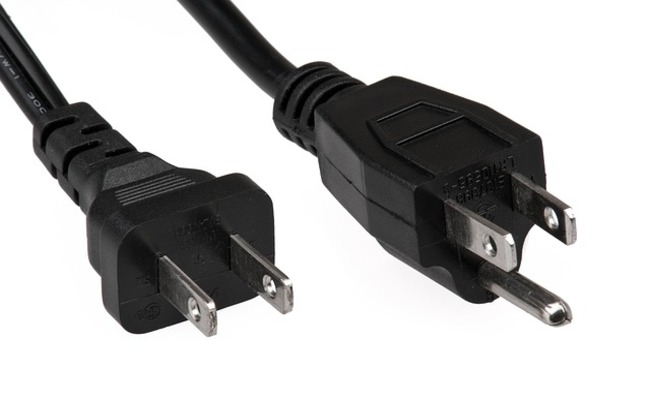
AC (Alternating Current) and DC (Direct Current) are two different types of electrical currents used to power devices. Both have different characteristics and are suitable for distinct purposes.
In this article, we will explain how you can convert AC into DC. We will also explain the differences between AC and DC power.
Can You Convert DC To AC?
Yes, DC to AC conversion is possible, but you require an electronic converter device called an inverter. The process is necessary because most clean energy technology devices generate DC as their output. Without such conversion, the clean energy devices such as solar panels and batteries would never be integrated into the home system.
An inverter works by converting DC signals in such a way that the direction of current reverses, creating pulsating signals that we call AC. It also ensures a designated frequency and voltage suitable for both residential and commercial use. Let's see the basics of AC and DC to understand their conversion.
Basics Of DC and AC
What Is DC Power?
DC stands for Direct Current, a term typically used to describe the current that flows in only one direction. DC provides a constant voltage with a stable and unidirectional electric supply. The supply is highly essential for smooth and controllable usage.
One of the major applications of DC is in batteries, which are commonly found in mobile phones, laptops, security cameras, and many other devices. Batteries also play a vital role in vehicles for engine startup, headlights, and other electronic equipment.
Other applications include DC motors that are used in electric vehicles for speed and torque adjustments. They are also used in elevators for precise control. Solar panels are also considered a major source for generating DC power via solar radiation, which is then converted into AC for appliance compatibility.
What Is AC Power?
AC stands for Alternating Current, which is another type of electric current that changes direction and produces continuous waves. The source is highly essential for long distances due to minimal losses. The wave frequency in countries is commonly 60 or 50 Hz and is considered efficient in delivering electricity seamlessly from the power station to the grid.
AC has more applications due to its ease of stepping up or down the voltage through transformers. Common household applications include air conditioners, refrigerators, microwaves, fans, and washing machines.
Industrial application includes pumps, motors, and high-tech machinery that AC often operates. You may have seen the emerging technologies for DC fans and air conditioners, but AC demand remains dominant in terms of applications.
How To Convert DC To AC?
The conversion from DC to AC can be easily done through an inverter. You might be receiving DC output from a solar panel, battery, or any other source. Let's see step by step and understand in simple terms how the DC signal is converted to AC.
- Initially, the DC goes to the switching circuit, where it turns the signal on and off to create a rough form of AC. The switching circuit is one of the primary processes that utilizes semiconductor devices, such as transistors and MOSFETs, for rapid switching.
- In the second step, it will start creating alternative pulses until it attains a smooth sinusoidal wave.
- Once the frequency reaches 50 or 60 Hz and a smooth sine wave is achieved, it will be sent to the H-bridge circuit.
- Here, the H bridge contains four switches that turn on and off and make the current flow alternatively in two directions.
- Now, the wave is filtered by passing through capacitors and inductors, which makes it a pure sine wave.
Why Convert DC to AC?
The conversion is essential due to the global dependency on appliances. With the conversion, the generated energy from solar panels can be easily sent to the grid. Additionally, the power transmission from the station to the grids will be efficient and smooth with minimal losses.
DC cannot be transmitted easily as it cannot be stepped up or down, but it is useful at some stages, such as storing energy in batteries or providing direct power to appliances like fans, bulbs, or air conditioners. Moreover, the household and industrial equipment are designed for AC for efficient and smooth operations.
Bonus: AC/DC Power Security Camera Recommendation
Elite Floodlight Wi-Fi
Elite Floodlight Wi-Fi is a plug-in security camera. It operates through an adapter that converts AC to DC, providing an uninterrupted power supply to the camera. It is an excellent option for 24/7 security. It captures videos in 4K resolution for excellent details and clarity. It uses dual lenses to cover a wide-angle 180⁰ view.
It's a dual-band Wi-Fi 6 security camera for fast and reliable connectivity. It has a 3000-lumen floodlight that illuminates a vast area and assists with color night vision. It smartly detects objects and sends real-time alerts. With its local AI video search, users can easily find the footage they need.
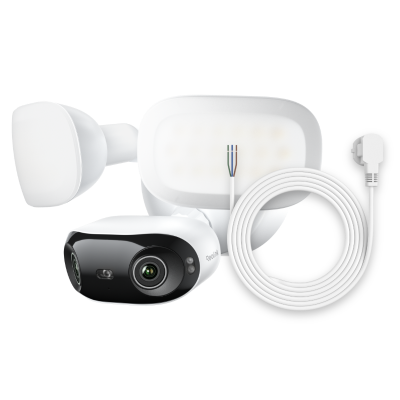
4K 180° Ultra-Wide Wired Floodlight Security Camera
3000-Lumen Dimmable Lighting, Adjustable Color Temperature, Local AI Video Search, Local Storage, Dual-Band Wi-Fi 6.
Reolink E1 Pro
E1 Pro is a compact indoor plug-in security camera. It is also connected to a nearby AC outlet via an adapter that covers AC to DC. It's a 5MP security camera to record clear videos with rich details. It is also equipped with a pan-and-tilt motion to offer 360⁰ coverage.
It can detect persons and pets in real-time and send alerts to the connected devices. It can also track the motion of objects. It's compatible with Google Assistant and Alexa for hands-free operation. It also offers flexible storage options to store your videos in a microSD card, NVR, Home, or server.
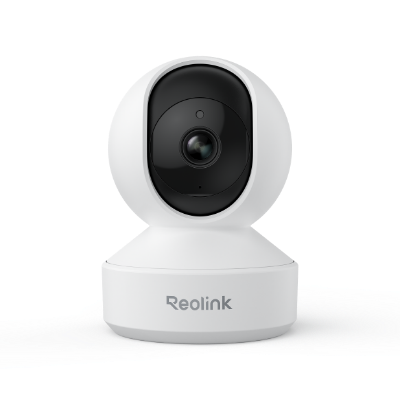
Smart 5MP Wi-Fi PT Indoor Security Camera
Crying Detection for Baby Monitoring; Smart Detection & Auto Tracking; 360° Coverage with Pan & Tilt; 5MP Super HD.
FAQs
1. Why is it hard to convert DC to AC?
DC to AC conversion is a complex process and requires careful consideration. To obtain a smooth sine wave, it passes through several processes like switching, filtering, and other complicated ones.
2. Do you lose power converting DC to AC?
Yes, power losses occur during the conversion, but typically at a rate of 8-15%, which is considered relatively low. The losses primarily occur during the switching and heating of the elements. Modern inverters are almost 95% efficient.
3. What device converts AC to DC?
A rectifier is a device that converts an AC signal to DC. It will make the sine waves steady and allow them to flow in one direction. You will commonly find applications such as mobile phone chargers and power supplies.
Conclusion
AC is everywhere, especially when it comes to home, commercial, and residential applications. The appliances and machinery used are AC, be it single or three-phase. But it is nearly impossible to rule out by DC. Both have their advantages and applications. DC appliances are also becoming popular and an affordable choice, but still, the dependency on AC is unbeaten.
Search
Subscribe for the Latest Updates
Security insights & offers right into your inbox