
Flock Camera vs Security Camera: What's the Difference?

A Flock camera usually refers to a Flock Safety license plate recognition (LPR) camera, which captures license plates and searchable vehicle details. A traditional security camera records a wider scene, including people, property, vehicles, and events.
The main difference is purpose: Flock LPR cameras are built for vehicle identification and investigations, while traditional security cameras are designed for broader video surveillance. Flock also offers separate video security cameras, so capabilities vary by product.
This article will break down the main differences between flock cameras and security cameras and tell the main features of both.
- What Is a Flock Camera?
- What Is a Traditional Security Camera?
- Flock Camera vs Security Camera: Key Differences
- Comparison Table
- Flock Camera vs License Plate Security Camera
- Is a Flock Camera the Same as a Home Security Camera?
- Which Is Better: Flock Camera or Security Camera?
- Flock Cameras vs Security Cameras for Different Scenarios
- Privacy: Are Flock Cameras Different From Security Cameras?
- Can a Regular Security Camera Read License Plates?
- FAQs
- Conclusion
What Is a Flock Camera?
A Flock camera usually refers to a Flock Safety LPR camera. It focuses on vehicle identification instead of general video surveillance. Flock says its LPR system records plate images and vehicle details such as make, color, and body type.
Users include police, businesses, neighborhoods, schools, HOAs, and individual homeowners.
What Does a Flock Camera Capture?
A Flock LPR system may capture:
- License plate images and plate numbers
- Vehicle images
- Vehicle make, color, body type, and other details
- Date, time, and camera location information
The system organizes this information for vehicle searches. Flock states that its automated license plate recognition, or ALPR, system does not collect driver information or facial recognition data.
Flock LPR cameras center on vehicle information. They do not serve the same purpose as a home camera that watches a porch, yard, room, or doorway.
How Does a Flock Camera Work?
A vehicle passes the camera, which captures the plate and vehicle image and creates time and location data. The information uploads to the Flock platform, where authorized users can search the available vehicle evidence.
Basic workflow: Vehicle passes camera → plate and vehicle image captured → metadata generated → data uploaded → authorized users search vehicle evidence.
Does a Flock Camera Record Video?
Flock's LPR cameras are primarily designed to capture vehicle-focused, point-in-time imagery rather than operate like conventional continuous-video security cameras. Flock also sells separate video camera products, so capabilities depend on the specific device. This means "Flock camera" should not be treated as one universal hardware category.
What Is a Traditional Security Camera?
A traditional security camera monitors a general scene and may record continuously or after motion. Depending on the model, it may provide live viewing, night vision, motion alerts, audio, two-way talk, zoom, or pan and tilt controls.
Security cameras may save footage to a memory card, network video recorder, local server, or cloud account. Their main purpose is scene monitoring, while Flock LPR mainly supports vehicle identification.
Security camera: scene monitoring.
Flock camera: vehicle identification.
Flock Camera vs Security Camera: Key Differences
The main differences involve what each camera watches, what it records, how users search the data, and what installation it needs.
Primary Purpose
A Flock LPR camera focuses on vehicles passing a set point, such as a neighborhood entrance or roadway, and creates searchable vehicle evidence. A regular security camera gives a wider view of people, packages, animals, vehicles, and nearby events.
Image and Data Capture Method
Flock LPR cameras capture vehicle-focused images and create searchable information. Flock's documentation notes that its LPR cameras use still images rather than working like standard continuous video cameras. Traditional security cameras usually capture video clips or continuous footage.
Data Storage and Network Access
Flock uploads LPR data to its connected platform, where authorized users can search vehicle evidence. According to Flock, customers control access and sharing, and searches are logged for review. Traditional cameras may store footage locally or in the cloud, with storage time based on settings, available space, and the service plan.
Power and Connectivity Infrastructure
Its neighborhood cameras can use solar and battery power with cellular LTE service. Traditional camera power and network setups vary by model. Wi-Fi models often need nearby power, while wired systems may use Ethernet and Power over Ethernet.
Cost and Ownership
Flock typically uses an annual subscription model that can include hardware, LTE connectivity, software, cloud access, installation, maintenance, and support. Pricing varies by deployment and usually requires a custom quote.
Traditional security cameras are more commonly purchased as hardware, with optional costs for NVR storage, cloud plans, installation, or monitoring. For homeowners and small businesses, this usually gives more flexibility in choosing local storage and avoiding recurring service fees.
Comparison Table
Flock Camera vs License Plate Security Camera
A Flock LPR camera is one type of license plate camera. Flock combines dedicated LPR hardware with a connected platform that organizes plate and vehicle data for searches and investigations. A license plate security camera is a broader category.
It may be a dedicated LPR unit or a general surveillance camera that can capture plates. Some systems keep data on a local network, while Flock uses a connected platform with customer-controlled access.
The main difference concerns how the information is used. A general security camera may show a plate as part of recorded video, while a dedicated LPR system turns plate and vehicle information into searchable records.
Is a Flock Camera the Same as a Home Security Camera?
No. A Flock LPR camera is primarily built to identify vehicles, while a home security camera is designed to monitor doors, driveways, yards, packages, people, and other activity. Home cameras also commonly provide live view, two-way audio, night vision, and local or cloud video recording.
Which Is Better: Flock Camera or Security Camera?
The better choice depends on the evidence you need. Neither is universally superior, as the two systems serve different security goals.
Choose a Flock or LPR Camera If:
- You need to identify vehicles entering or leaving a location.
- You need to search plate evidence after an incident.
- You need to support vehicle-focused investigations.
Choose a Security Camera If:
- You need live monitoring of people, animals, or property.
- You need wider video coverage around a home or business.
- You need audio, night vision, or continuous recording.
Use Both If:
- An entrance needs plate identification and the surrounding property also needs general video coverage.
- The LPR system can identify vehicles, while regular security cameras can record activity around them.
Flock Cameras vs Security Cameras for Different Scenarios
Privacy: Are Flock Cameras Different From Security Cameras?
The privacy issues differ because LPR systems organize searchable vehicle records, while standard security systems usually organize footage by time, event, and location. This difference affects how users search, store, and manage the information.
Flock Camera Data
According to the latest update of August 2026, Flock says ALPR data is automatically deleted after a defined retention period. Its current recommended default for new law-enforcement customers is seven days, although local law and customer type can affect retention. Private-sector customers may have different retention terms and controls.
Traditional Security Camera Data
A standard camera may save footage to a memory card, network recorder, local server, or cloud account. Retention depends on storage space, recording mode, and account settings. Owners should also follow applicable privacy and recording laws, especially when cameras capture neighboring property, public areas, or audio.
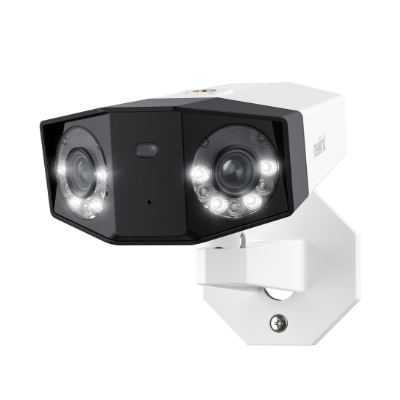
Groundbreaking 16MP Dual-Lens PoE Camera
16MP UHD, Dual-Lens, Motion Track, 180° Wide Viewing Angle, Power over Ethernet, Color Night Vision.
Can a Regular Security Camera Read License Plates?
Yes, a regular security camera may capture a readable license plate when the plate is close enough and the angle, lighting, shutter speed, and resolution are suitable. However, capturing a visible plate is not the same as automatic license plate recognition.
A dedicated LPR system detects plate numbers and organizes them into searchable vehicle records, making it more useful for gates, parking areas, and investigations.
FAQs
Can a Flock Camera Replace a Home Security Camera?
A Flock LPR camera usually cannot replace a home security camera because the two systems have different purposes. Flock LPR mainly handles vehicle identification, while a home security camera watches a wider scene and may offer live view, motion alerts, audio, night vision, and continuous recording.
Can Flock Cameras Identify Drivers?
Flock's ALPR system does not collect driver information or facial recognition data as part of its vehicle identification function.
Do Flock Cameras Have Facial Recognition?
Flock states that facial recognition is not included in its LPR system and is not planned for that product line.
How Long Does Flock Keep License Plate Data?
Flock's current privacy information says data is often deleted after 7 days, depending on local law. Local legal requirements can result in a different retention period.
Can Homeowners Buy a Flock Camera?
Flock says it serves individual homeowners along with HOAs, neighborhoods, businesses, schools, and public agencies. It uses a subscription service model rather than selling its cameras in the same way as common retail security cameras.
Can a Regular Security Camera Recognize License Plates?
Some security cameras can capture readable plates, and selected models include LPR features. Standard cameras do not automatically provide the same plate indexing and vehicle search functions as dedicated LPR systems.
Do I Need Both an LPR and a Security Camera?
You may need both if vehicle identification and full-scene monitoring matter at the same site. An LPR camera can cover the entrance, while regular security cameras monitor people, property, and events in the surrounding area.
Conclusion
A Flock camera and a traditional security camera serve different purposes. Flock LPR cameras focus on identifying and searching vehicle information, while security cameras provide broader video surveillance of people, property, and events. For vehicle-focused entrances, LPR may be the better fit.
For homes and businesses that need wider scene monitoring, a traditional security camera is usually more practical.
Search
Subscribe for the Latest Updates
Security insights & offers right into your inbox