
Best Non-Cellular Trail Cameras for Hunting & Wildlife (2026 Buyer’s Guide)

If you want to watch deer, turkey, or coyotes without paying a monthly bill, the best non cellular trail camera 2026 models give you clear pictures, long battery life, and no data plan. This guide walks you through every step so you can pick the right non cellular trail camera for your land, your budget, and your style of hunting.
What Is a Non-Cellular Trail Camera?
A non-cellular trail camera stores all the photos and videos in an SD card within the unit. There is no inserting a SIM card required, no picking your cell plan, and no pictures sent to your phone. You walk up to the camera, interchange or draw the card, and see the files on the computer back at home or on the built-in monitor of the camera.
Why Choose Non Cellular Trail Cameras?
You may wonder why anyone still buys a camera without cell service when wireless models exist. The answer is simple: no monthly fees, no signal worries, and less that can break. Non-cell units keep working when towers go down, and they cost less up front.
Key reasons hunters and wildlife watchers still choose non-cellular units:
-
Zero monthly fees, ever
-
No SIM card or data plan to manage
-
Longer battery life because no power goes to a modem
-
Smaller body without antenna bulk
-
Legal in every state, even where cell cameras face bans
-
Price starts under one hundred dollars
-
Files stay on your card, so no cloud hack risk
What to Consider When Choosing the Best Non Cellular Trail Camera?
The shelf appears overcrowded, but only a few spots determine whether you smile or curse as you look at the card. Consider where you are going to locate the camera, the frequency with which you can access the camera, and what you wish to view when you open the files. The five sections listed below are the ones that will be of the greatest importance when you are shopping for the best non cellular game camera.
Local storage
Look for a camera that accepts SD cards up to 512 GB. Larger cards let you leave the camera out for months. Make sure the slot has a tight cover so dust and rain stay out. A second card slot is nice because you can swap fast without losing a single minute of coverage.
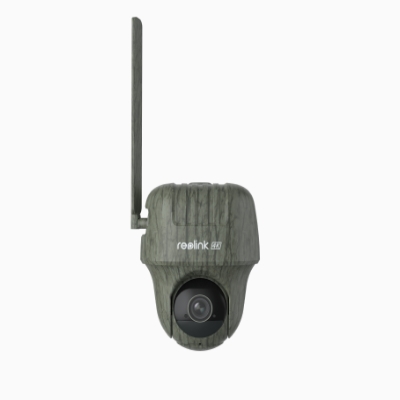
4K 4G LTE Wildlife Camera with 360° All-Around View
4G LTE Network, 4K 8MP Ultra HD, No-Glow IR LEDs, Person Detection, Animal Detection, Two-Way Audio, Battery/Solar Powered.
File retrieval
Check that the camera has a two-inch color screen on the back. The screen lets you scroll through shots in the field so you know if the angle is right. If you wear glasses, pick a model with playback zoom so you can check antler points before you walk away.
Image and video quality
The 20MP is sufficient to make clear prints of still images. In the case of the video, at least 1080p and thirty frames per second should be selected. In case you are interested in learning the animal behavior, seek 1296p or 4K. A large-angle lens of 110 to 130 degrees will reveal a bigger portion of the trail, but will also make the animals appear smaller. A wide-angle lens is used, such as a 70-degree lens, which can show the action but can exclude the edge. Select the perspective that suits your position.
Battery life and power source
Eight lithium AA batteries can run a camera for eight to ten months if the unit takes day-only shots. If you run video clips longer than ten seconds, expect four to six months. Some models accept an external twelve-volt battery box; that setup can last a full year. Solar panels work, yet they cost extra and add another cable that squirrels can chew.
Weatherproof design
Look for an IP66 or IP67 rating. The first number means dust cannot enter; the second means strong jets or even short submersion will not harm the guts. A gasket around the door should feel thick and soft. If the latch uses a single lever, test it with gloves on. A metal lock bracket is worth the few extra dollars because bears and two-legged visitors both hate tools.
Best Non Cellular Trail Camera 2026
The list below mixes low-price workhorses with high-end units that record every whisker. All prices are street prices checked in October 2026.
- Reconyx HyperFire 2 Covert – 0.2-second trigger, 1080p video, no-glow IR flash to 100 feet, made in Wisconsin, five-year warranty
- Bushnell Core DS-4K No Glow – Dual sensors for day and night, 4K video at thirty fps, thirty-two low-glow LEDs, two-year battery life in day-only mode
- Stealth Cam Fusion X Pro – 26 MP stills, 1080p video, burst mode up to nine shots, accepts 512 GB card, external power port
- Wildgame Innovations Terra Extreme 32 – 32 MP, eighty-foot flash, simple switch setup, runs on eight AA batteries, bargain price for large property setups
- Cuddeback CuddeLink J-Series – One camera acts as the home unit; up to twenty-four remote cameras send pictures to the home unit by private radio link; you pull only one card
- Moultrie Mobile Edge Pro (Non-Cell Mode) – 33 MP, 1080p video, built-in two-inch screen, can be upgraded to cell later if laws change, runs on twelve AA or an external pack
- Spypoint Force-Pro – 30 MP, 4K video, 0.2-second trigger, ninety-foot flash, sub-one-second recovery, budget-friendly yet fast
- Primos Proof Cam 35 – 14 MP, 720p video, simple slide switch, fifty-foot flash, best for kids or first-time users
Cellular vs. Non Cellular Trail Cameras: Comparison Table
The table below puts the two styles side by side so you can see the trade-offs at a glance.
FAQs
What is the difference between cellular and non cellular trail cameras?
Cellular cameras send pictures through cell towers to your phone and need a data plan. Non-cellular cameras save every file on an SD card that you pull and view later.
Will cellular trail cameras work without cell service?
No. If the tower signal is weak or gone, the camera still takes pictures, yet it cannot send them. You must visit the camera to retrieve the card.
What states have banned cellular trail cameras?
Montana, Utah, Nevada, and Arizona prohibit or restrict cellular trail cameras during hunting periods. Regulations vary with each new season, and thus, look into the existing game regulations before installing any camera.
Conclusion
The most popular non-cellular trail camera 2026 options provide you with a high-quality picture, an extended power supply, and the absence of monthly payments. Select a model based on the size of the storage, quality of video, and weather adaptation that is suitable for your land and the frequency of checking it. Fix it upon a tree, lean it a little, and screw it up.
You will be able to know that the easy way out is still available when you insert that card into your laptop and look at a buck that you dreamed about. Provided you already have a non-cell camera, give us the camera model and its performance. The next hunter will be sure of his choice after reading your story.
Search
Subscribe for the Latest Updates
Security insights & offers right into your inbox