
180° vs 270° vs 360° Security Cameras: What’s the Difference?
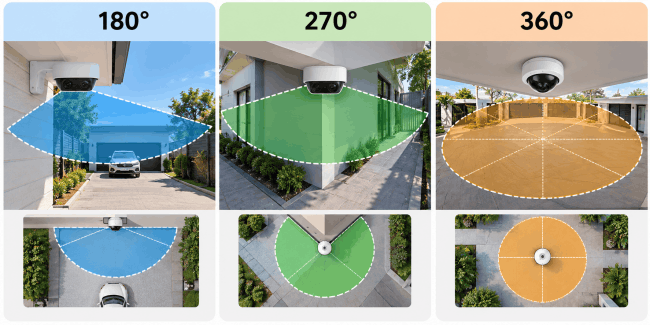
A 180° security camera covers wide areas in front of a wall effectively. A 270° camera covers about 3 directions around corners and similar mounting points. A 360° camera provides surrounding coverage for open spaces and central mounting positions. However, a wider viewing angle does not always give you better security coverage.
Placement, resolution, image detail, and coverage style should guide your final camera choice. Viewing angle also differs from movement, which changes what 360° coverage actually means.
- What Do 180°, 270°, and 360° Mean on a Security Camera?
- How Do Different Security Camera Viewing Angles Work?
- How Do 180°, 270°, and 360° Cameras Perform in Real Installations?
- 180° vs 270° vs 360° Security Cameras: Key Differences
- Which Security Camera Viewing Angle Do You Need?
- Does a Wider Viewing Angle Mean Better Security?
- Best Reolink Cameras for Different Coverage Needs
- FAQs
- Conclusion
What Do 180°, 270°, and 360° Mean on a Security Camera?
These numbers show the approximate area visible around the camera's mounting position horizontally. Horizontal field of view, or FOV, describes visible space from left to right. A 180° camera usually suits walls, while 270° coverage usually suits building corners. A 360° camera generally works best in central positions or open monitoring areas.
Viewing angle describes coverage width, not the camera type or movement system itself. Lens coverage differs from rotation range because moving cameras change direction during operation. PT means pan and tilt, while PTZ adds zoom to those motorized movements. Therefore, advertised 360° coverage may not show the entire surrounding scene at once.
180° vs 270° vs 360° Security Cameras: Quick Comparison
How Do Different Security Camera Viewing Angles Work?
180° Panoramic Cameras
Many 180° models use 2 lenses or sensors and combine both captured images. This process creates one panoramic image covering a broad area across the camera's front. Other models use an ultra-wide lens or fisheye lens for broad fixed coverage. Fixed panoramic coverage differs from cameras that physically pan across a 180° range.
270° Multi-Sensor Cameras
Some fixed 270° systems use several lenses or sensors aimed toward separate directions. Their software may stitch those views together or present them as separate feeds.
However, different 270° camera designs can use different methods to provide wide coverage. Users should not assume every 270° model works through the same internal design.
360° Panoramic vs PTZ Cameras
Fixed panoramic cameras often use fisheye lenses or several sensors for surrounding coverage. These designs can capture the full surrounding image at the same recording moment.
Software can dewarp curved fisheye footage and make viewed areas appear more natural. Multi-sensor systems may combine images while keeping simultaneous coverage around their mounting point.
PT and PTZ cameras use motors for panning, tilting, and sometimes optical zooming. They can use preset positions, automatic tracking, and movement between several viewing directions.
However, 360° pan movement does not mean the camera records every direction simultaneously. The lens usually faces one direction while the camera moves toward another direction.
A panoramic camera can show wide fixed views, while PTZ cameras move instead.
How Do 180°, 270°, and 360° Cameras Perform in Real Installations?
Scenario 1: Residential driveway
A fixed 180° panoramic camera can monitor a driveway and adjacent front yard simultaneously. Position it to minimize obstructions and verify identification detail at the far end.
Scenario 2: Commercial building corner
A fixed 270° multi-sensor camera can cover multiple directions from one corner, potentially reducing the number of devices needed.
Scenario 3: Warehouse or open area
A fixed 360° panoramic camera supports continuous surrounding awareness. A PTZ camera is useful when operators need to track movement or zoom in on selected areas.
180° vs 270° vs 360° Security Cameras: Key Differences
The following points explain how coverage, placement, detail, and installation needs differ clearly.
Coverage Area
A 180° camera covers around 1/2 the horizontal area around its mounting location. A 270° model covers about 3/4, while 360° designs cover surrounding areas differently. The exact visible area still depends on lens design and the camera's construction.
Camera Placement
Placement provides a simple guide for choosing between these 3 broad coverage options. Use 180° coverage for walls, 270° for corners, and 360° for central areas. Open spaces can also benefit from 360° designs when surrounding awareness matters most.
Simultaneous Coverage
Fixed panoramic and multi-lens cameras can display several directions during the same moment. PT and PTZ cameras move between directions instead of showing everything simultaneously together. Therefore, rotation range and simultaneous viewing coverage should never be treated as identical.
Image Quality and Detail
Wider coverage spreads available image pixels across a larger part of the scene. This can change useful detail even when 2 cameras use the same resolution. A wider camera does not automatically produce worse image quality than narrower cameras. However, its resolution should match the viewing area and required identification detail carefully.
Wider FOV also does not guarantee longer detection or identification distance for subjects.
Blind Spots
Blind spots depend on horizontal FOV, vertical FOV, installation position, and nearby obstructions. Walls, objects, lens arrangements, and camera movement can also change blind spot locations.
Image Distortion and Stitching
Fisheye lenses may curve straight lines and make parts of images look distorted. Multi-lens cameras may show visible seams where separate image views meet each other. Dewarping software can correct fisheye views and make footage easier to understand visually. Stitching software can also join separate sensor views into one wider combined image.
Installation and Number of Cameras
One panoramic camera can sometimes reduce the total camera count needed for coverage. Separate cameras can still provide better detail for important points at longer distances. These points may include doors, gates, faces, license plates, and other identification areas.
Which Security Camera Viewing Angle Do You Need?
Your mounting position should guide the viewing angle before other camera features matter.
Choose a 180° Camera If...
Choose 180° coverage when you need a broad frontal view from wall mounting. It fits driveways, yards, storefronts, garages, and similar areas along wide exterior walls.
Choose a 270° Camera If...
Choose 270° coverage when corner mounting needs clear views toward 3 separate directions. It works well around large building exteriors, parking areas, and warehouse corners too.
Choose a 360° Camera If...
Choose 360° coverage for central mounting positions and broad surrounding awareness in open areas. It also suits large indoor spaces and sites needing motorized PT or PTZ tracking. Placement should guide selection first, before comparing other features across suitable camera designs.
Does a Wider Viewing Angle Mean Better Security?
No, a wider security camera is not always the better security choice overall. Wider FOV can reduce blind spots, but several important trade-offs remain for users. Pixels spread across larger scenes, which can reduce useful identification detail at distance. Very wide views may also create distortion or capture areas you do not need.
Wider coverage can raise resolution needs and may create extra privacy concerns nearby. Mounting position still affects results, regardless of the camera's advertised field of view. Wider FOV does not automatically mean better security or longer useful identification distance.
Best Reolink Cameras for Different Coverage Needs
These models match different coverage needs, but their viewing methods are not identical.
Best for 180° Panoramic Coverage: Reolink Duo 3 PoE
Reolink Duo 3 PoE uses 2 lenses to produce 180° panoramic viewing coverage. It records at resolutions up to 16MP and supports broad simultaneous frontal monitoring. This design suits driveways, yards, storefronts, and other wide areas around properties well.
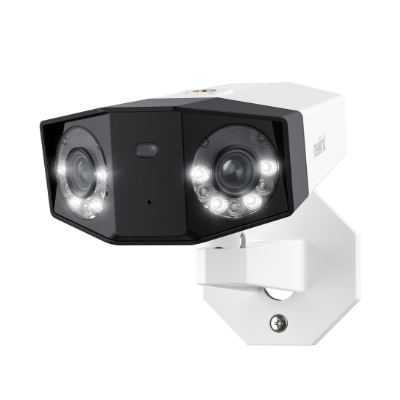
Groundbreaking 16MP Dual-Lens PoE Camera
16MP UHD, Dual-Lens, Motion Track, 180° Wide Viewing Angle, Power over Ethernet, Color Night Vision.
Best for Multi-Direction Coverage: Reolink TrackFlex Floodlight WiFi
Reolink TrackFlex Floodlight WiFi should not be described as fixed 270° visual coverage. It uses pan and tilt movement for 360° tracking across supported monitoring areas. Its 3 built-in motion sensors provide 270° detection beyond the current camera view. The camera's visible view at one moment remains narrower than the 270° detection area.
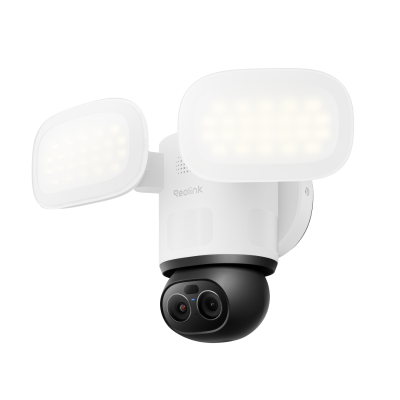
Smart 4K 360° Coverage Wi-Fi Floodlight Security Camera
Local AI Video Search, 4K 8MP Ultra HD, 360° Coverage View, 6X Hybrid Zoom, Dual-Color Floodlight.
Best for 360° Pan/Tilt Monitoring: Reolink RLC-823S2
Reolink RLC-823S2 provides 360° motorized panning, 90° tilting, and 16X optical zoom capability. It also supports automatic tracking and preset positions for changing monitored viewing directions. Its 360° figure describes motorized movement instead of simultaneous panoramic recording around it.
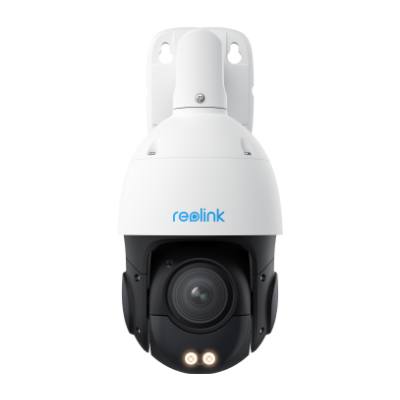
Smart 4K PTZ PoE Security Camera with 16X Optical Zoom
16X Optical Zoom, 360° Coverage in 4K UHD, Auto Tracking, Color Night Vision.
FAQs
Is a 180° Security Camera Enough for a Driveway?
A 180° camera can cover a driveway when mounting and viewing conditions fit. The camera should cover the full driveway from a useful mounting position nearby. Distance and resolution must also provide enough detail for your required identification tasks.
Can a 180° Camera Replace 2 Security Cameras?
Sometimes, 1 180° camera can replace 2 cameras covering the same frontal area. This works best when both narrower cameras would otherwise watch overlapping frontal spaces. Separate cameras may still provide better detail from different directions and viewing distances.
Does a 360° Security Camera See Everything at Once?
No, a 360° security camera does not always see everything at once simultaneously. Fixed fisheye or multi-sensor models may record surrounding areas during the same moment. PT and PTZ models rotate instead and normally face one direction at once.
Is 180° or 360° Better for Outdoor Security?
Neither 180° nor 360° coverage is automatically better for every outdoor security installation. A 180° camera suits walls, driveways, and perimeter lines needing broad frontal coverage. A 360° design can suit open yards or other central outdoor mounting positions.
Is a 360° PTZ Camera Better Than a 180° Panoramic Camera?
Not necessarily. A 180° panoramic camera captures a wide frontal scene continuously, while a 360° PTZ camera rotates to monitor different directions. Choose panoramic coverage for simultaneous monitoring and PTZ for flexible tracking and zooming.
Can a Security Camera Detect Motion Outside Its Viewing Angle?
Yes, some cameras use separate motion sensors to detect activity outside their current lens view. For example, Reolink TrackFlex Floodlight WiFi is described as offering 270° motion detection, while its motorized camera turns to monitor detected activity. Detection coverage and video viewing coverage are not the same.
Conclusion
The main difference among 180°, 270°, and 360° cameras involves coverage and placement needs. Each angle works best in different layouts, so wider coverage is not automatically superior.
Match viewing angle with property layout before comparing other camera features and specifications. Then review resolution, image detail, blind spots, lens design, and simultaneous coverage needs.
Search
Subscribe for the Latest Updates
Security insights & offers right into your inbox