
180-Degree Security Camera: All You Need to Know
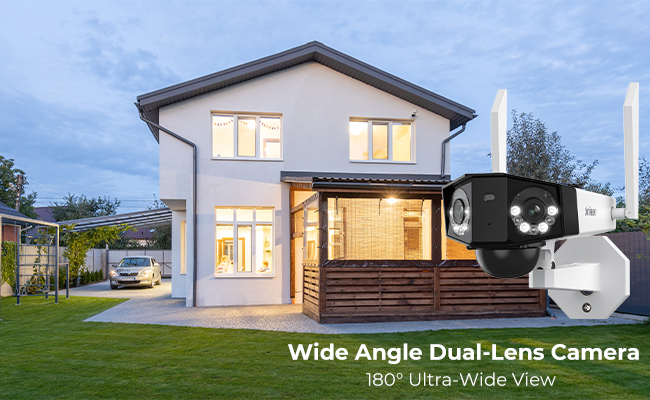
A wide field of view (FOV) is one of the basic qualities that a good security camera should have. As you may have guessed, a wide field of view, especially with a 180-degree security camera, allows the camera to capture more area in one shot, which is very useful for surveillance.
You have different options when it comes to choosing the view angle (FOV) of a security camera, and in this article we are going to cover the 180-degree security camera and everything you need to know about it.
Key Takeaways:
-
180-degree security cameras provide ultra-wide coverage, helping reduce blind spots and monitor larger areas with fewer cameras.
-
They are ideal for driveways, entrances, yards, parking lots, and large properties, offering efficient surveillance for both homes and businesses.
-
When choosing a 180-degree camera, consider FOV, resolution, night vision, smart detection, weather resistance, and storage options.
-
The best choice depends on your needs: Argus 4 Pro for wireless home security, Elite Floodlight WiFi for outdoor areas, and Duo 3 PoE for large properties.
What is a 180-degree Camera? How Does It Work?
A 180-degree security camera is a surveillance camera designed with an ultra-wide-angle lens to capture a 180-degree field of view (FOV) of the surrounding area. Unlike traditional security cameras with narrower viewing angles, a 180-degree camera can monitor a much wider space in a single frame, helping reduce blind spots and improve overall security coverage.
These cameras are commonly used for home and business surveillance, especially in areas that require a broad view, such as driveways, entrances, yards, parking lots, warehouses, and large indoor spaces. By covering more area with fewer cameras, 180-degree security cameras provide an efficient solution for monitoring multiple points of interest at once.
How Does 180-degree Security Camera Work?
A 180-degree security camera works mainly through fisheye lens technology or multiple-lens stitching technology. A fisheye lens captures an ultra-wide view through a single lens, while dual-lens cameras use two lenses to record overlapping areas and combine the footage into one seamless panoramic image.
Because of their wide coverage, many 180-degree security cameras also include features such as high-resolution video, night vision, smart motion detection, and weather-resistant designs. They are especially useful for users who need reliable monitoring of large properties or multiple entrances without installing many separate cameras.
Types of 180-Degree Security Cameras
There are two main types of 180-degree security cameras: fisheye lens cameras and dual-lens stitched cameras. Both technologies provide ultra-wide coverage but use different methods to create panoramic views.
Fisheye lens 180-degree camera
A 180-degree fisheye CCTV camera is a great option for surveillance because it offers a wide angle of view. This type of camera is especially beneficial in areas where there is a lot of activity, as it can capture a larger area than a traditional camera.
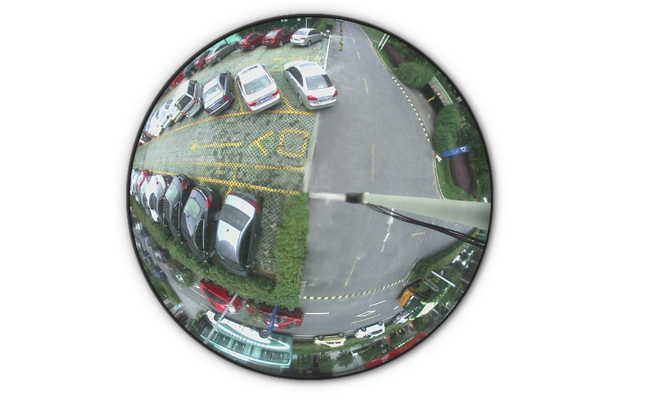
Fisheye lenses can be used with both analog and digital cameras, and they are available in various sizes and focal lengths.
Dual-Lens Stitched 180-degree camera
Another method of achieving 180 degree ultra-wide FOV is with multiple lenses. For instance, when using two lenses, the multi-lens 180-degree camera receives footage from both lenses watching the same area simultaneously and uses video stitching to generate single footage covering an extensive-angle of view.
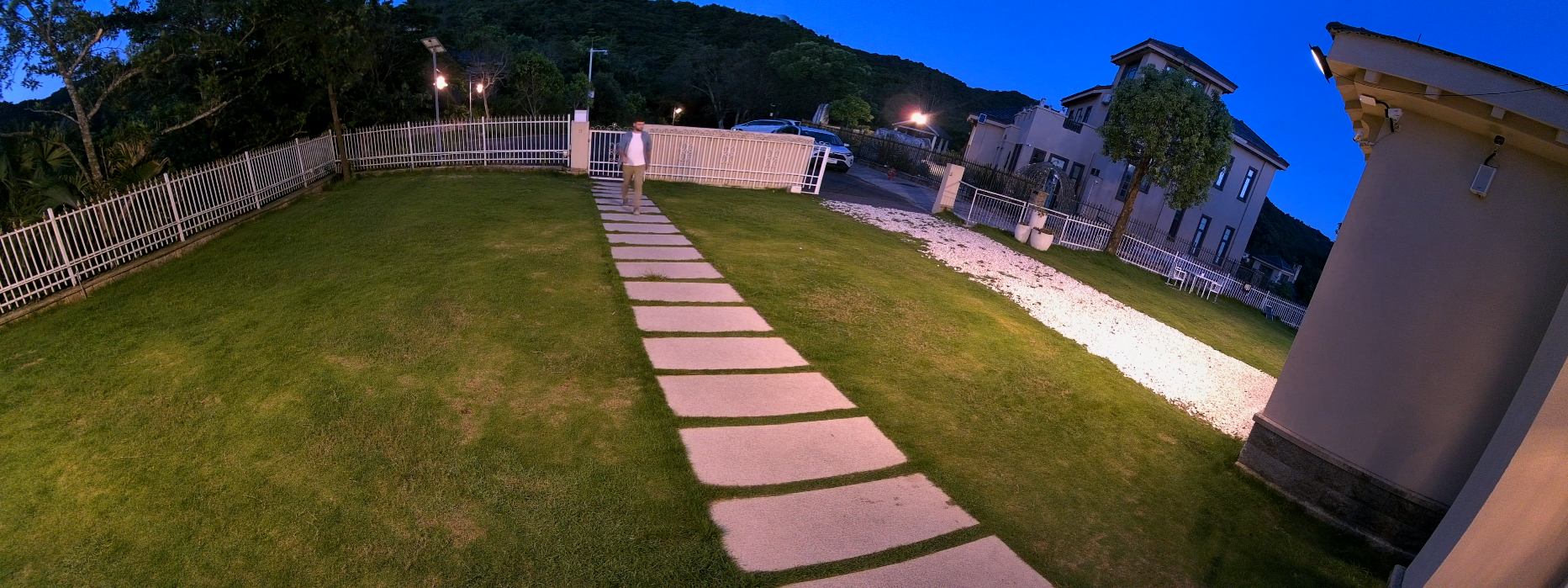
A front lawn is captured in a 180-degree wide angle view by the Reolink Duo camera. The camera has two lens, one on the left and one on the right, which allows it to capture a 180-degree field of view. This is a great way to get an overview of your property, and it's also useful for security purposes.
Why Should You Use a 180-Degree Security Camera?
- Wider Coverage With Fewer Blind Spots: A wider field of view lets the camera get more information from a scene. This is the primary benefit of these types of cameras, which means the camera will be able to monitor large portions of areas with fewer blind spots. This makes them highly effective in parking lots, warehouses, your home driveway, etc.
- Reduce the Number of Cameras Needed: This would translate to lower costs if you are trying to watch an expansive area. Rather than using multiple cameras with smaller FOVs, you could use one or just a few 180-degree security cams to cover the same large area, saving you extra costs on purchasing and maintaining cameras.
- Capture More Details With High Resolution: and more detail. Another significant benefit is the camera's resolution and high level of detail. Because of the 180-degrees security camera's application in surveillance, manufacturers are now equipping their products with the ability to record in high-res. This feature is handy for facial recognition and identifying license plates of suspicious vehicles.
How to Choose the Best 180-Degree Security Camera?
When choosing a 180-degree security camera, you should consider several important factors, including field of view (FOV), resolution, night vision, smart detection, weather resistance, durability, and storage compatibility. The right combination of these features ensures better coverage, clearer images, fewer blind spots, and reliable security monitoring for both indoor and outdoor environments.
1. Resolution
Resolution is one of the most important factors when choosing a 180-degree security camera because it determines the level of detail captured in recorded footage. Higher-resolution cameras provide clearer images, making it easier to identify people, vehicles, and other important details.
For most surveillance needs, a 5MP or higher resolution camera is recommended for better image quality. However, resolution should not be considered alone. Factors such as the camera’s field of view, image sensor size, and lens quality also affect overall video performance.
2. Field of View (FOV)
The field of view (FOV) determines how much area a security camera can capture at once. Since the main advantage of a 180-degree security camera is its ultra-wide viewing angle, choosing the right FOV is essential for reducing blind spots and improving coverage.
A wider FOV allows one camera to monitor larger areas, such as driveways, entrances, yards, parking lots, and warehouses. Compared with traditional security cameras with narrower viewing angles, 180-degree cameras can cover more space with fewer devices.
However, an extremely wide viewing angle may make distant objects appear smaller. Therefore, it is important to balance wide coverage with image detail based on your specific monitoring needs.
3. Night Vision
Night vision is an essential feature for any security camera because security events can happen at any time, including in low-light conditions.
When choosing a 180-degree security camera, look for features such as infrared (IR) night vision, color night vision, or advanced low-light technology. These features allow the camera to capture clear footage after dark and provide reliable 24/7 surveillance.
For outdoor monitoring, cameras with enhanced low-light performance can help capture important details in challenging lighting environments.
4. Smart Detection
Smart detection helps a security camera distinguish between important events and irrelevant movement. Instead of recording every motion caused by leaves, shadows, or other background activity, intelligent detection systems can identify specific targets.
Many modern 180-degree security cameras support AI-powered detection, allowing them to recognize:
- People
- Vehicles
- Pets
This reduces false alarms and makes recorded footage easier to review. Some cameras also allow users to customize motion detection zones, such as focusing on a front door, gate, or other vulnerable areas.
5. Weather Resistance and Durability
Since many 180-degree security cameras are installed outdoors, weather resistance and durability are important factors to consider.
A camera’s protection level is usually measured by its IP rating, which indicates resistance to dust and water. For outdoor surveillance, choosing a camera with at least an IP64 rating or higher helps ensure reliable operation in different weather conditions.
In addition to weather protection, durability against physical impact is also important. The IK rating measures a camera’s impact resistance, and cameras with IK08 to IK10 ratings provide stronger protection against external damage.
6. Storage and NVR Compatibility
Storage options determine how security footage is saved, accessed, and managed. Before choosing a 180-degree security camera, make sure it supports a storage method that fits your needs, such as a microSD card, cloud storage, or NVR system.
A network video recorder (NVR) allows cameras to store and manage footage centrally while supporting features such as high-quality recording, video playback, audio recording, and advanced security functions.
For users who need continuous monitoring or multiple cameras, choosing a 180-degree camera compatible with an NVR system provides a more reliable and scalable surveillance solution.
7. Installation Location and Coverage Needs
Before purchasing a 180-degree security camera, consider where you plan to install it and what area you need to monitor.
Common installation locations include:
- Front doors and entrances: Monitor visitors, deliveries, and activity around your doorway.
- Driveways and yards: Reduce blind spots around your property with wider coverage.
- Warehouses and parking lots: Monitor large areas with fewer cameras.
Choosing a camera based on your surveillance environment ensures better performance and helps avoid unnecessary blind spots.
Best Picks for 180-Degree Security Camera
Best for Wireless Home Security: Reolink Argus 4 Pro
The Reolink Argus 4 Pro is designed for users who want flexible installation without complicated wiring. Its dual-lens design captures a wide panoramic view, making it easier to monitor front yards, gardens, and outdoor spaces while reducing blind spots.
As a battery-powered wireless camera, Argus 4 Pro is a convenient option for locations where running cables is difficult. It also features 4K video quality, ColorX low-light technology, and smart detection to provide clearer monitoring during both daytime and nighttime.
For homeowners who need easy setup and reliable coverage with complete wireless installation, Argus 4 Pro offers a practical security solution.
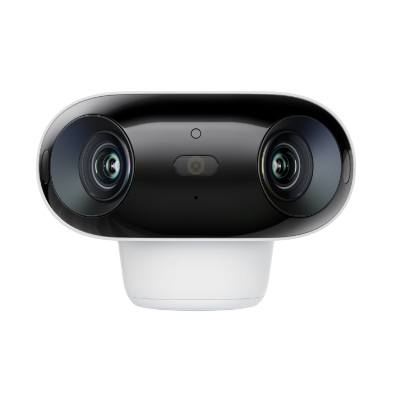
4k 180° Wire-free Color Night Vision Camera
4K UHD 180° Blindspot-free View; Color Vision Day and Night; 30% More Battery Life; Dual-band Wi-Fi 6; Smart detection.
Best for Driveways and Large Outdoor Areas: Reolink Elite Floodlight WiFi
The Reolink Elite Floodlight WiFi is an ideal choice for monitoring large outdoor spaces such as driveways, backyards, garages, and entrances. Its dual-lens design provides a 180° panoramic view, allowing users to cover a wider area with fewer blind spots.
This camera combines wide-angle surveillance with powerful lighting, making it especially useful for areas that require both security monitoring and active deterrence at night. The built-in floodlight improves visibility in dark environments, while smart detection features help identify people, vehicles, and other important events.
With high-resolution video, Wi-Fi connectivity, weather-resistant design, and flexible storage options, the Elite Floodlight WiFi is suitable for homeowners who need reliable outdoor protection.
Best for: Driveways, yards, entrances, garages, and other large outdoor areas.
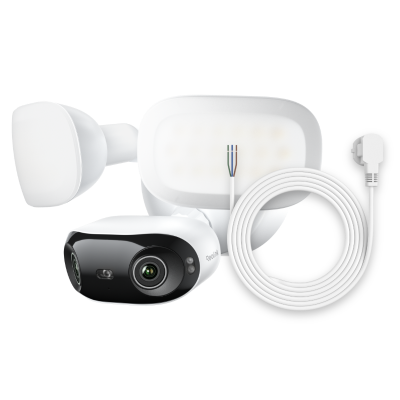
4K 180° Ultra-Wide Wired Floodlight Security Camera
3000-Lumen Dimmable Lighting, Adjustable Color Temperature, Local AI Video Search, Local Storage, Dual-Band Wi-Fi 6.
Best for Businesses and Large Properties: Reolink Duo 3 PoE
The Reolink Duo 3 PoE is built for users who need detailed surveillance across large areas, including warehouses, parking lots, farms, and commercial properties. Its dual-lens system creates a wide panoramic view, helping monitor more space with fewer cameras.
Powered by PoE technology, Duo 3 PoE provides a stable wired connection through a single Ethernet cable for both power and data transmission. This makes it a reliable choice for continuous monitoring and professional security setups.
With high-resolution recording, smart detection, and NVR compatibility, Duo 3 PoE is suitable for users who prioritize image detail, stable performance, and scalable surveillance.
Best for: Warehouses, commercial spaces, parking lots, farms, and large properties.
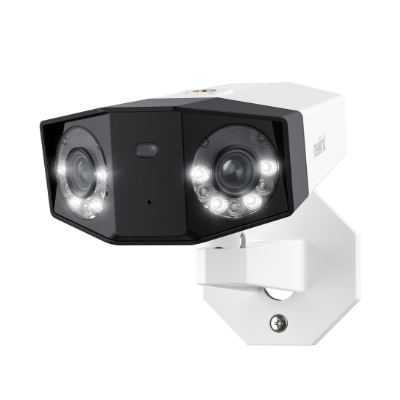
Groundbreaking 16MP Dual-Lens PoE Camera
16MP UHD, Dual-Lens, Motion Track, 180° Wide Viewing Angle, Power over Ethernet, Color Night Vision.
Best for Large Outdoor Coverage Without Wiring: Reolink Duo 2 WiFi
The Reolink Duo 2 WiFi is a great choice for users who need wide-area monitoring without installing Ethernet cables. Its dual-lens design creates a 180° panoramic view, allowing it to cover large outdoor areas such as yards, driveways, and gardens with fewer blind spots.
With Wi-Fi connectivity and flexible installation, Duo 2 WiFi provides a convenient solution for homeowners who want panoramic security coverage without complicated wiring. It also supports smart detection, night vision, and weather-resistant performance for reliable outdoor surveillance.
Best for: Large yards, driveways, gardens, and outdoor areas where wired installation is difficult.
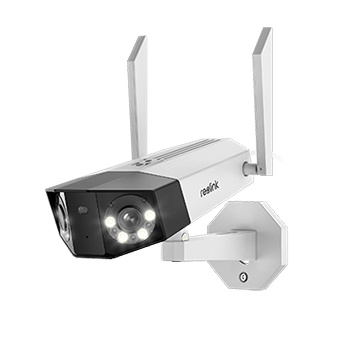
Smart 4K Dual-Lens WiFi Camera
4K 8MP Super HD, Dual-Lens, Person/Vehicle Detection, 180° Wide Viewing Angle, 5GHz/2.4GHz WiFi, Color & Infrared Night Vision.
Buyer Decision Table
FAQs
How far can a 180-degree camera see?
The answer depends on a few factors, including the camera's resolution and the sensor's size. Generally speaking, 180-degree cameras can see anywhere from 10 to 20 feet away. However, higher-end models may have a more range than the lower-quality ones.
Can a camera see 180 degrees?
Not all cameras can; only ultra-wide cameras are capable of viewing angles of 180 degrees and above. The ultra-wide FOVs are typically achieved using two lenses or a unique fisheye lens. Thanks to the advanced dual-lens stitching technology, Argus 4 Pro falls into this category. This camera has 180° field of view, which helps you eliminate blind spot.
What is the best angle for a security camera?
There is no definitive answer to this question. Your needs would help you choose the best angle for a security camera. Ultimately, the best angle for a security camera is the one that provides you with the coverage you need to feel safe and secure.
If you have a large home or property, you may want to consider using multiple cameras with different fields of view to get comprehensive coverage.
Alternatively, if you only need to monitor a small area, a camera with a narrower field of view may be sufficient. No matter your particular needs, a security camera out there will provide you with the coverage you need.
How many degrees can CCTV record?
Most CCTV cameras can record anywhere from 24 to 32 degrees. The field of view (FOV) will determine how many different objects the camera can see at once. While most home security cameras have a FOV of between 45 and 90 degrees, some can have a FOV as wide as 180 degrees. This allows the camera to see a larger area, but it also means that objects in the distance will appear smaller.
For this reason, it's crucial to choose a CCTV camera with a FOV that is appropriate for the area you want to monitor.
Are 180 degree cameras good?
Yes, 180-degree cameras are a good choice for users who need wider security coverage with fewer blind spots. Their ultra-wide field of view allows them to monitor large areas such as driveways, entrances, yards, parking lots, and warehouses with fewer cameras. Many modern 180-degree security cameras also offer features like high-resolution video, night vision, and AI-powered detection, making them a reliable option for both home and business surveillance.
How to Turn a Camera 180 Degrees?
If you want to get a 180-degree viewing angle, you usually do not need to physically turn a traditional camera. A 180-degree security camera uses an ultra-wide-angle lens, fisheye lens, or dual-lens stitching technology to capture a wider view automatically. If you are using a PTZ camera, you can rotate the camera through the app or control system to change its viewing direction. For fixed security cameras, adjusting the installation angle or choosing a wide-angle camera is the best way to achieve broader coverage and reduce blind spots.
Conclusion
180-degree security cameras are a great way to bolster your home or business security. Their wide FOVs reduce the number of blind spots for your camera, making it easy to see what is happening around the property. They also allow you to record footage of any activity, providing valuable evidence in the event of a break-in or any other incident.
Getting a 180-degree camera doesn't automatically solve your problems, though. You have to make sure you pick the right one for your needs so they can work efficiently.
If you have any questions, don't hesitate to leave a comment or share this article with your friends. Thanks for reading!
Search
Subscribe for the Latest Updates
Security insights & offers right into your inbox