
USB Security Cameras: Types, Uses, and Best Options
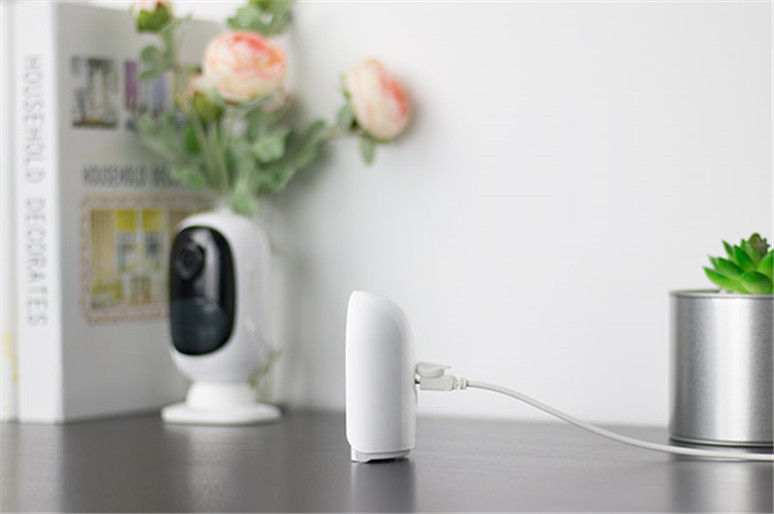
Searching for a USB security camera that is flexible, portable, easy to set up, and money saving? Attention, there are some that use USB cable for power and some can’t live alone without PC. And this divides USB security cameras roughly into two categories:
- What Is a USB Security Camera?
- What Are Common Types of USB Security Cameras?
- USB Camera vs Security Camera: What's the Difference?
- Can You Use a USB Webcam as a Security Camera?
- How to Use a USB Camera for Home Security?
- 6 Key Features to Look for in a USB Security Camera
- Best Reolink Alternatives to Traditional USB Security Cameras
- FAQs About USB Security Cameras
- Conclusion
What Is a USB Security Camera?
A USB security camera is a camera that uses a USB connection for power, data transmission, or both. Some security cameras use USB only for charging or continuous power while transmitting video over Wi-Fi, while USB webcams connect directly to a computer for power, video transmission, and recording.
What Are Common Types of USB Security Cameras?
USB-Powered Security Cameras
This type of USB security camera is fully functional day and night IP cameras, using USB cable instead of network or power cable for power supply, and usually comes with free USB security camera software on your phone, PC, and laptop for remote viewing, recording and motion alerts anywhere.
USB Webcams for Security
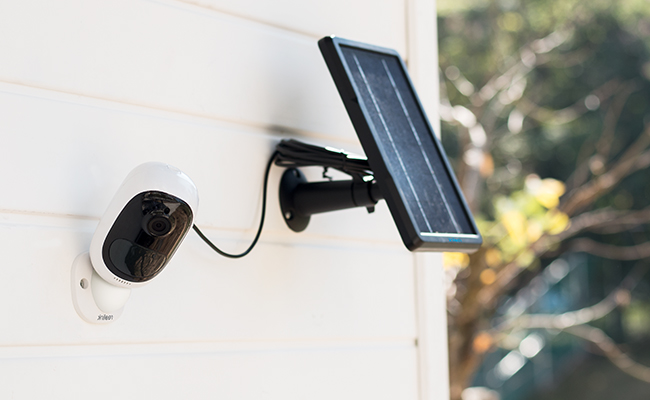
Compared with IP USB security cameras, the webcams need to be connected with your computer directly via the USB port to start monitoring, video recording and data transmission. So everything will be controlled on your PC via certain USB security camera software.
USB Camera vs Security Camera: What's the Difference?
Can You Use a USB Webcam as a Security Camera?
Yes. A USB webcam can be used as a basic security camera when connected to a computer running surveillance software. However, it is usually less suitable for dedicated home security because the computer must remain on and features such as night vision, weather resistance, smart detection, and independent recording may be limited.
How to Use a USB Camera for Home Security?
- Connect the USB camera to a computer.
- Install compatible video surveillance software.
- Position the camera toward the monitoring area.
- Configure motion detection and recording.
- Set storage and remote access options.
- Keep the computer powered on while monitoring.
6 Key Features to Look for in a USB Security Camera
Evaluating a USB security camera requires looking beyond basic video specs to ensure the hardware fits your computer setup and monitoring needs. A USB security camera connects directly to a computer, laptop, or dedicated hub via USB to deliver power, transmit video data, or both.
1. Power & Connection
USB security cameras receive operational power and transfer video data through a standard USB cable plugged directly into a host computer or power adapter.
Most standard models utilize USB-A or USB-C interfaces. USB-C offers faster data transfer rates and higher power delivery, which supports smoother 2K or 4K video streams without lag.
Standard passive USB cables suffer signal degradation beyond 15 feet (5 meters). If your installation requires placing the camera further from your host PC, choose an active extension cable with a built-in signal booster to prevent video dropping.
2. Recording & Storage
USB cameras generally rely on host computer hard drives, local microSD cards, or cloud services for video storage rather than stand-alone NVR recorders.
Recording directly to your computer's local hard drive provides full privacy and eliminates subscription fees. However, continuous 24/7 recording at 1080p consumes roughly 20 GB to 30 GB of disk space per day per camera.
Many USB security cameras include a built-in microSD slot (supporting up to 256 GB or 512 GB), allowing local backup recording even if the connected host computer shuts down or enters sleep mode.
3. Night Vision
The quality of night vision determines whether your USB camera can capture usable footage after dark or in dimly lit interior rooms.
-
Infrared (IR) Night Vision: Uses built-in 850nm or 940nm IR LEDs to illuminate rooms in total darkness, rendering clear black-and-white footage up to 30 feet away.
-
Color Night Vision: Employs high-sensitivity image sensors (typically operating down to 0.001 lux) or integrated LED spotlights to produce full-color footage in low-light environments.
4. Motion Detection
Smart motion detection filters out background movements like swaying blinds or pet activity, ensuring you only receive critical security alerts.
Basic USB webcams use pixel-change detection, which triggers frequent false alarms when light levels change or dust passes the lens.
Advanced USB security cameras feature built-in processing algorithms that distinguish people, vehicles, and pets. Based on user feedback in security forums like r/homesecurity, upgrading to AI-filtered motion alerts reduces daily notification spam by over 80%.
5. Indoor vs Outdoor Use
USB security cameras are predominantly designed for indoor use; outdoor deployments require specific weather-sealed housings and moisture protection.
Indoor USB cameras lack sealings against rain, dust, and temperature fluctuations. Placing an unrated indoor camera outside leads to rapid lens fogging and moisture failure within weeks.
If mounting near an exterior doorway or window sill, select hardware featuring at least an IP65 or IP66 weather-resistance rating to withstand direct rain splashes and extreme temperatures.
6. Computer Requirements
Because USB security cameras offload processing and storage duties to your host machine, your computer must meet minimum hardware and software thresholds.
Verify native support for your operating system (Windows, macOS, or Linux). Standard UVC (USB Video Class) compliant cameras run plug-and-play without third-party drivers, making them broadly compatible across security software platforms like iSpy, Blue Iris, or Agent DVR.
Best Reolink Alternatives to Traditional USB Security Cameras
USB security cameras offer a flexible, low-profile approach to monitoring. USB security cameras operate using standard USB power interfaces—such as standard 5V USB adapters, solar panels, or direct PC USB connections—delivering full HD video, local storage, and smart detection without complex high-voltage wiring.
Whether you need an ultra-wide wire-free outdoor unit or an upgraded indoor camera with pan-tilt capabilities, these top USB security cameras provide continuous protection without forced monthly subscription fees.
Outdoor & Indoor Wire-Free USB Security Camera: Reolink Argus 4 Pro
The Reolink Argus 4 Pro is a 100% wire-free 4K (8MP) dual-lens security camera featuring a seamless 180° blindspot-free view, Wi-Fi 6 connectivity, and ColorX spotlight-free full-color night vision.
The Reolink Argus 4 Pro uses a weather-sealed USB Type-C interface for rapid charging and continuous outdoor operation when paired with a compact solar panel. If used indoors or in low-sunlight areas, its internal lithium battery recharges via a standard USB cable.
By using dual-lens image stitching, a single Argus 4 Pro replaces two traditional cameras, capturing an ultra-wide view across driveways or yards. It supports up to 512GB microSD card storage and feature-rich ColorX night vision that retains full-color video down to near-total darkness without needing bright spotlights.
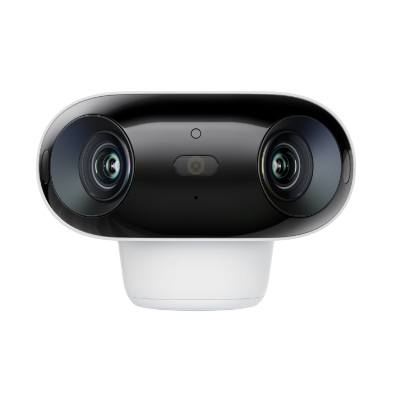
4k 180° Wire-free Color Night Vision Camera
4K UHD 180° Blindspot-free View; Color Vision Day and Night; 30% More Battery Life; Dual-band Wi-Fi 6; Smart detection.
Best Indoor USB Security Camera: Reolink E1 Pro (5MP Version)
The updated Reolink E1 Pro is a plug-in indoor USB camera featuring an upgraded 5MP sensor, f/1.6 aperture, auto-tracking, and dedicated crying detection for baby and pet monitoring.
Designed for nursery, pet, or main living area coverage, the upgraded Reolink E1 Pro connects to standard wall outlets via its included 5V USB power adapter. Its 355° pan and 50° tilt rotation provide complete 360° room coverage, allowing you to track motion dynamically.
With an f/1.6 aperture lens that draws in twice as much light as standard indoor cameras, it produces crisp low-light footage alongside smart AI alerts for people, pets, and baby cries. It also includes a quick physical Privacy Mode toggle and supports microSD cards up to 512 GB.
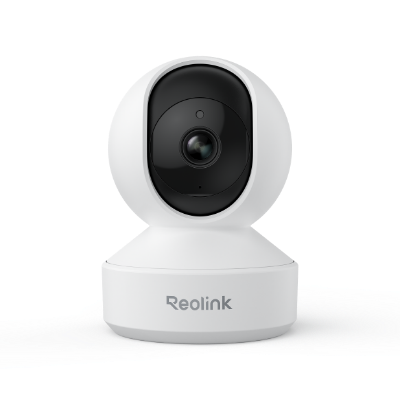
Smart 5MP Wi-Fi PT Indoor Security Camera
Crying Detection for Baby Monitoring; Smart Detection & Auto Tracking; 360° Coverage with Pan & Tilt; 5MP Super HD.
FAQs About USB Security Cameras
Can a USB Camera Be Used for Surveillance?
Yes. A USB camera can be used for surveillance, especially for indoor monitoring. A USB webcam typically needs to stay connected to a computer running surveillance software, while a USB-powered security camera may operate independently and use Wi-Fi for video transmission, alerts, and remote viewing.
What Is the Best USB Security Camera?
The best USB security camera depends on how you plan to use it. For basic indoor monitoring through a computer, choose a USB webcam with good resolution, low-light performance, and compatible surveillance software. For home security, a dedicated USB-powered Wi-Fi camera with motion detection, night vision, remote alerts, and local recording is usually more practical.
Can I Plug a USB Camera Into My Phone?
Sometimes. A USB camera may connect to a smartphone if the phone supports USB OTG or USB host mode and the camera is compatible with the phone and viewing app. However, compatibility varies by camera, connector, operating system, and app. Many security cameras instead use USB only for power and connect to a phone wirelessly through an app.
How Much Does a USB Camera Cost?
USB cameras can range from around $20 for basic webcams to $100 or more for higher-end models. Cameras designed specifically for home security may cost more because they include features such as night vision, motion detection, local storage, weather resistance, and remote monitoring. The total cost can also depend on required software, storage, and accessories.
Conclusion
USB security cameras can be a simple and flexible option for indoor monitoring, temporary surveillance, or setups where USB power is readily available. However, not all USB cameras work the same way. Some use USB only for power or charging, while webcams rely on USB to connect directly to a computer for video transmission and recording.
Before choosing one, consider whether you need independent operation, 24/7 recording, night vision, motion detection, remote viewing, or outdoor protection. For more complete home or business surveillance, a dedicated Wi-Fi or PoE security camera may provide greater reliability and more security-focused features than a standard USB webcam.
Search
Subscribe for the Latest Updates
Security insights & offers right into your inbox