
Top 10 Warmest Cities in Canada: All You Need to Know
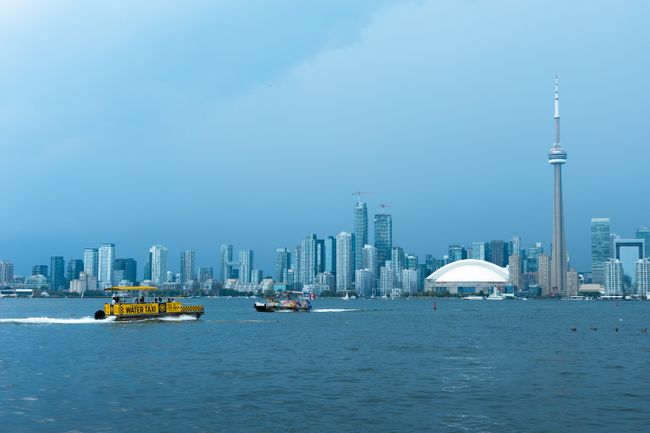
Victoria, British Columbia is the warmest city in Canada, holding an average daily high of 15.3°C (60°F) across the entire year, more than any other major city in the country. That single fact reshapes a lot of assumptions people carry into a move to Canada, since most of the warmest cities in Canada turn out to be clustered in just two provinces: British Columbia and Ontario.
Ocean currents keep the BC coast from ever really freezing, valleys like the Okanagan trap summer heat further inland, and the Great Lakes moderate Ontario's swings enough to push cities like Windsor and Hamilton into the same warm-weather conversation.
None of these places skip winter entirely. What they skip is the brutal, six-month version that defines Canada's reputation everywhere else. Some, like Kelowna, trade a milder winter for genuinely hot summers instead. Others, like Victoria and Vancouver, stay mild in both directions and rarely see a proper heatwave or a proper freeze.
The list below breaks down exactly what are the 10 warmest cities in Canada. But, before we dive into the rankings, here's how we rank them.
- How We Ranked the Warmest Cities in Canada
- 1. Victoria, British Columbia
- 2. Abbotsford, British Columbia
- 3. Kelowna, British Columbia
- 4. Windsor, Ontario
- 5. Vancouver, British Columbia
- 6. St. Catharines, Ontario
- 7. Brantford, Ontario
- 8. Hamilton, Ontario
- 9. Toronto, Ontario
- 10. London, Ontario
- What Warmer Weather Doesn't Tell You: Higher Crime Rates
- Recommended Reolink Security Cameras For Securing Your Warm Canadian Home
- FAQs
- Conclusion
How We Ranked the Warmest Cities in Canada
"Warmest" here means annual average daily high temperature, the figure climatologists use to describe what a place is actually like on a typical day, not the single hottest day anyone ever recorded there. This ranking draws on Environment Canada's climate normals for the country's 33 largest metropolitan areas, as compiled by Current Results, cross-checked against city-by-city climate data and additional reporting.
That distinction matters because the hottest place in Canada on any given day and the warmest city in Canada to actually live in are two different questions. Lytton, British Columbia set the national heat record at 49.6°C (121.3°F) on June 29, 2021, breaking an 84-year-old record by more than 4 degrees. Lytton is a small village, though, not a place most people researching a move to Canada would consider, and one historic heatwave doesn't make a location comfortable the other 364 days of the year.
Sunniest and warmest aren't the same thing either. Calgary, Alberta gets more bright sunshine than any other major Canadian city, about 2,396 hours a year, yet its frost-free season runs just 117 days because Alberta winters stay genuinely cold. If you're chasing the best weather Canada has to offer rather than just the most sunshine, the cities below are a better guide than a sunshine chart alone.
1. Victoria, British Columbia

Victoria's average daily high of 15.3°C (60°F) makes it Canada's warmest city, and its winters barely register as winter at all, averaging just 8.8°C (48°F) from December through February and dropping to freezing on only one day most years.
Sheltered on the southern tip of Vancouver Island, Victoria sees its first frost around November 5 and its last around April 7, leaving 211 frost-free days. That's among the longest stretches in the country. Summers stay just as gentle, rarely climbing past 25°C. It's a city for people who want winter gone, not for people chasing real heat.
2. Abbotsford, British Columbia

Abbotsford runs a close second at 15.1°C (59°F) average daily high, and its nights are almost as forgiving as Victoria's.
Set in the Fraser Valley east of Vancouver, Abbotsford's winter lows average around 0.5°C (33°F), with only about 5 days a year dipping to freezing at their coldest point. Summers are a bit warmer and drier than the immediate coast. That's appealing to anyone who wants a bit more sun without leaving BC's mild-winter belt.
3. Kelowna, British Columbia

Kelowna's average daily high of 14.7°C (59°F) ranks third nationally, but this Okanagan Valley city trades Victoria's gentleness for real heat, averaging 26.7°C (80°F) on summer days. That's the second hottest temperature of any major Canadian city.
It has a semi-arid valley climate that feels closer to wine country than the rainy coast. It also lived up to that reputation during the same 2021 heat dome that set Canada's all-time temperature record in the BC Interior, when Kelowna itself climbed above 45°C. Do note that winters bite harder here than on the coast, with around 28 days a year at or below freezing. So, pack a real coat even if you're chasing sun.
4. Windsor, Ontario
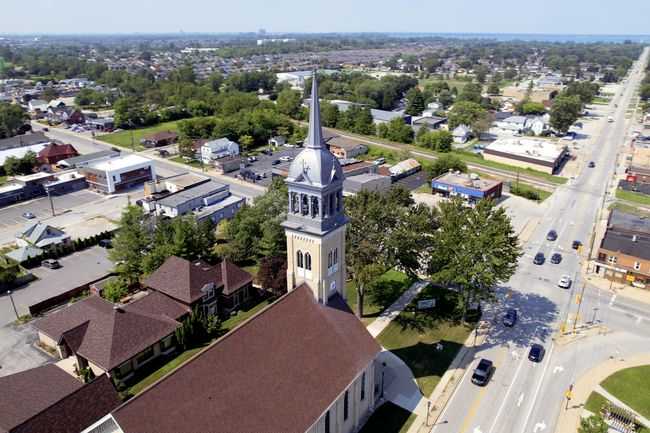
Windsor posts Canada's hottest average summer days at 26.9°C (80°F) even though its annual average of 14.4°C (58°F) puts it fourth on this list overall.
As Canada's southernmost city sitting across the river from Detroit, Windsor earns that summer heat honestly. It has 23.5 days a year climbing above 30°C, compared with just 2.1 days a year in Victoria. Winters swing back hard though, with highs at or below 0°C on 44 days a year. This is a four-season city, not a year-round escape from the cold.
5. Vancouver, British Columbia

Vancouver's average daily high of 13.9°C (57°F) trails Victoria's but it holds the longest frost-free season of any major Canadian city at 237 days a year.
Its oceanic climate carries a distinct dry summer stretch that feels almost Mediterranean by July and August. Rain mainly defines a Vancouver winter as average highs stay above freezing for nearly the entire season and snow rarely sticks for long. Vancouver has only 0.3 days a year above 30°C and summer never turns scorching either.
6. St. Catharines, Ontario
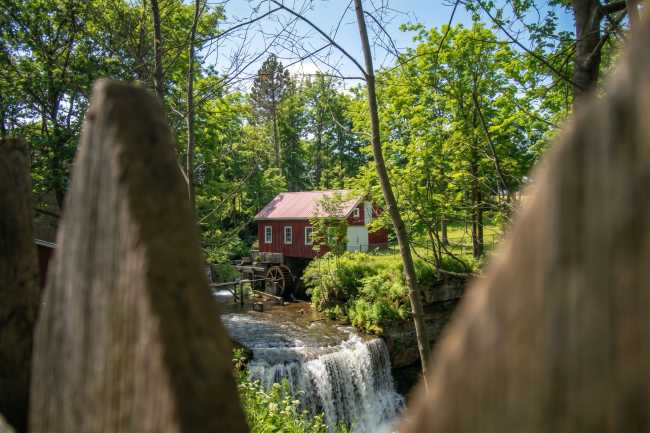
St. Catharines averages 13.6°C (56°F) year-round, the mildest city in Ontario's Niagara region and warmer on average than Toronto just up the lake.
St. Catharines is situated between Lake Ontario and the Niagara Escarpment, both of which help moderate temperatures year-round. It is also close enough to the Niagara Peninsula's wine country that summer warmth often lingers into September.
7. Brantford, Ontario
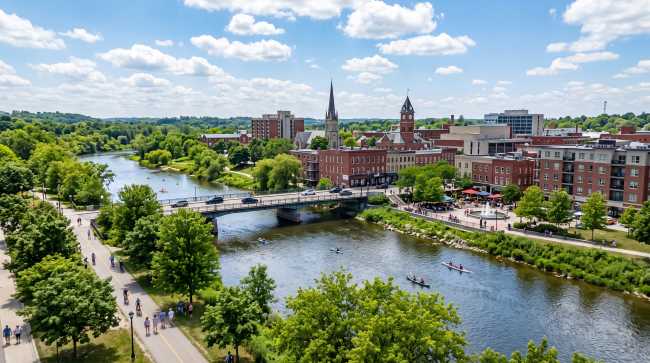
Brantford's 13.2°C (56°F) annual average high edges out several bigger Ontario cities, and its summer days run nearly as hot as Windsor's at 25.9°C (79°F).
Brantford sits in the same general climate zone that draws people who want hot summers more than mild winters, set along the Grand River in Southwestern Ontario's warm belt. It carries less name recognition than Toronto or Hamilton, but its 13.2°C (56°F) annual average high edges out Toronto's 12.9°C (55°F) and Hamilton's 13.1°C (56°F).
8. Hamilton, Ontario
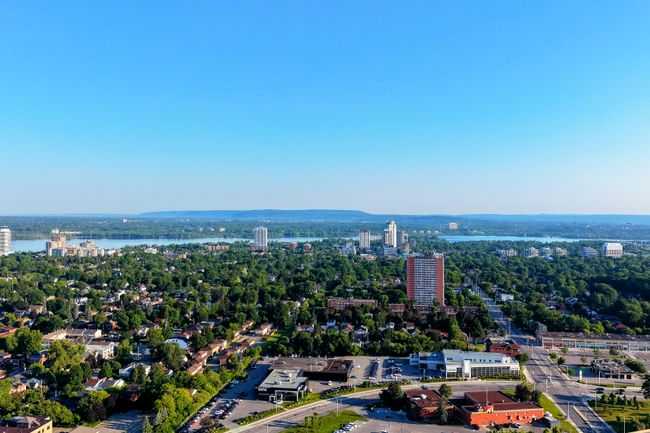
Hamilton's average daily high of 13.1°C (56°F) comes with a bonus most people don't associate with Ontario. It's also the seventh-sunniest major city in the country, logging 2,111 hours of bright sunshine a year.
Wedged at the western tip of Lake Ontario, Hamilton benefits from the escarpment locals call "the mountain," which traps warmer air in the lower city through summer. Combine that steady sun with average summer highs of 25.8°C (78°F), and Hamilton edges out its bigger neighbor Toronto on both counts.
9. Toronto, Ontario
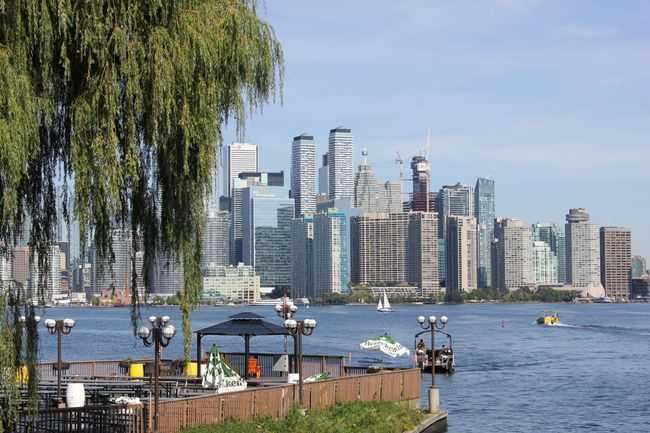
Toronto's average daily high of 12.9°C (55°F) ranks ninth here, modest for Canada's largest city, but its 203 frost-free days a year and 11.5 days above 30°C still put it ahead of most of the country.
For a lot of people planning a move to Canada, Toronto is the default choice regardless of climate, driven by jobs, transit, and an established immigrant community in nearly every neighborhood. The weather cooperates more than its reputation suggests too. Winters here run noticeably milder than in Ottawa, Winnipeg, or Calgary, even without cracking this list's top tier.
10. London, Ontario

London closes out the list at 12.7°C (55°F) average daily high, close enough to Toronto's climate that the two cities feel like the same season most of the year.
Positioned between Lake Huron and Lake Erie, London benefits from the same lake-moderated weather that keeps Windsor and Hamilton off the extreme end of Ontario's temperature range. It's overall a smaller city with lower cost of living than Toronto and a similar climate.
What Warmer Weather Doesn't Tell You: Higher Crime Rates

Warmer weather doesn't just mean milder winters. Researchers have also tied it to a real rise in opportunistic crime, mostly because more people are outside, more windows and garages get left open, and packages sit on porches longer. A 2017 Drexel University study published in the Journal of Urban Health found violent crime ran 9 percent higher on the hottest days than on mild ones, and that crime overall peaked from May through September, the same stretch when most of these ten cities are at their busiest outdoors.
Kelowna puts a number on that risk locally. In 2022, it logged the highest police-reported crime rate of any metropolitan area in Canada, and its Crime Severity Index still sits well above the national average in Statistics Canada's latest figures. That's not true of the whole list. Victoria, Windsor, and most of the Ontario cities here actually rank below the national average. Still, it's a good reason not to assume a sunnier city is automatically a quieter one.
Whichever of these ten you land in, warmer, sunnier climates also change one practical detail for the cameras themselves. Solar charging actually works reliably here instead of struggling through six months of overcast winter. That makes battery cameras with a solar panel attachment a genuinely better fit in Victoria or Kelowna than somewhere with four hours of winter daylight, though a weatherproof rating still matters wherever you land.
Recommended Reolink Security Cameras For Securing Your Warm Canadian Home
Reolink Argus 4 Pro
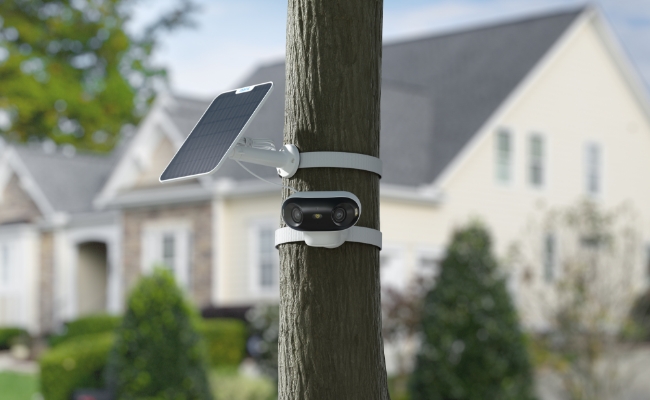
Best for wide, single-mount coverage of a driveway or entrance
The Argus 4 Pro covers a full 180° field of view from a single mount, wide enough to watch most driveways and entrances without adding a second camera.
It records in 4K with ColorX night vision during the dark so spotlighted footage stays in color in the night instead of dropping to black and white.
There's also a built-in PIR sensor that can filter out irrelevant motion, like blowing branches, before it ever triggers an alert. A Digital Camera World reviewer who mounted one outdoors found its PIR sensor sharp enough to ignore wind-blown trees on a gusty day, flagging only actual people as they walked past.
The camera also features a 5,000mAh battery, IP66 weatherproofing, and a -10°C to 55°C (14°F to 131°F) operating range. This means that it handle even Kelowna's hottest recorded days without issue, and it pairs with Reolink's Solar Panel 2 for continuous charging.
It also connects over dual-band WiFi 6 and works with Google Assistant and Alexa.
Overall, it's a great single camera for covering a full driveway or entrance. But, for Apple users, there is no support for the Apple HomeKit.
Reolink Argus PT Ultra

Best for covering a full yard from one camera
The Argus PT Ultra rotates a full 355° horizontally and 140° vertically, so one camera can cover a driveway, gate, and backyard from a set of saved presets instead of needing three fixed cameras.
It shoots 4K at 15fps, sharp enough to make out a face or license plate on playback, and switches between color and infrared night vision so you can identify a vehicle's color after dark or drop to infrared when a porch light would be more disruptive than helpful.
The 21.6Wh battery covers the extra draw from the pan-tilt motor cycling between presets. According to a CNX Software reviewer, the battery held at 99 to 100 percent overnight even when he set up three presets, labeled Road, Gate, and Backdoor, to rotate between zones automatically.
Like the Argus 4 Pro, its weatherproof rating and -10°C to 55°C operating range also ensures reliable recording in almost any condition. If needed, it can support Reolink's solar panel accessory for continuous charging and connects over dual-band WiFi 6.
It's a popular camera for larger properties where pan-tilt coverage beats a fixed lens. But, do note that the single 90° fixed lens means each individual preset covers less ground than a dual-lens camera would.
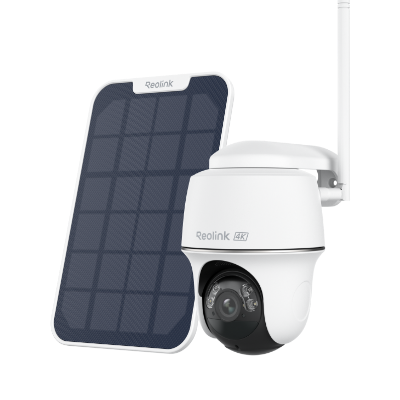
4k 100% Wire-Free PT Camera
4K 8MP Ultra HD; 5GHz/2.4GHz WiFi; Rechargeable Battery & Solar Powered; 355° Pan & 140° Tilt; IP65 Certified Weatherproof; Clear Night Vision; 2-Way Audio; 122° Wide Viewing Angle.
Reolink Go PT Ultra

Best for a property without home WiFi yet
The Reolink Go PT Ultra runs on 4G LTE instead of WiFi, so it works the moment it's mounted even before internet service gets connected at a new address.
Like the Argus PT Ultra, it offers 4K video, a 355°/140° pan-tilt range, and supports operation from -10°C to 55°C. However, it uses cellular connectivity rather than WiFi and has an IP64 rating. A 21.6Wh battery pairs with Reolink's Solar Panel 2, and Reolink says as little as 10 minutes of daily charging will help keep it running.
The Go PT Ultra has been well received with Reolink customers. One said the camera caught a woman approaching their spouse on the driveway between 4:30 and 5 in the morning, footage they then handed over to police.
There's also a construction site owner praising the camera for deterring two attempted thefts in its first week on the job.
For a rural or newly purchased property without WiFi set up yet, the Go PT Ultra is an excellent choice. But, it needs a real cellular signal to send footage reliably as a 4G camera.
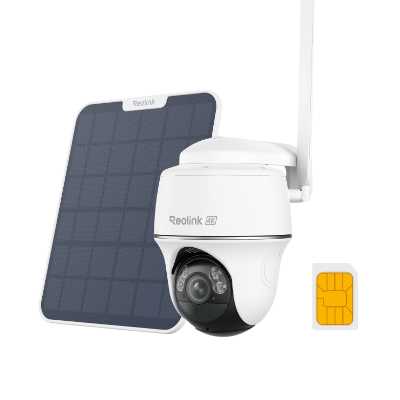
4K 8MP Wire-Free 4G LTE PT Battery Camera
4K 8MP; Smart Detection; 355° Pan & 140° Tilt; Battery/Solar Powered; Color Night Vision; Smart Real-Time Alert.
FAQs
What is the warmest city in Canada?
Victoria, British Columbia, is the warmest city in Canada, averaging 15.3°C (60°F) year-round and rarely dropping below freezing even in January. Its position on the southern tip of Vancouver Island, sheltered from Pacific storms, keeps both summer and winter temperatures milder than anywhere else in the country.
What is the warmest city in Canada during winter?
Victoria holds the title for winter specifically, with an average daily high of 8.8°C (48°F) from December through February and only one day a year that drops to or below 0°C. Compare that to Toronto, which sees highs at or below freezing on nearly 46 days a year, and the gap becomes obvious.
What is the sunniest city in Canada?
Calgary, Alberta, is the sunniest city in Canada, logging about 2,396 hours of bright sunshine a year, more than any other major Canadian city. It isn't warm, though. Its frost-free season lasts just 117 days a year, proof that sunshine and mild temperatures don't always travel together.
What is the warmest province in Canada?
British Columbia is Canada's warmest province, home to four of the five mildest cities on this list: Victoria, Abbotsford, Kelowna, and Vancouver. Its southern coast and interior valleys stay shielded from the Arctic air masses that dominate winter across the Prairies and much of Ontario.
Conclusion
So there you have it. We hope you're now more informed about the warmest cities in Canada and what to watch out for as a result. Wherever you end up among these warmest cities, investing in a security camera for safety is always worth it. As the saying goes, prevention is better than cure.
With warmer cities, the sun works in your favor, since there's plenty of solar power to draw on for any electrical device you use, including security cameras. Check out our solar-powered security cameras to find out more.
Search
Subscribe for the Latest Updates
Security insights & offers right into your inbox