
Top 10 Most Stolen Cars in Ontario: Is Yours on The List
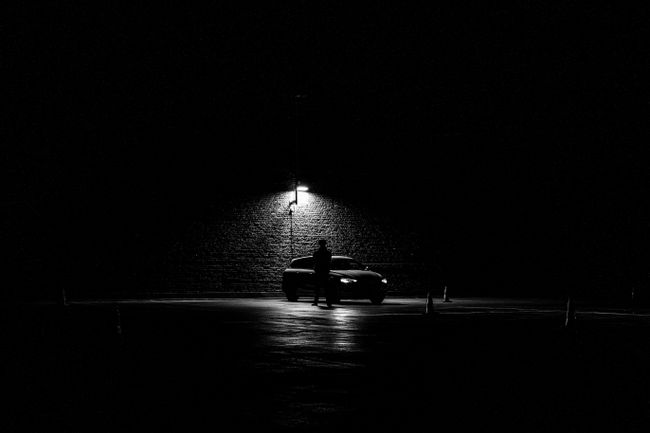
There are roughly 8,800 vehicles reported stolen across the province in just the first half of this year. Auto theft has imposed significant costs on Ontario drivers for years, leading to higher deductibles, rental car expenses during the claims process, and insurance premiums that rise fastest for the vehicles most frequently targeted by thieves.
This breakdown covers which vehicles topped Ontario's 2024 theft list, why thieves keep targeting them, and how the province's theft trend has actually shifted in recent years.
Ontario's Most Stolen Cars, Ranked by Theft Count
Honda's CR-V topped Ontario's most-stolen list with 1,309 reported thefts, followed closely by the Dodge Ram 1500 Series and Honda Civic, and newer SUVs and pickups fill out most of the rest of the top 10.
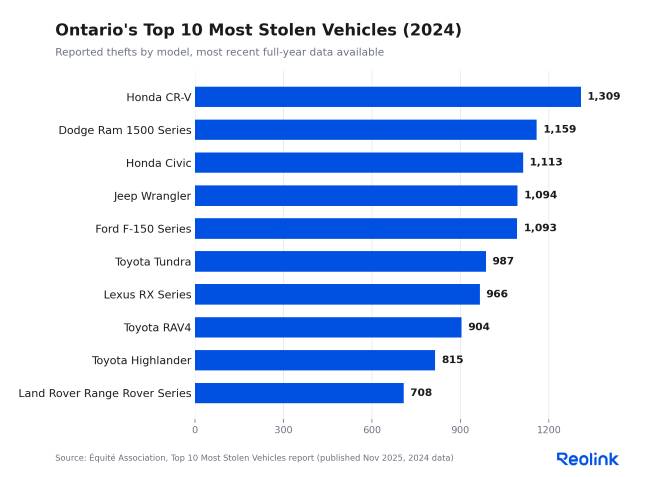
The figures above come from Équité Association, the national insurance-crime body Canadian insurers rely on for theft data, and they cover the most recent full-year (2024) complete dataset available.
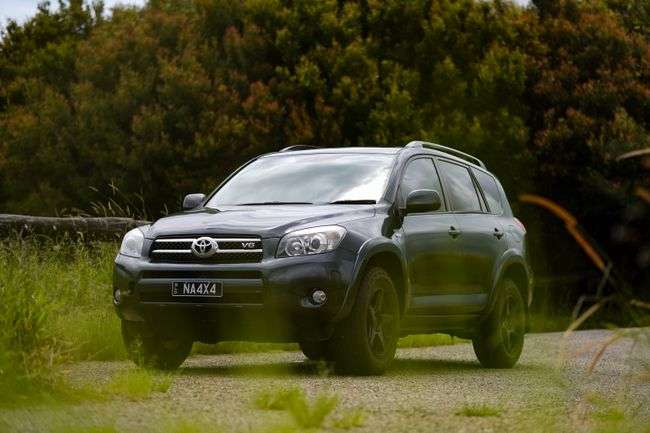
Nationally, the picture looks different. The Toyota RAV4 is Canada's most stolen vehicle overall, with 2,080 thefts the same year, yet it ranks eighth in Ontario specifically. That gap between the national list and Ontario's own highest theft cars shows that theft patterns aren't uniform across the country and what puts a model at risk in one province doesn't always apply in another.
Why These Models, and Why Ontario Specifically
Thieves target these particular vehicles because they're common enough to blend into traffic, valuable enough to resell for real money, and in most cases, still vulnerable to relatively simple keyless entry attacks.
Équité's data points to 2020-or-newer model years as the ones actually being stolen within each of these nameplates.
That's not a coincidence. Modern keyless entry and push-button start systems can be defeated with a relay device that tricks the car into thinking its key fob is nearby, letting a thief start the engine in under a minute without ever touching the fob.
Pair that vulnerability with a vehicle that's genuinely useful (SUVs and pickups make up eight of Ontario's top 10) and easy to resell, and the list above is exactly what results.
Ontario's specific position on that list also comes down to geography. The Insurance Bureau of Canada reports that the majority of stolen vehicles from Ontario and Quebec move through the Port of Montreal, often trucked or railed there in shipping containers with altered VINs or paperwork that misrepresents the cargo entirely.
Ontario's highway and rail links to that port make it a convenient starting point for organized crime networks shipping vehicles overseas, and that's a big part of why the province keeps showing up near the top of national auto theft in Canada statistics, year after year.
Is Car Theft in Ontario Getting Better or Worse?
It's getting better, and has been for three straight years, though Ontario's improvement is slower than most of the rest of the country.
Theft first turned a corner in 2024, when Équité recorded a 19% national drop in stolen vehicles compared to 2023. The improvement held through 2025 with auto theft claims across Canada totaled about $900 million for the year, down from more than $1 billion in 2024, as theft counts fell another 18% year over year.
Ontario did even better on paper, with reported thefts down 22% for the full year, though only 51% of those stolen vehicles were ever recovered, a rate Équité itself describes as low.
The trend has held into 2026, though Ontario's pace has cooled relative to the rest of Canada. Équité's most recent report, covering the first half of 2026, found theft down 10.1% nationally compared to the same period in 2025, with Ontario down 8.4%.
Western Canada is improving faster still, down 14.3% overall and 15.1% in Alberta specifically, while Ontario and Quebec continue to lag, which tracks with both provinces remaining the preferred export routes for organized theft rings.
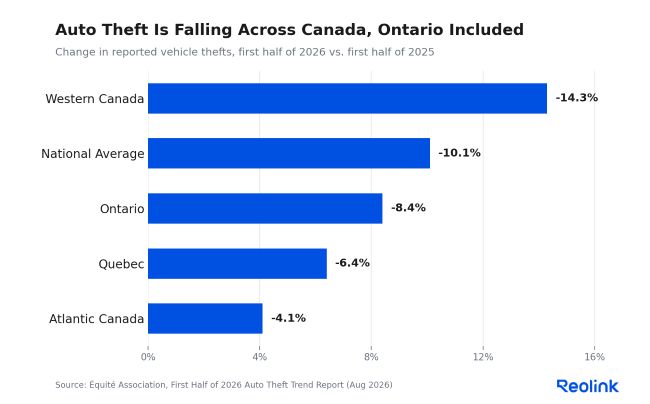
Ontario alone still accounts for roughly 42% of all vehicles stolen in Canada in the first half of 2026, based on Équité's own regional breakdown. Auto theft in Ontario is improving. It just isn't improving as quickly as it is everywhere else. That's part of why Ontario's most stolen cars keep drawing outsized attention even as the national trend gets better.
What to Do If Your Car's Make Is on This List
The Insurance Bureau of Canada (IBC) frames vehicle theft prevention as layers, not a single fix, and skipping the cheap layers doesn't save much if you skip the expensive ones too.
First layer of prevention
The first layer costs nothing.
- Lock your doors every time.
- Never leave a key fob inside the car or near a window
- Park in a garage or a well-lit spot when you have the choice.
IBC also notes that roughly one in four Canadians say they or someone they know has had a vehicle stolen in the past five years, so this isn't a hypothetical risk for most readers.
Second layer of prevention
The second layer is visible and audible deterrence.
- Fit a steering wheel lock or brake pedal lock that a thief can see through the windshield.
- Put alarm decals on the windows, even a basic aftermarket alarm makes a car less appealing next to an easier target.
- Keep your key fob in an RFID-blocking pouch whenever it isn't in use.
A pouch specifically blocks the relay attack that makes so many vehicles on this list easy targets, since it stops the fob's signal from reaching a relay device sitting outside your house.
Third layer of prevention
Layer three is a vehicle immobilizer, an aftermarket device that disables the ignition unless it recognizes a signal beyond the key fob.
- Install an aftermarket immobilizer if your vehicle doesn't already have one built in.
- Add a hidden GPS tracker, which forms an unofficial layer four, so the car can still be located after it's gone.
None of this stops a theft in progress, but a tracking system meaningfully improves the odds of getting the car back afterward, worth considering given that only about half of Ontario's stolen vehicles get recovered at all.
Where a Home Security Camera Fits In
The same Aug 2026 Équité trend report we found states that 82% of vehicle thefts happen at or near the victim's home, not in a parking lot or on the street.
That's the exact spot a driveway camera already watches, which turns a security camera from a nice-to-have into one of the more useful theft deterrents available for the money, right behind the physical layers above. It also lines up with how the relay attacks described earlier actually happen, since a thief needs under a minute standing right next to the vehicle, so a camera watching that exact spot has a real shot at catching the attempt as it unfolds rather than just confirming it afterward.
Reolink's own guide on catching someone breaking into or stealing a car at night goes deeper on placement and blind spots, but the short version starts with where most thefts actually happen.
A recorded footage can provide the police with a real lead to chase, and it gives your insurer a timestamped record instead of a police report with no visual evidence behind it. Reolink walks through that documentation process step by step in its guide to what to do when a car is stolen.
Best Reolink Security Cameras for Auto Theft Prevention
Which camera makes sense depends mostly on your setup.
Reolink RLC-811A
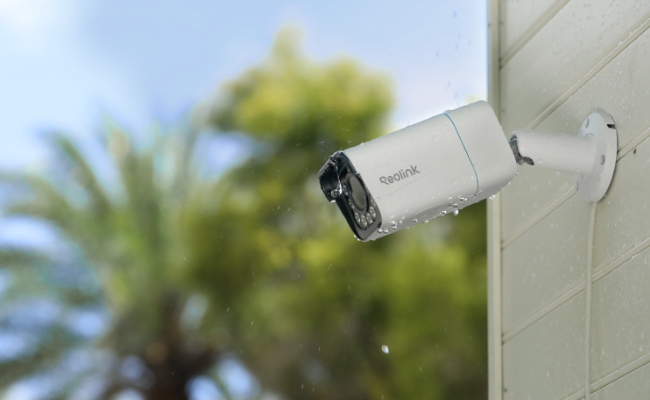
For a fixed mounting point that already has power run to it, like an eave, garage wall, or lamppost, the RLC-811A is a solid fit. It records in 4K with 5x optical zoom for pulling in tight detail like a plate or a face from across the driveway, plus color night vision powered by a 450-lumen spotlight that keeps footage in full color after dark instead of switching to grainy black-and-white.
As it's PoE powered rather than solar or battery, it keeps working through a Canadian winter without depending on a snow-covered solar panel, which is a real problem for battery cameras during this time of year. It's also the model Reolink lands on in its own picks for Canadian winters, for the same reason.
An independent test from Consumer Reports found its nighttime footage clear and well-lit enough to make out real detail, with motion alerts reaching the app in about two seconds. That level of detail matters for a relay-attack theft specifically, since most of them happen at night and a blurry clip doesn't do much for a police report. The tradeoff is installation as it needs an Ethernet run to wherever it's mounted, which isn't realistic for every driveway.
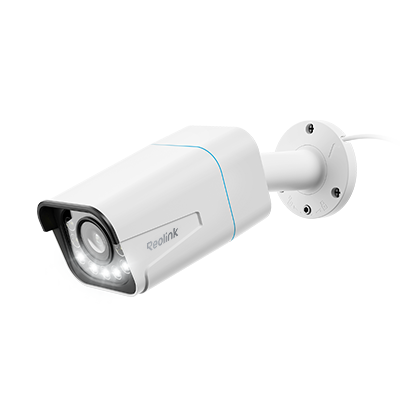
4K Smart PoE Camera with 5 Spotlights
4K 8MP Ultra HD Day & Night, Person/Vehicle Alerts, 5X Optical Zoom, Two-Way Audio, Built-in Siren, Color Night Vision, Live View Anywhere.
Reolink Go PT Ultra
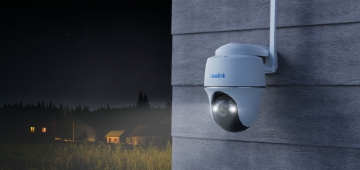
For a detached garage, a long rural driveway, or anywhere without power or WiFi nearby, the Go PT Ultra is built for exactly that gap.
It's a 4K, 4G LTE camera with 355-degree pan and solar-panel compatibility. So, it runs on cellular data instead of a home network. That pan range matters on a property without an existing camera setup, since it covers the driveway from more or less any angle a thief might approach rather than locking onto a single fixed view.
An independent field test by Fstoppers found the footage sharp enough to pick out fine detail even at night, and reported no battery issues on an open, sun-exposed test site, in contrast to a shaded location where the same reviewer saw faster battery drain.
A driveway with a clear view of the sky behaves more like that open site than a shaded one, and that's the scenario that actually applies here. The honest limitation is that it depends on cellular signal and a data plan, so it won't help much in an area with poor coverage.
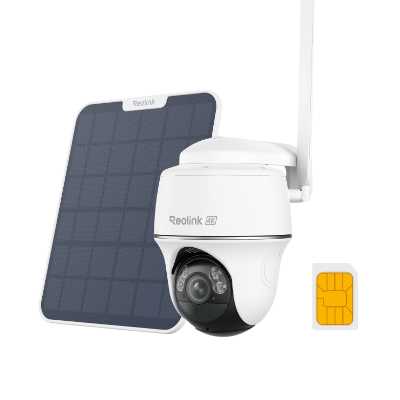
4K 8MP Wire-Free 4G LTE PT Battery Camera
4K 8MP; Smart Detection; 355° Pan & 140° Tilt; Battery/Solar Powered; Color Night Vision; Smart Real-Time Alert.
FAQs
What car is hardest to steal in Ontario?
In Équité Association's Ontario-specific least-stolen breakdown, the Cadillac XT5 topped the list with a single reported theft, a theft ratio of roughly 0.009%. Most vehicles on that list share the same traits: low resale value, weak demand for export overseas, and little overlap with the keyless entry systems that make Ontario's most stolen vehicles easy relay-attack targets.
Does car insurance in Ontario cover theft?
Only if the policy includes comprehensive coverage, since basic liability insurance in Ontario doesn't cover theft. Comprehensive coverage pays out for a stolen vehicle, minus the deductible, and insurers increasingly price premiums based on how often a specific make and model appears on lists like this one. Belongings left inside the car typically fall under a separate part of a home or tenant policy rather than the auto policy, so check both before assuming everything is covered.
What should I do right after my car is stolen in Ontario?
Call police to file a report immediately, then contact the insurer the same day to start the claim. Provide the VIN, license plate, and any security or dash camera footage available, since a timestamped clip of the theft is often the difference between a fast claim and a drawn-out one. Auto theft, sometimes listed as motor theft on a claim form, falls under comprehensive coverage, and with Ontario's recovery rate hovering around 51%, push the investigation rather than assume the car is simply gone.
Do security cameras actually stop car theft, or do they just record it after the fact?
Both, though the deterrent effect matters more than most people assume. A visible camera changes a thief's calculation before they ever touch the door handle, since organized theft rings prioritize fast, quiet jobs and tend to avoid a property that's clearly monitored. When a theft happens anyway, that same footage speeds up an insurance claim and gives police an actual lead instead of just a description. That combination is what makes a driveway camera worth the cost even when it's never needed.
Conclusion
If your car's make or model is one of Ontario's most stolen cars, the fix isn't panic, it's layering up your prevention measures. Lock up, add a visible deterrent like an RFID pouch or steering wheel lock, and point a camera at the spot where 82% of thefts actually happen. A wired security camera like the RLC-811A suits a driveway with power already run to it, while a cellular such as the Go PT Ultra covers the one that doesn't.
Either way, the goal is the same and that's to make a car enough of a hassle that a thief gives up on an attempt. Interested to find out more about the abovementioned cameras? Head to the Go PT Ultra and RLC-811A product page to find out more!
Search
Subscribe for the Latest Updates
Security insights & offers right into your inbox