
Best Van Security Camera: Secure Your Workhorse
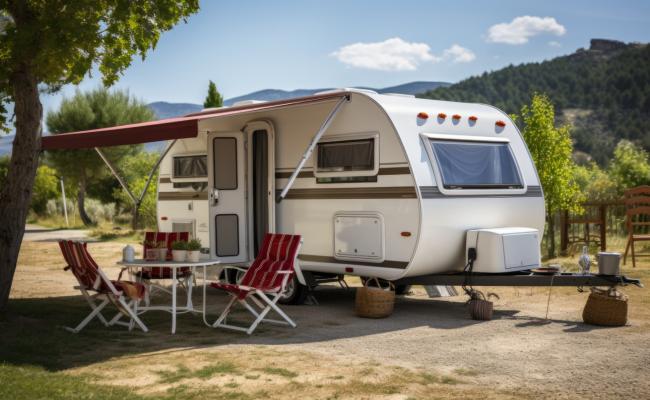
Living the van life and traveling the open road in a van or RV is an adventurous and freeing experience. However, ensuring the security of your mobile home is paramount. Investing in a high-quality van security camera system allows you to deter theft, protect your assets, and monitor your van remotely while on the go. This comprehensive guide covers everything you need to know about choosing, installing and using van security cameras.
What Is a Van Life Camera?
A van life camera is a security camera designed to monitor a van, camper van, RV, or other mobile living space. It helps van owners deter theft, monitor suspicious activity, and check on their vehicle remotely when they're away.
Unlike traditional home security cameras, van security cameras are built for mobility. Many models offer features such as 360° coverage, night vision, smart motion detection, local recording, and 4G LTE connectivity, allowing you to receive alerts and view live footage even when parked in remote locations without Wi-Fi.
Why Invest in a Van Security Camera?
There are several key reasons to invest in a security camera system designed specifically for vans and RVs, including:
- Deterrent to Theft: The sight of a visible security camera is often enough to deter potential thieves from targeting your van. Security cameras make it clear you take the security of your vehicle seriously. Would-be criminals are likely to move onto an easier target.
- Asset Protection: A van used for #vanlife often contains many valuable assets from electronics to camping gear. Installing surveillance cameras allows you to remotely monitor your belongings and van interior for break-ins, unauthorized access or vandalism. Receive mobile alerts if motion is detected inside your parked van.
- Real-Time Monitoring: Van security cameras allow you to check in on your van any time via a smartphone app for real-time monitoring. View live footage as needed whether you've stepped away briefly or are miles down the road on an excursion. Some systems even enable live-stream viewing.
- Remote Access: Cellular-enabled van cameras maintain connectivity while in motion or parked remotely. If you’ll be away from cell service for awhile on backcountry roads, save video clips and still images locally to view later. No need to rely on campground WiFi!
Real-World Case Study: Securing the Mobile Home Front
Van lifers, RV owners, and overlanders are not actually shopping for a standard "security camera"—they are trying to solve a high-stakes, mobile safety problem: "How do I protect my entire life when my home is parked in a public space, and I am either sleeping inside or away from it?"
To understand how mobile security works in practice, we examined real-world user data from digital nomad threads to build a scenario-based case study mapping out real vehicular vulnerabilities, operational failures, and the exact features required to solve them.
User Profile: Solo Overlander & Digital Nomad
-
Problem: A digital nomad lives full-time in a converted sprinter van, boondocking on remote BLM land by weekend and parking on urban streets during the workweek. Because their laptop, solar electrical components, and personal belongings are entirely contained within the vehicle, they face constant anxiety regarding break-ins while away hiking or working from a coffee shop.
-
Nighttime Challenge: While sleeping inside the vehicle in isolated areas, late-night door knocks or footsteps outside create an immediate threat. They need a way to check their perimeter in pitch darkness without opening the doors or giving away their presence inside the van.
Technical Failure Points
Before finding a reliable solution, the owner encountered four classic mobile security blind spots:
-
Wi-Fi Dependency: Standard smart home cameras rely on a fixed router connection. Because the van moves between national parks and cellular dead zones, traditional cloud-dependent setups fail completely.
-
Power Failure: The vehicle's auxiliary lithium battery bank is shared between a refrigerator, lights, ventilation fans, and a laptop. Running a traditional, power-hungry NVR hard drive system overnight drains the leisure batteries, threatening their off-grid energy independence.
-
Alert Latency and False Wakes: Budget battery cameras sleep deeply to save power, taking several seconds to wake up and connect to a network when triggered. In real-world testing, by the time a notification arrived on the phone, a prowler had already walked past the side door. Conversely, parking on an urban street caused constant false alarms from passing traffic and stray animals, destroying sleep at 2:00 a.m.
-
Stealth Dilemma vs. Road Vibrations: Mounting bulky, white residential cameras to the exterior of the van completely ruined its "stealth" appearance, turning it into a high-visibility target for thieves. Furthermore, standard plastic ball-and-socket mounts loosened or snapped under constant highway vibrations and wind resistance.
Engineered Mobile Setup
To overcome these vehicular hurdles, some owners moved away from residential gear and deployed a low-voltage, standalone 4G LTE cellular solar-powered camera system configured around a precise local architecture.
Key Takeaways
Van owners do not need generic home surveillance; they need an adaptive security framework tailored for energy autonomy, fluctuating cellular signals, and tactical physical resilience. Transitioning to smart, local-first 4G solar tracking ensures total property defense and peace of mind, whether you are miles out on a trail or sleeping inside an urban grid.
How to Choose the Best Van Security Camera & System? 6 Key Features to Consider
When evaluating mobile security camera options, the standard features found in residential systems must be filtered through the unique constraints of vehicle life.
1. Video Quality & Perimeter Field of View
High-resolution video is critical for capturing forensic details like faces or license plates around a vehicle, but it must be paired with an ultra-wide or pan-tilt lens to eliminate vehicular blind spots.
-
Resolution Look for a van camera system delivering crisp, high-definition video and still images. 4K or 1080p resolution is ideal to capture clear facial details and license plates. Note that in a mobile environment, 4K can drain your local storage capacity faster and consume double the cellular bandwidth when streaming remotely.
-
Perimeter Coverage: Ensure the camera lens offers a wide field of view up to 360 degrees. Vehicles have natural structural blind spots, so a panoramic view or a multi-camera is essential to monitor the full exterior perimeter.
2. Storage Capability: Local vs. Cloud
Local physical storage is mandatory for an overlanding vehicle, as cloud storage relies entirely on active cellular signals and rapidly burns through expensive mobile data plans.
-
Local Storage: Local storage is useful when traveling beyond cellular service but does require physically removing the card later to download video. It keeps your recordings functional in remote national parks and ensures 100% data privacy.
-
Cloud Disadvantage: Cloud storage enables instant remote access from anywhere but depends on 4G LTE or WiFi signals. If you park in a cellular dead zone or a deep valley, cloud-reliant cameras will completely fail to save footage.
The best approach is a system that records locally to a high-endurance card for zero-signal reliability, while utilizing cellular connectivity to push small, compressed motion alerts to your phone when network signals are available.
3. Connection & Power Options
Mobile power architecture requires balancing continuous, hardwired vehicle power against standalone, independent solar batteries to prevent accidentally draining your vehicle's starter battery.
-
Vehicle-Powered Systems: Hardwired, vehicle-powered systems tap into your van's auxiliary battery and fuse box for continuous charging. This provides uninterrupted power for 24/7 recording but requires a solid understanding of low-voltage DC electronics to ensure the camera system doesn't deplete your primary power reserves.
-
Battery & Solar Standalone Systems: Portable battery-powered models offer flexible placement using built-in rechargeable batteries or solar panels. These operate on an entirely independent power loop, preserving your van's energy autonomy while off-grid without requiring complex hardwiring into the vehicle’s electrical grid.
4. Physical Installation & Road Resilience
Van installations require rugged, vibration-resistant mounting solutions that can handle highway speeds without damaging the vehicle's structural integrity or compromising stealth.
Look for easily adjustable camera positions, long cables for running to power sources, and multiple camera capacity. Consider a removable option if parking in risky areas where the camera itself might become a target for theft or vandalism.
5. Night Vision: Standard IR vs. Low-Light Color
Monitoring a vehicle in remote campsites requires high-sensitivity sensors that can resolve crisp imagery in total darkness without broadcasting the van's location to the surrounding area.
Infrared (IR) illumination enables black and white night viewing. For color night vision, look for special starlight or low light technology to see vivid colors even in extremely low light scenes.
6. Mobile Network Connectivity
True remote access on a moving vehicle requires dedicated cellular network hardware rather than local, stationary Wi-Fi assumptions.
or remote access on the go, cellular connectivity is key. 4G LTE networks provide the most extensive coverage across North America.
WiFi connectivity enables live viewing if in range of a wireless network but is not suitable for traveling. Similarly, Bluetooth connectivity allows control and access within 30 feet or so of your smartphone. It is helpful for configuring settings while inside the vehicle but useless for long-distance remote monitoring.
Best Van Security Cameras for Different Scenarios
Reolink Argus 4 Pro: Best for Urban Stealth & Stealth Camping
If you frequently park overnight on city streets or close-quarter campgrounds where maintaining a low profile is critical, the Reolink Argus 4 Pro provides a seamless 180-degree panoramic view and full-color night vision without activating visible spotlights or glowing red infrared lights that expose your presence.
Urban Stealth Scenario: When stealth camping in residential or commercial zones, standard security cameras create a major problem. They either flash bright white spotlights when motion is detected or emit a faint red infrared glow in the dark, instantly alerting passersby that someone is living inside the vehicle.
The Argus 4 Pro utilizes specialized ColorX technology, pairing an extra-large lens aperture with a high-sensitivity sensor to capture full-color footage using only ambient city starlight or street lamps.
This completely wireless, battery-powered camera requires no complex hardwiring into your vehicle's fuse box. The rechargeable battery pack can be paired with a compact, matching solar panel to create a self-sustaining power loop that operates independently from your van's core leisure battery bank.
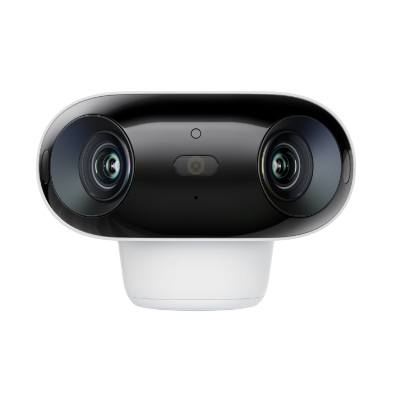
4k 180° Wire-free Color Night Vision Camera
4K UHD 180° Blindspot-free View; Color Vision Day and Night; 30% More Battery Life; Dual-band Wi-Fi 6; Smart detection.
Reolink Go PT Ultra: Best for Remote Property & Active Threat Deterrence
For overlanders and road trippers who camp deep on public lands, construction zones, or isolated campsites with zero local Wi-Fi, the Reolink Go PT Ultra serves as a standalone 4G LTE powerhouse that lets you remotely scan your vehicle's full perimeter and actively scare off trespassers.
Remote Boondocking Scenario: When you leave your van parked at a remote trailhead to go hiking, or when you are sleeping inside on secluded BLM land, standard home Wi-Fi assumptions break down completely. You need a system that can transmit emergency alerts to your phone over mobile towers and physically protect the vehicle when you are miles away.
The Go PT Ultra features an integrated cellular module, acting as its own standalone internet source. It bypasses the need for local hotspots or stationary routers, streaming real-time remote access and motion-triggered alerts straight to your smartphone app anywhere there is a cellular signal.
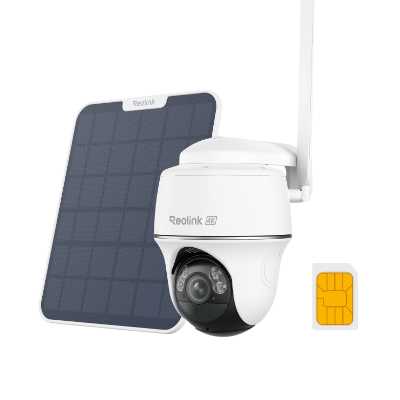
4K 8MP Wire-Free 4G LTE PT Battery Camera
4K 8MP; Smart Detection; 355° Pan & 140° Tilt; Battery/Solar Powered; Color Night Vision; Smart Real-Time Alert.
Quick Scenario Match
To bring further clarity to your choice, use this quick matrix to pair your lifestyle with the ideal Reolink mobile camera hardware.
Security Tips for Van Life
-
Closely observe all road signs and traffic laws to avoid trouble or accidents in unfamiliar areas. Research your route ahead of time using vanlife apps and atlases.
-
Spend time getting to know each destination – search forums and travel guides for insider info on road conditions, weather patterns, potential hazards, vehicle accessibility and safe camping spots.
-
Always secure your van keys on your person rather than leaving them behind at campsites or attractions. Invest in a hidden lock box secured discretely inside your van to safely stow a spare key.
-
Set up audible alarms that will draw attention if suspicious activity is detected in or around your vehicle. Combine with visible alarm signage for extra deterrence.
-
Consider a non-lethal defensive weapon designed for self protection such as pepper spray. Learn your local laws and only use responsibly as an absolute last resort.
FAQs
What is the best van security?
The best van security incorporates layers of preventative measures like high-security locks, alarm systems and video surveillance. A reliable van security camera system with remote access, motion detection alerts and night vision capability provides 24/7 monitoring and asset protection wherever you roam.
How can I protect van from thieves?
Deter theft and protect your van by installing visible security signage, interior motion-activated lights, audible alarms and surveillance cameras inside and out. Use high-quality locks on doors and storage compartments. Etch VIN numbers onto valuables. Park strategically in well-lit areas rather than isolated, dark spaces.
Is there a 360-degree van security camera?
Yes, 360-degree van security cameras are available from brands like Reolink, Owl and Kenzee. These all-seeing systems feature multiple camera lenses to provide complete panoramic coverage inside and outside your van. View live footage and receive mobile alerts from every angle!
Conclusion
Investing in a complete van security camera system tailored for life on the road provides peace of mind for van lifers and road trippers. Look for key features like long-lasting battery/solar power, 4G LTE connectivity, smart motion detection with alerts, high-quality 4K video and versatile mounting.
Follow other safety best practices as well. Then hit the open highway knowing your van is well protected on adventures near and far! Share your van life experience with us in the comment section below! We'd love to hear from you.
Search
Subscribe for the Latest Updates
Security insights & offers right into your inbox