
Types of Solar Panels: Efficiency, Cost & Uses
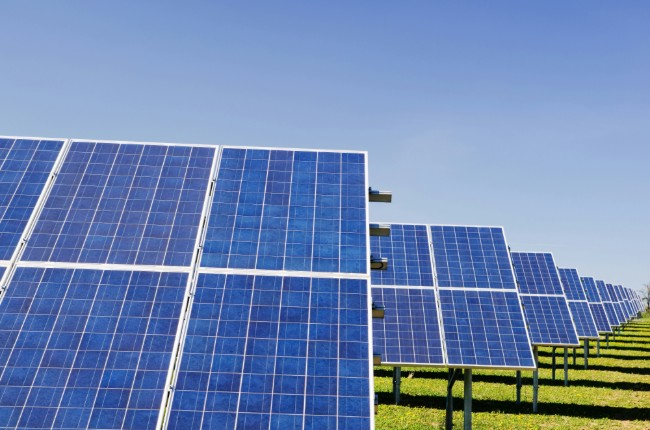
The idea of using the sunlight has become a reality, and the equipment used makes or breaks every project. This guide summarizes the primary types of solar panels, their contents, appearance, effectiveness, and prices, thus enabling the readers to find a match between a panel and a purpose without any hesitation.
What Are 4 Types of Solar Panels?
There are four evident categories of solar technology. They have their own entry material, different production processes, and aim at a different efficiency-price-design freedom balance. The following sections describe the different types of solar panels in detail.
Monocrystalline Solar Panels
Manufacturers cut single-crystal silicon ingots into thin wafers, then wire them in series.
Material
-
Pure silicon grown as one continuous crystal
-
Metal gridlines for current collection
-
Tempered glass cover
Appearance
-
Uniform deep-black tone
-
Rounded cell corners that form small gaps at the edges
-
Compact frame with minimal surface hardware
Pros
-
Highest real-world efficiency among mass-market panels
-
Long performance warranty, often 25 years or more
-
Small footprint helps on tight roofs
Cons
-
Higher price per watt than other crystalline options
-
Drop in output at very high heat compared with thin-film modules
-
The crystal growth process wastes some silicon during slicing
Most solar security cameras use monocrystalline solar panels due to its high efficiency and strong performance in limited space.
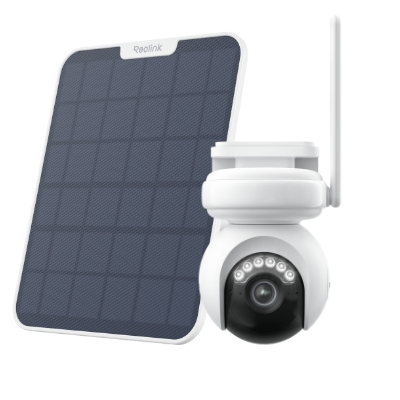
Industry-leading 4K Continuous Recording Battery Camera
4K UHD Continuous Recording; ColorX Night Vision; Pan & Tilt; Automatic Tracking; All Recordings Stored Locally.
Polycrystalline Solar Panels
Producers cast many silicon crystals into a single block, then slice it into monocrystalline wafers.
Material
-
Multi-crystal silicon blend
-
Soldered copper busbars
-
Aluminum frame
Appearance
-
Blue or blue-gray hue with light speckles
-
Square cell edges with no gaps between cells
-
Slightly thicker frame than monocrystalline units
Pros
-
Lower cost per watt than single-crystal panels
-
Solid lifespan and mechanical strength
-
Well-known supply chain and installer familiarity
Cons
-
Efficiency trails monocrystalline by several percentage points
-
Panel area grows as efficiency drops, adding weight
-
Color can fade faster under strong ultraviolet light
Passive Emitter and Rear Contact (PERC)
PERC panels start with mono wafers yet add a special rear layer that reflects unused light back through the cell.
Material
-
Single-crystal silicon
-
Dielectric rear surface film
-
Rear aluminum coating to boost reflection
Appearance
-
Deep-black front similar to mono panels
-
The back sheet is often white or silver for heat control
-
Slim frame thanks to higher efficiency
Pros
-
Five to eight percent more output than standard mono modules
-
Better low-light response at dawn and dusk
-
Slight efficiency gain offsets minor extra cost
Cons
-
The rear layer increases internal temperature if ventilation is poor
-
Manufacturing is still evolving, so data on very long lifespans is limited
-
Needs clean surfaces; dirt reduces the reflective benefit
Thin-Film Solar Panels
Instead of wafers, thin-film panels deposit layers of photovoltaic material onto glass, metal, or polymer sheets.
Material
-
Options include cadmium telluride (CdTe) or copper indium gallium selenide (CIGS)
-
Transparent conductive oxide front contact
-
Flexible or rigid backing sheet
Appearance
-
Uniform dark surface with no visible cell grid
-
Large-format glass sheets or bendable rolls
-
Matte finish that blends into building facades
Pros
-
Lightweight enables installation on roofs with load limits
-
Weak-light performance stays steady on cloudy days
-
Lowest cost for very large ground arrays with cheap land
Cons
-
Efficiency lags crystalline panels by several points, so the area grows
-
Some materials, such as cadmium, raise recycling concerns
-
Fewer suppliers and shorter warranty periods in many cases
What Are the Key Differences Between Types of Solar Panels?
Picking a panel means weighing several competing factors. The next headings compare common decision points.
Efficiency Range
Monocrystalline is at 20 -22 percent in current mass-produced modules, PERC reaches about 23 percent, poly-crystalline approaches 17 percent, and thin-film is commonly in the range of 1215 percent when it is evaluated at standard conditions.
Cost per Watt
Polycrystalline is normally the lowest sticker price of crystalline panels. In square-meter terms, thin-film is cheap; however, when more area is required on the balance-of-system, the overall balance-of-system cost may increase. Monocrystalline and PERC cost more but reduce racking and labor as fewer panels are required in the discharge of the same.
Durability
Crystalline silicon modules, both mono and poly, demonstrate field service lives beyond 25 years. PERC shares that foundation, though its rear layer still builds a data record. Thin-film laminates work in harsh heat yet may degrade faster under mechanical stress unless framed in glass.
Installation Weight
Thin-film sheets weigh as little as 6 kg m-², which favors weak roofs. Mono and PERC average 11 – 12 kg m-², while poly panels can reach 13 kg m-² on heavy frames.
Solar Panel Types: Comparison Table
Below is a concise reference that lines up core metrics. Values show typical ranges for 2026 installations.
How to Choose the Best Solar Panel Options?
Selecting the best solar panel depends on various factors like installation location, budget, and roof strength. Let's do a short analysis of each factor to better understand which option can be best for you:
- Site space – Measure the roof or ground area first. Tight plots lean toward high-efficiency mono or PERC modules.
- Project budget – Fix a total spend target, then match the cost per watt that hits energy goals without overruns.
- Roof strength – Verify load limits. Old metal decks may suit thin-film skins, while strong rafters accept mono frames.
- Climate conditions – Hot deserts cut crystalline output a little; thin-film losses stay smaller under heat.
- Aesthetic rules – Historic districts prefer dark panels that blend, favoring mono or sleek thin-film over blue poly cells.
- Future expansion – If extra panels may join later, choose a type with a stable supply and matching size, often mono or poly.
When to Use Different Types of Solar Panels?
Timing and context help decide which panel provides the best value for a task. In the following sections, we have explained which solar panels you can use in different settings:
When to Use Monocrystalline Solar Panels
-
Scarce roof space in dense urban housing
-
Off-grid cabins needing maximum daily kWh from small arrays
-
Commercial sites that value a premium look for clients
-
Utility projects where long service and low maintenance dominate planning
When to Use Polycrystalline Solar Panels
-
Rural barns with wide roofs and modest energy demands
-
Municipal projects seeking low upfront cost yet proven reliability
-
Educational installs where budget controls matter more than color uniformity
-
Farms with ground-mount arrays on affordable land
When to Use PERC Solar Panels
-
Homeowners aiming for net-zero energy with limited roof pitch choices
-
Businesses wanting early-morning and late-day performance for HVAC loads
-
Cold regions where extra low-light gains shorten winter payback times
-
Installers chasing higher output without changing racking layouts
When to Use Thin-Film Panels
-
Warehouse roofs that cannot carry heavy frames
-
Building-integrated photovoltaic facades require smooth surfaces
-
Remote sensors or parking canopies that need custom shapes
-
Large desert plants where land cost stays low, and heat runs high
FAQs
What are the different types of solar panels?
Four leading categories are identified in the market within monocrystalline, polycrystalline, PERC, and thin-film. They all have different methods of production, and they have different patterns of efficiency, price, and weight, and offer to the planner an array of choices that fit the space constraints, budgets, and climates.
Which type of solar panels are best?
Monocrystalline and PERC provide the best performance, thus are suitable for small roofs or even in power markets that have high value. Thin-film is also the best in light structures and in very hot areas, and polycrystalline provides a competitive price to projects that have a large space.
Which is better N-type or P-type solar panels?
N-type cells are resilient to degradation through light, provide greater efficiency, and heat is reasonably tolerated, whereas P-type cells are the most costly and supply most of the world. N-type tends to win in case the owners are interested in the longest output and can also accept a slight premium.
What are the least efficient solar panels?
First-generation amorphous thin-film modules have the lowest recording lab and field efficiency, at just 10 percent with mainstream alternatives. Recent design cadmium telluride or CIGS thin-film panels do better on this number, however, they remain in the shadow of crystalline silicon layouts.
Conclusion
There are four distinct types of solar panels that are available to solar buyers. Monocrystalline and PERC are the most efficient, and polycrystalline is the one that maintains a strict balance between the price and performance, and thin-film is superior where weight is a factor, or heat.
Take into account the space of the location, the budget, and the climate, and find the type of panel, compatible with which conditions they are compatible. Be ready to share your own project stories and guide other individuals to the same decision.
Search
Subscribe for the Latest Updates
Security insights & offers right into your inbox