
Exploring the Different Types of Motion Sensors: A Comprehensive Guide

Motion sensors are used for detecting any type of motion in different areas inside and outside the building. There are different types of motion sensors and each one works by sending a signal. It detects motion based on the signals it receives. After that, it can trigger different automations or alert you.
Let us have a look at the details about different sensors, their working, applications, and more.
What Are Different Types of Motion Sensors?
There are many options when you look for a motion sensor and here are the different types of these sensors:
Passive Infrared (PIR)
PIR sensors sense infrared radiation, that is heat emitted from human beings or animals. It detects motion when the temperature in the field to view increases. It’s easy to see that they are frequently employed in homes and other offices for security purposes.
Microwave Sensors
The microwave sensors send out microwaves and then measure the bounce of the same. Any form of movement alters the reflection and therefore activates the sensor.
These sensors can detect motion through walls and solid objects. They cover wide areas, but they are sensitive and produce false alarms.
Contact Sensors
For door and window contact sensors check the status, whether they are opened or closed. They use magnets where a break in the connection sets off an alarm.
These sensors are basic, cheap, efficient, and ideal for entry-point security. They are often applied in home and office security systems, to make certain the door or window is shut.
Pet-Immune Motion Sensors
These sensors are known to distinguish between human and animal motion. This prevents false alarms resulting from pets in the house.
These sensors are perfect for homes with animals because they provide security without causing too many alarms. They are standard systems that are often integrated with PIR technology for higher accuracy.
Video Motion Sensors
Video motion sensors work by processing video feeds to identify motion. They track changes in the pixel on the screen of the camera installed in the car or homes.
These sensors are equipped with a vision to affirm movement when it is sensed. They are applied widely in security systems: detecting motion and recording videos. They are useful for real-time monitoring.
Area Reflective Sensors
Area reflective sensors produce infrared radiation and record movement via light reflection. Close or relatively farther objects cause a change in reflection that in turn gives an alert. Such sensors are accurate for the surveillance of some sections of a given area.
They are usually installed indoors in security or automation measures, mainly in areas such as restricted access zones or commercial premises.
Ultrasonic Motion Sensors
High-frequency waves emitted by ultrasonic sensors serve to detect movement. They evaluate the reflection of sound waves from moving items.
They are effective in both huge and compact environments. They are typically used in automatic doors as well as lighting systems. Environmental conditions, mostly fans, may be responsible for false alarms.
Vibration Motion Sensors
Sensors that detect vibration notice movement by recognizing physical vibrations, like a door being wrenched open or a window being banged to open.
They operate when they detect alterations in the position of the object. These sensors are appropriate for selected security purposes. Usually, they function to identify unauthorized entry or tampering on doors or windows.
Factors to Consider When Choosing a Motion Sensor
When you are choosing a motion sensor, you must consider the following factors to make the best decision.
Detection Range and Sensitivity
How far a sensor can detect motion is known as the detection range. A range of sensors monitors large surfaces while other sensors concentrate on small environments. The level of sensitivity determines how much the sensor reacts to motion. You should choose the sensor according to the range and sensitivity requirements.
Environmental Factors
The design for indoor sensors focuses on stable scenarios and environments that are controlled. Outdoor sensors need to manage weather, variations in temperature, and light from the sun.
You need weatherproof outdoor sensors to achieve reliable performance in tough environments. Make sure to select a sensor for a certain area to guarantee that it will run efficiently in those conditions.
Power Source
In your home, wired sensors are hooked up straight to the power supply. They are reliable, but the installation work is more extensive.
Installation of battery-powered sensors is less complicated, and they are also capable of being moved. Still, they demand regular battery replacements. Installation convenience and your willingness to engage in maintenance determine your choice.
Cost Considerations
Prices for motion sensors change according to their type, their range, and their technology. Affordable and efficient for simple needs, sensors such as PIR or contact are available at a good price.
Sensors that are advanced, like those powered by microwave or video, are usually more costly. Select one that matches your budget as well as the needs of your project.
Applications of Motion Sensors
Motion sensors serve multiple applications including the following:
Security Systems
Motion sensors are integral parts of security solutions. They recognize unapproved actions and set off alarms or cameras. Surveillance and alert systems regularly make use of PIR sensors and video motion sensors.
Enhanced security emerges from motion sensors, rapidly identifying threats and notifying either homeowners or those responsible for security.
Security cameras are vital for real-time monitoring and one of our top recommendations is Altas PT Ultra. It is a 4K supported camera that supports 360-degree coverage. It works 12 hours/8 days on a single charge, and it is solar-ready. One of the best things about it is the Wi-Fi6 connectivity which ensures reliable and seamless connection.
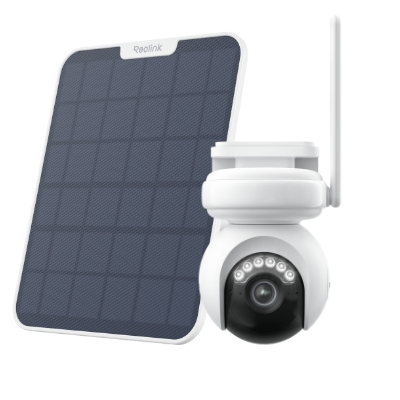
Industry-leading 4K Continuous Recording Battery Camera
4K UHD Continuous Recording; ColorX Night Vision; Pan & Tilt; Automatic Tracking; All Recordings Stored Locally.
Home Automation
Home automation tasks including light activation and thermostat adjustment are possible with motion sensors. They engage devices to increase ease of use and conserve energy in response to movement detection.
These sensors can control lighting, heating, and cooling systems so that everyday activities become easier and more efficient in smart homes.
Industrial Applications
Motion sensors are important in industrial contexts. They help manage machinery, allow for task automation, and watch over areas related to safety.
Their function includes noticing movement in broken zones or around equipment to help prevent accidents. Due to their large coverage potential in warehouses and manufacturing facilities, ultrasonic and microwave sensors are frequently adopted.
Smart Lighting Solutions
Included in smart lighting systems, motion sensors are what automatically control lights, switching them on or off based on activity in the room. PIR sensors and Ultrasonic sensors are commonly used to control lighting in various places, such as homes, offices, and outdoor spots including driveways and walkways.
FAQs
1.What Are the Most Common Motion Sensors?
Three of the most common sensors include PIR, Microwave, and contact sensors.
2.What is the Difference Between a Motion Sensor and a Pir Sensor?
A motion sensor may use sound waves. Microwaves, or light for detecting motion. A PIR sensor on the other hand uses infrared energy and detects motion using body heat.
3.Which Sensor is Best for Motion Detection?
Different motion sensors perform the best under different situations and requirements. For instance, the PIR sensors are perfect for detecting movement in tight places. Microwave sensors are good for large areas.
Conclusion
Different types of motion sensors play an important role in different types of applications. That is why it is very important to pick the right ones for your home security and automation system requirements. With this detailed guide, we hope that you now have a better understanding of different types of sensors and their applications in your use case.
Search
Subscribe for the Latest Updates
Security insights & offers right into your inbox