







What Is a Triple Lens Camera? How It Works and Why It Matters
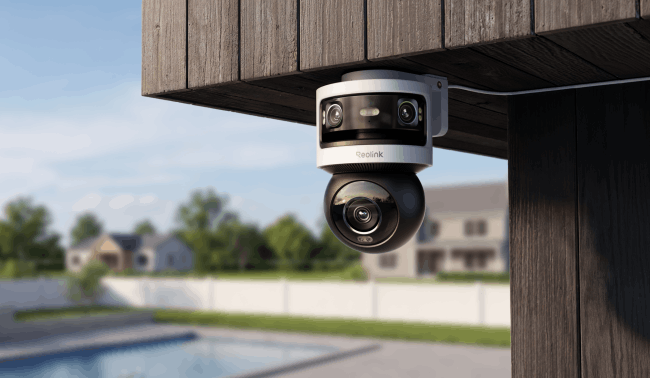
A triple-lens security camera combines three specialized optical sensors into a single housing to capture wide, standard, and close-up views simultaneously. By stitching these separate video feeds in real time, a single multi-lens unit provides complete 180° to 360° panoramic coverage alongside detailed optical zoom—eliminating blind spots without the high labor costs and complex wiring of installing multiple individual cameras.
But are three lenses always better than one or two? This guide explains how triple-lens cameras work, their advantages and limitations, and how to choose the right model for home or business security.
- What Is a Triple-Lens Camera?
- How Does a Triple-Lens Security Camera Work?
- What Are the Benefits of Triple-Lens Security Cameras?
- Triple-Lens vs Dual-Lens vs Single-Lens Cameras
- When Is a Triple-Lens Security Camera Worth It?
- What to Look for When Buying a Triple-Lens Camera? 6 Key Features
- Best Triple-Lens Security Camera: Reolink OMVI Series
- 4 Common Mistakes Buyers Make with Triple Lens Cameras
- Buyer's Decision Table
- FAQs
- Conclusion
What Is a Triple-Lens Camera?
A triple-lens camera is a camera system with three lenses that capture different parts of a scene or provide different viewing angles. Each lens typically works with its own image sensor, while the camera's processor manages the captured images.
The three lenses may serve different purposes depending on the camera type:
-
Wide-angle lenses: Capture larger areas and surrounding activity.
-
Telephoto lenses: Provide closer views of distant subjects.
-
Panoramic lenses: Capture overlapping views that software can combine into a wider image.
Not all triple-lens cameras use the same lens arrangement. Some focus on panoramic coverage, while others combine wide-angle and close-up monitoring.
How Does a Triple-Lens Security Camera Work?
Triple-lens cameras use three optical modules to capture images from different angles or focal lengths. The camera then processes these images based on its design.
1. Capture Images Through Three Lenses
Each lens captures light from the scene and sends image data to a sensor. Depending on the camera, the lenses may capture overlapping areas, different viewing angles, or subjects at different distances.
For example, a triple-lens security camera may use two wide-angle lenses to monitor a large area and a third lens to provide an additional view.
2. Process and Combine Images
The camera's processor handles the images captured by its lenses. Some triple-lens systems use image stitching to combine overlapping views into a panoramic image. Others display separate video streams or switch between different lenses.
Image stitching requires the camera to align overlapping parts of the scene. The quality of the final image depends on lens placement, sensor resolution, and processing technology.
3. Provide Panoramic or Multi-View Monitoring
Depending on the design, a triple-lens camera may offer:
-
Panoramic monitoring: Combine multiple views into a wider image.
-
Multi-view recording: Capture different parts of a scene at the same time.
-
Close-up monitoring: Use a dedicated lens to capture distant details.
-
Smart detection: Identify people, vehicles, or other supported objects across monitored areas.
However, three lenses do not automatically provide 360° coverage or optical zoom. These features depend on the camera's specifications.
What Are the Benefits of Triple-Lens Security Cameras?
A 360° or 180° triple-lens camera bridges the gap between wide coverage and distant detail. Single-lens wide cameras suffer from edge distortion and blurry digital zoom, while traditional PTZ (Pan-Tilt-Zoom) cameras leave blind spots when turned away.
-
Complete Field Coverage with Zero Blind Spots: Three synchronized sensors create a wrap-around view. You can monitor an entire driveway, parking lot, or storefront using a single wall mount.
-
True Optical Zoom Without Moving Parts: Telephoto hardware brings distant objects closer before recording. Digital zoom merely enlarges existing pixels, whereas multi-lens optical tracking preserves critical facial and license plate details.
-
Dual-Context Evidence Recording: During an intrusion or event, the system records the broad perimeter context while simultaneously holding a tight, zoomed-in focus on the subject.
-
Lower Installation & Hardware Costs: Running one Ethernet cable (Power over Ethernet) to a single triple-lens camera replaces the labor, cabling, switch ports, and NVR channels required for three separate standard cameras.
Triple-Lens vs Dual-Lens vs Single-Lens Cameras
Single and dual-lens cameras work well for narrow hallways or small indoor rooms. However, large yards, open parking areas, and commercial properties benefit significantly from a triple-lens layout.
When Is a Triple-Lens Security Camera Worth It?
A triple-lens security camera is worth the higher upfront cost when you need to monitor wide-open areas with a single device without sacrificing long-range detail or creating blind spots.
While a standard single-lens or dual-lens camera is sufficient for small entryways, narrow hallways, or low-traffic porches, a triple-lens system delivers distinct real-world advantages in specific high-demand scenarios:
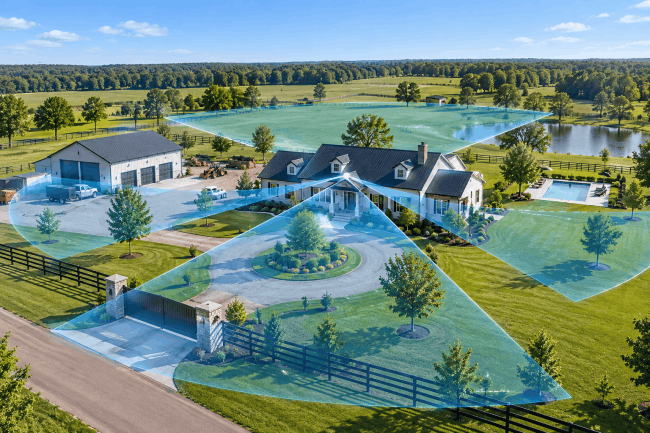
1. Monitoring Large, Open Properties (Wide Views + Distant Detail)
Single wide-angle cameras distort edges and blur when zooming in on distant details (like faces or license plates at the edge of a driveway).
Two wide-angle lenses stitch together a 180° to 360° overview, while the third telephoto/detail lens maintains crisp clarity on distant activity. It is ideal for large front yards, commercial parking lots, warehouses, and open acreage.
2. Replacing Multi-Camera Clusters
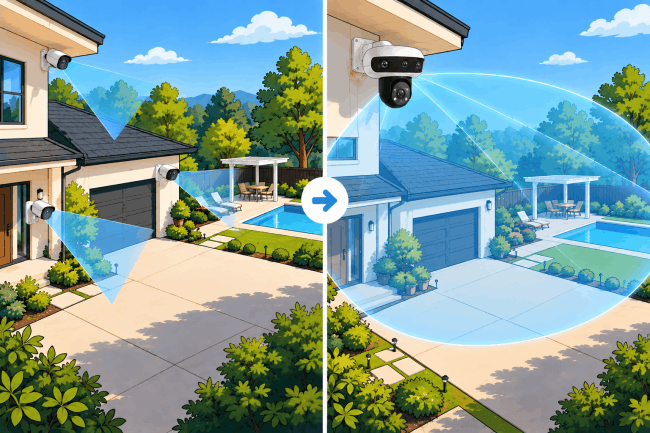
Covering a wide intersection, corner perimeter, or large storefront typically requires mounting two or three separate single-lens cameras. This triples cabling labor, switch port usage, and NVR recording channels.
A single triple-lens unit covers the same multi-angle area through one physical mount, requiring only a single Power over Ethernet (PoE) drop.
3. Capture-Critical Evidence
Pan-tilt-zoom (PTZ) cameras can track a moving subject, but they leave the rest of the perimeter unmonitored while turned away.
Multi-sensor architecture captures full wide-angle perimeter context while simultaneously tracking and zooming in on specific subjects, ensuring crucial evidence is never missed due to a camera looking the wrong way.
When It Is NOT Worth It?
A triple-lens camera is likely unnecessary if you are monitoring a small indoor room, a short townhouse porch, or a narrow corridor. In those constrained spaces, a standard single-lens indoor camera provides adequate coverage at a significantly lower cost.
What to Look for When Buying a Triple-Lens Camera? 6 Key Features
1. Resolution and Image Quality
Check the resolution of each lens alongside the final video output. When evaluating panoramic triple-lens cameras, compare the total overall image resolution and test how much fine detail remains when zooming in on distant objects.
2. Field of View and Image Stitching
Verify actual horizontal and vertical viewing angles to ensure seam-free alignment, as three lenses do not inherently guarantee 360° coverage.
Examine the camera's full horizontal and vertical field-of-view specifications. If the camera uses panoramic stitching, confirm that the combined video feed blends overlapping edges without visible seam lines, geometric warping, or distortion. Be aware that a triple-lens design does not automatically provide full 360° coverage.
3. Optical Zoom and Detail Capture
Triple-lens configurations vary significantly in optical design. Certain models feature a dedicated telephoto lens for detailed mid-range or long-range views, while others rely entirely on fixed wide-angle lenses. Always check the technical specs to confirm whether the model provides true adjustable optical zoom, a fixed telephoto module, or standard digital zoom.
4. Night Vision Performance
Look beyond lens count by evaluating sensor size, aperture ratings, and built-in lighting to determine nighttime image clarity. A higher lens count does not automatically guarantee superior night vision.
Assess the specific low-light technologies supported—such as infrared (IR) night vision, full-color night vision, or integrated spotlights. Keep in mind that physical sensor size, lens aperture, and ambient lighting conditions heavily influence real-world nighttime image quality.
5. Connectivity and Storage
Select a reliable power and data connection while choosing local storage options to avoid forced cloud subscription fees.
Triple-lens security cameras require stable data transmission and power delivery:
-
Power over Ethernet (PoE): Transmits both electrical power and network data through a single Ethernet cable.
-
Wi-Fi: Provides wireless network connectivity, though it still requires a wired power source unless powered by an onboard battery.
-
Local Storage: Compatibility with microSD cards and Network Video Recorders (NVRs) allows footage to be saved locally without relying on cloud subscriptions.
6. Smart Detection and Recording
Prioritize AI-powered smart detection and customizable detection zones to minimize false alerts and speed up video retrieval.
Review supported AI detection capabilities, including person, vehicle, and pet recognition. Check for customizable non-detection zones, instant push alerts, and flexible recording schedules. These intelligent features filter out false triggers (such as wind or shadows), making it substantially easier to find critical events in recorded footage.
Best Triple-Lens Security Camera: Reolink OMVI Series
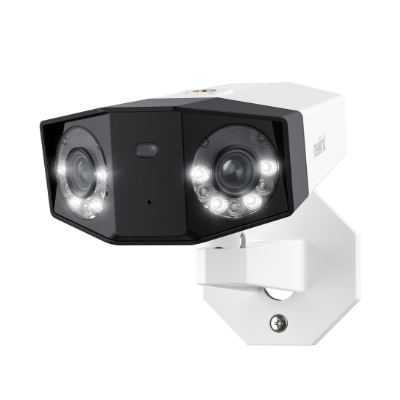
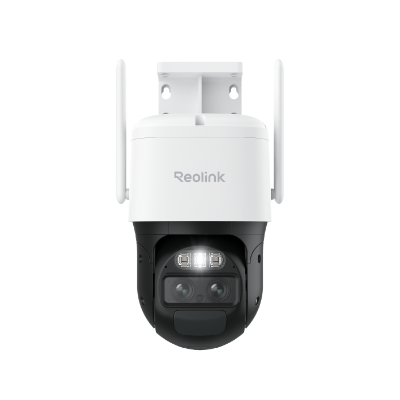
The Reolink OMVI Series offers specialized multi-lens security cameras that pair ultra-wide panoramic views with intelligent target tracking, providing full-property coverage without monthly subscription fees.
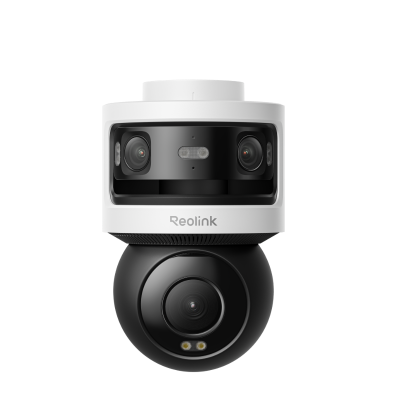
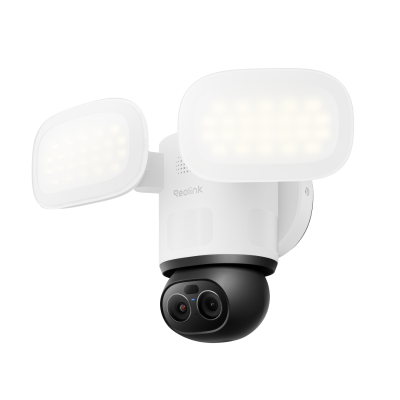
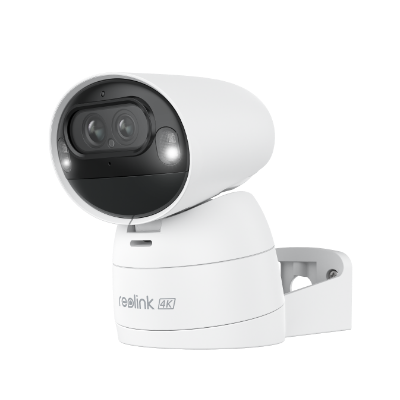
Reolink OMVI 3i PoE
A reliable Power over Ethernet (PoE) triple-lens camera engineered for single-cable setup, local recording, and wide-area monitoring without blind spots.
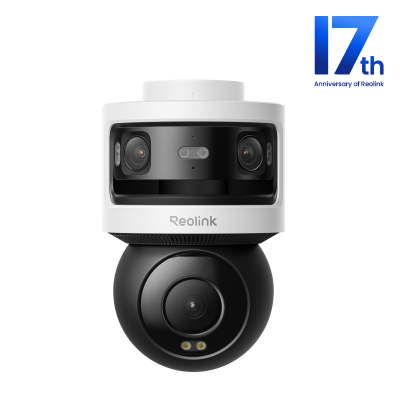
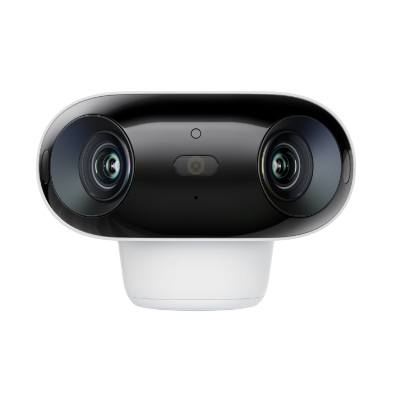
All-in-one Triple-Lens 180° Panoramic Pan-Tilt Security Camera
10MP Dual-Lens 180° View, 4K 360° Full Coverage, SyncTrack with auto framing & auto tracking, Local Storage (No Monthly Fees), Local AI Video Search.
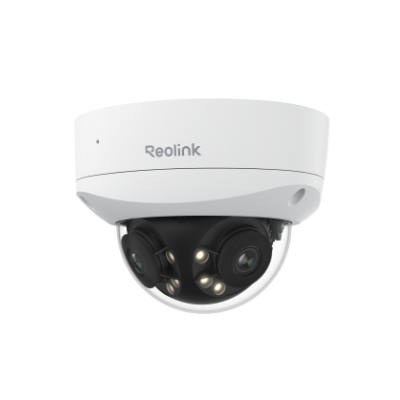
The Reolink OMVI 3i PoE combines three coordinated optical sensors into a single low-profile housing. Designed for homeowners and business owners looking for simple installation, it delivers real-time panoramic stitching alongside dedicated mid-range detail tracking. Powered through a single Ethernet cable, it offers continuous 24/7 recording to an NVR or local microSD card without requiring a monthly service plan.
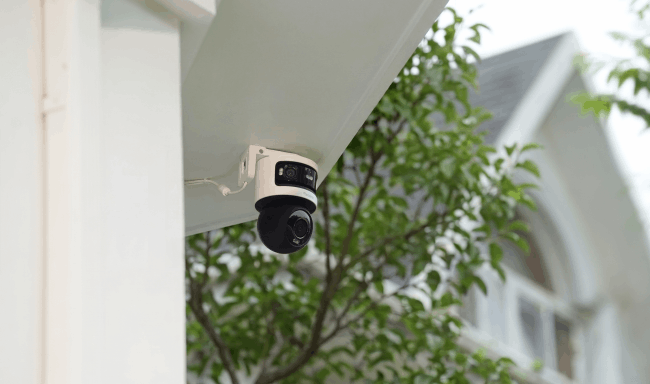
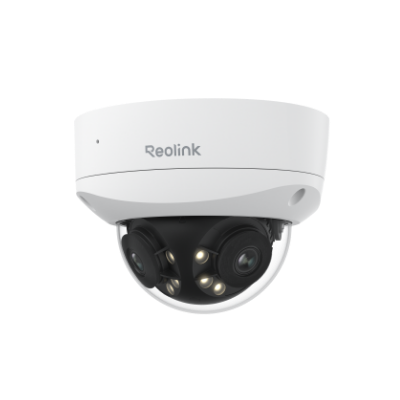
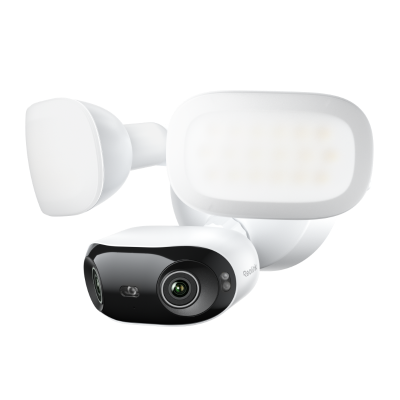
Reolink OMVI X16 PoE: Best for Advanced Wide-Area Security Monitoring
The new Reolink OMVI X16 PoE is built for demanding surveillance environments where standard fixed-lens cameras fall short. By integrating panoramic monitoring with long-range optical zoom, it allows users to keep an eye on an entire perimeter while simultaneously zooming in on distant activity with exceptional clarity.
Equipped with advanced multi-sensor tracking and AI-powered smart detection, the OMVI X16 PoE automatically follows subjects moving across wide open spaces without losing track of the surrounding context. Ideal for:
-
Large Estates & Acreage: Monitor long gated driveways, yards, and property lines simultaneously.
-
Commercial Parking Lots: Track vehicle movement across broad spaces while capturing fine details on distant subjects.
-
Warehouses & Loading Docks: Oversee interior floor activity and exterior loading bays with zero coverage gaps.
-
Open Business Grounds: Secure outdoor storage yards, storefronts, and perimeter fences using a single unified unit.
The Reolink OMVI X16 PoE is launching in November 2026. Visit our official website for the latest updates and early notifications!
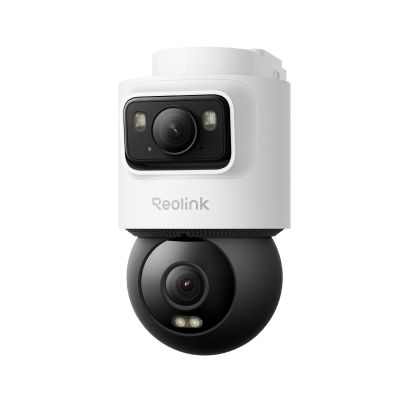
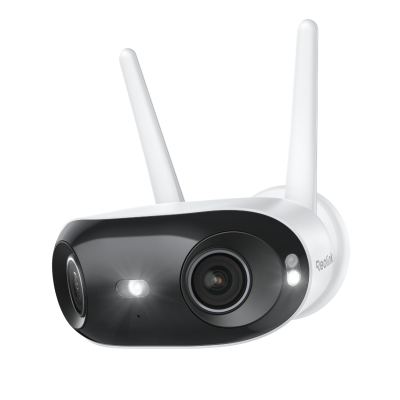
Reolink OMVI 3i Wi-Fi
A flexible wireless triple-lens camera that delivers wide panoramic coverage and smart detection over dual-band Wi-Fi without running network cables.
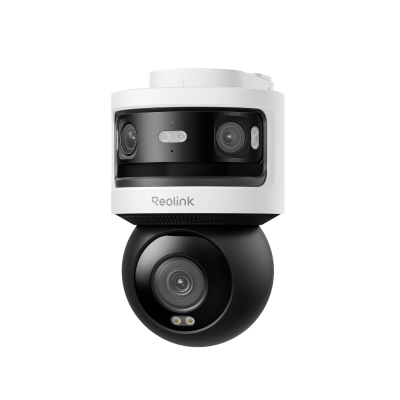
10MP+8MP Triple-Lens 360° Panoramic Pan-Tilt Camera
- 10MP Dual-Lens 180° View & 4K 360° Full Coverage
- Dual-Band WiFi 6 Connectivity & Local Storage
The Reolink OMVI 3i Wi-Fi brings multi-sensor panoramic monitoring to locations where running Ethernet cables is difficult or impractical. Featuring strong dual-band Wi-Fi connectivity, onboard smart AI detection, and subscription-free local storage, it offers the same multi-lens view as its PoE counterpart with added wireless installation flexibility.
4 Common Mistakes Buyers Make with Triple Lens Cameras
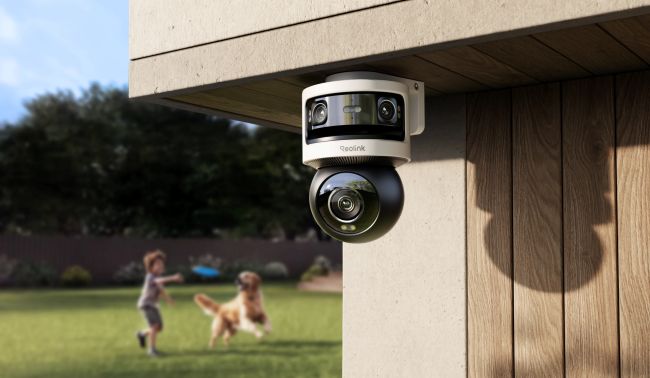
1. Mounting the Camera Too Low: Panoramic multi-lens cameras rely on elevated line-of-sight to stitch images correctly. Installing a unit below 8–10 feet can cause optical distortion on nearby foreground objects.
2. Overlooking Network Bandwidth and NVR Capacity: A triple-lens camera streams high-resolution data. Using older H.264 compression instead of H.265 can quickly congest Wi-Fi networks and fill up hard drives.
3. Assuming Extra Lenses Eliminate the Need for Adequate Lighting: While multi-sensor blending improves low-light clarity, zero-lux environments still require built-in IR or spotlight illumination to capture color detail.
4. Buying Standard Digital Zoom Cameras for Long Distances: Buyers often confuse digital enlargement with true multi-lens optical tracking. Always verify that the multi-lens system includes a dedicated telephoto or detail lens for long-range coverage.
Buyer's Decision Table
FAQs
What are the disadvantages of triple cameras?
Triple cameras cost more, draw extra power, and take up more space. Firmware must juggle three data streams, so updates matter. If one module fails, repair may require full unit replacement. Some budget models market three lenses yet use small sensors, so image quality still drops.
What is the difference between dual lens and triple lens?
Dual lens systems merge a main lens and either a wide or tele lens. They offer reasonable flexibility but still trade reach for width. Triple lens cameras add a third dedicated optic, so you gain wide, standard, and zoom coverage in one shot. That extra module widens the field while keeping detail.
Can a Triple-Lens Camera Record 360 Degrees?
Some triple-lens security cameras support 360° panoramic monitoring, but not all. The actual field of view depends on lens placement and image processing. Check the manufacturer's specifications for the horizontal and vertical viewing angles.
Does a Triple-Lens Camera Have Optical Zoom?
Not necessarily. Some models include a telephoto lens, while others use multiple wide-angle lenses for panoramic coverage. A fixed telephoto lens provides a closer view but does not automatically offer adjustable optical zoom.
Is a Triple-Lens Camera Better Than a Dual-Lens Camera?
A triple-lens camera may offer additional viewing angles or more monitoring options. However, a dual-lens camera can also provide wide panoramic coverage. The better choice depends on resolution, field of view, zoom, night vision, and monitoring needs.
Are Triple-Lens Security Cameras Worth It?
Triple-lens security cameras can be worth it for large yards, parking lots, and commercial spaces that need multiple views. For smaller areas, a single-lens or dual-lens camera may provide enough coverage at a lower cost.
What Is the Difference Between a Triple-Lens Camera and a 360° Camera?
A triple-lens camera has three lenses, while a 360° camera is defined by its viewing coverage. Some triple-lens cameras create panoramic images, but three lenses do not automatically provide 360° coverage. A 360° camera can also use other lens arrangements or rotating mechanisms.
Does Reolink Offer Triple-Lens Security Cameras?
Yes. The Reolink OMVI series offers a triple-lens security camera designed for wide-area monitoring. Check its official website for detailed coverage, recording, and detection capabilities.
Conclusion
A triple lens camera joins three lenses, three sensors, and fast software to deliver broad coverage and crisp detail in one device. It captures wide context, mid-frame clarity, and optical zoom all at once. When you shop, weigh resolution, stitching, night vision, and network features. If you use a 360° triple-lens WiFi security camera, you can cut blind spots and cables in one step. Share your thoughts or field notes below so other readers can learn from your experience.
Search
Subscribe for the Latest Updates
Security insights & offers right into your inbox