
Reolink vs Ring: Doorbell Cameras Compared [Features, Pros & Cons]
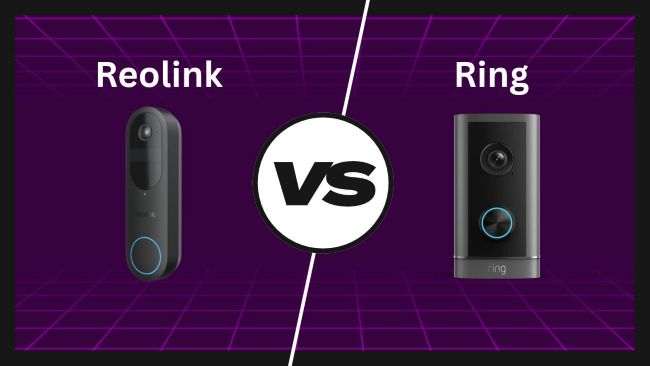
Reolink and Ring produces some of the most popular doorbell camera products today and you're probably in the midst of comparing between the two brands now. We've got many customers asking how Reolink products compare and before we clarify, most of them came to us confused.
This is why we created this guide to make things simpler. To keep this fair, we checked every claim against each brand's own pages, listed available specs, and named news reports. Here's the short version first.
Reolink vs Ring at a Glance
Reolink and Ring both sell DIY security cameras and doorbells. The real divide is where your video lives. Our doorbell cameras keep video local and treat a subscription as optional, while Ring's doorbell doorbell cameras lean on the cloud and a paid plan.
An NVR is a small recorder box that saves video at home. A Home Hub does the same job for wireless cameras. There are other brands that sells video doorbells too, but this guide sticks with Reolink and Ring.
Company Details
What is Reolink?
Reolink is a security camera brand that we founded in 2009. We make cameras, video doorbells and recorders for homes and small businesses. There are now millions of people using our products across more than 110 countries and regions, and that we grew our offline retail presence to over 3,000 stores in 2025. Reolink products are built around local storage, so your video can stay on a microSD card, an NVR or a Home Hub instead of a paid cloud plan (optional).
What is Ring?
Ring is Amazon's smart home security brand, and it sells video doorbells and security cameras founded by Jamie Siminoff in 2013. Founder Jamie Siminoff started the company in his garage. It has been acquired by Amazon acquired Ring for a reported $1 billion in 2018, Jamie Siminoff now oversees Ring along with Amazon's Blink, Key and Sidewalk teams.
Who Designs and Builds These Doorbell Cameras
Both Reolink and Ring design their own hardware. Ring is owned by Amazon, and Ring has its own hardware design engineers for its research and development team.
On Reolink's side, we have our own team to research, design, and manufacture our own cameras, doorbells and recorders.
The Core Difference: Who Owns Your Footage
Reolink doorbell cameras save your footage at home, while Ring doorbells cameras save it in the cloud. Think of it like keeping photos on your phone versus in an online album.
Reolink doorbell cameras record to a microSD card, an NVR or a Home Hub with no subscription. Ring doorbells need a Ring Protect plan for cloud video history, saved clips and Package Alerts.
Both brands keep the basics free. Reolink's smart detection, two-way audio and local storage carry no fee. Ring's Live View, real-time motion alerts, two-way talk and motion zones are free too. The line falls at recorded history and smart alerts, not at everything.
Ring's subscription plans is Ring Protect. This is where the monthly cost comes in. It comes in four tiers:
- Ring Solo
- Ring Multi
- Ring Pro
- Virtual Security Guard.
A plan unlocks up to 180 days of cloud video history, saved and shared clips, and Package Alerts. Gizmodo reported in June 2026 that Ring doorbells need a subscription to access recorded footage and receive package alerts. Their current plan prices are on its own site.
For Reolink, there is a subscription option too: Reolink Cloud. But, it's an optional paid add-on. It adds off-site backup in selected countries and local recording stays free either way.
Note: To find out what our subscription entails, check out our subscription guide for more detail.
Here's the catch with Ring's local option. Ring Edge is Ring's local-storage feature, and it only works with a Ring Alarm Pro. That's a separate base station that runs their home alarm system, and it also has a built-in Wi-Fi 6 router, a siren and a backup battery.
Ring Edge saves video to a microSD card inside that base station, which you buy yourself. It also needs a compatible Ring plan, and your Ring devices must be on the same network as the base station.
According to Ring, Ring Edge supports 1080p recording and isn't compatible with 2K or 4K devices. All eight of their current doorbells are 2K or 4K. That means Ring's current doorbell cameras have no local storage option, so the cloud is the only home for your doorbell video.
Doorbell Camera Lineup, Model by Model
Reolink's three current doorbell cameras skip the subscription and top out around 2K. Ring's eight-model range includes three 4K doorbells.
Reolink's Three Current Doorbell Cameras
Reolink currently sells three doorbells. The PoE and WiFi models are wired only, and the Battery model runs on a battery or doorbell wiring.
Wiring is the biggest practical question. PoE means power over Ethernet, so one network cable brings power and internet to the PoE model. That suits a home with an Ethernet cable at the door. If you don't have one, the WiFi or Battery doorbell fits better. The Video Doorbell WiFi runs on your existing doorbell wiring and joins your Wi-Fi.
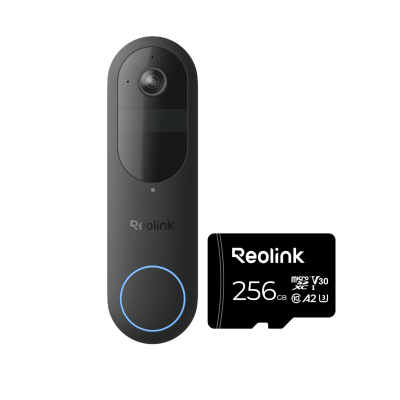
Smart 2K+ Plug-in Wi-Fi Video Doorbell with Chime
Both wired models record 5MP (2K+) video, and both carry an IP65 weather rating to resist rain and dust. They can also save to an NVR or Home Hub. The PoE model comes in white with a taller 3:4 view or in black with a wider 4:3 view.
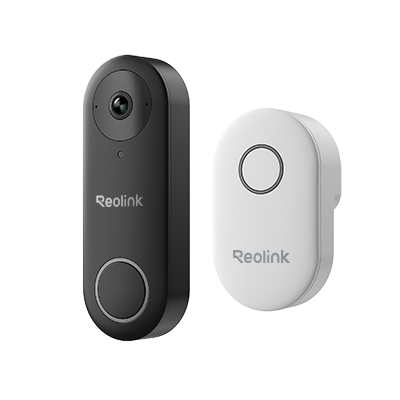
Smart 5MP Video Doorbell with Chime
5MP Super HD, Person Detection, Power over Ethernet, 180° Diagonal Viewing Angle, Two-Way Audio, High-Quality Night Vision.
Reolink's Battery Video Doorbell (2nd Gen) is the flexible one as it can also be wired. It records 4MP (2K) video in a square 1:1 view with a 150° field of view both horizontally and vertically. That shows a visitor from head to toe. On battery, it records when it detects motion and lasts up to 300 days with five minutes of recording a day. When wired, it can record around the clock to a microSD card. An optional solar charger also helps keep the battery topped up.
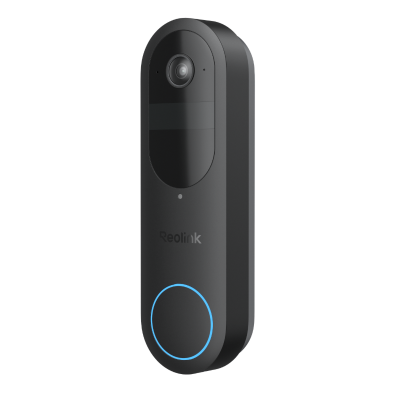
2K Battery Wi-Fi Video Doorbell with Smart Detection
- 2K 4MP Head-to-Toe View
- Person/Vehicle/Animal/Package Detection
- 300-Day Lasting Battery Life
- No Monthly Fees for Local Storage
Ring's Eight Current Doorbell Cameras
Ring sells eight current doorbell cameras, split evenly between wired and battery models. Three of them reach 4K.
A few details matter day to day. The Elite runs on Power over Ethernet and adds remote gate access. The Battery Doorbell 2K has a built-in battery, while the Battery Doorbell 2K Plus and Battery Doorbell 4K Pro use removable battery packs. The Peephole Cam 2K is a battery camera that fits a compatible door peephole with no drilling.
The 4K trio is the Battery Doorbell 4K Pro, Wired Doorbell 4K Pro and Wired Doorbell 4K Elite.
Package Detection
Both brands offer package detection, and the cost is where they differ. Reolink includes it at no charge for all three current doorbell cameras.
Ring's Package Alerts work on every current doorbell except the Peephole Cam 2K. But, they need a paid Ring plan, which they are also upfront about the limits. According to Ring, envelopes, tubes, small boxes and food deliveries might not be detected. It says the feature works best with medium to large shipping boxes.
Resolution and Field of View
On paper, Ring's range of doorbell cameras have three models out of eight that specced 4K resolution, while Reolink has 2K across it's three models.
That said, the head-to-toe view isn't a difference anymore. Ring lists it on all eight doorbells, and its Battery Doorbell 2K has a square 1920×1920 view at 140° each way. Reolink's models are square too, at 150° each way. Either way, you'll see a visitor and the package at their feet.
Smart Home Fit
As a subsidiary of Amazon, Ring's doorbell cameras support Alexa. But, so does Reolink's, according product specifications.
Reolink's doorbell cameras also support Google Assistant, which is Google's voice assistant. Last but not least, they are also compatible with Home Assistant. It's free, open-source smart home software that you can run yourself.
Ring's doorbell cameras are also compatible with Home Assistant but they are not known to be compatible with Google Home directly. That said, users have recommended manual workarounds to those who are looking to integrate Ring doorbell cameras with Google Home.
Which Brand Fits Your Situation
After such a detailed breakdown, the right choice should depend on where you want your footage to live, not on which brand is better. Here's how the common situations shake out.
- You want no subscription for core features: Reolink fits here. Local recording is free on all three of our doorbells.
- You rent or can't commit to permanent wiring: It's a toss-up. Both brands sell battery doorbells.
- You want the highest resolution on paper: Ring wins with its three 4K doorbells.
- You want a head-to-toe view: Call it even, since both brands list one.
- You use Google Home or Home Assistant: Reolink's doorbell cameras fit better, because they support Google Assistant and Home Assistant. For Ring, it's best to confirm on current Google support first or check out user workarounds.
- You use Alexa: No clear winner here. Both brands support it.
- You care how your doorbell camera is designed and built: Reolink has the edge for now as the R&D, design, and manufacturing of the products are all owned by Reolink.
FAQs
Does Reolink or Ring require a monthly subscription?
Reolink doesn't, but Ring mostly does for recorded video. Reolink's core features need no subscription, while Ring needs a Ring Protect plan for cloud video history, saved clips and Package Alerts. Live View and real-time alerts are free on both brands.
Is Reolink or Ring better for a video doorbell?
Neither wins outright, so it depends on what you value. Reolink doorbell cameras suit you if you want free local storage and Google Assistant or Home Assistant support. Ring suits you if you want the highest resolution on paper, since three of its doorbells record in 4K.
Does Ring or Reolink have higher resolution doorbell cameras?
Ring does. Its Battery Doorbell 4K Pro, Wired Doorbell 4K Pro and Wired Doorbell 4K Elite record in 4K. Reolink PoE and WiFi doorbell cameras record 5MP (2K+), and the Battery Video Doorbell (2nd Gen) records 4MP (2K).
Do Reolink and Ring doorbell cameras have package detection?
Yes, both do. Reolink includes it at no charge on the Battery Video Doorbell (2nd Gen), WiFi doorbell and the white PoE doorbell. Ring needs a paid plan for Package Alerts, and its support page says small items like envelopes might be missed.
Can I use a Ring or Reolink camera without any cloud storage?
Yes with Reolink, and no with Ring's current doorbells. A Reolink camera or doorbell records to a microSD card, an NVR or a Home Hub with no cloud involved. Ring's current doorbells have no local storage option, so the cloud is their only recording path.
Which is better for renters, Reolink or Ring?
It's a toss-up, since both brands sell battery doorbells that need no wiring. Reolink's is the Battery Video Doorbell (2nd Gen), and Ring's are the Battery Doorbell 2K, 2K Plus and 4K Pro. Ring also sells the no-drill Peephole Cam 2K, so the choice comes down to subscription and smart home factors, not install type.
Conclusion
Choosing between Reolink and Ring isn't really about which brand is better. It's about where you're comfortable keeping the footage from your front door.
If you'd rather own your recordings and skip the monthly bill, Reolink doorbells are built for that. Video saves to a microSD card, an NVR or a Home Hub, and Google Assistant and Home Assistant support is there if your smart home leans that way. If the sharpest picture on a spec sheet matters most, and a plan to keep your clips doesn't bother you, Ring's three 4K doorbells are worth a close look.
Before you buy, here are three simple questions worth asking. What does your door already have: an Ethernet cable, doorbell wiring or neither? Do you want your video at home or in the cloud? And which smart home setup do you already use? Your answers should point you to the right doorbell faster than any spec comparison if you managed to read to this point.
Ready to match a model to your door? See our full doorbell lineup.
Search
Subscribe for the Latest Updates
Security insights & offers right into your inbox