


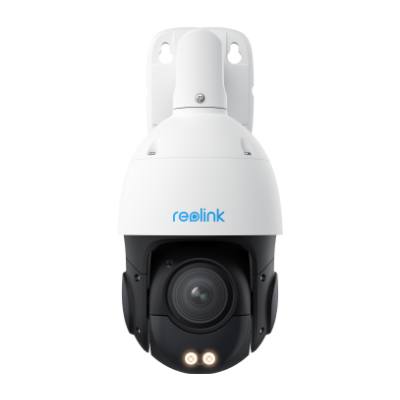
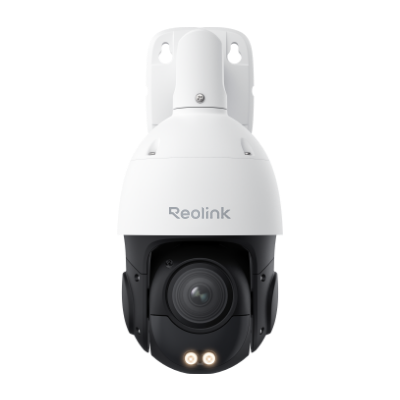
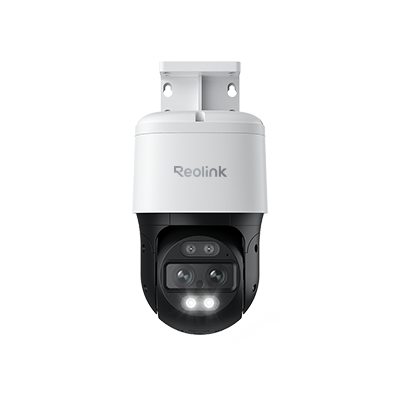
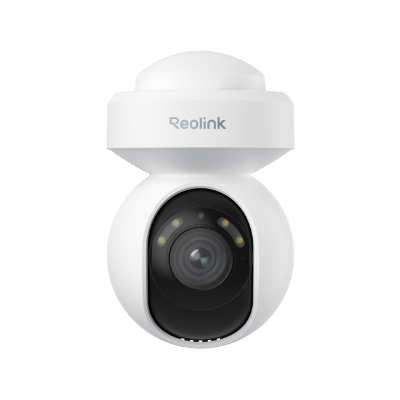

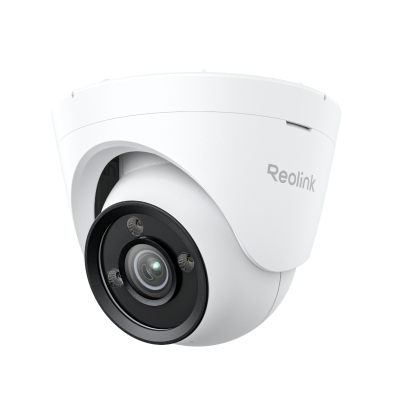

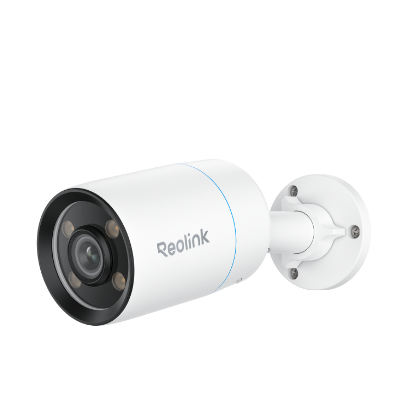
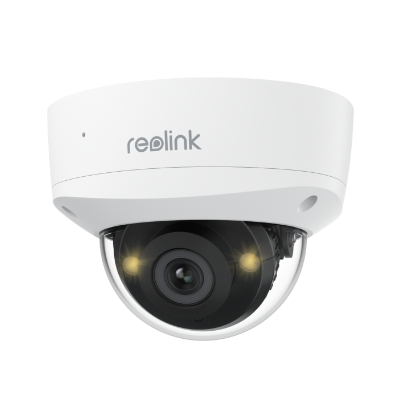
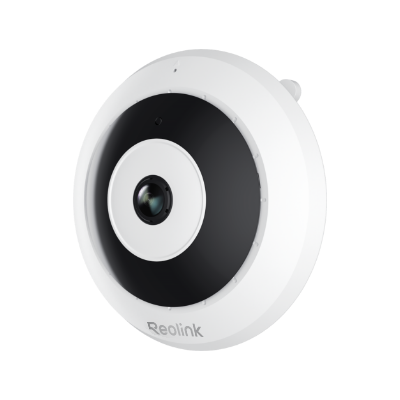
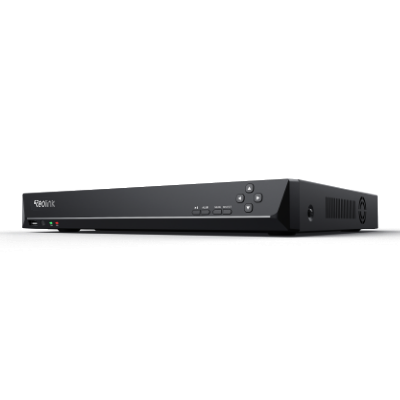
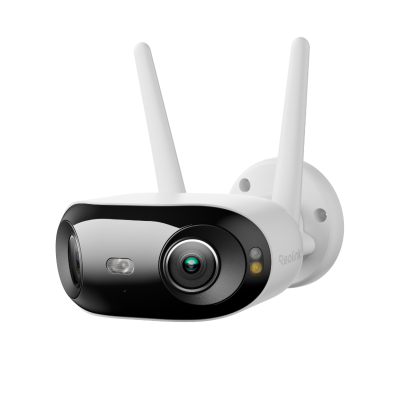
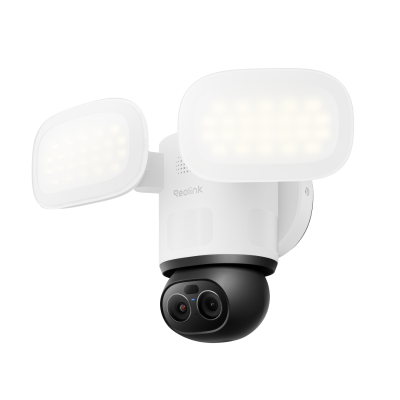
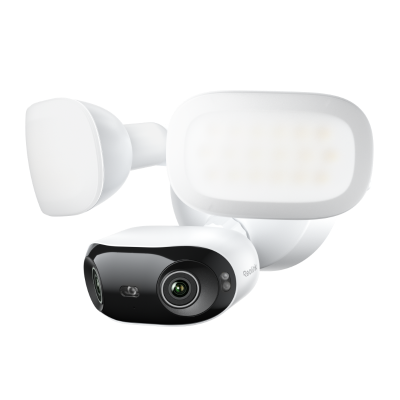

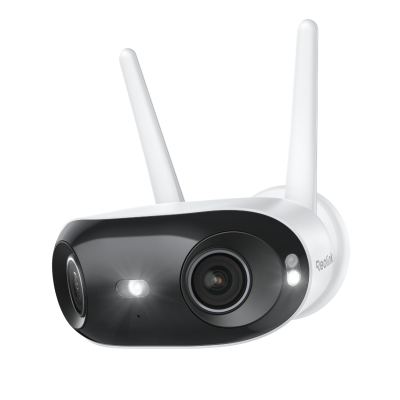
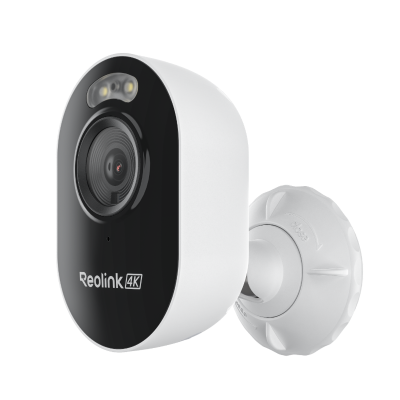
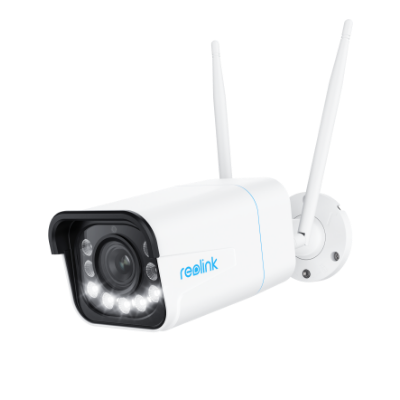
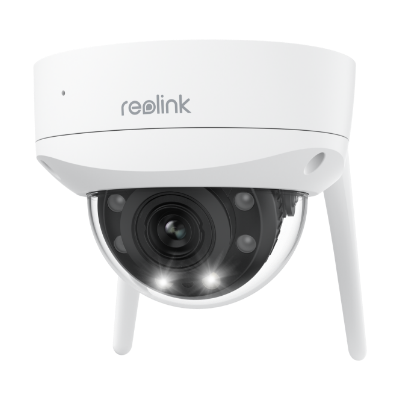
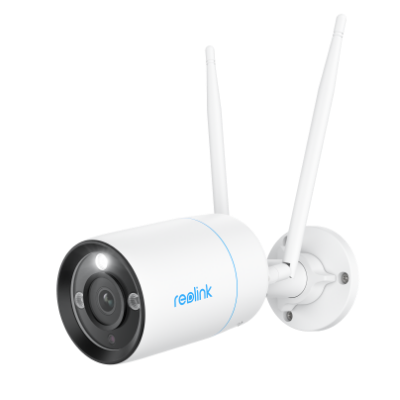
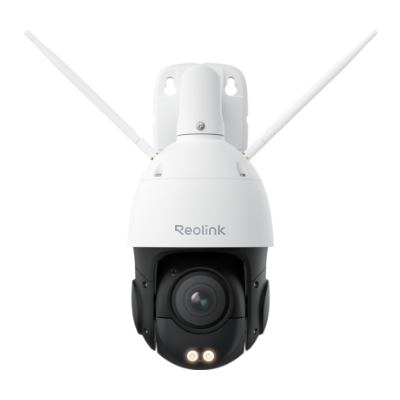


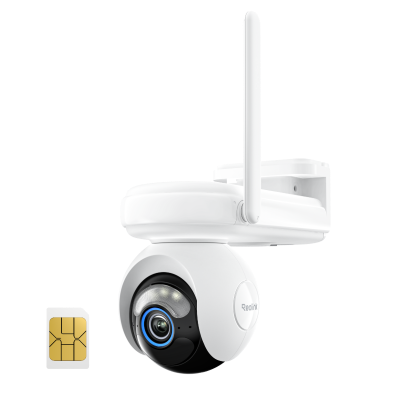
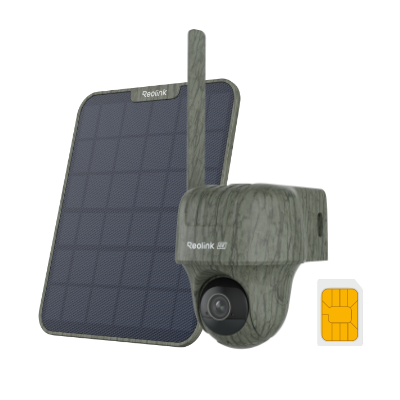
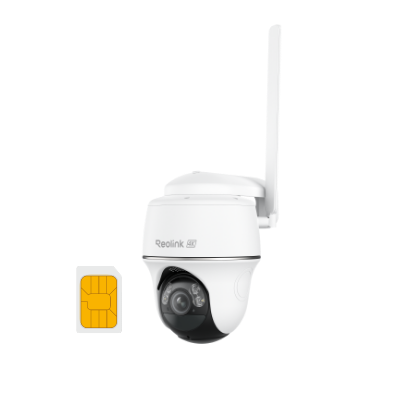
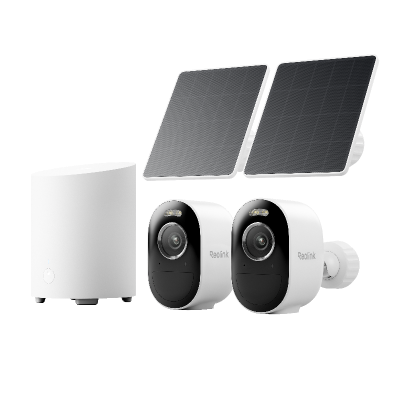
Reolink Duo 2 Series: 2026 Full Guide
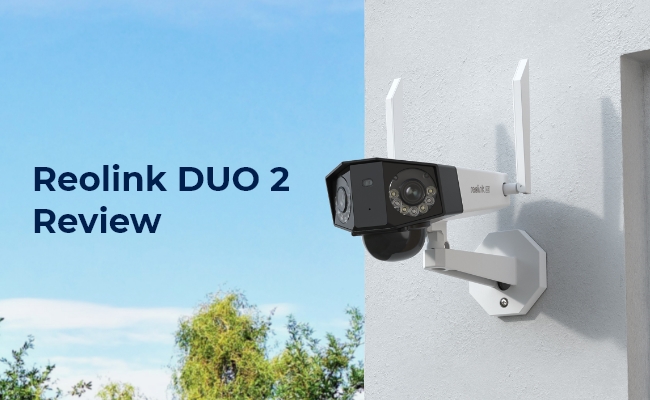
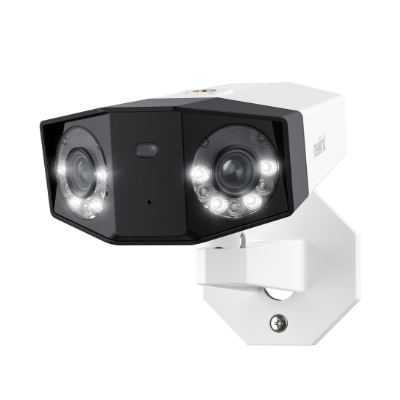
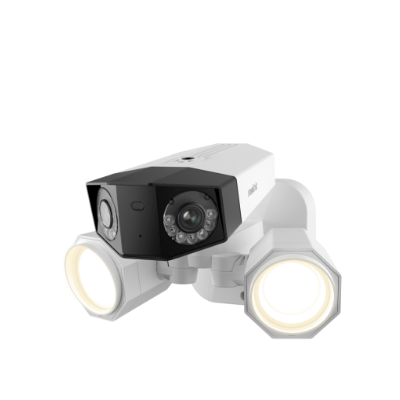
The Reolink Duo 2 series is a single camera design built four different ways, PoE, WiFi, Battery, and LTE, so it fits almost any spot around a home or property.
All four use the same dual-lens design for a single 180° view with no blind spot down the middle. What actually separates them is how each one gets power and gets online, and that's the one decision that determines which model is right for your specific mounting spot.
Here's what's shared across the whole lineup, what changes from model to model, and which one to pick depending on where you're actually installing it.
Reolink Duo 2 Series: Core Feature Breakdown
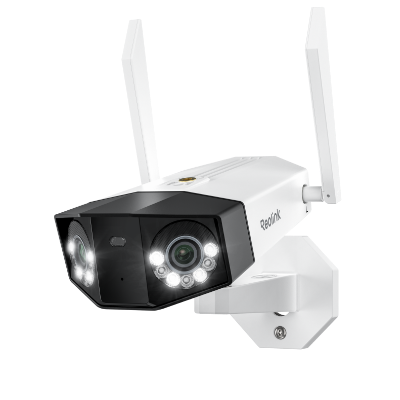
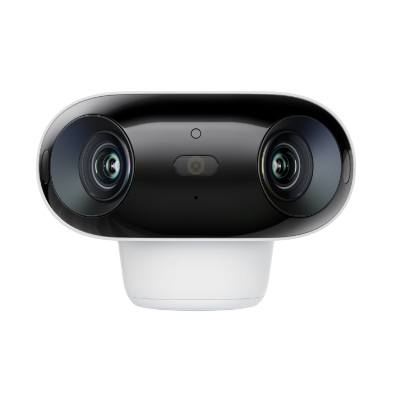
Dual Lens, 180° Coverage
Each Duo 2 camera has two separate lenses shooting two separate video feeds, stitched together into one continuous 180° panoramic view. That's what removes the blind spot a single fixed lens leaves at the edge of its frame, one camera covers what would otherwise take two.
Not every dual lens camera does that stitching well, and it's worth knowing what actually defines a good dual lens camera, since it's not the total megapixel count on the spec sheet.
It comes down to three things:
-
How well the lenses match exposure and color as light changes
-
How much their fields of view overlap to avoid a blind spot
-
How sharp the image remains at the edges.
The original Duo only stitched its two video feeds together inside Reolink's own app. View a footage recorded by the Duo and you'd see two separate, unstitched images instead of one. The Duo 2 moved that stitching onto the camera itself, so the combined 180° view is built into the footage everywhere it's viewed, not just in the app.
The progress doesn't stop at the launch of the Duo 2. Reolink has also kept refining the stitching itself. A Duo 2 firmware update specifically targeted "the overstretching in the middle part of the stitching," the distortion that showed up when something like a car or a person crossed the seam between the two lenses, along with a color-shift bug during day and night transitions.
Note: Reolink has its own plain breakdown of how the stitching itself works, for anyone who wants to understand the deeper technical version of how footage stitching works.
Weatherproofing and Operating Range
The four models don't all carry the same waterproof rating. The Duo 2 PoE and Duo 2 WiFi are IP67 rated while the Duo 2 Battery and Duo 2 LTE are IP66.
In practice, IP66 rating means the camera can take a direct blast from a hose or driving rain head-on without an issue.
IP67 goes a step further. It can survive full submersion in water (roughly a meter deep) for around 30 minutes.
This means the PoE and WiFi models have a bit more margin if one ever ends up sitting in standing water during a storm.
All four models are rated to run from -10°C to 55°C (14°F to 131°F), so the operating range itself doesn't change based on which one you pick, only the water rating does.
Two Night Vision Modes
The Duo 2 series cameras provide both Infrared and color night vision.
Infrared night vision gives black-and-white footage and provides a sharper footage in full darkness while color night vision activates a spotlight to capture true colors in low light instead.
With both modes available, you'll be able to adapt a Duo 2 series to capture sharp footages no matter how dark the night becomes in your area.
Smart Detection
With Reolink's Smart Detection technology, the Duo 2 series cameras can tell people, vehicles, and pets apart from other movement before sending an alert. This helps to significantly reduce false alerts a basic motion sensor would send for a passing shadow or a tree branch.
Storage
The PoE and WiFi version support cards up to 512GB while the Battery and LTE version cap out at 128GB. All four of them also work with a Reolink NVR for centralized storage. If you are looking to utilize an FTP server, the PoE and WiFi supports it.
Reolink Duo 2 Series Camera Models
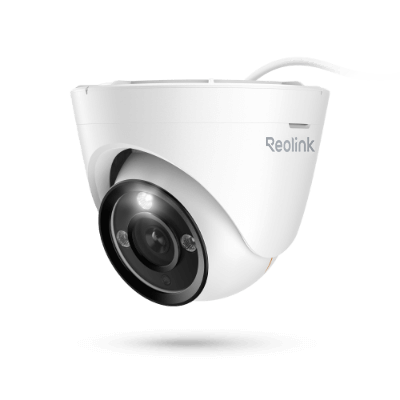
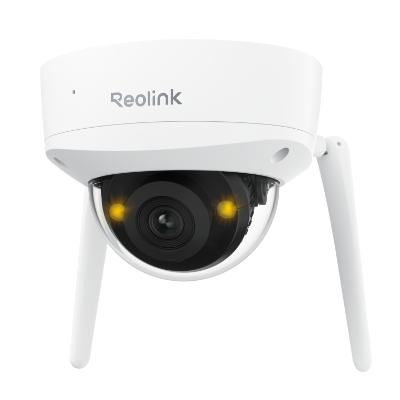
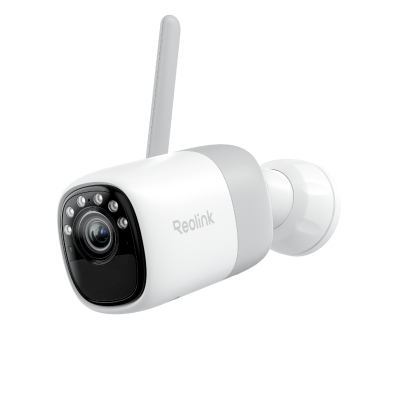
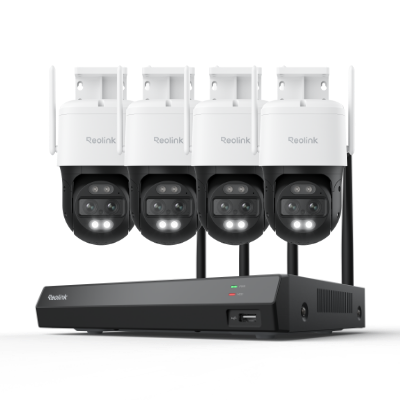
Reolink Duo 2 PoE
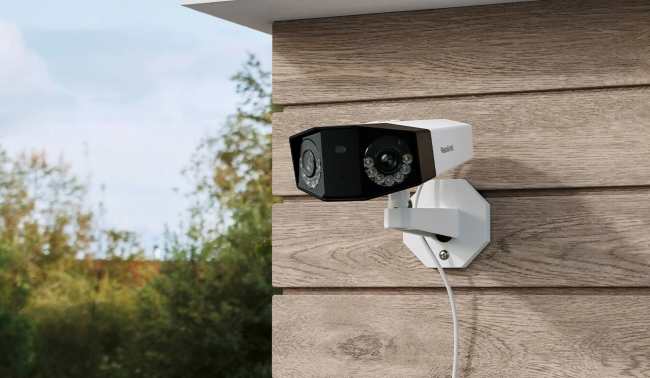
The Reolink Duo 2 PoE is the PoE camera version in the line up.
Because it uses a single Ethernet cable instead of WiFi, the camera delivers a more stable connection with no signal dropouts, even when installed far from your router. The trade-off is that you'll need to run an Ethernet cable to the camera's mounting location.
Once it's connected, setup is plug and play, no separate power adapter to find room for.
Best for: a fixed spot you're setting up properly such as a driveway, a main entrance, a storefront, or anywhere running one Ethernet cable is a one-time job and a stable feed matters more than convenience.
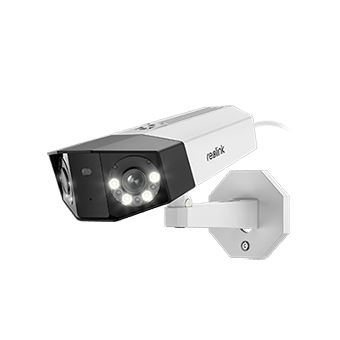
Smart 4K Dual-Lens PoE Camera
4K 8MP Super HD, Dual-Lens, Person/Vehicle Detection, 180° Wide Viewing Angle, Power over Ethernet, Color & Infrared Night Vision.
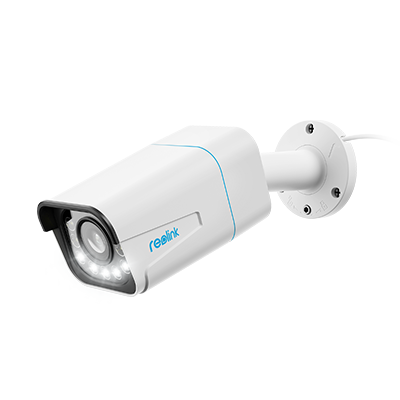
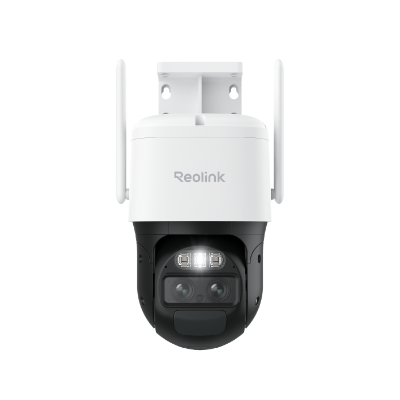
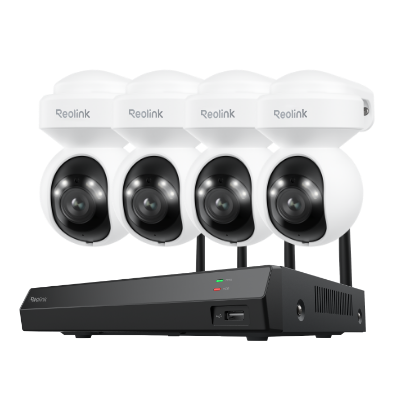
Reolink Duo 2 WiFi
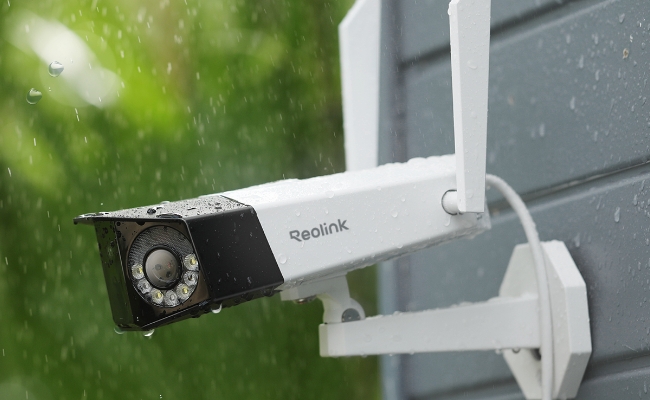
The Reolink Duo 2 WiFi trades the Ethernet run for a wall outlet and a WiFi connection instead. It makes it faster and simpler to mount somewhere without pulling cable, as long as the WiFi signal actually reaches that spot.
Two 2T2R MIMO antennas are there specifically to keep that connection stable at a distance from the router, rather than a single antenna straining to hold the link.
Best for: a spot within reach of both an outlet and your WiFi, like above a garage door or a side entrance, where you want a quicker mount than running Ethernet but don't need to go fully wireless.
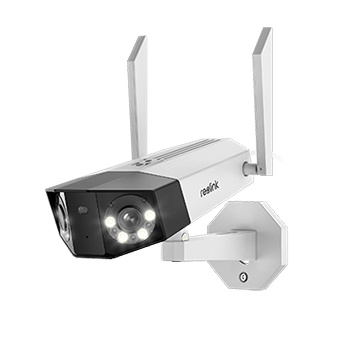
Smart 4K Dual-Lens WiFi Camera
4K 8MP Super HD, Dual-Lens, Person/Vehicle Detection, 180° Wide Viewing Angle, 5GHz/2.4GHz WiFi, Color & Infrared Night Vision.
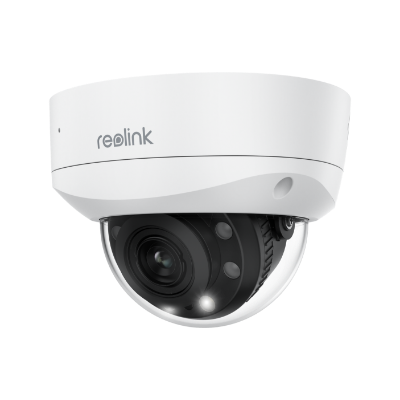
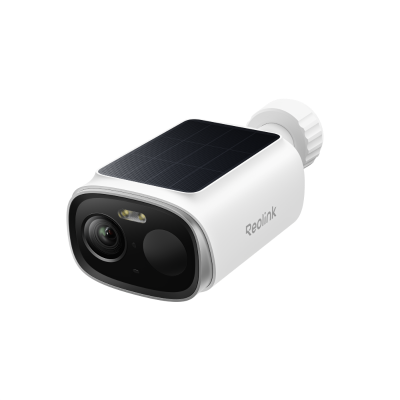
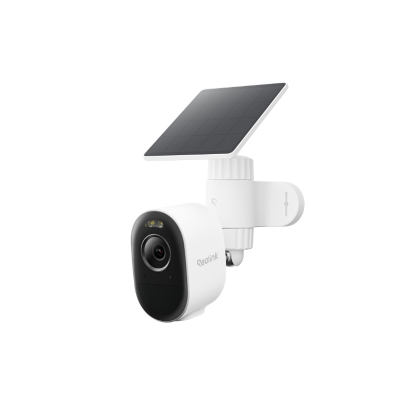
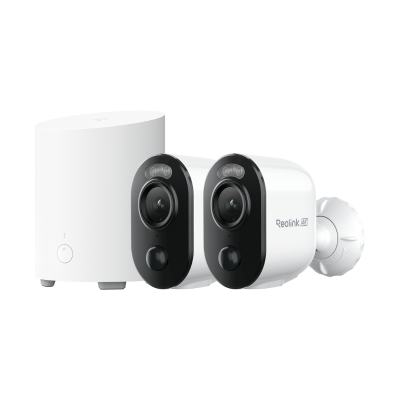
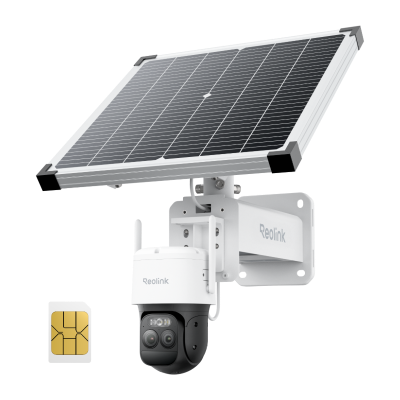
Reolink Duo 2 (Battery)
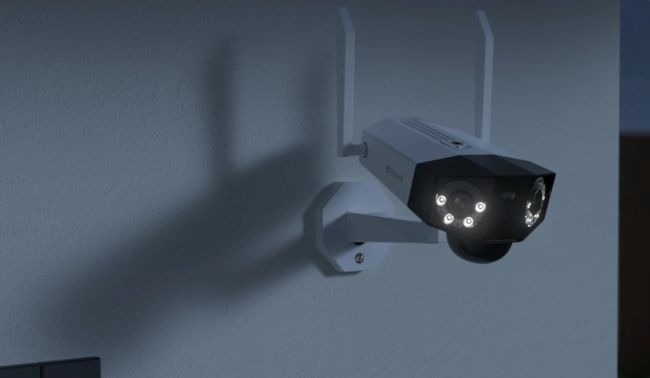
One of the key strengths of the battery version is that it keeps recording to the microSD card even without a WiFi connection at all. WiFi only comes into play when you want to check the live feed or get a remote alert.
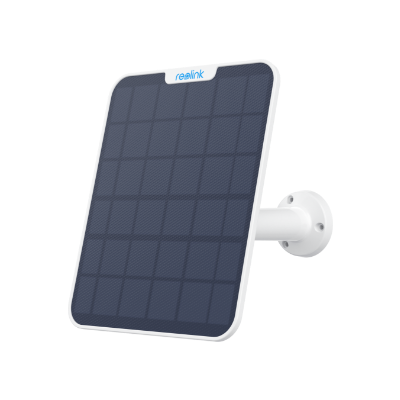
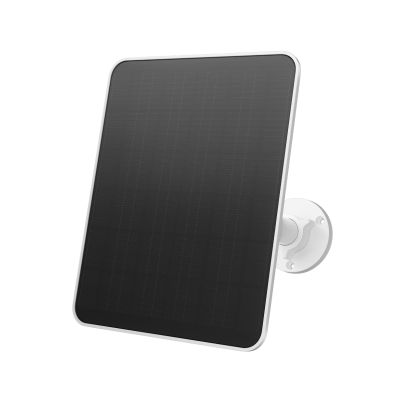
This model is currently sold as a single bundle with a solar panel included, not as a bare camera on its own, so the price on the product page already reflects both pieces together.
Best for: a spot with no outlet and no cable run, but still within reach of your home WiFi such as sheds or driveway gates where the included solar panel means you're not climbing up to recharge it on a schedule.
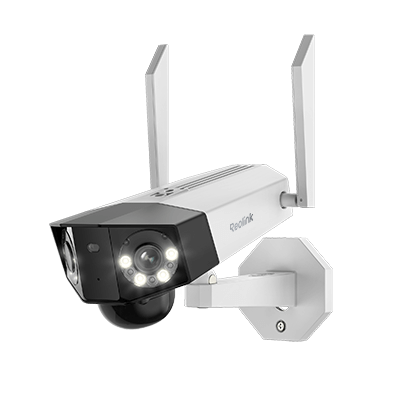
Smarte 2K+ Akku-Kamera mit Dual-Linsen
6MP Super HD, Personen-/ Fahrzeugerkennung, Ansicht in 180°-Weitwinkel, Akku-/ Solarbetrieben, Dual-Band WiFi, Farbige Nachtsicht.
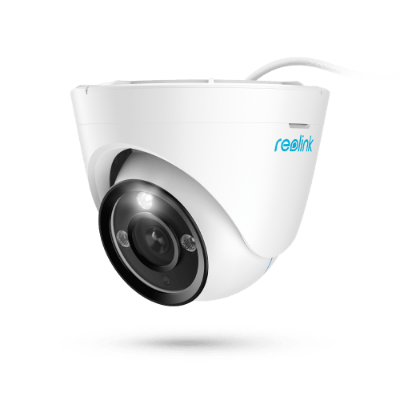
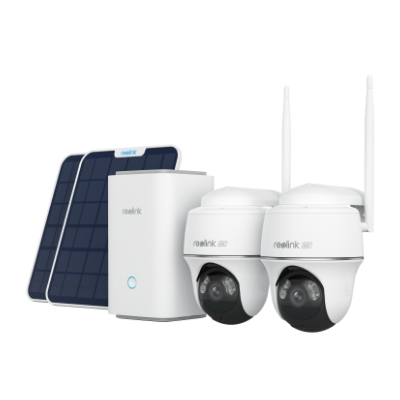
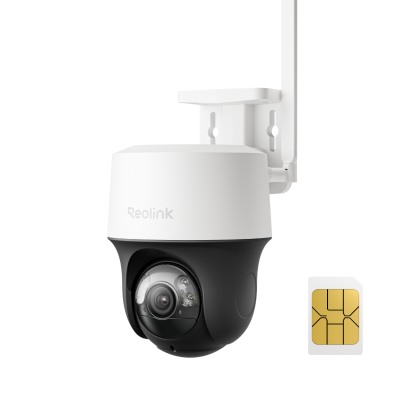
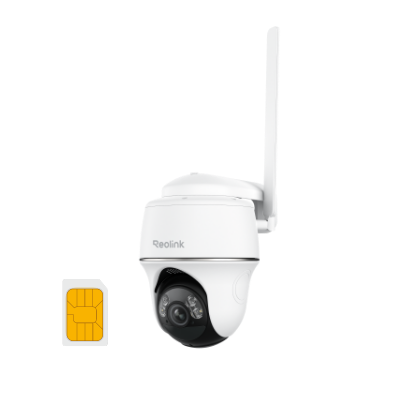
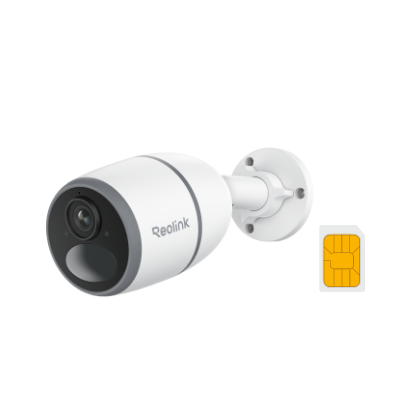
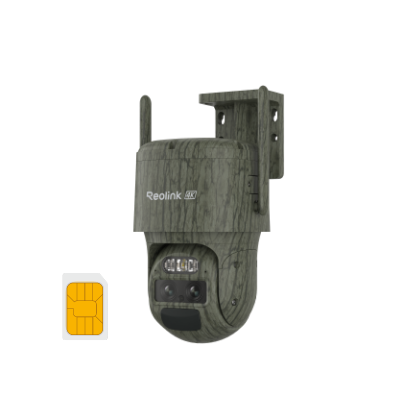
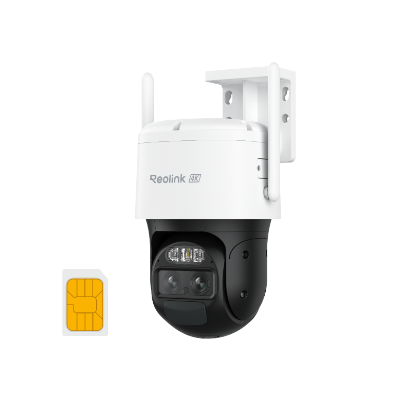
Reolink Duo 2 LTE
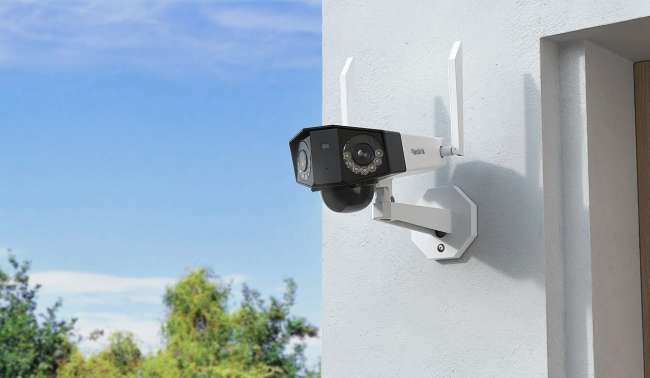
The Reolink Duo 2 LTE is the one model in the series that doesn't need WiFi, an outlet, or an Ethernet cable at all. It just needs a SIM card with a data plan.
That makes it the pick for a spot with no network reach of any kind. It records to microSD by default, with encrypted cloud storage available as a paid add-on if you'd rather not rely on the card alone.
Best for: the one spot none of the other three can reach, nowhere near WiFi, an outlet, or a cable run. It's purely designed to perform in genuinely off-grid locations like a remote gate, a plot of land away from the house, or an RV parked away from a home network.
Smart 2K+ Dual-Lens 4G LTE Camera
6MP Super HD, Person/Vehicle Detection, 180° Wide Viewing Angle, Battery/Solar Powered, 4G LTE Network, Color Night Vision.
Comparing the Reolink Duo 2 Series
The four models differ in how they're powered and how they get online. Everything else carries across all four models the same way.
Reolink Duo 2 vs. Duo 3: Do You Need to Upgrade?
Reolink's newer Duo 3 lineup uses the same dual-lens idea but
- Doubles resolution to 16MP
- Adds a wider f/1.6 lens for better low-light color video
- and draws less power despite the higher resolution.
As a more advanced model, it will cost more and the Duo 2 series is still a fully current, actively sold lineup.
So, if 8MP already covers what you need, this generation is the better value. But, if you specifically want to zoom into finer detail like a face or a plate number, the Duo 3 is worth considering as the better performer.
Note: If you are looking for a more detailed comparison between the Duo 2 series performance, Reolink's own Duo 2 PoE vs. Duo 3 PoE comparison guide provides some valuable spec information worth learning.
Warranty and Support
Every Reolink Duo 2 model comes with a 30-day money-back guarantee and a 2-year limited warranty, with support available 24/6. See Reolink's warranty page for the full terms.
Real Customer Experiences
Every quote below is a verified purchase either from Reolink's own open review page or from Amazon. Note that these are honest reviews posted on customers' own accord.
Duo 2 PoE. Joel, a verified buyer, reviewing on Reolink's site (Nov 2024):

"I have had a POE Duo 2 outside watching my carpark for about 3 years now. It is out in the elements all the time and always perform flawlessly. Great quality vision, excellent features and a great mobile application as well. The 180 degree view is excellent for easily covering large areas. Just about to order another one for my house."
Duo 2 WiFi. Yack, a verified Amazon buyer (March 2026):
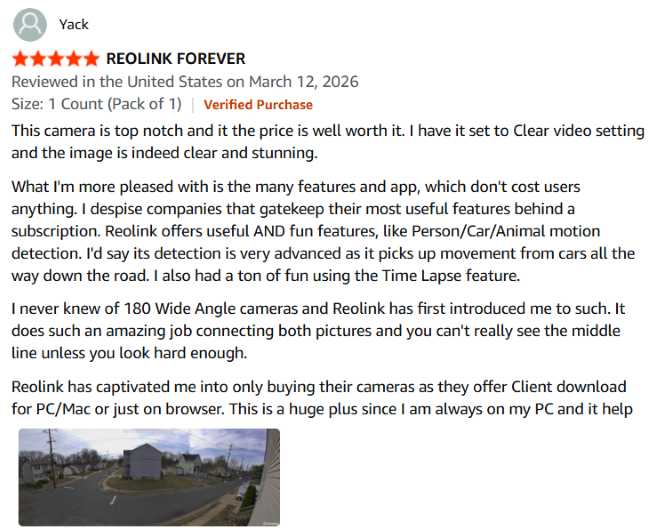
"This camera is top notch and it the price is well worth it. I have it set to Clear video setting and the image is indeed clear and stunning."
Duo 2 (Battery). Julio Gonzalez, a verified Amazon buyer (Apr 2025):

"Works fine. Need exact voltaje to work OK. Wide view. Good conector to wi fi."
Duo 2 LTE. salavtore gugliara, a verified Amazon buyer, in a review titled "Survived Hurricane Ian" (Jan 2024):
"Well made design, Durable and reliable, Picture Quality and Audio better than expected."
FAQs
How do I get a Reolink Duo 2 camera?
All four models are available directly from Reolink's store. The PoE, WiFi, and LTE models are sold as standalone cameras; the Battery model is sold as a bundle with a solar panel included rather than on its own.
What's the current price of the Reolink Duo 2 series?
Prices change often enough that a number printed here can go stale, so check the live price directly on each product page: Duo 2 PoE, Duo 2 WiFi, Duo 2 (Battery), and Duo 2 LTE.
What IP rating does the Reolink Duo 2 have?
It depends on the model. The Duo 2 PoE and Duo 2 WiFi are IP67 rated, meaning they can survive brief full submersion. The Duo 2 Battery and Duo 2 LTE are IP66, meaning they handle direct water jets and heavy rain but aren't built for submersion.
What's the operating temperature range for the Reolink Duo 2?
-10°C to 55°C (14°F to 131°F), and that range is the same across all four models, PoE, WiFi, Battery, and LTE.
Conclusion
The four Duo 2 models are the same dual-lens camera split by how you'd rather power and connect it: run a cable for the most stable connection, plug into an outlet and lean on WiFi, go battery and solar for a spot with no wiring at all, or go cellular for a spot with no network reach either. Match that to where the camera is actually going before you match it to a price.
Search
Subscribe for the Latest Updates
Security insights & offers right into your inbox