
Top 10 Most Dangerous Cities in New York
New York State presents a striking contrast between safe suburban communities and high-crime urban centers. It's important for visitors and relocators to know how dangerous and safe the cities are.
In this article, we will discuss the most dangerous cities in New York. We will share the crime rate statistics to get a better idea and also discuss the safety measures.
Is New York Dangerous?
New York is not broadly “dangerous” based on current NYPD data, but it is not completely risk-free either. Overall crime is lower than historical peaks, with violent crime trending downward, while transit-related incidents and petty theft remain the main concerns. Safety also varies by neighborhood, but overall the city in 2025–2026 is generally improving and not experiencing a widespread crime crisis, despite some localized and transit-related challenges.
Citywide Crime Trend (Overall Safety Improving)
- In 2025, total major crime fell about 3% year-over-year, reaching ~121,500 incidents citywide
- This continues a broader multi-year trend of gradual declines in major index crime
- NYC also recorded:
- Fewer robberies (~10% decline)
- Lower burglary and auto theft
- Fewer murders overall (-20%) in 2025
Overall: violent crime remains below recent peak levels and continues to decline in most categories
Violent Crime: Mixed but Generally Stable
- Murders are at historic lows in early 2026, with the lowest first-quarter level on record
- Shootings have also declined significantly year-over-year
- Felony assault is relatively flat, showing only minor fluctuations
Transit (Subway) Crime: Main Area of Concern
- Subway crime shows more volatility than overall city trends
- Recent data indicates:
- Transit robberies and assaults have fluctuated and in some periods increased
- Early 2026 reports show robberies on transit up ~20% year-over-year in some comparisons
Property Crime: Still the Most Common Issue
- Larceny (theft/shoplifting) remains the largest share of crime
- Auto theft and burglary have declined compared to previous years
- Some neighborhood-level variation remains significant (tourist/commercial areas tend to be higher)
Top 10 Most Dangerous Cities in New York
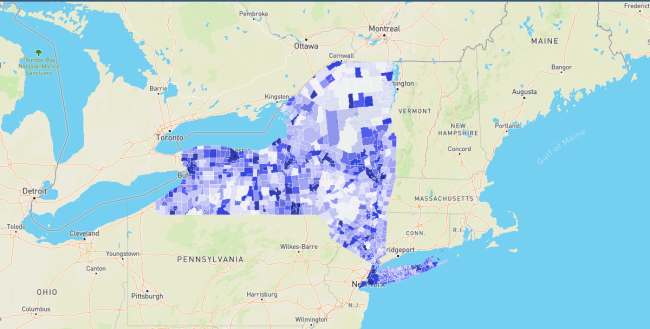
According to NYS Criminal Justice, the top 10 most dangerous cities in New York reveal stark safety disparities between urban centers and surrounding areas.
Buffalo
Buffalo leads with 12.4 violent crimes and 42.6 property crimes per 1,000. The East Side accounts for 48% of shootings, while downtown sees frequent robberies (4.2 per 1,000).
New police drones reduced response times by 35%. Community programs cut youth gang recruitment by 25%.
Rochester
Rochester reports 11.8 violent crimes and 40.2 property crimes per 1,000. Northeast neighborhoods see 5.1 aggravated assaults per 1,000 - the state's highest concentration.
The installation of security systems in public housing resulted in a 22% decrease in burglaries. Carjackings along I-490 continue to be an issue.
Syracuse
Syracuse documents 10.2 violent crimes and 38.4 property crimes per 1,000. The Southside sees 38% of violent offenses, particularly near abandoned industrial sites.
A new task force recovered 112 illegal guns last quarter. Downtown cameras decreased thefts by 18%.
Niagara Falls
Niagara Falls shows 9.3 violent crimes and 36.1 property crimes per 1,000. Tourist areas experience 32% more thefts in summer.
Enhanced lighting along Rainbow Boulevard cut crimes by 20%. Hotel security partnerships reduced guest theft by 25%.
Albany
Albany's 8.7 violent crimes and 34.9 property crimes per 1,000 center on student housing areas. Lark Street accounts for 41% of assaults.
Campus safety initiatives added 40 emergency call boxes. Downtown businesses watch cut shoplifting by 17%.
Schenectady
Schenectady reports 7.9 violent crimes and 32.8 property crimes per 1,000. The Stockade District sees frequent burglaries (11.2 per 1,000).
Neighborhood camera programs helped solve 45 cases. Community policing improved relations in high-risk areas.
Troy
Troy's 7.2 violent crimes and 31.4 property crimes per 1,000 reflect college-town challenges. RPI campus areas experience 28% of assaults.
A late-night shuttle program reduced drunk walking incidents. Downtown revitalization decreased property crimes by 15%.
Utica
Utica documents 6.8 violent crimes and 30.2 property crimes per 1,000. The Bleecker Street corridor struggles with drug-related offenses.
Police outreach programs connected 60 at-risk youth with mentors. Security grants funded 35 business camera installations.
Binghamton
Binghamton shows 6.3 violent crimes and 29.7 property crimes per 1,000. Student housing areas see seasonal burglary spikes.
University police partnerships improved campus-adjacent safety. Downtown lighting upgrades cut nighttime crimes by 18%.
Newburgh
Newburgh completes the list with 5.9 violent crimes and 28.4 property crimes per 1,000. Waterfront redevelopment reduced crimes by 22% in revitalized areas.
Gang intervention programs decreased youth violence by 17%. Ongoing challenges include combating drug trafficking routes.
Summary:
What Drives Crime in New York? Key Factors Behind Most Dangerous Cities in NY
1. Economic Disparities and Urban Poverty
- Crime challenges are strongly linked to concentrated urban poverty and limited economic opportunity
- Cities like Buffalo and Rochester show violent crime rates up to three times the state average in high-poverty neighborhoods
- Limited jobs and economic instability can contribute to higher levels of gang activity and repeat offending
2. Drug Trafficking Routes and Regional Connectivity
- The I-90 corridor functions as a major transportation route connecting urban centers across New York
- This corridor is often associated with drug trafficking movement between cities
- Criminal activity can concentrate around these transit-linked pathways
3. Seasonal Crime Patterns in Tourist Areas
- Property crime increases significantly in high-traffic tourist destinations
- Niagara Falls experiences around 32% more thefts during summer months
- Higher visitor volumes create more opportunities for pickpocketing and opportunistic theft
4. College Town Crime Fluctuations
- Cities with large student populations see seasonal crime spikes during academic semesters
- Albany and Troy are notable examples, especially in student housing areas
- Temporary population increases contribute to fluctuating demand on local policing
5. Homelessness and Downtown Crime Concentration
- In smaller cities like Newburgh, homeless encampments are linked to a portion of downtown offenses
- Approximately 31% of downtown crime in these areas is associated with concentrated street-level activity
- These zones often overlap with public spaces and commercial districts
New York’s crime patterns are shaped by a combination of economic inequality, transportation-linked trafficking routes, seasonal tourism activity, and localized population shifts, rather than uniform statewide conditions.
Safety Tips for Living in New York
1. General Personal Safety Tips
- Stay aware of your surroundings, especially in higher-crime urban areas
- Avoid isolated or poorly lit locations after dark
- Stick to populated and familiar routes when traveling at night
- Be extra cautious in areas with higher reported incidents (e.g., certain urban districts)
2. Parking and Public Area Safety
- Park only in well-lit, secured areas
- Prefer locations with visible surveillance cameras
- Avoid leaving valuables inside vehicles
- Stay alert in downtown districts and transit-heavy areas
3. Home and Property Security with Cameras
- Use security cameras to improve visibility and deter suspicious activity
- Advanced models, like the Reolink TrackMix security camera offers:
- Dual-lens design for both close-up and wide-angle views
- High-resolution video capture
- Night vision for low-light conditions
- Real-time alerts and smart detection features
These features help homeowners monitor activity around their property more effectively and respond quickly to potential threats
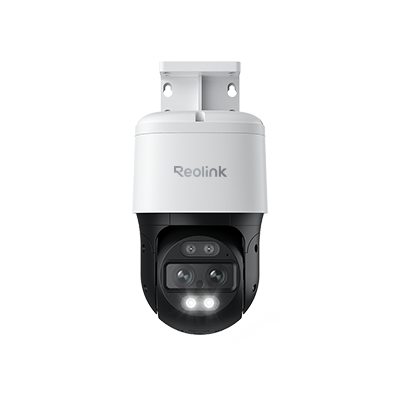
4K Dual-Lens PTZ Camera with Dual Tracking
4K 8MP Ultra HD, Wide & Telephoto Lenses, Pan & Tilt, Auto-Tracking, Person/Vehicle Detection, Power over Ethernet, Two-Way Audio.
FAQs
Which New York City has the most crime?
Buffalo currently has New York's highest violent crime rate at 12.4 incidents per 1,000 residents. The city's East Side neighborhoods experience shooting rates nearly four times the state average, driven by gang activity and poverty concentrations.
What city in New York has the lowest crime rate?
Ithaca maintains New York's lowest crime rate, 1.8 violent crimes per 1,000 residents. The college town's community policing model and strong local economy contribute to its exceptional safety record.
What is the roughest area of New York?
There is no single “roughest” area in New York, but some neighborhoods in larger cities report higher crime rates than others. Areas often cited include parts of Buffalo’s East Side and some neighborhoods in Rochester and Syracuse, where violent and property crime rates are higher compared to state averages. However, crime is highly localized, and many parts of these same cities are safe.
Which is the safest city in NY?
Some of the safest cities in New York State include small and suburban communities with lower crime rates. Cities like Rye, Saratoga Springs, and Lewisboro are often ranked among the safest due to consistently low violent and property crime levels. Safety can still vary by neighborhood, but overall these areas report much lower crime than major urban centers.
Conclusion
The most dangerous cities in New York present manageable risks when approached with proper awareness and precautions. From Buffalo's urban violence to Niagara Falls' property crimes, understanding local patterns is essential for personal safety. Modern security solutions like Reolink security cameras complement community-based strategies to create effective protection throughout the dangerous place in NY.
Search
Subscribe for the Latest Updates
Security insights & offers right into your inbox