
How to Keep Deer Out of Your Garden: 9 Facts, 3 Myths

The strongest way to keep deer out of a garden is a layered defense: an 8-foot fence or deer netting around the perimeter, deer-resistant plants inside, weekly-rotated scent repellents on the few prized plants that need them, and an AI-equipped outdoor camera to catch what gets past the rest. Single tactics fail because deer adapt. The combination is what works.
One night is enough to ruin an entire flower bed. Hostas disappear to bare stems. Tulip buds vanish before they bloom. Hydrangeas get chewed unevenly overnight. Most homeowners only start researching how to keep deer out of garden spaces after the damage becomes impossible to ignore.
No plant stays completely deer-proof once food pressure gets high enough. That is why the strongest deer deterrent for garden protection combines multiple layers instead of relying on one trick. This guide ranks the methods that genuinely reduce browsing pressure and calls out the ones that mostly waste time.
First, Make Sure It's Actually Deer

Deer leave four reliable clues: heart-shaped split hoof tracks, torn stems instead of clean cuts, browsing damage between three and six feet high, and pellet droppings clustered like jellybeans.
Most failed deer deterrent plans start with the wrong diagnosis. Rabbits leave clean 45-degree cuts because they have upper incisors. Deer do not. Deer tear stems roughly because they pull vegetation against their lower teeth instead of slicing cleanly.
Browsing height helps narrow things down quickly. Damage appearing four feet high almost always rules rabbits out. Voles stay near soil level chewing bark and roots. Groundhogs flatten plants and leave wide tracks.
Timing matters too. Deer feed most heavily at dawn and dusk. Garden beds untouched all day but stripped overnight strongly point toward crepuscular deer activity.
The University of Maryland Extension deer damage guide explains the torn-vs-clipped distinction in detail and helps gardeners distinguish deer from smaller pests accurately.
Confirm with a Trail Camera

A cellular trail camera mounted three to four feet high and angled toward likely entry paths usually confirms deer activity within one or two nights.
Modern wildlife camera systems reduce false alerts dramatically compared to older motion-trigger cameras. The trail camera guide category now includes AI animal recognition that separates deer from raccoons, pets, and moving branches.
Understand Deer Behavior Before You Defend

Deer pressure spikes during late winter, early spring, and late fall because food scarcity and biological stress increase feeding urgency.
Late winter pushes deer toward woody browse like arborvitae, juniper, and apple saplings when natural forage disappears. Early spring creates another surge because tender hosta shoots, tulips, and vegetable starts contain high moisture and nutrients. Fall feeding intensifies before the rut.
An adult white-tailed deer eats up to ten pound of vegetation daily. Hungry deer ignore weak repellents more aggressively during lean months.
Feeding activity also follows predictable timing. Peak browsing usually happens within 30 minutes before sunrise and after sunset. That explains why homeowners rarely witness the damage live.
Suburban white-tailed deer commonly travel in family groups. A doe and one to three fawns sometimes can form groups of up to six. One deer can cause frustration, but a small herd can flatten ornamental beds overnight.
Michael Mengak from the UGA Warnell School of Forestry and Natural Resources notes that deer graze selectively instead of immediately destroying entire plants. That subtle “nibble here and there” pattern delays homeowner response until feeding routes become established.
9 Ways to Keep Deer Out of Your Garden That Actually Work
Most suburban gardens need four to six layered defenses instead of one miracle product. These methods rank roughly by effectiveness, starting with the strongest standalone defenses.
1. Install an 8-Foot Deer Fence Around the Garden Perimeter

An eight-foot fence is the only standalone defense that reliably stops determined deer because adult white-tails can clear six feet from a standstill.
Deer fencing for garden protection usually uses either woven wire or polypropylene mesh. Poly mesh visually disappears better in suburban landscapes, while woven wire lasts longer but looks more agricultural.
Fence posts should stay roughly 10 to 15 feet apart. Ground staking matters because deer frequently test weak bottom edges first before attempting jumps.
Solid stockade fences sometimes work at six feet because deer refuse blind jumps where they cannot see the landing zone clearly.
2. Try the Double-Fence Trick If 8 Feet Feels Like Too Much
Two parallel four or five-foot fences spaced roughly five feet apart stop deer because deer struggle to judge the landing space between them.
The depth-perception issue matters more than raw height. Deer hesitate when they cannot confidently predict where their hooves will land.
Many homeowners use inexpensive inner barriers like baling twine, chicken wire, or lightweight mesh for the second fence. This setup works especially well where an eight-foot perimeter fence feels visually overwhelming.
Heavy deer pressure changes the equation slightly. Does with fawns sometimes challenge double-fence systems more aggressively during food shortages.
3. Plant Deer-Resistant Species Inside the Garden

Deer avoid plants with fuzzy leaves, prickly foliage, strong fragrance, or toxic sap because those traits reduce palatability.
Gardeners searching for how to keep deer from eating plants should first replace the most vulnerable species. Fuzzy-leaf plants like lamb’s ear, yarrow, lady’s mantle, and Siberian bugloss perform consistently well.
Fragrant herbs including lavender, Russian sage, oregano, thyme, catmint, and bee balm naturally discourage browsing. Spiny plants like globe thistle and sea holly create uncomfortable mouthfeel.
Toxic plants remain among the strongest long-term choices:
- Daffodils
- Foxglove
- Hellebores
- Ferns
- Bleeding heart
The Rutgers deer-resistant plant database remains one of the strongest horticultural resources available because it evaluates hundreds of species individually.
No plant remains completely safe during drought or severe winter browse pressure. Deer will munch on almost anything green.
4. Rotate Scent Repellents Weekly, Not Whenever You Remember
Egg-solid-based repellents outperform most other deer sprays when rotated every seven to ten days.
Bobbex, Liquid Fence, and Deer-Away consistently rank near the top because rotten egg proteins trigger natural biological avoidance behavior. Deer associate the smell with decay and contamination.
The biggest mistake homeowners make is spraying once and assuming the problem is solved. Deer habituate quickly. Rain also resets effectiveness almost immediately.
The Ward & Williams deer repellent study found Bobbex performed best overall while Hinder delivered strong value relative to cost.
Most products smell terrible during application but dry nearly odorless within an hour.
5. Set Up Motion-Activated Sprinklers Along Likely Approach Paths

Motion-activated sprinklers startle deer effectively because sudden water bursts trigger immediate flight behavior.
The Orbit Yard Enforcer covers roughly up to 35 feet of water coverage and 40-foot motion detection range. It works best protecting hostas, vegetable beds, and newly planted flowers during spring and summer.
Placement matters more than quantity. Sprinklers should target likely entry paths instead of spraying randomly across the yard. Moving them every few days slows habituation.
Winter creates the major weakness. Frozen hoses and disabled sprinklers make them useless during the season when shrub browsing pressure often peaks hardest.
6. Install a Smart Outdoor Camera with Siren, Spotlight, and Two-Way Audio

A smart outdoor security camera with AI animal detection creates active year-round deer deterrence during the dawn and dusk feeding window when homeowners are usually asleep.
Basic motion sensors trigger constantly from shadows and branches. AI animal detection filters most of that noise out. That means spotlights, sirens, and alerts activate only when real animals enter the garden.
The scare principle mirrors motion sprinklers but without freezing limitations. Sudden light, sound, and human voice signals disrupt feeding patterns because deer associate them with direct human presence.
Color night vision also matters because deer feed heavily during low-light periods where traditional infrared systems lose detail. A modern outdoor security camera provides deterrence plus behavioral evidence showing exactly where deer enter and when.
Reolink cameras are on sale now! Don’t miss the Reolink Spring Sale 2026 for great deals on Reolink cameras.
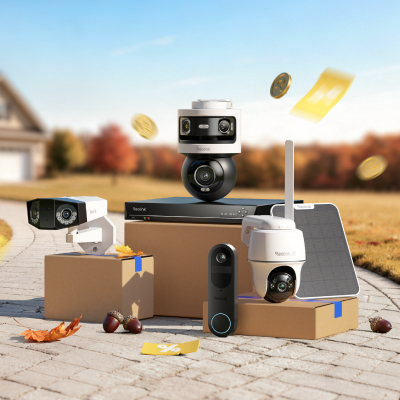
🎉 Limited-Time Security Camera Prime Deals
- Explore Special Offers on Individual Cameras and Security Systems.
- Protect Your Home for Less with Bundles & Multi-Packs.
7. Cage or Net Prized Individual Plants
Wire cages and seven-foot deer netting protect prized plants more reliably than almost any spray deterrent.
This tactic works especially well for heirloom hydrangeas, young fruit trees, roses, and expensive specimen shrubs. Whole-garden fencing sometimes feels excessive when only one or two plants remain highly vulnerable.
Black mesh softens visual impact significantly compared to bright plastic netting. Many homeowners also remove cages seasonally once shrubs become dormant.
8. Layer Your Planting to Block Sightlines
Dense layered planting reduces deer browsing because deer avoid feeding where escape routes feel visually uncertain.
Miscanthus and switchgrass work especially well because they create thick visual screening without solid fencing.
This tactic works best alongside other deterrents instead of functioning alone.
9. Add a Dog or Borrow the Scent of One

A dog with regular yard access remains one of the strongest biological deer deterrents because deer interpret canid scent as a predator signal.
Border collies, terriers, and other alert breeds work especially well when outside during dawn and dusk feeding windows.
Homeowners without dogs sometimes scatter dog hair around perimeter edges temporarily. That workaround helps briefly but loses effectiveness quickly after rain or wind exposure.
This method depends heavily on consistency. A dog sleeping indoors overnight provides far less deterrence than one actively patrolling the yard.
3 Deer Deterrents That Don't Actually Work
These tactics appear constantly in gardening forums and viral social posts. Most work briefly. None deserves to anchor a serious deer defense plan.
Bars of Irish Spring Soap Hung in Trees
Irish Spring soap repels deer for roughly two to three weeks before deer either ignore it completely or begin chewing the soap itself during winter food shortages.
Anecdotal gardening reports split almost evenly between success and failure. That inconsistency usually signals rapid habituation rather than reliable deterrence.
State extension services generally do not recommend soap as a primary deer deterrent for garden protection.
Predator Urine (Coyote, Wolf, Bobcat)
Predator urine products lose effectiveness quickly because suburban deer learn the scent is not connected to actual predator behavior.
The problem is behavioral inconsistency. Scent without movement, sound, or visible threat becomes background noise.
The Connecticut repellent study cited earlier found coyote urine performed little better than untreated controls over time.
Hair Bags, Dryer Sheets, and Aluminum Pie Pans
Hair bags, dryer sheets, and hanging pie pans fail because modern suburban deer already encounter constant human scent, reflective surfaces, and artificial noise.
These methods worked better decades ago when deer remained more cautious around human activity. Today’s suburban deer populations habituate within several days.
Rural gardens occasionally see short-term success. Dense suburban herds almost never do.
Reolink Security Cameras That Help Keep Deer Out of Your Garden
A security camera strengthens a deer defense plan two ways: it confirms exactly what animal is visiting and actively scares deer away using AI-triggered deterrence tools.
Reolink Argus 4 Pro

4k 180° Wire-free Color Night Vision Camera
4K UHD 180° Blindspot-free View; Color Vision Day and Night; 30% More Battery Life; Dual-band Wi-Fi 6; Smart detection.
The Reolink Argus 4 Pro works best for active deer deterrence because it combines a 180-degree dual-lens view, 4K resolution, ColorX night vision down to 0.0005 lux, AI animal detection, spotlight activation, and a built-in siren.
One camera typically covers an entire vegetable garden or flower border from a single mounting point. The battery-powered design plus optional 6W solar panel removes most cabling problems.
Battery life typically reaches two months without solar. Continuous recording can be enabled with the 6W solar panel under adequate sun.
Reolink Go Ranger PT
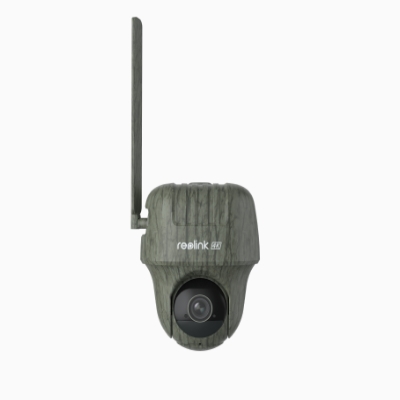
4K 4G LTE Wildlife Camera with 360° All-Around View
4G LTE Network, 4K 8MP Ultra HD, No-Glow IR LEDs, Person Detection, Animal Detection, Two-Way Audio, Battery/Solar Powered.
The Reolink Go Ranger PT works best for wooded property edges, rural gardens, and areas too far from the house for Wi-Fi.
Its 4G LTE connection enables completely off-grid deployment. AI recognition distinguishes bucks, antlerless deer, and turkeys separately, which keeps alerts actionable instead of overwhelming.
No-glow 940nm infrared LEDs preserve natural wildlife behavior because animals never see the illumination source directly.
Reolink Altas PT Ultra
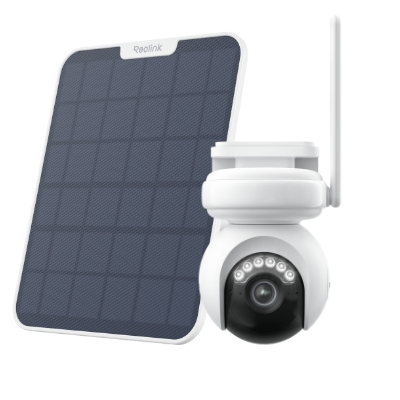
Industry-Leading 4K Continuous Recording Battery Camera
- True 4K UHD continuous recording
- ColorX night vision with 360° pan & tilt coverage
The Reolink Altas PT Ultra fits large semi-rural properties where one fixed camera cannot monitor multiple beds, orchard corners, and perimeter entry paths effectively.
Its 355-degree pan coverage, 90-degree tilt, dual-band Wi-Fi 6, ColorX night vision, and local Home Hub storage create strong large-property coverage without subscription fees.
One elevated mounting position often monitors an entire half-acre garden layout successfully while still providing AI animal detection and spotlight deterrence.
FAQs
What is the most effective way to keep deer out of a garden?
An eight-foot fence remains the strongest single defense, but the best overall approach combines fencing, deer-resistant plants, rotating repellents, and active deterrents like motion sprinklers or smart cameras. Layered defense works because deer eventually adapt to weak standalone tactics.
How do I keep deer from eating my plants?
Start by replacing vulnerable plants with deer-resistant species like lavender, Russian sage, daffodils, and ferns. Then protect prized plants individually using cages, weekly repellents, or motion-triggered deterrents like an outdoor security camera or sprinkler system.
How tall does a fence need to be to keep deer out?
A deer fence should reach at least eight feet tall to reliably stop adult deer because white-tailed deer can clear six feet from a standstill. Double-fence systems using two shorter fences spaced five feet apart also work because deer struggle with depth perception.
What scares deer the most?
Sudden motion paired with sound and light scares deer more effectively than static deterrents like soap or scent bags. Motion sprinklers and security camera systems with sirens and spotlights work because they simulate immediate human activity and presence.
How do farmers keep deer away from crops?
Farmers rely on layered defenses including woven-wire fencing, electric fencing, rotating repellents, trail camera networks, and outdoor security camera monitoring systems. Many agricultural programs also coordinate broader deer population management through state extension services.
Conclusion
Most gardens need three to five layered defenses, not twelve different products fighting each other. Start with diagnosis first. Confirm the browsing pattern using a trail camera or wildlife camera if you are unsure what animal is responsible. Avoid hoping one weak tactic solves everything, such as using soap.
Then close the obvious entry points, replace the easiest food sources, and add active deterrence where the pressure stays highest.
With all the valuable information provided, it's time to walk your garden at dawn or dusk and identify the exact route deer are using to enter.!
Search
Subscribe for the Latest Updates
Security insights & offers right into your inbox