
How to Keep a Construction Site Safe: 10 Key Tips
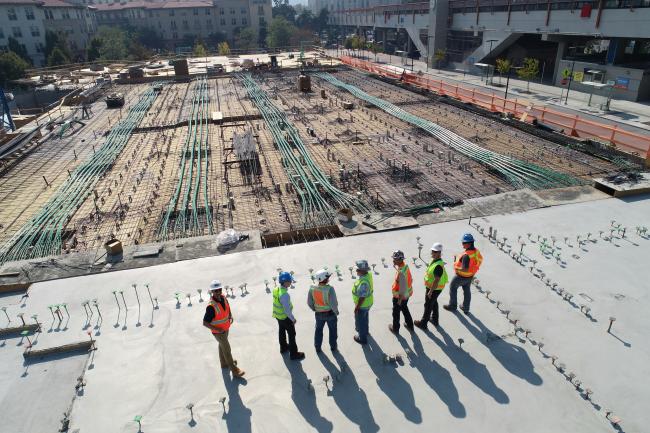
Safety in a jobsite does not require hard hats or caution tape. It requires a clear strategy, consistent management, and decisions that are based on tested principles. This article discusses construction site safety and examines major construction safety topics that ensure that the crews, visitors, and the community around the site are not harmed.
What Is Construction Site Safety?
Construction site safety is the entire mechanism of rules, equipment, actions, and control that prevent injury, illness, and property loss in the building, renovation, or demolition of the building. It begins during pre-planning, which is followed during each shift, and is developed according to the change of rocks, weather, and schedules. All the people at the site, the owner, the manager, and the apprentice, have a role in this system.
How to Keep a Construction Site Safe? 10 Essential Tips
Managers who wonder how to keep a construction site safe often look for a checklist. The next section reviews ten critical steps you can start today. These measures answer the common question of what are construction site safety rules? And they work on projects of any size.
1. Plan Before Work Begins
Life and money would be saved with early planning. Having designers, foremen, and safety personnel at the same table prior to the initial shovel dropping on the ground. Examine drawings of the study, soil reports, utility maps, and traffic patterns.
Split the job into stages, enumerate the hazards per stage, and put them in a method statement that is written in easily understandable language. Assign duties such that each of the significant risks has a person in charge.
2. Maintain Clear Site Access
Ambulances, fire crews, and delivery trucks need a straight path. Place heavy timber or steel plates over soft ground so vehicles do not sink. Mark separate lanes for people and equipment with bright paint and cones. Sweep mud away at lunch and again before the shift ends.
Install lights along fences and walkways so workers can see holes, anchors, and stored materials after sunset. Mount mirrors at blind corners and set a one-way system in tight zones. A tidy entrance signals that managers care about order, and order often prevents injury. You can also install cameras for construction site monitoring.

4K 8MP Wire-Free 4G LTE PT Battery Camera
4K 8MP; Smart Detection; 355° Pan & 140° Tilt; Battery/Solar Powered; Color Night Vision; Smart Real-Time Alert.
3. Enforce Personal Protective Equipment
PPE is the final barrier in case other control measures have not been successful. Wear appropriate equipment: electrical work, dielectric boots, steel fixing, gloves that have cut-resistant properties, and hearing protection around compressors. Stock up on spares on the premise so new employees are given a clean slate.
Conduct spot checks and incentive crews who properly use PPE and not just in instances of non-compliance. Wipe and dry equipment in dry lockers; perspiration, dirt, and the sun will reduce the service life. Write down serial numbers of the records and replacement dates to enable you to budget in advance. Workers will follow when their leaders put on PPE.
4. Keep Tools and Equipment in Good Condition
A sharp object is as damaging to productivity as a safety issue. You should make checklists of the type of tools and attach them to the storage rack. Train the workers to record defects in a notebook next to the rack and not through memory. Arrange mobile mechanics to sharpen, lubricate, and test the equipment once a week.
Keep store batteries at the correct temperature and have spares of belts, bits, and fuses, as such crews avoid quick and unsafe repairs. An accident may also be caused by improvisation, which is usually not possible in a small parts cabinet. Breaking tools should be put away, and scrap heaps should not cause injuries.
5. Control Hazardous Substances
There are almost no sites where chemicals are not found, whether it is gasoline or epoxy. Store acids, bases, and flammables in different metal boxes, which must be secured at night. Store Safety Data Sheets in transparent plastic bags on the door of the cabinet so that one can access the information at any time. Install drip trays below pumps and monitor the usage; sharp increases in the usage are indicators of leakage or theft.
6. Manage Working at Heights
Falls still cause most fatal injuries in construction. Fit guardrails at roof edges before material deliveries. Inspect planks for cracks and fix anchor bolts using torque wrenches, not guesses. Place warning lines six feet from openings and add self-closing gates at ladder tops. Teach workers to tie off to anchor points rated for at least five thousand pounds.
Lock rolling scaffolds when stationary and remove components that do not meet manufacturer guidelines. Keep lightweight debris nets under the roof to catch dropped tools. Assign a competent person to inspect fall protection daily and document findings.
7. Prevent Excavation Accidents
Ground collapses without warning. Verify underground utility locations with radar, not only paint. Choose slope angles based on actual soil test results. Use trench boxes when the depth exceeds five feet and forbid anyone from entering an unprotected cut. Test oxygen and methane levels in pits deeper than four feet. Park spoil piles at least two feet from the edge to lower sidewall stress.
Assign a competent person to inspect shoring after heavy rain and before each shift. Provide a ladder no more than twenty-five feet from any worker in the trench, allowing a quick escape when alarms sound.
8. Use Lockout/Tagout for Energy Sources
Stored energy can kill long after machines appear harmless. Identify every isolation point on a simple diagram and tape copies near the equipment. Shut down prime movers, bleed hydraulic accumulators, discharge capacitors, and block gravity loads with cribbing.
Each worker places a personal lock and signs the tag with indelible ink. Verify zero energy using test instruments, then try to start the system. Supervisors collect locks only after confirming the team and tools have cleared the danger area. Practice drills monthly to reinforce muscle memory and spot gaps in the procedure.
9. Train and Refresh Workers Regularly
Orientation covers site basics, but hazards change daily. Begin each morning with a ten-minute toolbox talk that highlights new deliveries, altered routes, or changing weather. Use photographs taken on site to illustrate correct and incorrect practices. Encourage questions and let workers demonstrate techniques immediately.
Ask small groups to repeat the main message back to prove understanding. Keep attendance and topics in a binder for audits. Supplement short talks with monthly in-depth sessions, inviting vendors or paramedics to share fresh insights. Good training turns safety rules into habits.
10. Promote a Culture of Reporting
Workers know risks first because they feel them. Set up an anonymous drop box and a quick phone app so they can report near misses right away. Thank the staff in the next briefing when you act on their insight. Display a chart that tracks corrective actions and closure dates so everyone sees progress, not paperwork.
Recognize teams that submit helpful reports and share lessons learned across crews. Avoid blame language in investigations; focus on root causes and practical solutions. Open communication reduces hidden hazards and builds lasting trust.
How to Use Construction Site Safety Signs?
Safety signs link hazard recognition with fast action. When placed well, workers see them, understand them, and adjust their behavior. Follow these guidelines to gain the full benefit of this simple control measure.
-
Post signs at eye level right beside the hazard so workers read them without looking up or down while moving through the area at speed.
-
Use clear pictograms with bold letters that match ANSI Z535 standards and keep wording short so every worker understands the message quickly under stress conditions.
-
Place distance markers in front of the danger zone to give equipment operators enough time to slow, stop, or reroute even when visibility drops suddenly.
-
Replace worn or faded signs immediately after you notice contrast fading, because blurred warnings invite mistakes and liability claims and degrade trust in management sitewide.
-
Add reflective coating or lighting for night shifts and inside dim spaces to keep the signal visible from any approach during rain or foggy mornings.
-
Train crews to reference signs during toolbox talks so the graphics become part of daily decision making, not ignored background décor when fatigue threatens focus.
FAQs
What are the OSHA requirements for construction sites?
OSHA establishes a standard of construction safety under Part 1926 standards. Contractors have to inspect the site on a daily basis, train workers, supply appropriate personal protective equipment, manage hazardous energy, prevent falls, and document incidents. Managers have to display the OSHA poster and maintain on-site records. Those obligations may be increased by local rules.
What's the 20/20/20 rule in OSHA construction?
The 20/20/20 rule helps supervisors to pause after every twenty minutes, take the necessary time to scan the environment for twenty seconds, and repair or report at least one of the hazards before they continue working. The practice maintains the alertness of attention, helps in early control of hazards, and also fits well in the normal and focused rhythms of sites, keeping everyone alert and safe.
What is the biggest safety issue on a construction site?
Uncontrolled falls remain the greatest risk on most projects. Workers often move between uneven surfaces, temporary edges, ladders, and lifts. Without solid anchorage, guardrails, or restraint systems, one misstep leads to severe injury. Continuous fall protection planning, equipment inspections, and worker coaching reduce that threat more than any other measure.
Conclusion
To wrap up, construction site safety rests on clear rules, reliable equipment, active training, and a culture that values reporting.
Apply the tips above, post effective signs, and return to these construction safety topics as your project changes. Share your experiences and let us know which practices worked best on your sites.
Search
Subscribe for the Latest Updates
Security insights & offers right into your inbox