
How Do Wireless Security Cameras Work?
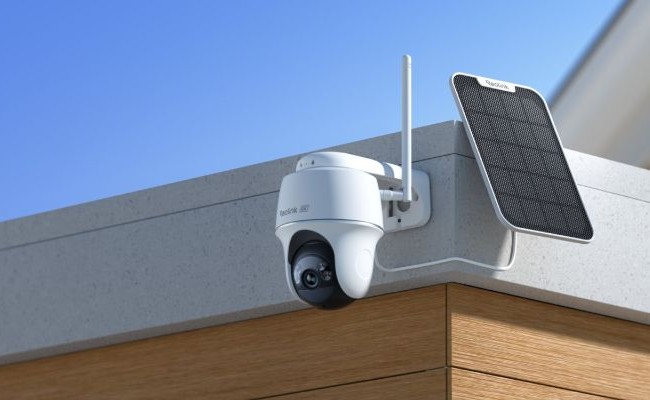
Wireless security cameras transmit video without a wired network connection, making them easier to install and position around homes and properties. Depending on the model, they can use WiFi or cellular networks and may support features such as 4K video, night vision, smart detection, local storage, and remote viewing. So, how do wireless security cameras work?
Key Takeaways:
- Wireless security cameras use WiFi or cellular networks for video transmission and remote access.
- Plug-in models suit continuous monitoring, while battery and solar-powered cameras offer more flexible placement.
- 4G LTE cameras extend wireless monitoring to locations without WiFi.
How Does a Wireless Security Camera Work?
Wireless security cameras work by transmitting video and audio signals via radio waves (Wi-Fi signals). These cameras capture data and send it to a receiver, which can be an NVR, a computer, or an app on a smart device. The stored data can be accessed conveniently through the same device from anywhere with Internet connection.
A wireless security camera connects to your home Wi-Fi network to transmit video without the need for cables. It contains several key components, including a lens, image sensor, processor, memory card, and Wi-Fi antenna.
The lens focuses light onto the image sensor, which captures video much like a digital camera. Common image sensors include CMOS and CCD. The sensor contains millions of light-sensitive pixels that convert photons into electrons to represent images.
The images are then processed by the camera's onboard chipset, which encodes the video into a compressed digital format like H.264 or H.265 to conserve bandwidth and storage space while maintaining quality. Image processing features like motion sensing, facial recognition, digital zoom, and night vision are also handled on the integrated circuit board.
Video is temporarily archived on a removable microSD card slotted into the wireless camera before it gets transmitted over the home WiFi network. Local storage acts as a backup footage source in case of internet outages. Some cameras support up to 512GB cards for weeks of 24/7 recording.
How Do WiFi Cameras Work?
WiFi security cameras leverage your existing home wireless network to deliver video. They broadcast over 2.4GHz or 5GHz frequencies via the 802.11 WiFi protocol, the same technology used for smart home devices and laptops. But how does a WiFi camera work exactly?
Plug-In WiFi Cameras
Plug-in WiFi security cameras connect directly to a power outlet, so you don't have to worry about changing or recharging batteries. They can operate 24/7 with continuous power. These cams also tend to offer higher video resolution and advanced features than battery-powered models.
For example, 4K wired cameras capture ultra-HD footage. However, plug-in WiFi cams have less flexible placement since they must be located near an AC outlet.
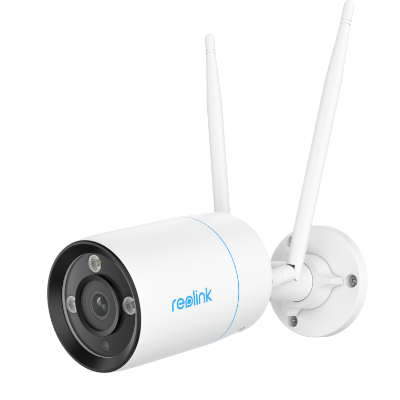
4K WiFi 6 Surveillance Camera
4K 8MP Ultra HD, Dual-Band WiFi 6, Color Night Vision, IP67 Waterproof, Smart Detection, Two-Way Audio, Built-in Siren.
Battery-Powered WiFi Cameras
Battery-powered WiFi cameras offer flexible, cable-free installation at outdoor or indoor locations within range of your home's WiFi router. For instance, you can mount one under the eaves or on a tree without needing access to power.
These wire-free cameras are easy to reposition. Motion-triggered recording helps conserve battery life, while compatible solar panels reduce the need for manual charging. For example, the Reolink OMVI 2i Ultra combines a 4K wide-angle lens with a 3K auto-tracking PT lens for 360° coverage, powered by a rechargeable 10,000mAh battery and an optional 6W solar panel.
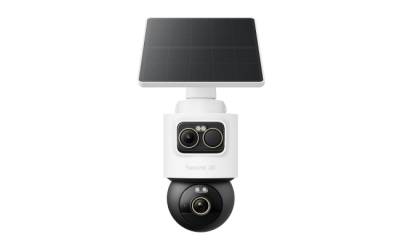
4K + 3K Dual-Lens PT & Bullet Wireless Security Camera
- 4K + 3K Dual-Lens with 360° Full Coverage
- SolarEase Endless Solar Power
- SyncTrack with Auto-Framing & Auto-Tracking
- AI Detection for Person, Vehicle & Animal
- Local Storage Up to 512GB microSD Card
How Do Wireless Cellular Security Cameras Work?
Wondering how do cellular security cameras work? Cellular security cameras use 3G or 4G cellular networks to transmit video instead of WiFi. They contain an integrated SIM card that connects to nearby cell towers via mobile broadband.
While out of the typical home WiFi range, these wireless cameras can be positioned anywhere with cellular service. Video streams to your phone no matter where you are in the world via mobile data. Cellular cams are convenient but usually require a paid monthly service plan based on how much video is uploaded.
4G LTE Cellular Security Cameras
4G LTE security cameras are particularly useful for farms, cabins, construction sites, and other locations where WiFi is unavailable. For example, the Reolink Go PT Ultra connects through a 4G LTE network and provides 4K 8MP video with 355° pan and 140° tilt for wider coverage.
The camera is powered by a rechargeable battery and also supports solar charging, allowing it to operate in locations without fixed power or WiFi. It also supports person, vehicle, and animal detection, color and infrared night vision, and local microSD storage up to 128GB.
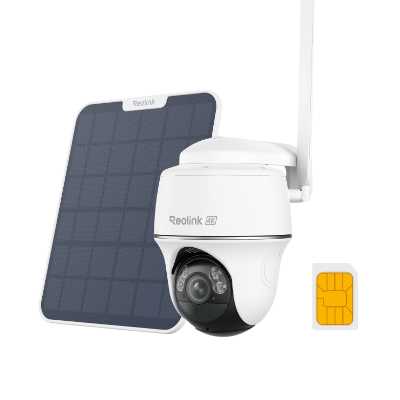
4K 8MP Wire-Free 4G LTE PT Battery Camera
4K 8MP; Smart Detection; 355° Pan & 140° Tilt; Battery/Solar Powered; Color Night Vision; Smart Real-Time Alert.
Wireless Home Security Cameras: Pros and Cons
Wireless home security cameras provide many advantages but also come with some downsides to consider before installing a system:
Pros:
- Ease of Use - Hassle-free setup with no wires to run. Connecting cameras to power and WiFi is all that's needed.
- Flexibility - Position cameras anywhere within WiFi range, indoors and outdoors. Easily reposition units.
- Accessibility without Hub - View footage on your smartphone or tablet without needing a dedicated hub.
- Smart Features - AI person detection, machine learning tech, and two-way audio provide enhanced monitoring.
Cons:
- Signal Interference - Nearby devices can potentially interfere with wireless transmission between cameras and routers.
- Security Concerns - Hackers may be able to access camera feeds. Manufacturers could have security flaws. Privacy is also a common concern, with cameras inside the home recording residents.
Wireless Security Camera: Buyer Decision
The best wireles/WiFi security camera depends mainly on how the camera connects to the network and receives power. Plug-in WiFi cameras are suitable for continuous monitoring where power is available, battery-powered WiFi cameras provide more flexible placement, while 4G LTE cameras are designed for remote locations without WiFi.
FAQs
Can I install a wireless security camera system myself?
Yes. Most wireless security cameras are designed for DIY installation and can be set up in minutes using a mobile app. Battery-powered models are especially easy to install because they require little to no wiring.
Do wireless outdoor security cameras work?
Yes. Wireless outdoor security cameras work well for monitoring driveways, barns, construction sites, backyards, and other exterior areas. Features such as weather resistance, reliable wireless range, high-capacity batteries, and solar charging make them suitable for outdoor use.
WiFi models can be used around homes and properties with reliable WiFi coverage, while cellular-enabled cameras can monitor remote areas beyond the home network. For off-grid locations, longer battery life and solar charging can also reduce the need for frequent recharging.
Do wireless security cameras need internet?
While internet access allows for remote viewing and advanced features, wireless security cameras can record video locally to a memory card without needing an internet connection. Local recording makes sense for remote areas with no WiFi coverage.
How do wireless security cameras record?
Most wireless cams offer both cloud recording to the manufacturer's servers and local recording to a built-in microSD card slot. Local recording provides backup footage that can be retrieved manually from the camera in cases where wireless connectivity is disrupted.
How do you power a wireless security camera?
Wireless security cameras can be powered by a wall outlet or a rechargeable battery, depending on the model. Battery-powered cameras can also support solar charging, making them suitable for outdoor areas where access to a power outlet is limited.
What is the difference between a wireless camera and a Wi-Fi camera?
A wireless camera is a broader category that transmits data without a wired network connection. A Wi-Fi camera is one type of wireless camera that connects through a WiFi network, while other wireless cameras may use 4G LTE cellular networks instead.
Conclusion
Wireless security cameras make it easier to monitor homes and properties without relying on wired network connections. WiFi models are practical for homes with reliable network coverage, while 4G LTE cameras extend remote monitoring to farms, cabins, construction sites, and other locations without WiFi.
The right option depends on the installation environment. Plug-in WiFi cameras are better suited to continuous monitoring, battery-powered models offer more flexible placement, and cellular cameras provide connectivity where a home WiFi network is unavailable.
Search
Subscribe for the Latest Updates
Security insights & offers right into your inbox